Vibration Plate Buying Guide: Types, Frequency, Amplitude, Weight Capacity, Exercises & Safety in Oman
Vibration plates are one of the popular tools found in home gyms and other fitness spaces. They offer a vibration-based movement to a workout routine without relying on a huge exercise machine. If you are going to buy a vibration plate, an understanding of these machines can help you choose the right model.
First things first, not all vibration plates are the same. They differ in terms of platform movement, vibration frequency, amplitude, weight capacity and workout settings. While some models are designed for simple home workouts, others offer features like resistance bands, remote controls, and digital displays.
In this blog, we explain the different types of vibration plates, features worth comparing, exercises you can perform and integral safety considerations before buying one.
What Is a Vibration Plate?
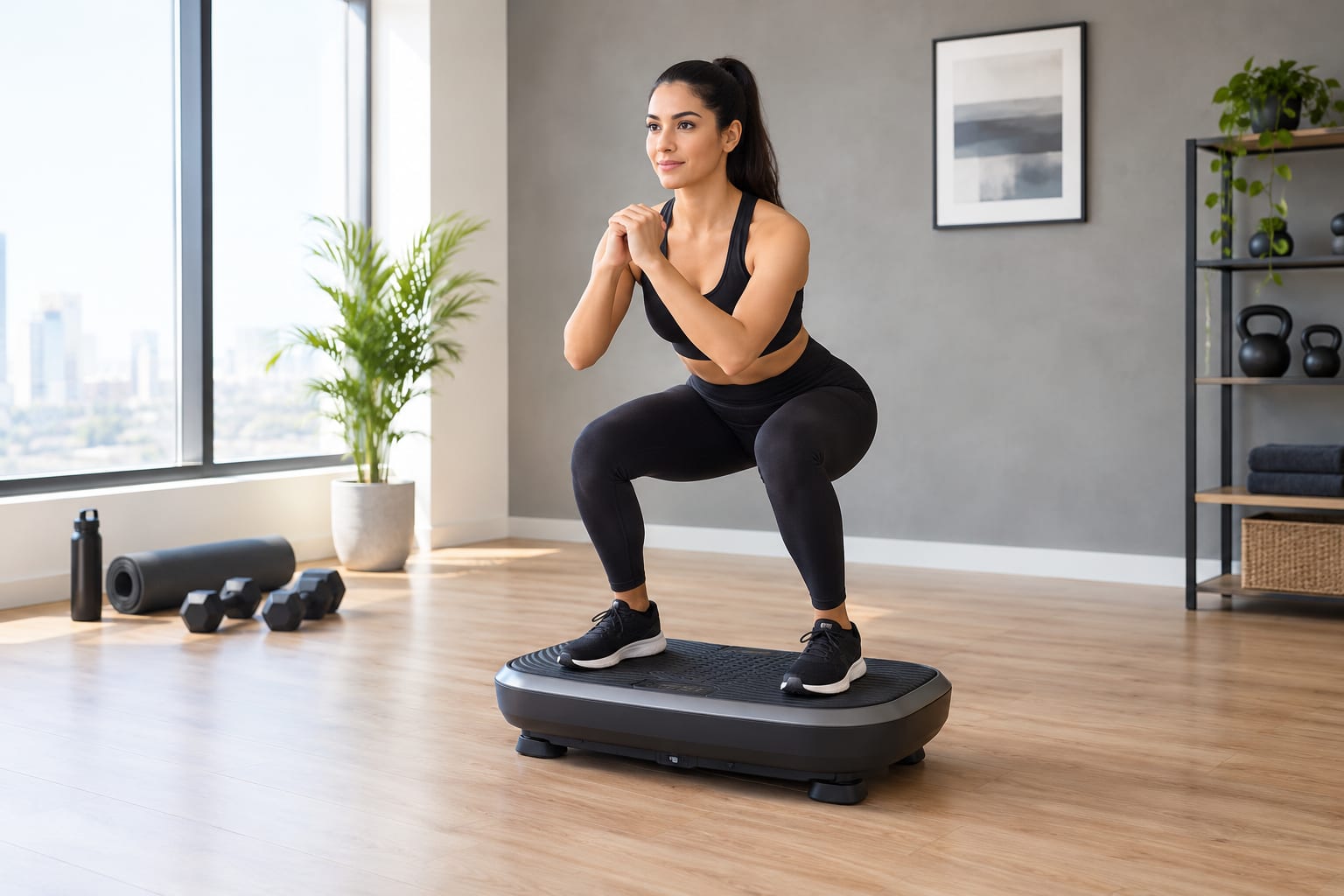
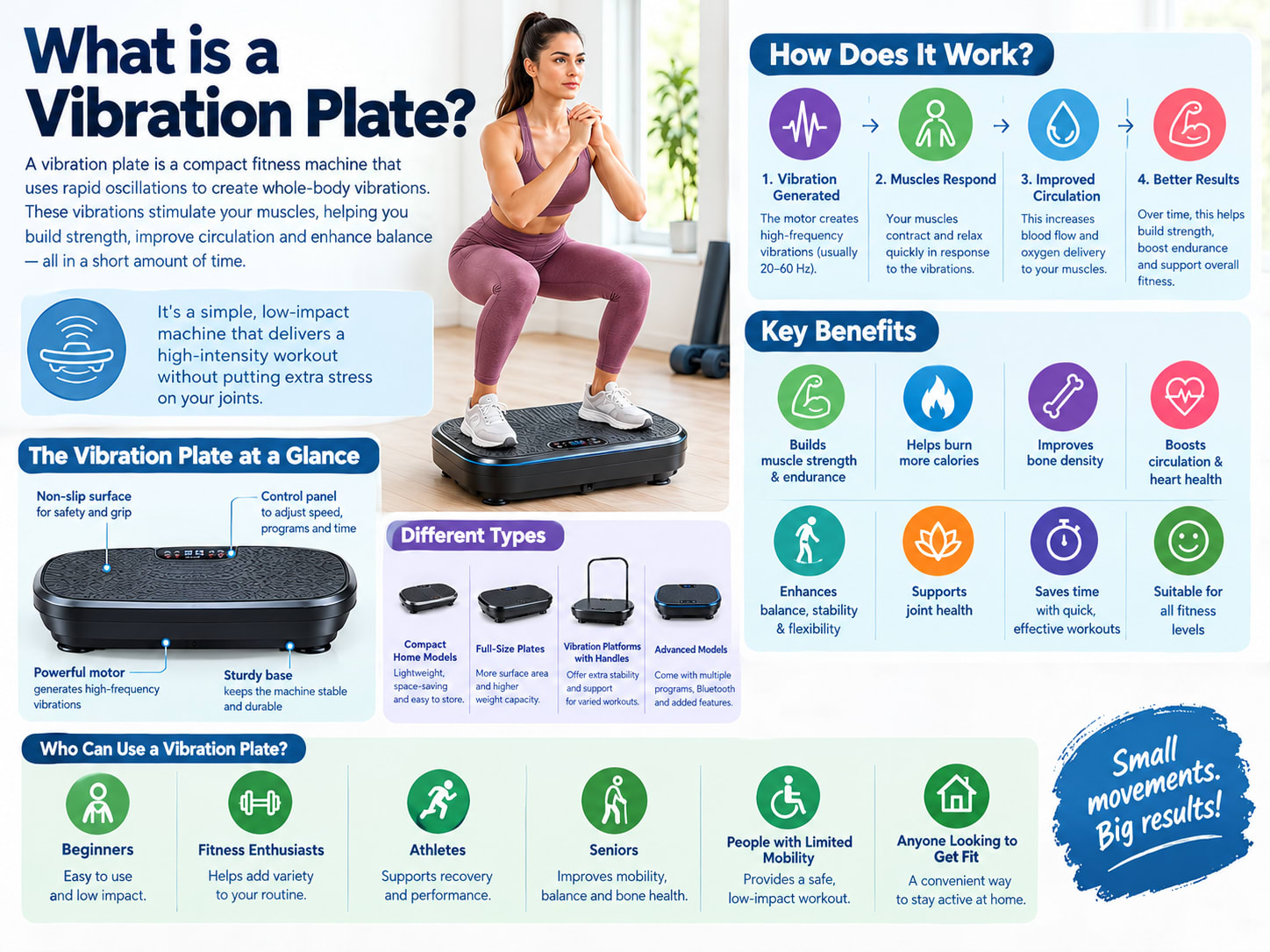
A vibration plate is a fitness machine with a platform that moves swiftly according to a specific vibration pattern. Users stand on the platform and perform exercises while it operates.
The platform usually moves vertically, tilts from side to side or produces movement in multiple directions, depending on the model. These movements create a different experience when compared to standing on a stationary surface.
Vibration plates are used alongside activities such as squats, calf raises and balance exercises. Though some people include them in their existing workout routines, they should not be considered a replacement for strength training or cardiovascular exercise.
Get to Know the Different Types of Vibration Plates
The first thing to know before buying a vibration plate is understanding how its platform moves. The type of movement affects how the machine feels and which exercises are comfortable to perform.
Vertical vibration plates
Vertical vibration plates move the platform up and down. Depending on the design, movement may be relatively uniform across the platform.
These machines can be considered if you prefer a platform with a straightforward movement pattern. Check the manufacturer's specifications to understand the vibration settings, available programmes and intended exercises.
Oscillating vibration plates
Oscillating vibration plates generally move around a central pivot, causing one side of the platform to rise while the other lowers. This creates a seesaw-like movement.
The movement pattern differs from that of a platform that moves vertically as a whole. Some users may find this style suitable for selected standing exercises, depending on their comfort and balance.
Before purchasing, check how the platform moves and whether the manufacturer provides clear instructions for safe positioning.
Three-dimensional vibration plates
Some vibration plates combine different movement patterns, such as vertical and oscillating movements, to produce multidirectional motion. These are sometimes marketed as 3D vibration plates.
The term can vary between manufacturers, so it is important to check the actual specifications rather than relying on the product name alone. Compare the available movement modes, frequency settings, amplitude and operating instructions to understand what the machine offers.
Which platform type should you choose?
There is no single platform type that suits everyone. Ultimately, your choice should depend on your fitness experience, intended exercises, comfort and budget.
If you are a beginner, look for a machine with understandable controls and clear safety instructions. If you have experience using vibration equipment, you may prefer a model with more adjustable settings.
Always check the manufacturer's description to confirm the platform type and avoid assuming that a particular movement pattern automatically produces better fitness results.
What Is Vibration Frequency and Why Does it Matter?
Frequency refers to the number of vibration cycles produced per second. It is measured in hertz (Hz). For example, a frequency of 20 Hz means the platform produces 20 vibration cycles per second.
A machine with adjustable frequency allows users to select from the settings provided by the manufacturer. Frequency is an important specification, but it should not be the only factor in your buying decision.
Different frequencies can create different vibration experiences. However, the effect also depends on aspects like amplitude, platform movement, body position, exercise selection and the duration of use.
A higher frequency does not mean that a vibration plate is more effective or suitable for every user. When comparing vibration plates, check the following conditions:
The minimum and maximum frequency.
Whether the frequency can be adjusted.
Whether the machine offers preset programmes.
Whether the manufacturer explains the available settings.
Whether the controls are easy to operate.
Choose a model that offers appropriate adjustments rather than selecting one simply because it advertises a high maximum frequency.
What frequency is suitable for beginners?
Beginners should follow the manufacturer's recommended starting settings rather than selecting a frequency based on a general rule.
Start with a comfortable setting and learn how to maintain a stable position on the platform. Increase the intensity only if it is appropriate for your fitness level and the machine's instructions.
If you have a medical condition or are unsure whether vibration training is suitable for you, seek professional advice before starting.
Vibration Plate: All About the Amplitude Factor
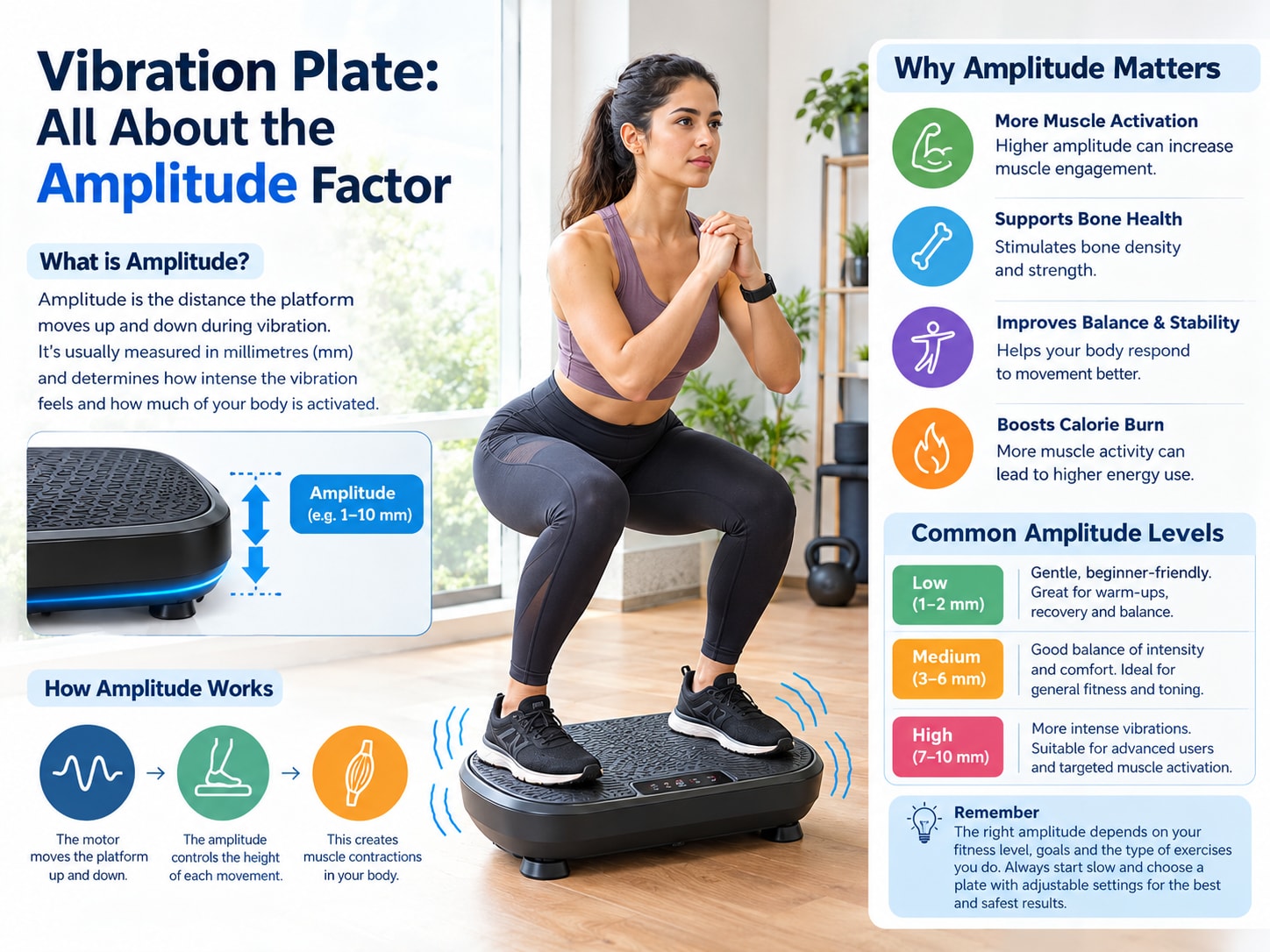
Amplitude describes the displacement of the vibrating platform during its movement. It is commonly expressed in millimetres (mm).
You may see products advertised with low or high amplitude settings. Some manufacturers also provide peak-to-peak displacement, which refers to the total distance between the platform's extreme positions.
This distinction matters because amplitude figures may not be directly comparable if manufacturers use different measurement conventions.
How does amplitude affect the experience?
Amplitude describes how far the platform moves, while frequency describes how often it completes its movement cycle.
Both specifications contribute to the machine's overall movement. The effect also depends on whether the platform moves vertically, oscillates or combines multiple movement patterns.
A higher amplitude should not be treated as better. The appropriate setting depends on the machine's design, the user's comfort and the exercise being performed.
What should you check before buying?
When comparing vibration plates, look for the following aspects:
The stated amplitude range in millimetres.
Whether the specification refers to single-sided or peak-to-peak displacement.
Whether amplitude is adjustable.
The available frequency settings.
The manufacturer's recommended operating settings.
If the product listing does not clearly explain amplitude, ask the retailer or manufacturer for clarification before comparing it with other models.
The Importance of Weight Capacity in Vibration Plates
Weight capacity is one of the most important specifications when buying a vibration plate. Every model has a maximum user weight specified by its manufacturer. This limit indicates the maximum weight the equipment is designed to support under the stated conditions.
Before purchasing, compare the specified capacity with the intended user's weight. Make sure not to exceed the manufacturer's limit.
Using equipment beyond its capacity may dilute its safe operation and could cause damage. Weight capacity should be considered alongside the platform's dimensions, stability and construction. A machine with a higher weight limit is not automatically the best choice if its other features do not suit your needs.
If several people use the vibration plate at home, ensure that the model is appropriate for everyone who uses it. For commercial gyms or shared fitness centres, always consider the intended frequency of use and confirm whether the manufacturer approves the model for commercial operation.
Check the platform size as well
The platform should provide enough room for the standing position and exercises recommended by the manufacturer.
Check the machine's dimensions and make sure you have adequate space to step on and off safely. A compact design may be convenient for a small apartment, while a larger platform may suit a dedicated home gym.
How do Features and Controls Play a Vital Role?
Vibration plates come with different features, and the most useful option depends on your workout preferences.
Adjustable speed and programmes
Some models provide multiple frequency settings or preset workout programmes. These features allow users to choose from the options available on the machine. Review the manufacturer's explanation of each programme and check whether adjustments can be made easily.
Remote control
A remote control can make it more convenient to adjust settings without reaching down to the main control panel. Check which functions the remote supports and whether batteries are included.
LED or digital display
A digital display may show information such as the selected programme, timer or intensity setting. Choose a display that is easy to read and controls that are simple to understand.
Resistance bands
Some vibration plates include resistance bands for selected upper-body movements. If bands are included, check their attachment points and the exercises approved by the manufacturer. Ensure that they are securely attached before use.
Bluetooth connectivity
Certain models include Bluetooth connectivity, sometimes for supported audio functions. If this feature matters to you, check the product description to confirm exactly what it supports. Remember that extra features can increase the price without necessarily improving the machine's suitability for your workout.
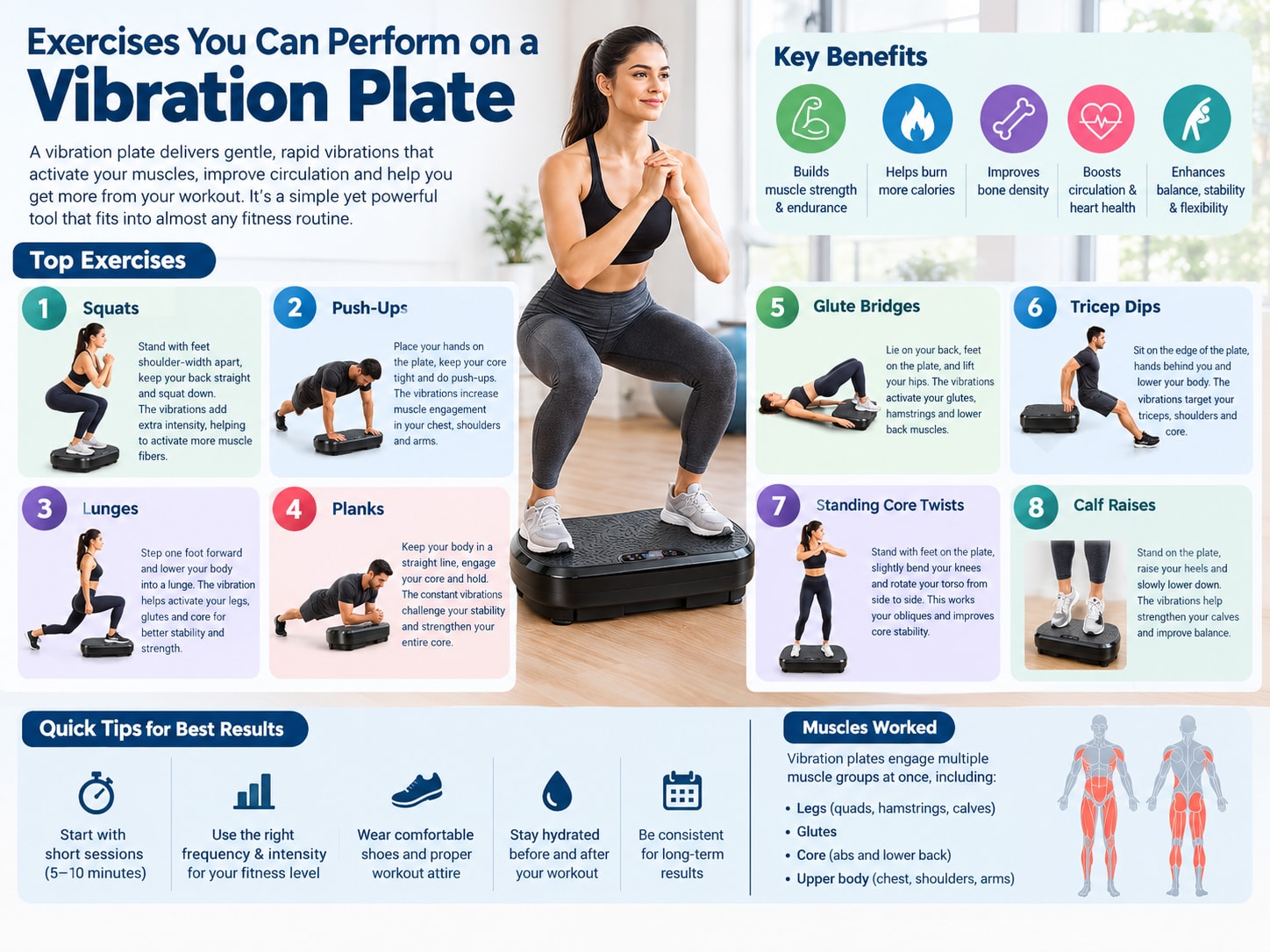
Exercises You Can Perform on a Vibration Plate
The exercises available to you depend on the model, your fitness level and the manufacturer's instructions. Start with simple movements and prioritise balance and control.
Standing position
Stand on the platform with your feet positioned as recommended by the manufacturer. Keep your knees comfortably aligned and maintain a stable posture. Use the controls according to the instructions and avoid locking your knees unless the manufacturer specifically directs otherwise.
Squats
Some vibration plates can be used for bodyweight squats if the manufacturer permits this exercise. Stand with your feet positioned comfortably and lower your hips in a controlled movement.
Keep your knees aligned with your feet and avoid going deeper than you can manage comfortably. Beginners should learn the movement on a stable surface before attempting it on vibrating equipment.
Calf raises
Calf raises involve lifting your heels while keeping the balls of your feet supported. If permitted by the machine's instructions, this movement can be incorporated into a vibration-plate routine. Maintain your balance and use appropriate support if necessary.
Shallow knee bends
Shallow knee bends offer a simpler alternative to deeper squats. Bend your knees slightly while maintaining an upright, controlled posture. Keep the movement within a comfortable range and follow the manufacturer's guidance.
Supported standing exercises
Some users may prefer standing exercises while holding a suitable, stable support nearby. The support should help you maintain balance without interfering with the machine or creating a tripping hazard. Follow the manufacturer's instructions about permitted support arrangements.
How long should you exercise?
Follow the manufacturer's recommendations for exercise duration, rest periods and intensity. Start conservatively if you are new to the equipment. Avoid extending sessions or increasing intensity simply because the machine offers additional settings.
A vibration plate should complement a balanced exercise programme that includes appropriate cardiovascular activity, strength training and other movements suited to your goals.
Who Should Seek Medical Advice Before Using a Vibration Plate?
Vibration plates are not suitable for everyone. Certain medical conditions, medications and circumstances may affect whether vibration training is appropriate. Speak to a qualified healthcare professional before using a vibration plate if you belong to the following category:
Are pregnant or think you may be pregnant.
Have a cardiovascular condition or a history of significant circulatory problems.
Have a pacemaker or another implanted medical device.
Have a history of blood clots or a condition that increases clotting risk.
Have osteoporosis or another condition affecting bone strength.
Have a neurological condition or problems with balance.
Have recently undergone surgery or are recovering from an injury.
Have a joint condition or persistent unexplained pain.
Have a condition that affects sensation in your feet or legs.
Have been advised to avoid vibration, strenuous exercise or certain physical activities.
Your suitability depends on your individual circumstances, the type of vibration plate and how it will be used. If you are undergoing rehabilitation, ask your treating healthcare professional whether vibration training is appropriate before adding it to your routine.
Important safety precautions
Before each session, check that the machine is positioned on a firm, level surface and that the platform is stable. Read the instruction manual, observe the weight limit and use only the exercises approved for your model.
Step on and off carefully, and do not use the machine if the platform, power cable or controls appear damaged. Stop immediately if you experience dizziness, chest discomfort, unusual shortness of breath, numbness or pain. Seek appropriate medical attention for concerning symptoms.
Do not assume that vibration plates are suitable for treating medical conditions or that they can replace professional care.
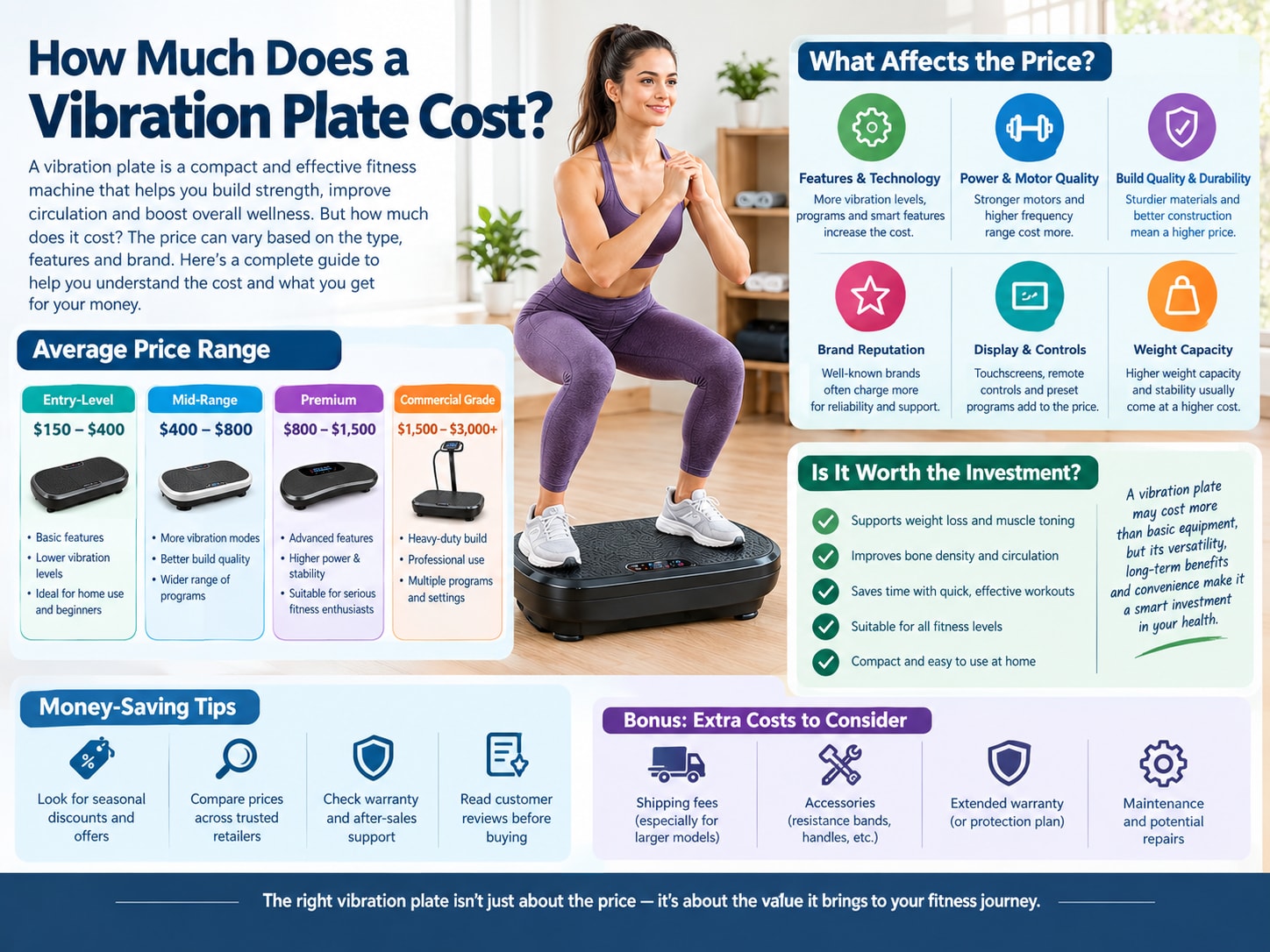
How Much Does a Vibration Plate Cost?
Vibration plate prices vary according to the brand, platform design, operating settings and additional features.
Basic models may offer straightforward controls, while other machines include remote controls, digital displays, multiple programmes, resistance bands or Bluetooth connectivity.
Before making a purchase, compare the current price with the specifications and features that matter to you. Consider these factors:
Platform type and movement pattern.
Frequency and amplitude specifications.
Maximum user weight.
Platform dimensions and stability.
Number of programmes and adjustable settings.
Included accessories.
Warranty and after-sales support.
Delivery charges and availability.
Avoid choosing a machine based on price alone. A suitable vibration plate should meet your practical requirements and provide clear operating and safety instructions. You can explore the available vibration plates at Lifetime Fitness Store to compare current models and their listed features.
Tips for Buying a Vibration Plate Online
Shopping online makes it easier to compare models, but checking the details before ordering is important. First, review the product description and confirm the platform type, frequency range, amplitude, weight capacity and dimensions.
Check the included accessories. Do not assume that resistance bands, remote controls or other items are supplied unless they appear in the product listing. Review the warranty terms, delivery arrangements and return conditions. For clarification about technical specifications, contact the retailer before ordering.
Finally, consider where you will use the machine. Make sure your chosen location has adequate space, a suitable surface and access to the required power supply. If you are building a broader home fitness setup, you can also explore massage devices as a separate category of wellness equipment.
Do you want to set up a home gym, upgrade a commercial fitness facility, or choose the right equipment to support your fitness goals?
Folks in Oman may visit Lifetime Fitness Store for high-quality fitness equipment and wellness products, backed by a wide product selection, reliable customer service, expert assistance, competitive prices, and quality delivery services designed to make your shopping experience convenient and satisfying.
Conclusion
Choosing the right vibration plate involves more than comparing prices or counting the number of available programmes. Platform type, frequency, amplitude, weight capacity and overall stability all contribute to understanding whether a model suits your needs.
Consider the exercises you intend to perform, the space available at home and the features you are likely to use. Review the manufacturer's safety instructions and seek medical advice if you have a health condition that could affect your suitability for vibration training.
With careful research, you can choose a vibration plate that fits your fitness routine, available budget and intended use.
Check the platform type, frequency, amplitude, maximum user weight, platform dimensions, stability and available controls. Also review the manufacturer's operating instructions, warranty terms and intended use.
Not necessarily. Frequency is only one factor affecting the vibration experience. Amplitude, platform movement, exercise selection and individual comfort also matter. Choose settings based on the manufacturer's guidance rather than assuming higher frequency provides better results.
Frequency measures how many vibration cycles occur per second and is expressed in hertz. Amplitude describes the platform's displacement and is commonly measured in millimetres. Both specifications help describe the machine's movement, but they measure different things.
Check the maximum user weight stated in the manufacturer's specifications. Ensure that the intended user is within this limit, and never exceed the stated capacity.
Some models offer adjustable settings that may suit beginners. Read the manual, start with the recommended settings and focus on maintaining balance. If you have a medical condition or are unsure whether vibration training is appropriate, consult a healthcare professional before use.





 Get a weekly dose of latest stories
and useful tips directly in your inbox!


 0





























 Price Match Guarantee
 Free Shipping
 Product Warranty
 After-Sale Support
 Have Coupon Code?
 You'll Save 0.00 On This Order
 Safe And Secure Payments. Easy Returns. 100% Genuine Products