Power Rack Oman Buying Guide: Dimensions, Gauge, Hole Spacing, Safeties & Attachments
Strength training is one of the most effective ways fitness fanatics resort to, in order to stay healthy. Among the numerous equipment that are preferred for strength training, power racks stand tall because of its features.
A power rack offers many options in the form of versatile exercise. It can be utilized for squats, bench presses, overhead presses, and other barbell exercises. If you are keen to purchase a power rack for a home gym or commercial fitness centre, there are a few aspects you need to be careful about.
Most of the power racks available in the market may appear similar in looks. A close look will help you identify visible differences in size, hole spacing, steel thickness, safety systems and attachment options.
Buying a rack model just because it is cheap or appears strong could invite several problems later. If you don’t inspect the rack thoroughly before the purchase, you are likely to realize sooner or later that the rack may not accommodate your room size or the safety bars may not be appropriate for your training styles.
This buying guide intends to elucidate some of the key aspects you need to keep in mind while choosing a power rack.
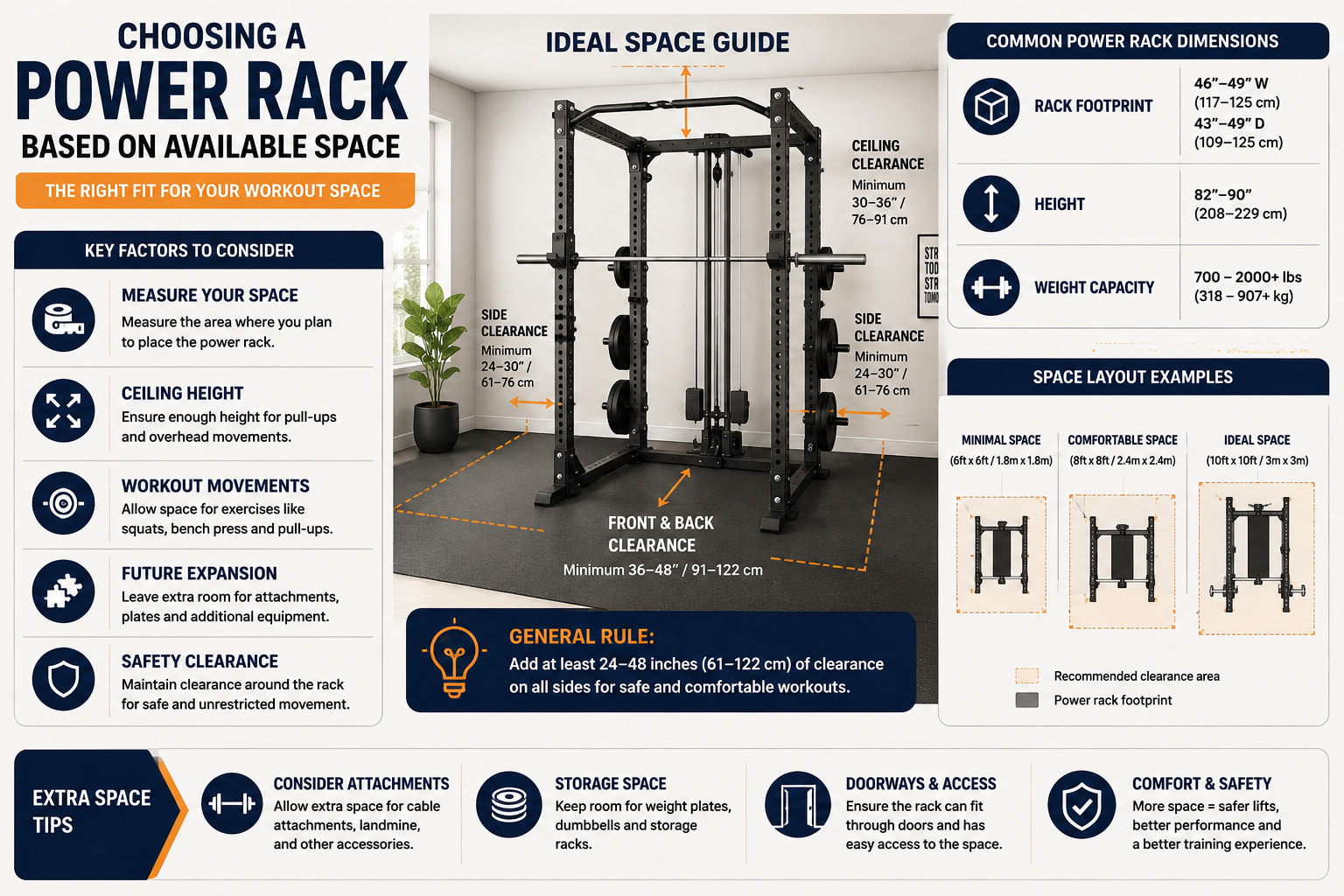
Choosing a Power Rack Based on Available Space
According to experts, the first and foremost thing one should focus on before making a purchase is to analyze the space where the rack will be installed. This tip may sound simple; in fact, many tend to overlook this advice
A power rack usually requires more space than what is mentioned in the product specifications. Moreover, you may need additional space to stand inside the rack, apart from loading weight plates onto the bar, and perform exercises comfortably.
Length, width, and ceiling height are generally the three factors that determine the right positioning of a power rack in a home gym or a commercial gym. Many power racks are often tall; some of them are equipped with pull-up bars near the top. So, watch the space if you are setting up a home gym in a room with a low ceiling.
Those who are into performing overhead presses should consider the height of the barbell. Never make the mistake of keeping the rack too close to a wall or another machine. Needless to say, you need ample space to move around without hitting other equipment.
When it comes to commercial gyms, space planning should be carried out even more meticulously. For example, a rack that looks compact when viewed on its own may take up larger space when several racks are placed next to each other.
Understanding Steel Gauge and Why It Matters for Power Rack
An overlooked aspect when power racks are compared is steel gauge. For starters, it is a way of describing the thickness of the steel used in the rack. A lower gauge number usually means thicker steel.
Interestingly, two racks can have similar gauge ratings, but they may have contrasting designs, sizes and weight capacities. Hence, a few things to consider are upright size, steel thickness, frame design, base design, weight capacity, and quality of the joints.
Though steel gauge is useful when comparing racks, experts suggest that it should be considered along with other specifications as well. A rack made with strong steel and frame generally provides a solid training experience.
If the rack you intend to purchase is for a commercial gym, ensure the equipment has characteristics that are suitable for multiple daily use. Someone who trains with a rack at his home gym a few times a week may not require the same sturdiness of equipment that is used in a busy commercial gym.
How to Choose the Right Upright Dimensions for a Power Rack
Those who have observed power racks may have noticed that the upright posts are the vertical parts of a power rack. Their size determines the strength and stability of the rack.
You may see specifications such as 2 x 2 inch or 3 x 3 inch uprights. The best size actually depends on the design of the rack and how you are planning to use it. Big uprights provide a solid feel, but it may lead to increase in the overall size and cost of the rack.
A heavier rack makes sense for a commercial gym. However, for a home gym, one should strike a balance between factors like strength, space and budget. The smart thing to do is to look at the complete rack and consider multiple factors before choosing one based on a single measurement.
Power Rack Hole Spacing Explained: Why It Matters
Hole spacing is something many first-time buyers tend to ignore. In fact, many are unaware of what it is and its significance. It denotes the distance between the holes running along the rack's upright posts. These holes are used to position safety bars and other attachments.
The spacing plays a pivotal role in the way the bar is positioned. This becomes evident when you are setting up the rack for activities like bench press. If the holes are far apart, you may not be able to position the bar exactly where you want it. It is natural that the bar could end up slightly high or too low.
Closer hole spacing in a rack provides more adjustment options. While some models use the same spacing throughout the upright, a few others have different spacing in different sections. If you plan to use the rack for activities like squats and bench presses, check the hole spacing carefully before buying.
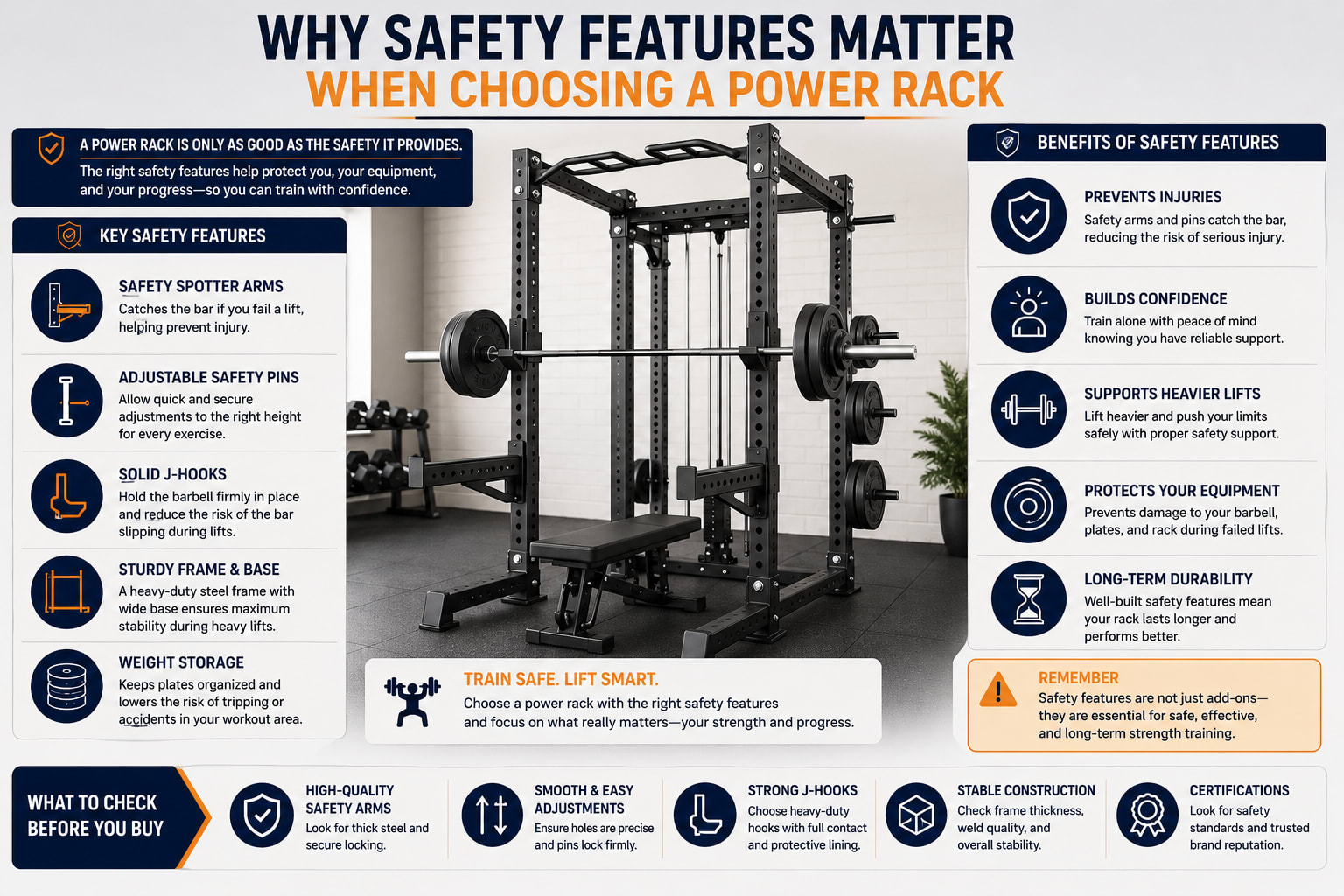
Why Safety Features Matter When Choosing a Power Rack
A know-how of several dos and don’ts often come in handy while purchasing a strength training equipment. However, safety should always be the biggest priority. For example, in a power rack, you need to look for the safety features that could save you when a lift does not go as planned.
Most of the power racks are equipped with safety bars or safety straps. Both the mechanisms are designed to hold the bar if you are not able to complete a lift.
Safety bars: Safety bars are metal bars that run across the rack. They can be adjusted to different heights. They are strong, simple, and many lifters prefer the solid feel they provide.
Safety straps: The advantage of safety traps is that they reduce the chance of the bar hitting a hard metal surface. They can also provide more flexibility when the bar is dropped.
Ensure the right adjustment: Unfortunately, no safety system can help you if the adjustment is set wrongly. Always follow the manufacturer's instructions for setting up the rack.
Consider Future Attachments When Choosing a Power Rack
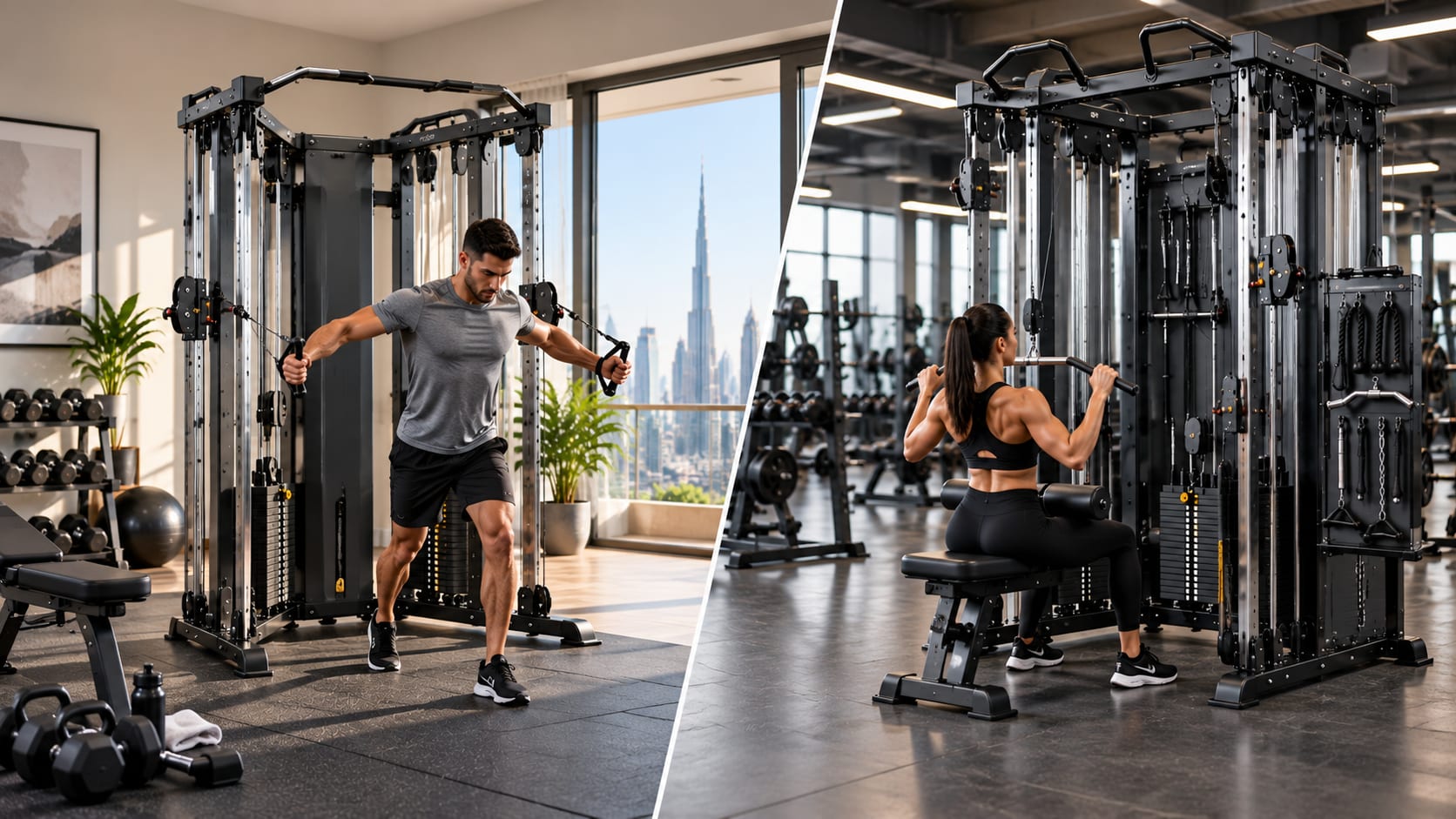
One of the biggest advantages of having a power rack in your gym collection is that you may expand it in the future. You may add pull-up bars, dip handles, cable systems, weight plate storage and barbell storage among others depending on the model.
This could turn a basic rack into a complex, effective strength-training station. Having said that, an attachment designed for one rack may not fit another rack, despite some racks looking similar. The differences in factors like upright size, hole spacing and frame design could affect compatibility. This is why it is advisable to plan about the future before buying a rack.
If you feel that you may need a cable attachment later, check whether the rack supports one. Similarly, if you want to add weight storage, check whether compatible storage options are available. Buying a rack with various attachment options could save you from the hassles of replacing the entire unit later.
How to Choose the Right Weight Capacity?
Though every rack comes with a stated weight capacity, it is often advised not to just look for the biggest number. The priority should be on how you are going to utilize the rack.
If you are a beginner, you may not need a high-capacity commercial rack. On the other hand, if you are an experienced lifter who regularly handles heavy weights, a stronger rack makes more sense.
In the case of commercial gyms, the equipment may be used repeatedly everyday by people of different levels of expertise. That is when factors like durability and long-term use then become part of the buying decision. It is always better to check the capacity of components such as J-hooks, safety bars, safety straps, and pull-up bars.
Understanding J-hooks for Power Racks
The commonly found curved hangers aka J-hooks act as a crucial support that hold the barbell on the rack. They may seem irrelevant, but they are required every time you take the bar out or put it back. Strong J-hooks usually fit securely into the rack and hold the bar firmly.
Watch how they are attached to the uprights and check whether they are flexible and adjustable. A protective covering on the hook helps reduce unnecessary damage to the barbell. When comparing different racks, ensure the J-hooks are designed for the respective racks rather than assuming that any hook will suffice.
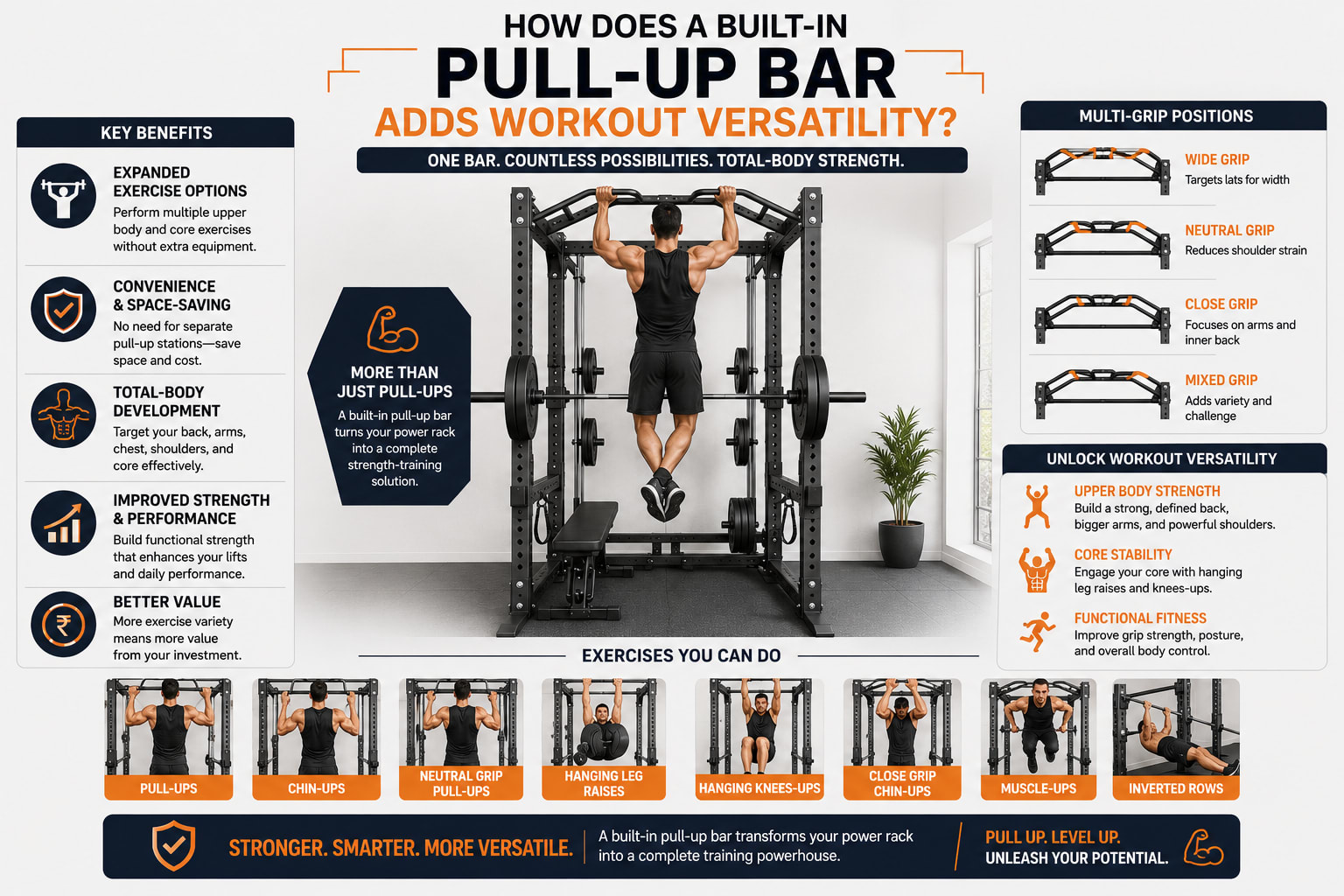
How Does a Built-In Pull-Up Bar Adds Workout Versatility?
There are fitness freaks who utilize power racks only for barbell training. But if you are someone who wants to make the best out of a power rack, adding a pull-up bar could be of an additional benefit. Different racks have different pull-up bar designs. While some feature a simple straight bar, others have multiple grips or a thicker bar.
Analyze the various exercises you want to perform. If you feel that pull-ups are an important part of your training, go for a rack with a comfortable and strong pull-up setup. Always remember to check the ceiling height before purchasing a rack with a high pull-up bar.
Home vs Commercial Gym Racks: Key Differences to Consider
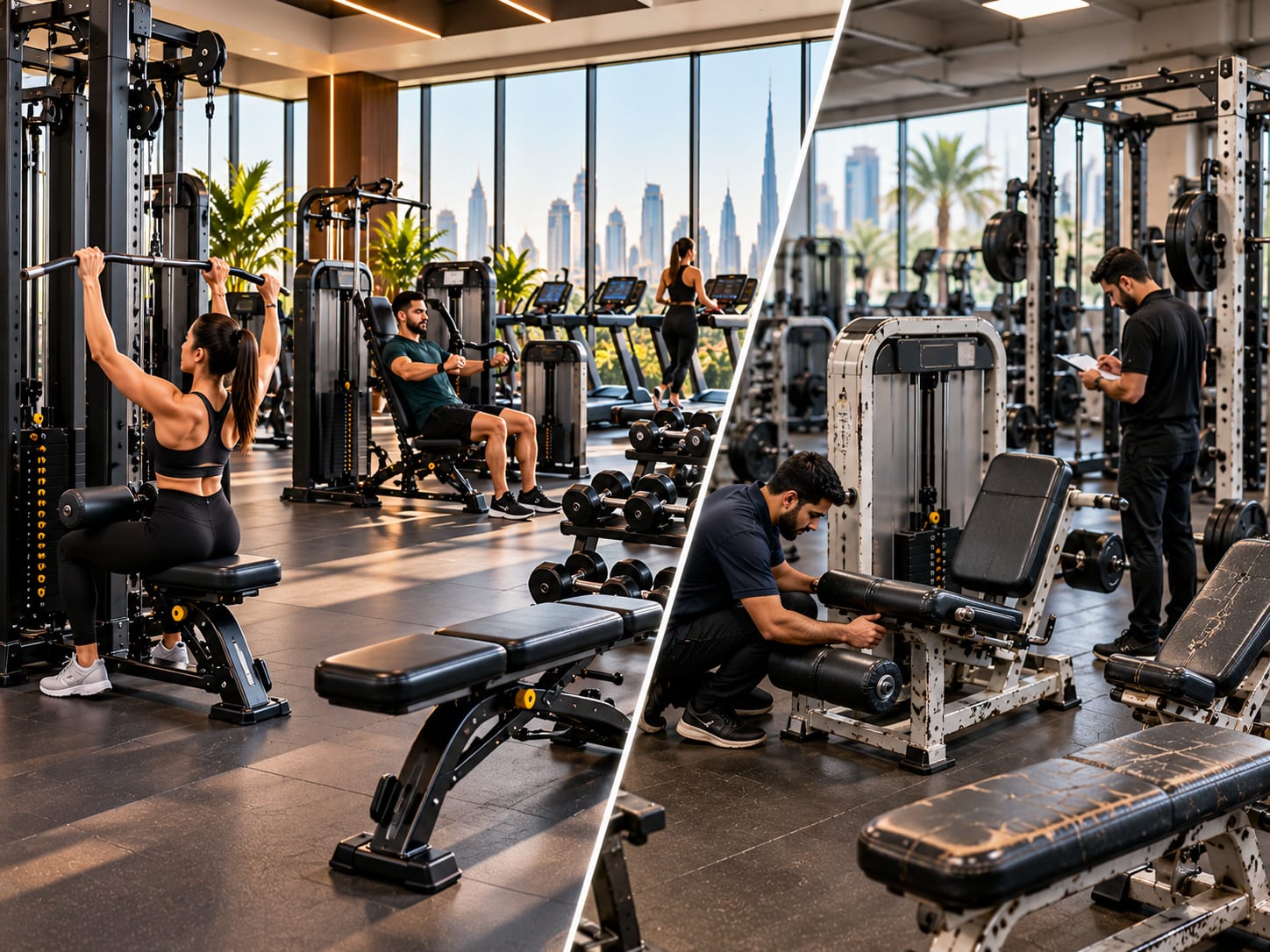
By now, we have understood that the right power rack for a home gym may not be the right one for a commercial gym. For a home gym, you may prefer a rack that is compact and does not require permanent floor installation. For a commercial gym, opt for equipment that can handle years of frequent use instead of going for the cheapest rack.
For a home gym, the focus should be on following factors:
Available space
Noise
Ease of use
Safety
Weight capacity
Price
Future expansion
For a commercial gym, the focus should be on following factors:
Heavy-duty construction
Frequent use
Stability
Safety
Easy adjustment
Warranty
Spare parts
After-sales service
Attachment options
How Does Your Training Environment Affect Rack Choice?
Apart from the varied features that leave an impact on training with power racks, there is a factor which people hardly acknowledge. It is the place or the environment where training is performed. As most of the indoor gyms are air-conditioned, environmental conditions are manageable. However, equipment installed in garages, outdoor areas or spaces with high humidity needs more attention.
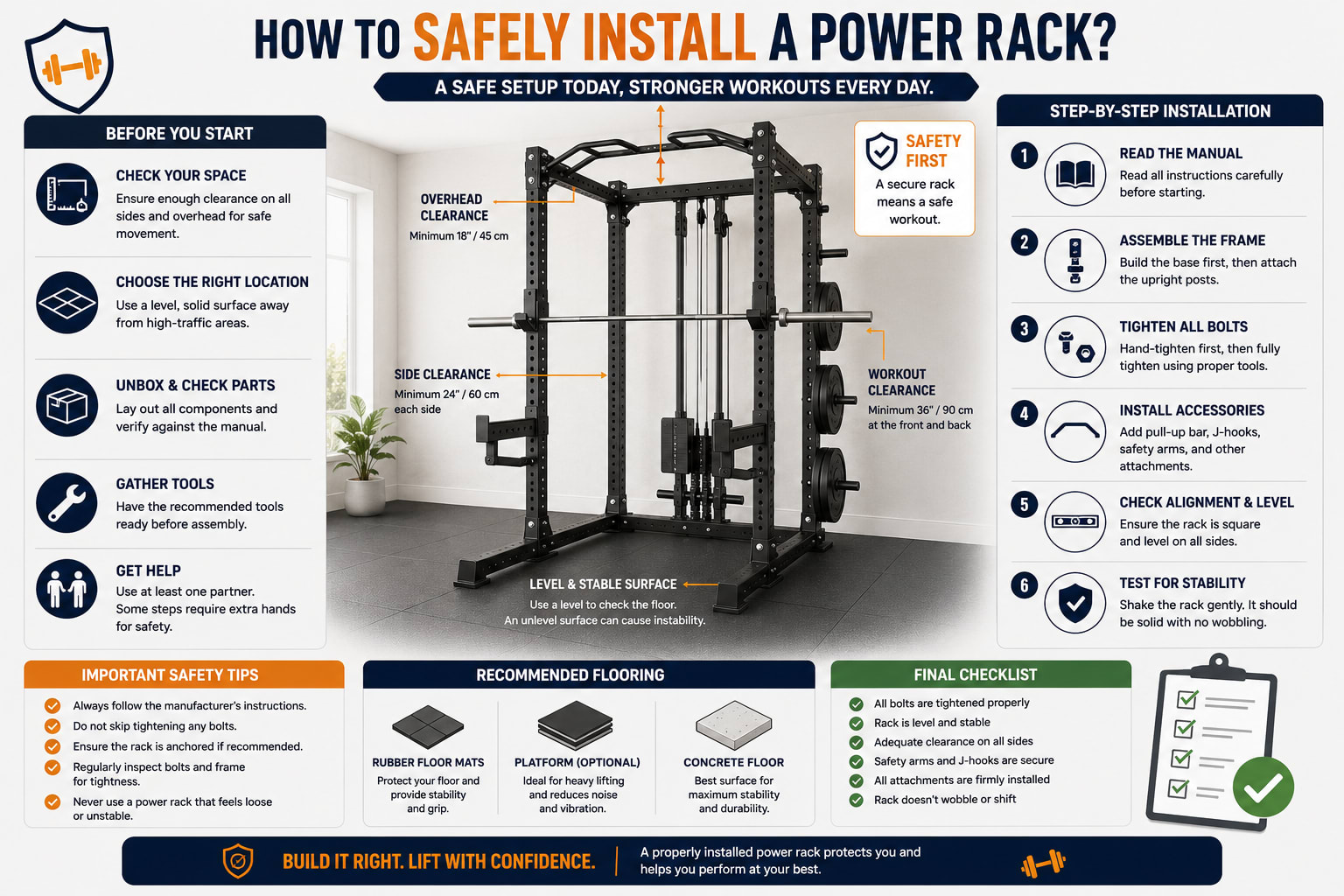
Make sure to keep the rack clean and dry, and check the frame regularly. If you happen to notice loose bolts, damaged parts or signs of corrosion, fix them before getting into heavy training. Regular maintenance is really important in commercial gyms where equipment is constantly used.
How to Safely Install a Power Rack?
A power rack usually arrives in several pieces and requires assembly. Before making the purchase, make sure you ask a few questions and clear your doubts. These questions are really important for commercial buyers. As a good rack is also an investment, it makes sense to know what kind of support you are likely to receive after the purchase. Below are the questions you may ask:
Is delivery included?
Is installation available?
Does installation cost extra?
Is floor anchoring included?
Is the rack suitable for my floor?
Is there a local service team?
Are replacement parts available?
Price and Long-Term Value Compared
Price is always an integral factor when buying gym equipment. As we mentioned above, the cheapest rack may not always be the best deal for you. The focus should be on how long you are expecting to use them.
If you go for a basic rack today and replace it a couple of years later after knowing that it cannot adjust the attachments you want, it isn’t a wise decision.
It is better to spend some extra bucks and get an expensive rack that offers stronger construction, better safety features and wider attachment compatibility. Also, spending heavily on features you will never use doesn’t make any sense. The priority should be to strike the right balance between price, quality and training requirements.
Upgrade your fitness journey in Oman with Lifetime Fitness Store, where you can discover quality gym equipment, competitive prices, attractive offers, and great-value options for every fitness goal.
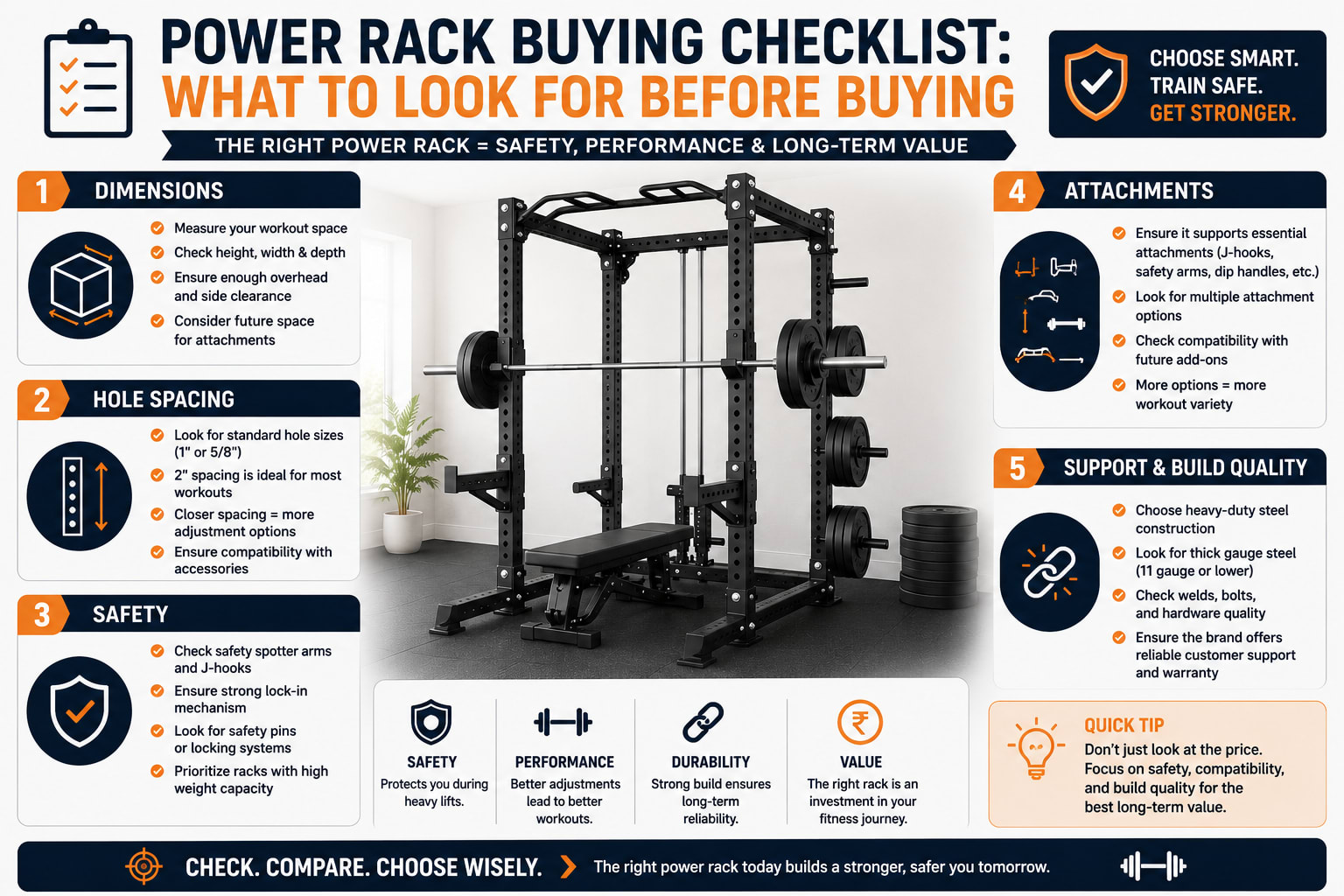
Power Rack Buying Checklist: What to Look for Before Buying
Check out a few features or checklists that you need to keep in mind before making a purchase.
Dimensions
Does the rack fit the available floor space?
Is the ceiling high enough?
Is there enough room around the rack?
Steel and construction
What steel gauge is used?
What are the upright dimensions?
What is the rack's maximum weight capacity?
Is the frame stable?
Hole spacing
What is the distance between holes?
What is the hole diameter?
Can the J-hooks and safeties be positioned correctly?
Safety
Does it include safety bars or straps?
Are they easy to adjust?
What is their weight rating?
Attachments
What attachments are available?
Will they fit this exact rack?
Can more attachments be added later?
Support
What warranty is provided?
Are spare parts available in Oman?
Is after-sales service available?
Conclusion
Buying a power rack should not be a decision that is based on just appearance or price alone. The rack needs to fit your space, support your training and provide the right safety features. It should also be an equipment you should be able to continue using as you extend your training sessions.
Analyze your room size. Compare the rack's dimensions, steel gauge, upright size, hole spacing and weight capacity. Pay attention to the safety bars or straps and get to know whether the rack needs to be anchored.
Most importantly, plan about the future. You may want a rack for squats today, but your training style and goals could change. You might want to include other attachments later. Choosing a rack that supports compatible attachments provides you much more flexibility.
Buyers should thoroughly check delivery, installation, warranty and after-sales support. Always understand that a power rack is a long-term investment, especially when it is for commercial gyms.
The best power rack is the one that offers the right combination of size, strength, safety, stability and flexibility. Take ample time to compare the details before buying, and you are likely to have a better chance of choosing a rack that continues to work for you in the years ahead.
Check the rack's height, width, depth, and overall footprint against your available workout space. Allow additional clearance around the rack for loading plates, using a barbell, performing pull-ups, and adding future attachments.
Steel gauge can help indicate the thickness of the steel used in the rack's construction. However, overall strength also depends on factors such as upright dimensions, frame design, hardware, weld quality, and the manufacturer's rated weight capacity.
Hole spacing determines how precisely you can position J-hooks, safety bars, spotter arms, and compatible attachments. Closer spacing in key training areas can make it easier to find a comfortable and safe setup for exercises such as squats and bench presses.
Consider the dimensions, steel gauge, upright size, hole spacing, weight capacity, safety system, J-hooks, attachment compatibility, flooring requirements, delivery, installation, after-sales support, and price before making your decision.




 Get a weekly dose of latest stories
and useful tips directly in your inbox!
Get a weekly dose of latest stories
and useful tips directly in your inbox!


 0
0









































































 Price Match Guarantee
 Free Shipping
 Product Warranty
 After-Sale Support
 Have Coupon Code?
 You'll Save 0.00 On This Order
 Safe And Secure Payments. Easy Returns. 100% Genuine Products