



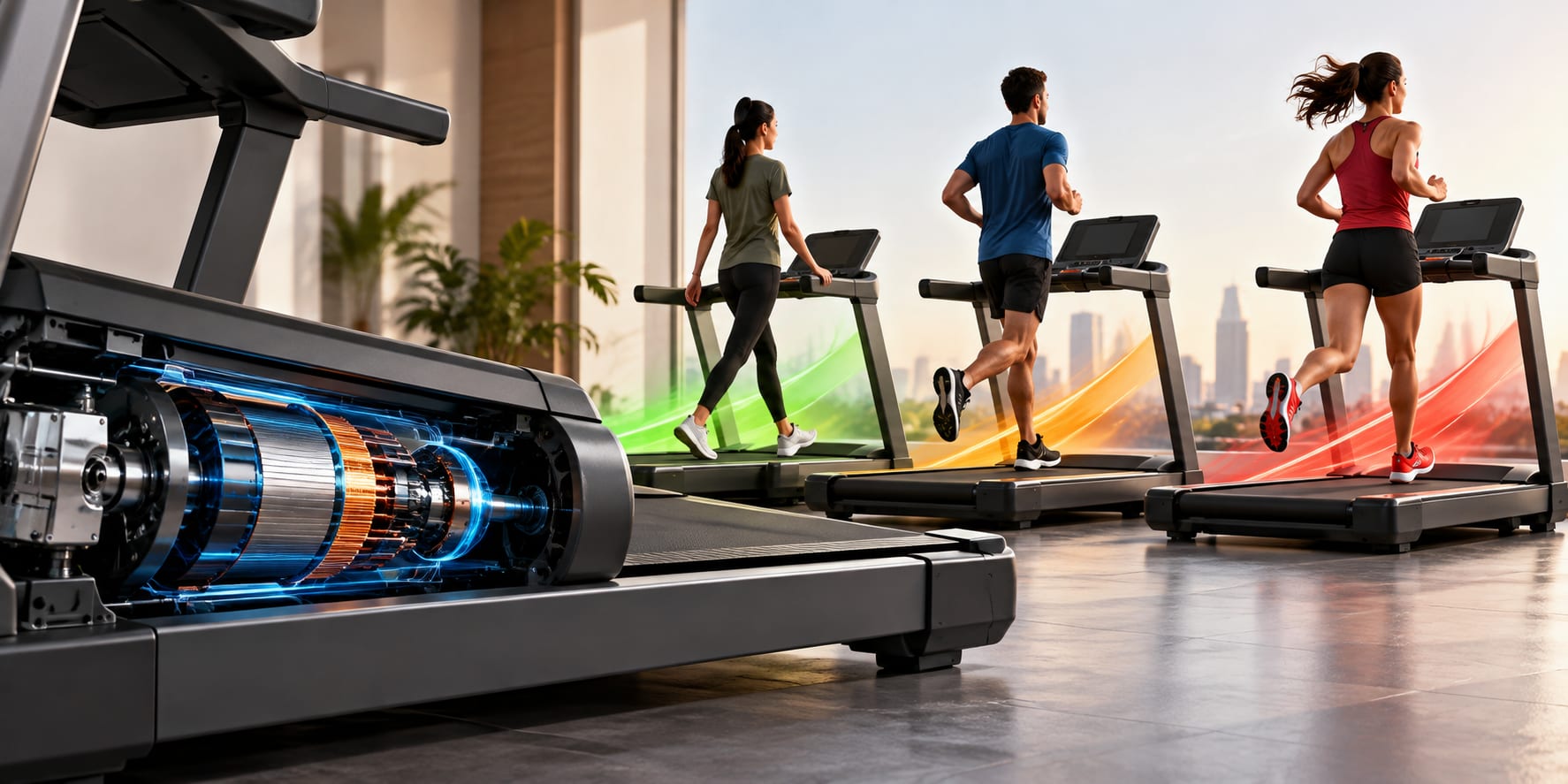
One of the major factors you may have to consider while buying a treadmill is motor power. Many models mention 2.0 CHP, a few others offer 3.0 CHP or more, while some others highlight a much higher horsepower figure. Needless to say, this makes it difficult to decide which treadmill is suitable for your needs.
The right motor power depends on how you plan to use the treadmill. A person who walks for 30 minutes a day may not need the same motor capacity as someone who runs regularly. Similarly, a treadmill used by several members may need a stronger motor than one used by a single person.
If you are planning to buy a treadmill for your home or fitness centre, understanding the motor power aspect can help you make a better choice. Additionally, it can prevent you from spending extra money on specifications you may not need.
This blog explains treadmill CHP, compares motor requirements for walking, jogging and running, and delineates what to consider when choosing a treadmill for multiple users.
What Exactly Does CHP Mean in a Treadmill?
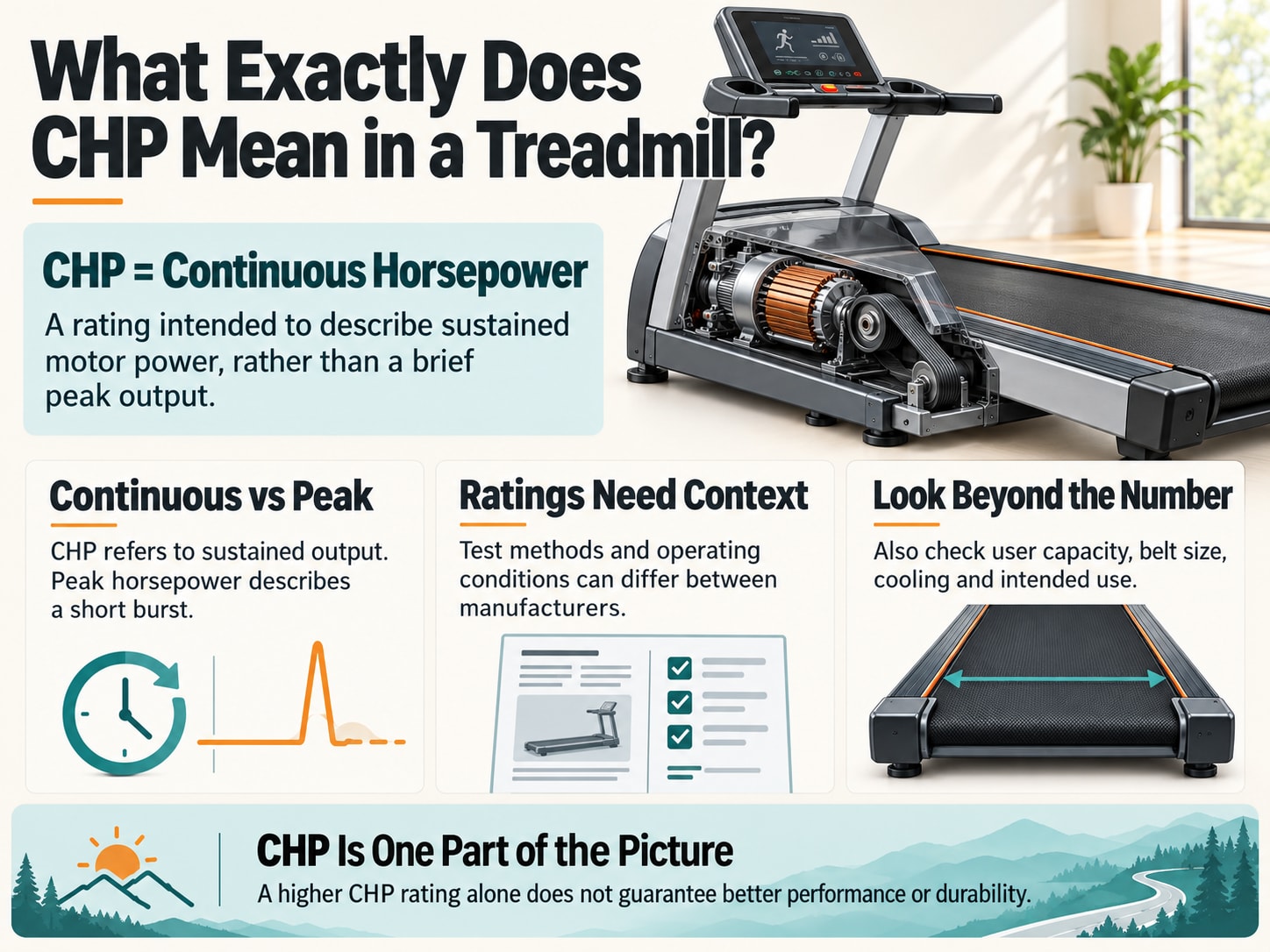
CHP is the short term for continuous horsepower. It refers to the motor's ability to deliver power continuously under specified operating conditions.
In simple terms, continuous horsepower helps you understand how much power a treadmill motor can sustain during normal use. This matters because a treadmill needs to keep the belt moving smoothly while supporting the user's movement.
For example, walking at a comfortable pace places different demands on a treadmill from running at a high speed. Running, heavier users, frequent workouts and incline sessions can increase the demands placed on the motor and drive system.
A treadmill with an appropriate continuous power rating is more likely to suit your intended workout routine than one selected purely by its advertised peak power.
However, CHP is not the only factor that determines treadmill performance. Belt quality, motor design, cooling, frame construction, user weight and overall build quality also play important roles.
Why is the CHP Factor Important for a Treadmill?
Motor power can affect how well a treadmill suits different workout intensities and usage patterns. Choosing an appropriate motor helps you match the equipment to your needs.
A motor that is not well suited to the intended workload may struggle to deliver the experience you expect. On the other hand, buying a more powerful model than you need may increase your budget without providing a meaningful benefit for your routine.
The aim should be choosing a treadmill that offers suitable motor capacity, a comfortable running surface and reliable performance for your expected use.
CHP vs Peak Horsepower: What Is the Difference?
This is an important thing to understand before buying a treadmill. Continuous horsepower denotes power delivered continuously under specified conditions. On the other hand, peak horsepower refers to a maximum power figure reached for a limited period or under particular conditions.
As these figures describe different things, they should not be compared as if they are equal. For example, one treadmill might advertise 3.0 CHP, while another promotes a peak horsepower figure of 4.5 HP.
You cannot conclude that the second treadmill has the stronger motor for continuous running simply because its advertised number is higher. The peak figure does not tell you how much power the motor can sustain throughout a workout.
What Should Buyers Check When Comparing Treadmills?
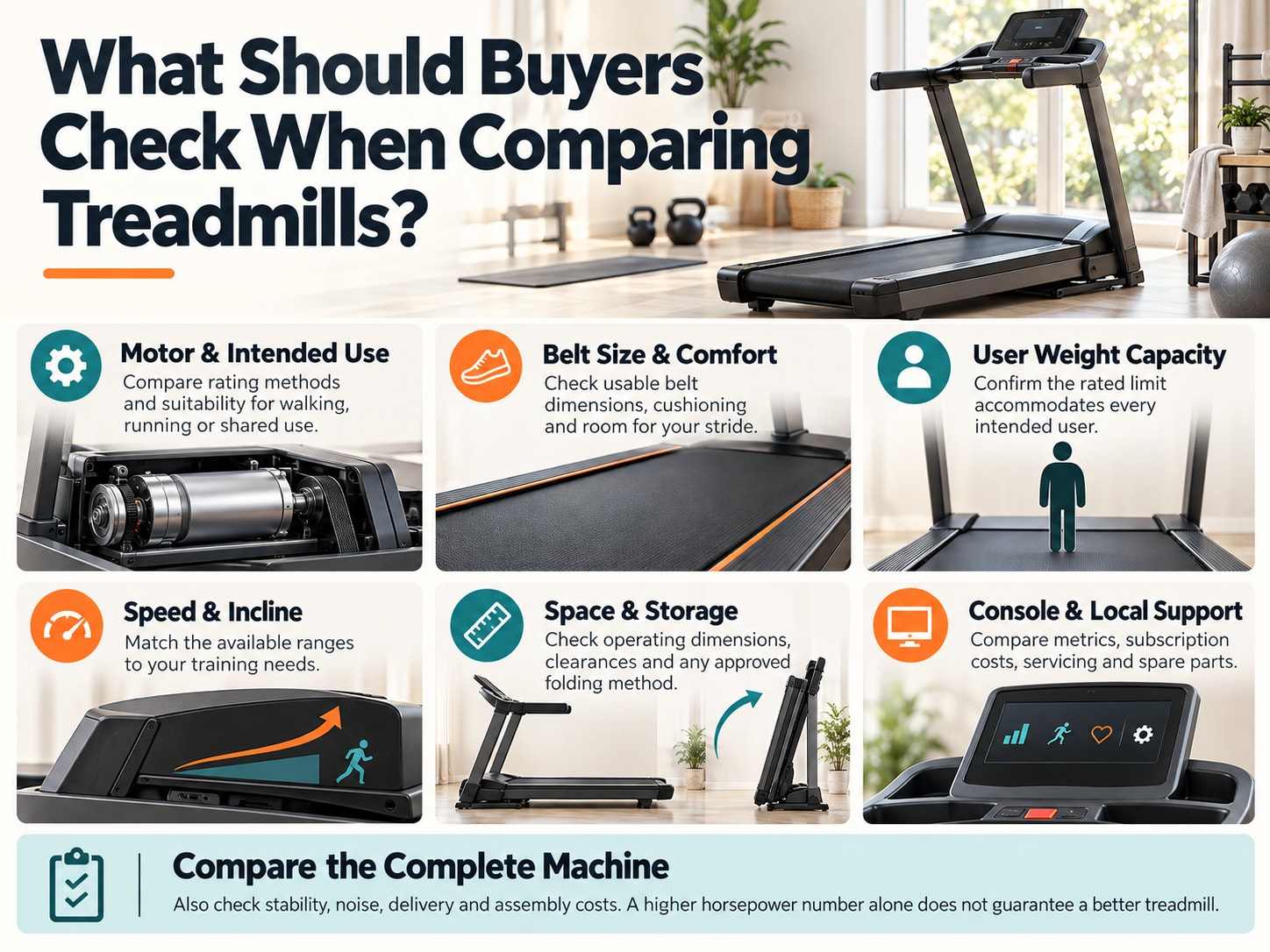
When comparing treadmills, look out for the following factors:
- The continuous horsepower rating, if provided.
- The manufacturer's intended use, such as home or commercial use.
- The maximum user weight.
- The available speed and incline ranges.
- The recommended daily or weekly usage, if specified.
- Warranty coverage for the motor and other major components.
If a product listing only mentions peak horsepower, ask the seller whether a continuous power rating is available. Also remember that motor ratings may be measured and reported differently between manufacturers. A number alone cannot guarantee that one treadmill will perform better than another.
How Much CHP Do You Need for Walking?
Walking is one of the most common reasons people buy a treadmill. It is suitable for daily activity, warm-ups, steady cardio and low-impact exercise routines. If you plan to walk at a comfortable pace, you do not need the same motor capacity as someone who regularly runs at high speeds.
For many home walking routines, a treadmill with around 1.5 to 2.0 CHP can be a reasonable starting point, depending on the model and the intended workload. This is a general buying guideline, not a fixed rule for every treadmill.
What Affects Motor Requirements for Walking?
Consider the following points before choosing a model.
- Walking speed: Comfortable walking places different demands on the treadmill from fast walking or power walking.
- User weight: The motor and drive system must support the intended user's weight within the manufacturer's specifications. Heavier users should pay close attention to the recommended capacity and overall build quality.
- Workout duration: Walking for a few minutes occasionally is different from walking for an hour every day. Regular, longer sessions make the treadmill's intended usage and construction more important.
- Incline use: Walking uphill increases the workload. If you plan to use the incline frequently, check that the motor, incline mechanism and overall treadmill specifications support this type of exercise.
Who Should Consider a Walking-Focused Treadmill?
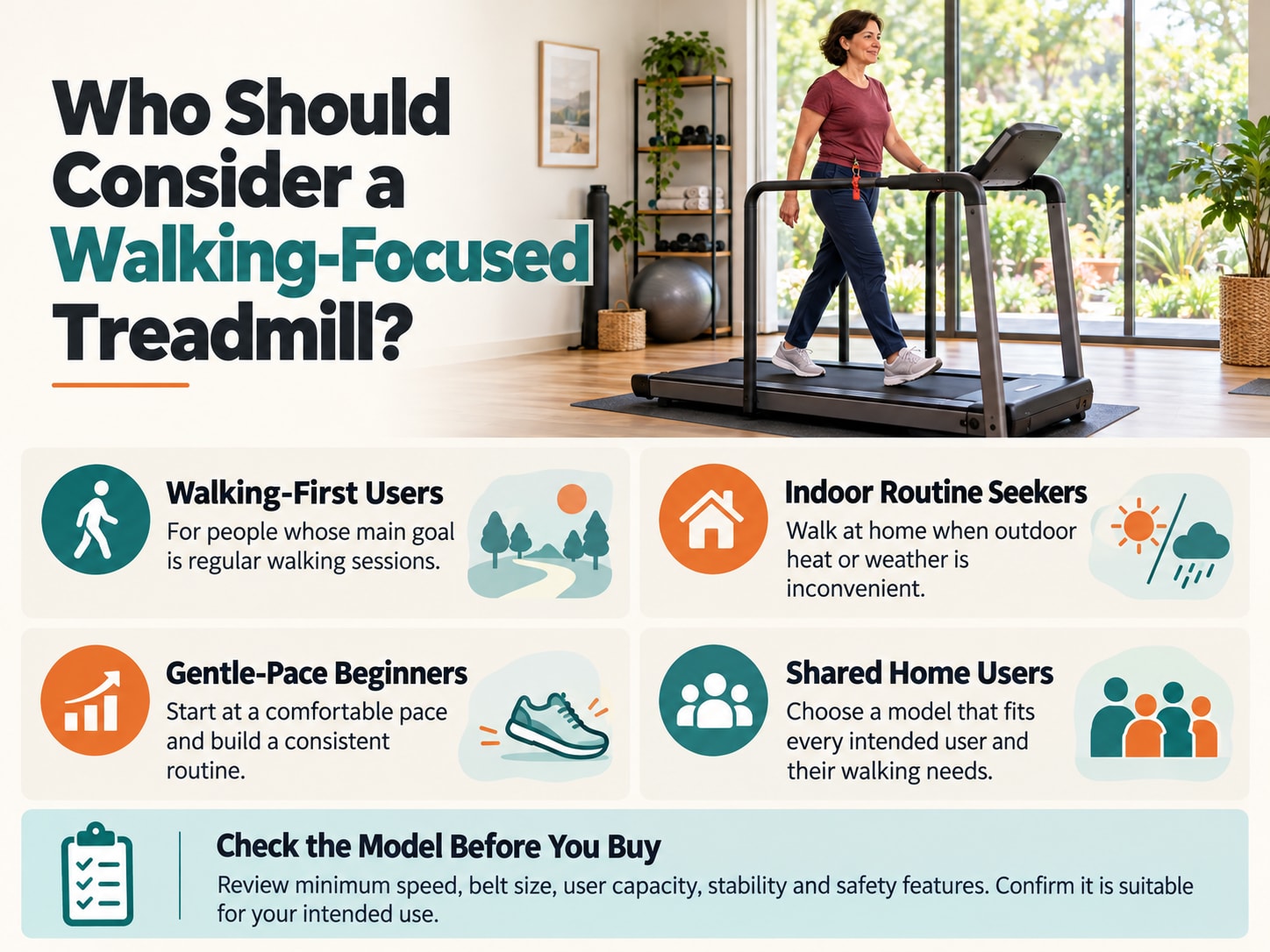
A walking-focused model may suit the following set of members:
- People who want to increase their daily steps.
- Beginners starting a regular exercise routine.
- Users who mainly walk at moderate speeds.
- Home gyms where the treadmill will be used occasionally or for moderate daily sessions.
If you expect to progress from walking to jogging later, consider a model with enough power and speed capability for that future use.
How Much CHP Do You Need for Jogging on a Treadmill?
Jogging requires more from a treadmill than comfortable walking. The belt moves faster, and the motor and drive system must maintain consistent movement throughout the workout.
For regular home jogging, around 2.0 to 2.5 CHP can be a useful starting range when comparing suitable models. The right choice depends on the user's weight, jogging speed, session length and frequency of use. If you jog several times a week, it is worth looking beyond the lowest-priced treadmill in this category.
What Should You Look for in a Jogging Treadmill?
- Smooth belt movement: The belt should move consistently at your chosen speed. If possible, try the treadmill before buying.
- Suitable running area: Jogging requires enough belt length and width for a comfortable stride. Taller users may prefer a longer deck.
- Speed range: Check that the treadmill supports your normal jogging pace and leaves room for progress.
- Motor and drive quality: A suitable motor rating is useful, but the belt, rollers, deck and overall construction also affect the experience.
- User capacity: Check the manufacturer's maximum user weight and choose a model appropriate for the people who will use it.
For example, someone who jogs for 20 minutes a few times a week may have different requirements from someone who runs for an hour most of the days. Both of them need to consider the full treadmill specification, not just CHP.
If jogging is your main workout, choose a treadmill designed for regular use rather than one intended mainly for occasional walking.
How Much CHP Do You Need for Running on a Treadmill?
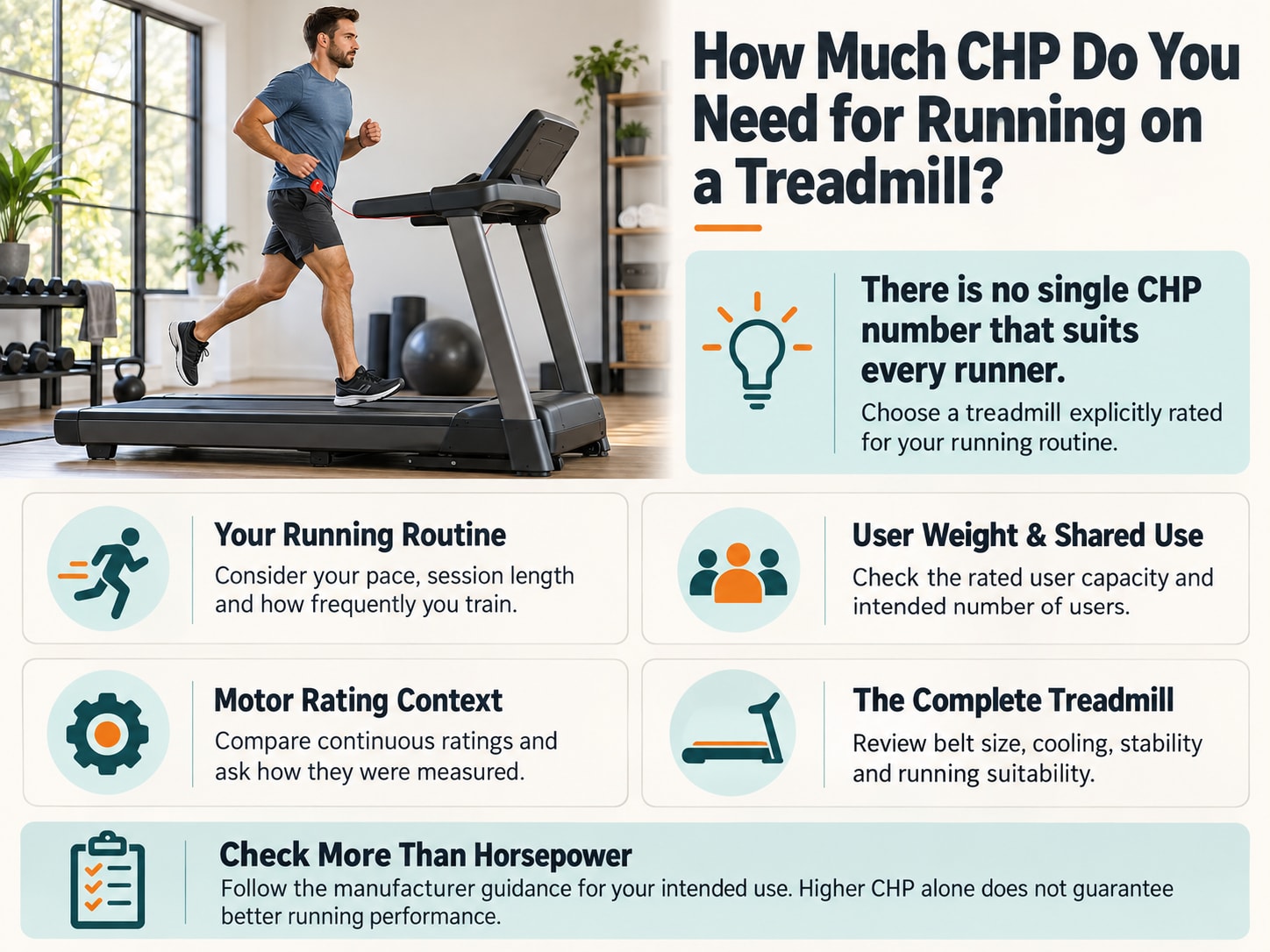
Running places greater demands on a treadmill than walking or light jogging. Users often run at higher speeds, exercise for longer periods or combine running with incline training.
For regular home running, around 2.5 to 3.0 CHP or more is a useful starting range to explore. More demanding routines may call for a treadmill with a higher continuous rating and a construction intended for frequent use.
However, these figures are general guidelines. The manufacturer's specifications, the user's weight and the intended workout intensity should determine the final choice.
Why Does Running Need More Consideration?
- Higher speeds: The treadmill must maintain belt movement at the speeds you use.
- Longer sessions: Regular, extended workouts place sustained demands on the motor and other components.
- Frequent training: A runner who trains most days needs equipment suited to that usage pattern.
- Incline workouts: Running uphill can increase the workload. Consider both the motor and the treadmill's incline capabilities.
- User weight: The demands on the treadmill can vary with the user's weight, stride and running style.
What Else Matters for Treadmill Runners?
Motor power should be considered alongside the running deck, cushioning, belt size, frame stability and maximum speed.
A powerful motor does not automatically mean that the treadmill has a comfortable running surface or a stable frame. If you run regularly, look for a model designed for running rather than relying on the motor figure alone.
For buyers, it is also worth checking warranty terms, service availability and spare parts support before investing in a treadmill for frequent running.
What Motor Power Is Best for Multiple Users?
If several members use the same treadmill, you should choose a model based on the needs of the most demanding regular user. For example, one person may walk in the morning while another jogs in the evening. Someone else may use the treadmill for regular running sessions.
In this situation, a walking-focused treadmill may not be the best choice simply because walking is one of the intended activities.
For a household with mixed walking, jogging and running routines, around 2.5 to 3.0 CHP or higher may be a useful range to investigate. The correct specification depends on the expected workload, user weights, session lengths and the manufacturer's intended use.
Questions to Ask Before Buying a Treadmill
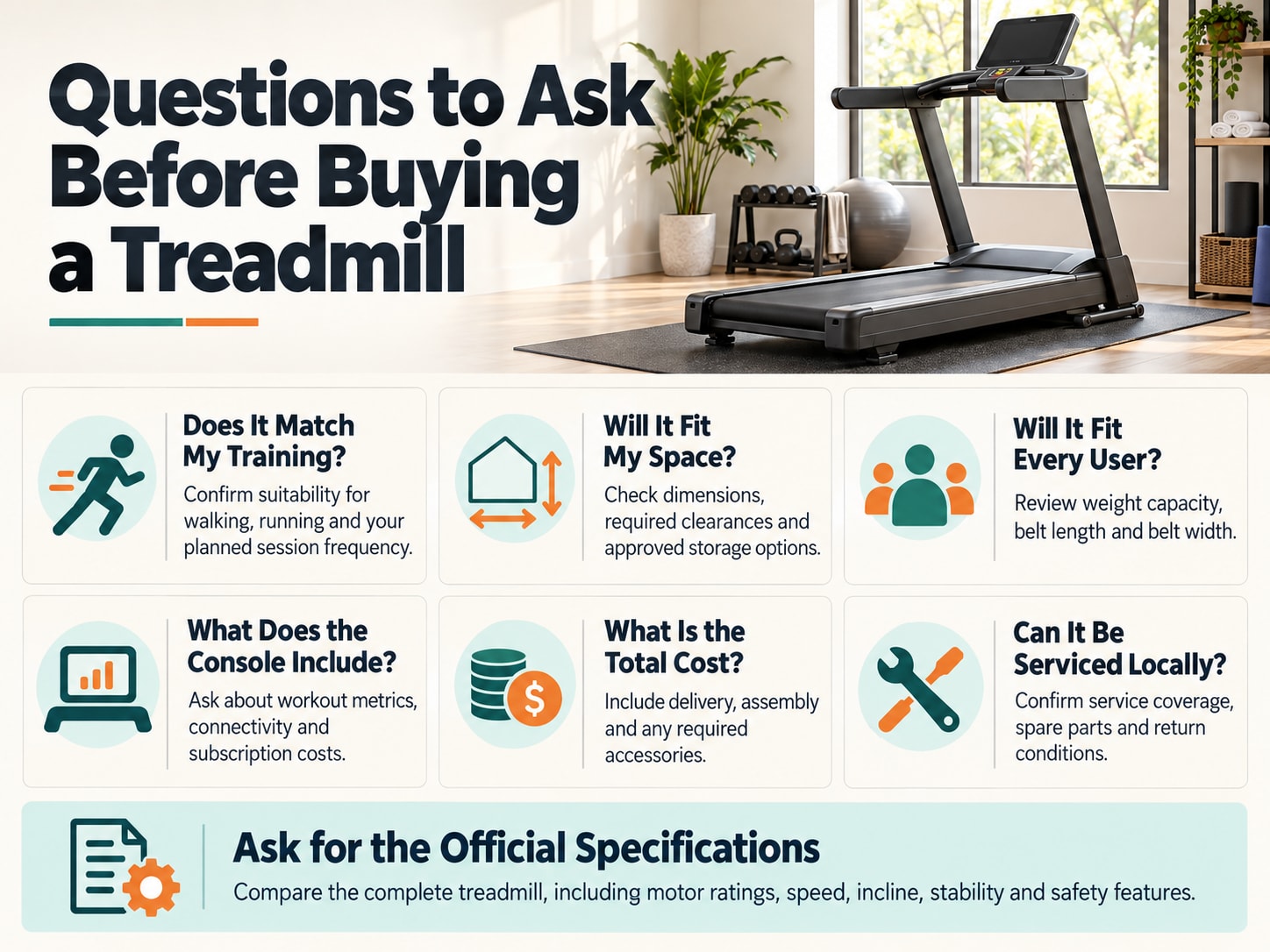
- How many people will use the treadmill?
- Will they mainly walk, jog or run?
- How often will each person exercise?
- Will the treadmill be used for long sessions?
- What is the weight of the heaviest regular user?
- Will users frequently use incline programmes?
- Is the treadmill designed for the expected frequency of use?
The number of users alone does not determine the required CHP. What matters is the combined pattern of use and whether the treadmill is built to handle it. A treadmill used by three people for short walking sessions may have different requirements from one used by two regular runners.
Is a Higher CHP Motor Always Better?
Not necessarily. A higher CHP rating can be useful when the treadmill needs to support regular running, heavier users or more demanding workouts. But it does not automatically make a treadmill better in every respect.
Two treadmills with similar motor ratings may differ in frame quality, belt construction, cushioning, cooling, console features and warranty coverage.
A treadmill with a suitable motor and a well-designed running deck may be a better purchase than a model with a larger advertised power figure, but weaker overall construction.
Consider All the Integral Aspects of a Treadmill
Before making a final decision, compare the following aspects:
- Continuous motor power, where available.
- Maximum speed and incline.
- Running belt dimensions.
- Maximum user weight.
- Frame stability and cushioning.
- Intended usage and duty rating.
- Warranty and service support.
- Overall price and available features.
A higher CHP rating is most useful when it matches your workout requirements. If you walk at a moderate pace, you may not need the same specification as a regular runner.
Motor Power for Commercial Treadmills
Commercial treadmills are used in fitness centres, hotels, residential gyms and corporate fitness facilities. They may experience frequent use throughout the day, so choosing the right model requires more than checking CHP.
For commercial applications, motor capacity should match the expected workload and the manufacturer's intended use. A treadmill intended for light home use may not be suitable for a busy gym, even if its advertised motor figure appears adequate.
What Should Commercial Treadmill Buyers Consider?
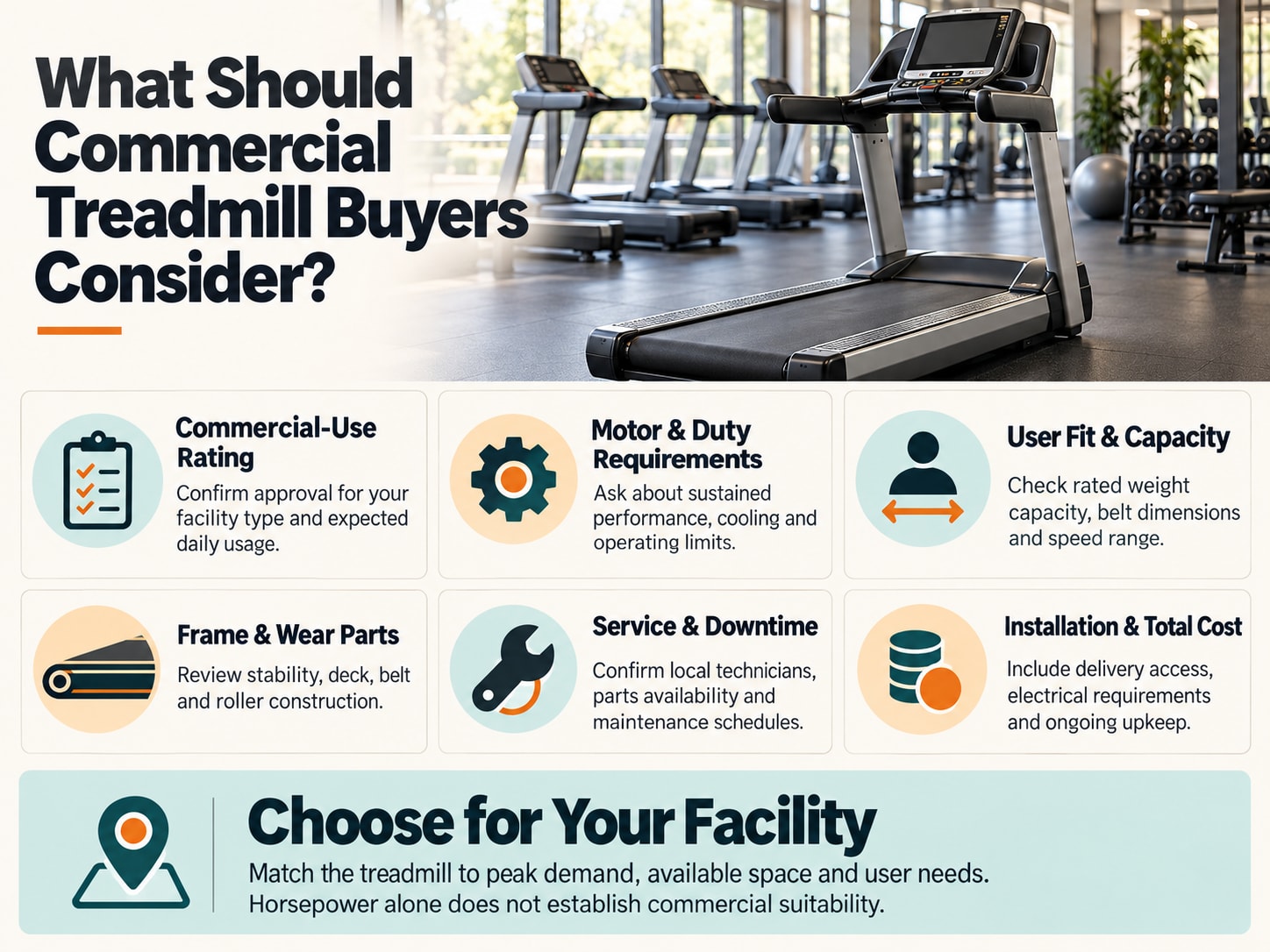
- Usage frequency: Estimate how many people will use the treadmill each day and how long typical sessions will last.
- Workout intensity: A facility where most users walk may have different requirements from one where regular running is common.
- Commercial-use rating: Confirm that the manufacturer approves the model for the intended environment and usage level.
- Maximum user weight: Consider the range of users who may exercise on the treadmill.
- Construction: Check the frame, deck, belt, rollers, incline mechanism and other components that affect durability.
- Warranty: Read the commercial warranty terms carefully. Coverage may differ from the warranty offered for home use.
- Maintenance and service: Regular inspection and timely repairs can help reduce downtime. Ask about spare parts availability and local service support.
For a commercial gym, it is sensible to plan equipment around expected member usage rather than buying every treadmill with the same motor rating. A well-matched treadmill can offer better long-term value than one chosen purely because it has a high horsepower figure.
Choosing the Right Treadmill for Home Gyms
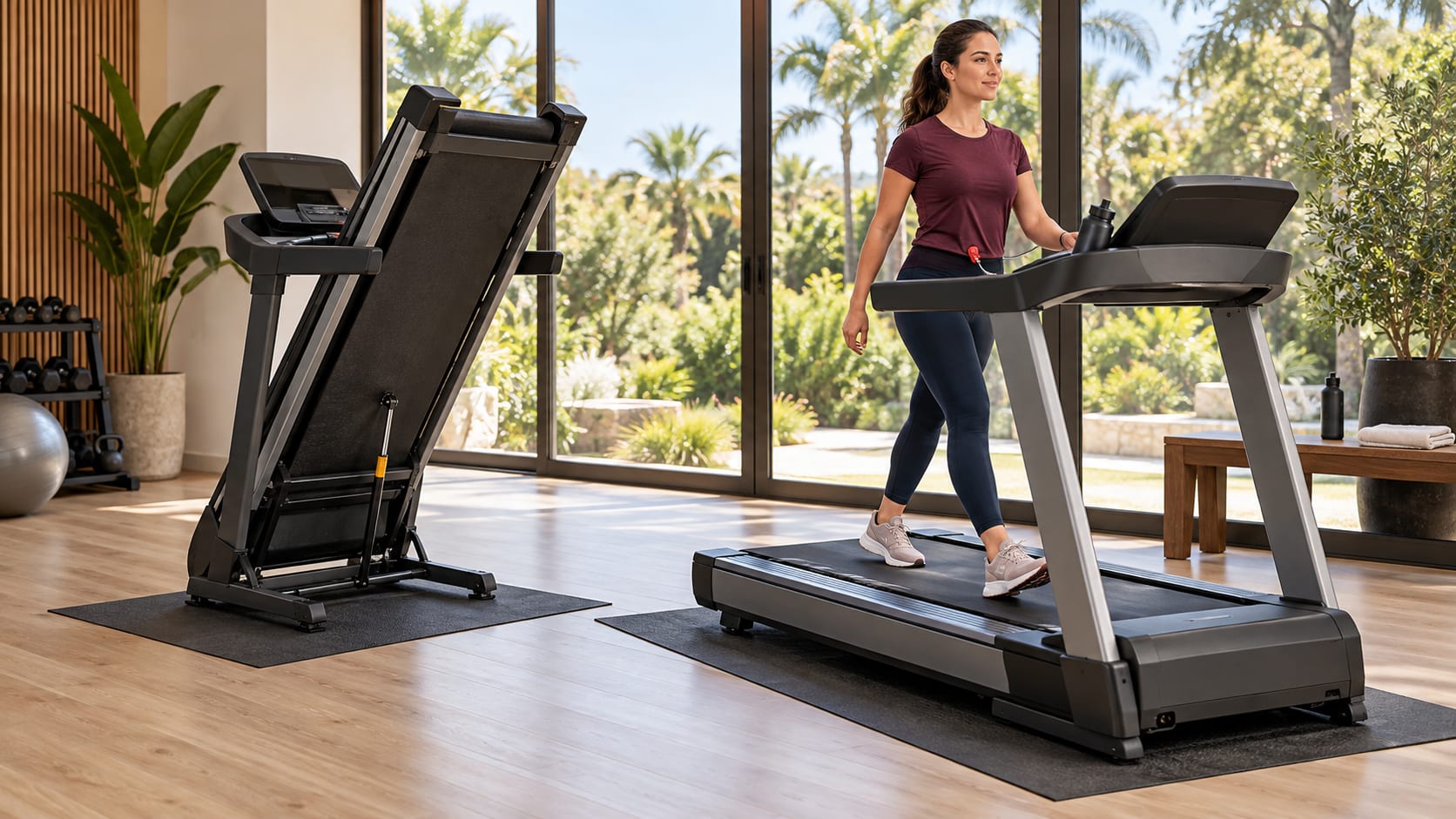
When buying a treadmill, think about how it will fit into your home and daily routine. In apartments, space may be limited. You may want a model that folds when not in use, but remember that folding designs still need sufficient space during workouts. Always check the full dimensions and folded dimensions before buying.
In villas or dedicated home gyms, you may have more room for a larger running deck or a treadmill designed for regular running. Consider the following points:
- Available space: Measure the area and leave enough room around the treadmill for safe access and movement.
- Electrical requirements: Check the manufacturer's power supply requirements and ensure the intended location is suitable.
- Ventilation: Place the treadmill in a well-ventilated indoor area and avoid exposing it to excessive heat or direct sunlight.
- Dust and cleaning: Dust can accumulate around the belt and other components. Follow the manufacturer's cleaning and maintenance instructions.
- Delivery and installation: Confirm the delivery arrangements, assembly requirements and access to the intended room.
- After-sales support: Check the warranty, availability of spare parts and options for servicing the treadmill.
These details can be important if the treadmill will be used frequently by several members.
Common Mistakes to Avoid When Comparing Treadmill Motors
A few common mistakes can make it harder to choose the right treadmill.
- Choosing by peak horsepower alone. A peak figure does not tell you how much power the motor can sustain. Look for continuous power information and the manufacturer's intended use.
- Assuming more CHP always means better quality. The motor is only one part of the treadmill. Deck quality, belt size, stability and durability matter too.
- Ignoring user weight. Always check the stated maximum user weight and choose a treadmill suitable for the intended users.
- Buying a walking treadmill for frequent running. A treadmill designed mainly for light walking may not be appropriate for regular high-speed running. Check the model's intended use and specifications.
- Forgetting workout duration. Frequent long sessions place different demands on equipment from occasional short workouts.
- Ignoring warranty and service. A suitable treadmill should also come with clear warranty conditions and practical support if repairs are needed.
Avoiding these mistakes can help you choose equipment that meets your needs without spending unnecessarily.
Looking for the perfect fitness equipment in the UAE? Visit Lifetime Fitness Store and explore our wide range of quality fitness products, enjoy reliable customer service, discover great deals, and find the right fitness solutions to match your goals.
Conclusion
Choosing the right treadmill motor power becomes easier when you start with your workout routine.
For comfortable walking, a lower CHP rating may be enough. Regular jogging usually calls for a stronger specification, while frequent running and mixed use by several people may justify looking at more powerful models designed for sustained workouts.
Most importantly, do not confuse peak horsepower with continuous horsepower. Peak power describes a short-term maximum under particular conditions, while CHP relates to continuous power delivery under specified conditions. They are not interchangeable figures.
When comparing treadmills in the GCC countries, consider motor power alongside user weight, speed, incline, running deck size, frame quality, usage frequency and after-sales support. These details will help you choose a treadmill that fits your space, budget and fitness goals.
 Get a weekly dose of latest stories
and useful tips directly in your inbox!
Get a weekly dose of latest stories
and useful tips directly in your inbox!


 0
0