Ramadan Workout Guide: Fitness Equipment, Pre-Iftar & Post-Iftar Routines, Hydration and Recovery Tips in the UAE
The tradition associated with Ramadan needs no introduction. It is that special time of the year when prayers, family gatherings, joy and self-discipline are shared among people. It is also a tricky time for fitness enthusiasts as maintaining a regular routine can be challenging.
With significant changes in eating habits, sleep schedules, and daily activities, finding the right time to exercise may not be easy for them. Moreover, people have busy work schedules and family commitments during the Ramadan month.
While some prefer to workout before Iftar, there are others who feel more comfortable exercising after breaking their fast. With a few simple fitness equipment and a little planning, fitness freaks can continue exercising during Ramadan without putting too much pressure on the body.
This blog explains practical pre-Iftar and post-Iftar workout routines, useful home fitness equipment, hydration tips, and recovery advice to help you stay active throughout Ramadan.
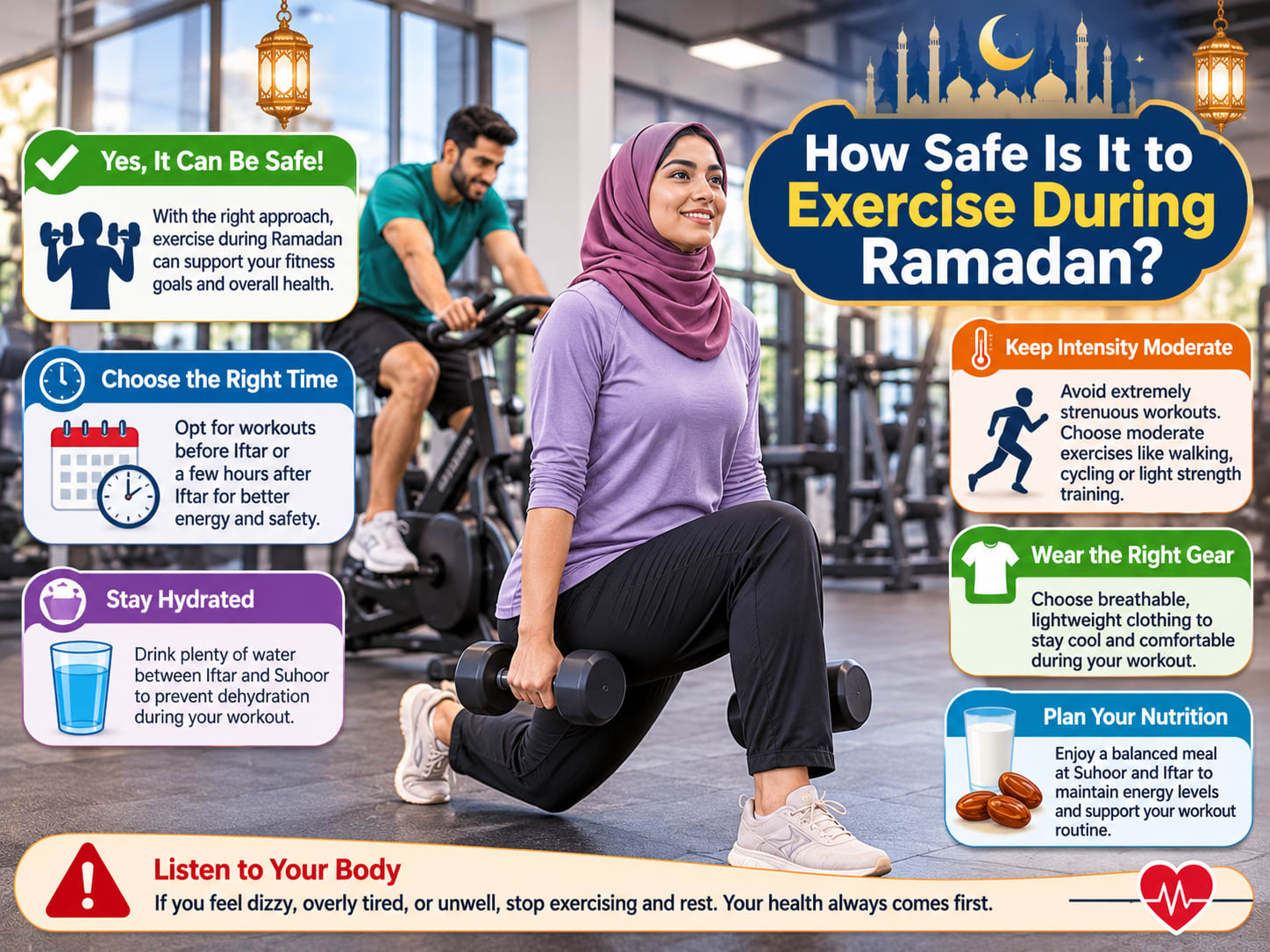
How Safe Is It to Exercise During Ramadan?
It is absolutely safe for healthy adults to continue exercising during Ramadan. However, they need to be mindful of the intensity and timing of workouts. During fasting hours, your body goes without food and water for several hours.
This can affect your energy levels, strength, and hydration. A workout that feels easy on a normal day may feel more challenging when you are fasting. Instead of following your usual fitness routine, consider making the following changes:
Reduce the intensity of your workouts.
Choose shorter exercise sessions.
Avoid very demanding exercises while fasting.
Include enough rest between workouts.
Drink enough water between Iftar and Suhoor.
Pay attention to how your body feels.
The main focus during Ramadan should be to maintain your fitness and stay healthy rather than pushing yourself to achieve new fitness goals. If you have a medical condition, are pregnant, or have been advised to limit physical activity, reach out to your healthcare professional before the workout routine.
When Is the Best Time to Work Out During Ramadan?
Choosing the right workout time is one of the most important parts of staying active during Ramadan. There is no universal perfect time for everyone. It depends on your energy levels, daily routine, fitness goals, and personal comfort. Listed below are three common workout timings to consider.
Pre-Iftar Workouts
Pre-Iftar workouts take place shortly before breaking your fast. Many people prefer this time because they can eat and drink soon after finishing their exercise. However, since you have not had food or water throughout the fasting hours, these workouts should be short and free of risks.
Ideally, a 20 to 30-minute session of walking, stretching, or light bodyweight exercises can be a good option for people who are already comfortable with regular physical activity. Avoid heavy weightlifting, intense cardio, and long workout sessions before Iftar.
Post-Iftar Workouts
Post-Iftar workouts are a good choice for those who want to exercise with more energy. After breaking your fast and having a light meal, your body gets a chance to replenish some of its energy and fluids. This can make it easier to perform strength exercises, cycling, or moderate cardio.
If you plan to do a hectic and challenging workout, allow ample time after eating so that you do not feel uncomfortable.
After Taraweeh Workouts
Some people prefer exercising after Taraweeh prayers. This can work well if your daily schedule is busy. For example, a short workout with resistance bands, dumbbells, or a stationary bike can help you stay active. However, avoid exercising so late that it affects your sleep. Never forget that getting enough rest is as important as working out during Ramadan.
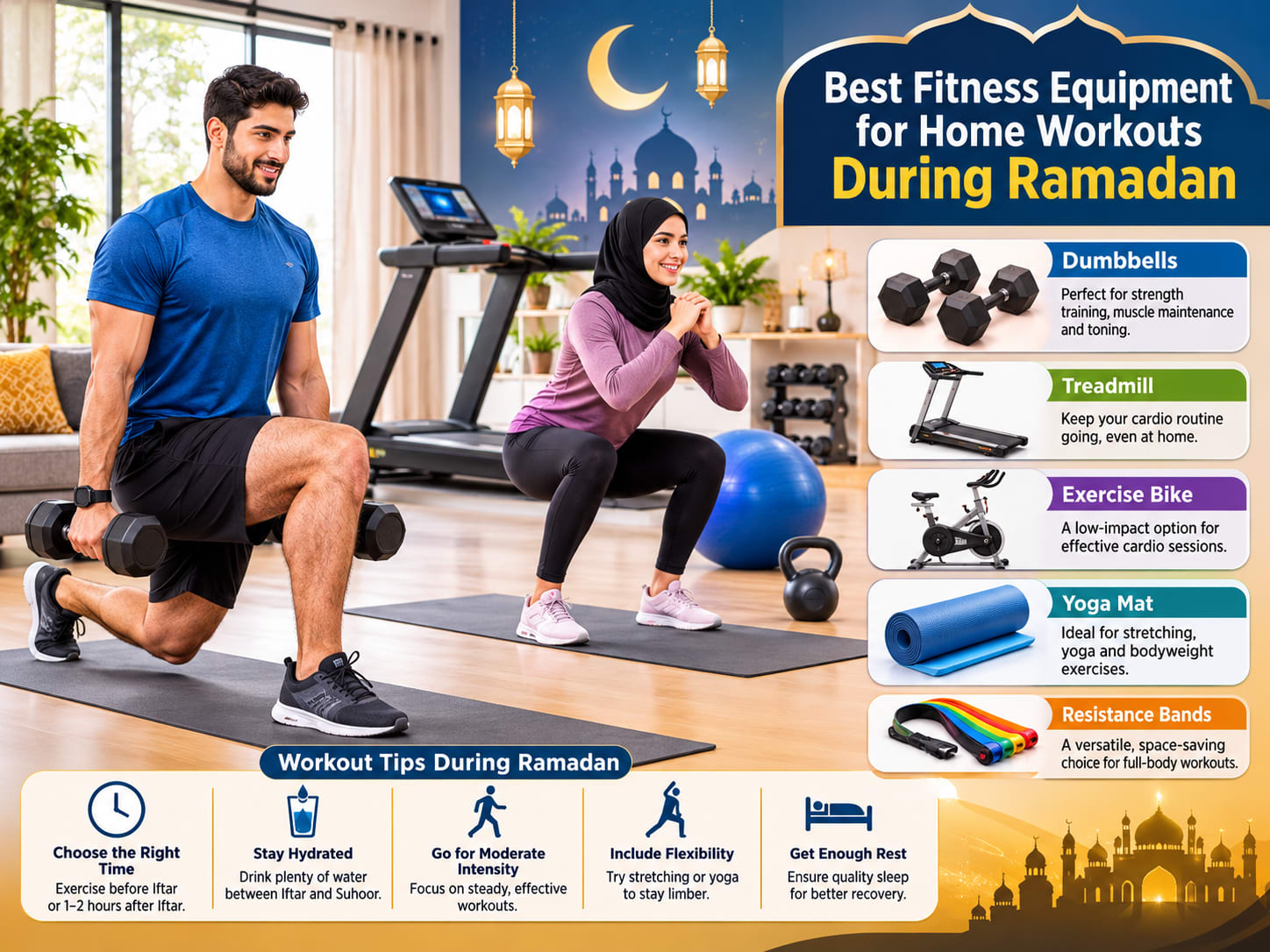
Best Fitness Equipment for Home Workouts During Ramadan
You do not need a fully equipped gym to stay fit during Ramadan. A few basic fitness products can help you indulge in effective workouts at home. Here are some useful options.
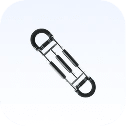
Resistance Bands
Resistance bands are among the most practical pieces of home fitness equipment. They are lightweight, easy to store, and suitable for different fitness levels. You can use them for the following:
Bicep curls
Shoulder presses
Squats
Glute bridges
Seated rows
Leg extensions
They are useful for short post-Iftar strength workouts. Choose bands with different resistance levels so that you can adjust the difficulty of your exercises.
Adjustable Dumbbells
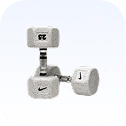
Adjustable dumbbells are a good investment if you enjoy strength training at home. They allow you to perform several exercises without needing multiple sets of weights. Some useful dumbbell exercises include the following:
Dumbbell squats
Shoulder presses
Bicep curls
Bent-over rows
Chest presses
Lunges
During Ramadan, start with lighter weights than you normally use. Focus on maintaining good form instead of lifting heavier weights.
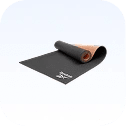
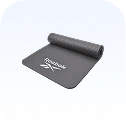
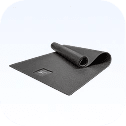
Yoga Mat
A yoga mat is a simple, but useful addition to your home workout space. It provides a comfortable surface for floor exercises, stretching, and yoga. You can use it for the following exercises:
Cat-cow stretches
Child's pose
Planks
Glute bridges
Seated stretches
Gentle yoga movements
According to experts, it is really helpful for light pre-Iftar workouts and post-workout stretching.
Treadmill or Walking Pad
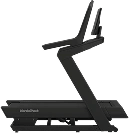
Walking is one of the easiest ways to stay active during Ramadan. A treadmill or walking pad allows you to walk indoors, which is useful in the GCC countries during warmer months. You can use it for a slow walking session before Iftar or a moderate walk after eating. Start at a comfortable speed and avoid pushing yourself when you are fasting.
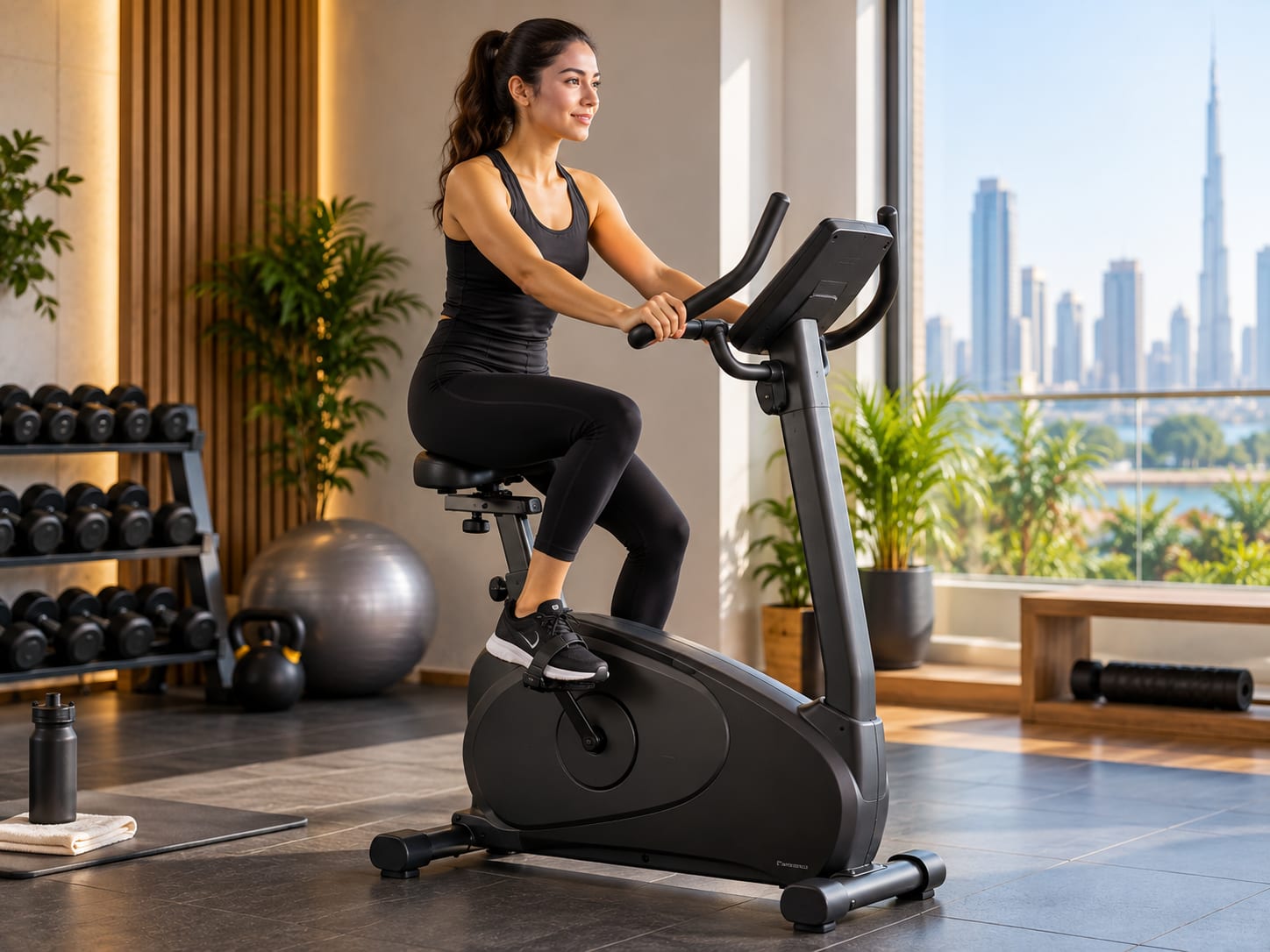
Stationary Exercise Bike
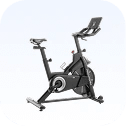
A stationary bike is another useful option for home fitness. It provides a low-impact cardio workout and allows you to control the speed and resistance. For Ramadan, keep the resistance low during fasting hours. After Iftar, you can gradually increase the intensity if you feel comfortable.
Foam Roller
A foam roller can help you relax after workouts and reduce muscle tightness. It is useful for gently rolling areas such as the calves, thighs, and upper back. Spend a few minutes using it after exercise, without applying excessive pressure to painful areas.
Ramadan Workout: Practical Pre-Iftar Routine
If you prefer exercising before Iftar, keep your routine simple. The aim is to move your body without using too much energy. A 20-minute workout is enough for a light activity session.
Suggested pre-Iftar routine:
Slow walking: It is advised for 5 minutes
Shoulder rolls: The ideal time is 1 minute
Bodyweight squats: A 2-minute session should be sufficient
Standing knee raises: This is ideal for 2 minutes
Resistance band rows: Do it for 2 minutes
Gentle side stretches: It is advised for 2 minutes
Slow walking and cool-down: This can be done for 5 minutes
How to Perform These Exercises?
Slow walking: Walk around your home or use a treadmill at a comfortable speed. Avoid running or increasing the incline.
Shoulder rolls: Slowly move your shoulders forward and backward to loosen the upper body.
Bodyweight squats: Stand with your feet shoulder-width apart. Lower your hips slowly and return to a standing position. Do only a comfortable number of repetitions.
Standing knee raises: Lift one knee at a time while standing. Keep your movements controlled.
Resistance band rows: Hold a resistance band, pull it towards your body, and slowly return to the starting position.
Gentle stretching: Stretch your arms, shoulders, back, and legs without forcing any movement.
Remember, pre-Iftar exercise should feel easy. If you feel dizzy, unusually weak, nauseated, or experience a headache, stop exercising and seek appropriate medical advice if symptoms persist or are severe.
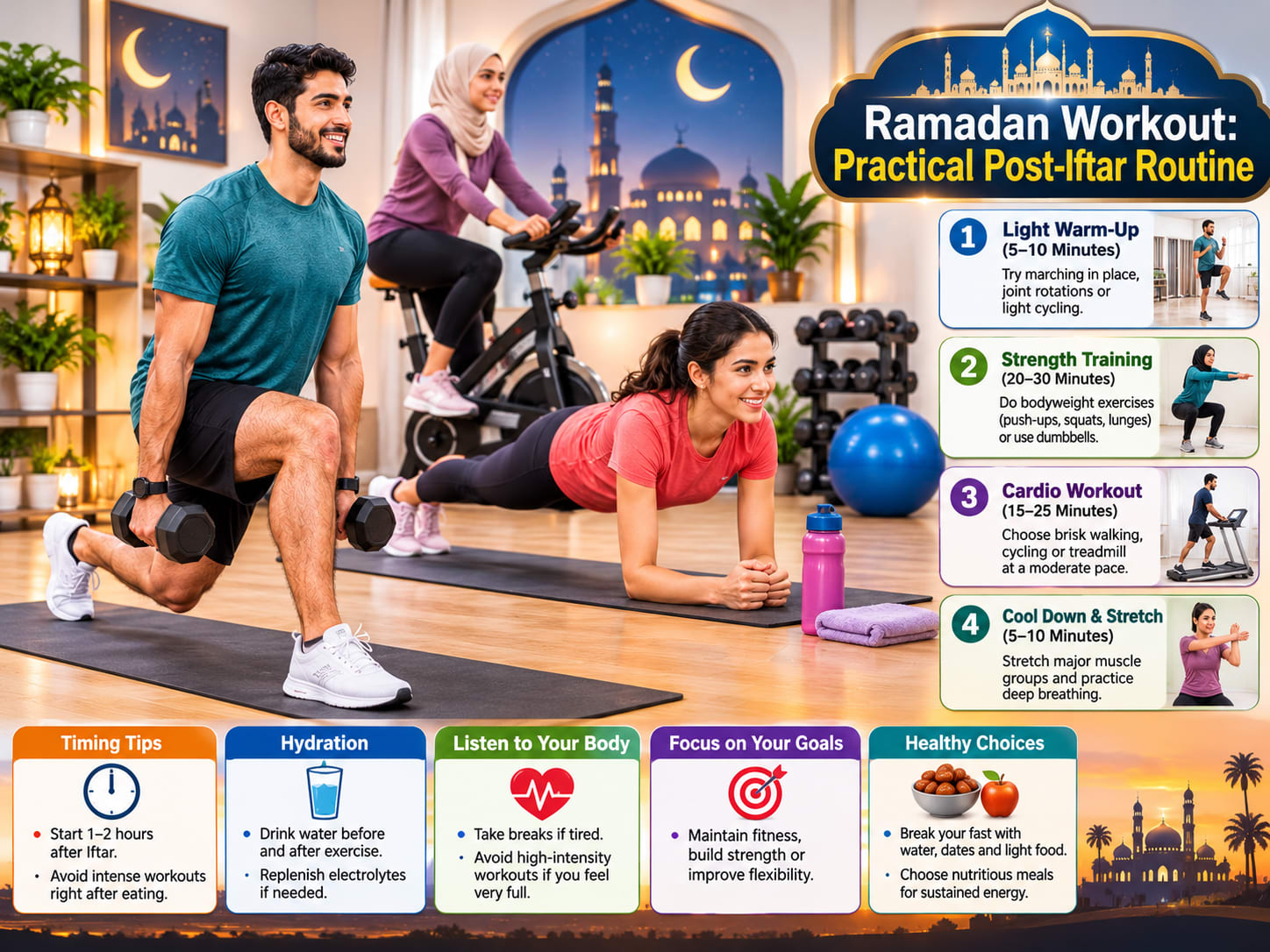
Ramadan Workout: Practical Post-Iftar Routine
Post-Iftar is often a better time for people who prefer strength training or moderate cardio. Once you have broken your fast, had some fluids, and allowed your body to settle after eating, you can try a 30-minute workout.
Suggested post-Iftar routine:
Warm-up walking: The ideal duration is 5 minutes
Dumbbell squats: 10 repetitions are recommended
Resistance band rows: 12 repetitions are considered ideal
Dumbbell shoulder press: 10 repetitions should be sufficient
Glute bridges: Around 10 to 12 repetitions are recommended
Stationary cycling: This is ideal for 5 minutes
Gentle stretching: Experts suggest a duration of 5 minutes
You can complete the strength exercises for one or two rounds depending on your fitness level.
Tips for Better Results
Start with light weights.
Take short breaks between exercises.
Do not rush through repetitions.
Keep your movements controlled.
Avoid exercising immediately after a large meal.
Finish with gentle stretching.
If you feel uncomfortable after eating, wait longer before starting your workout.
What Should You Eat Before and After a Ramadan Workout?
Food plays an important role in maintaining energy during Ramadan. Your body needs enough nutrients to support exercise and recovery. Focus on balanced meals that include carbohydrates, protein, healthy fats, and vegetables, instead of a complicated diet plan. .
What to Eat at Iftar?
Start by breaking your fast with water and dates. Dates provide carbohydrates and are a traditional way to begin Iftar. You can then have a balanced meal that includes the following:
Rice, whole grains, or potatoes for energy.
Chicken, fish, eggs, or beans for protein.
Vegetables for fibre and vitamins.
Yoghurt or other dairy products for additional nutrients.
If you plan to exercise after Iftar, avoid eating a very large or oily meal immediately before your workout. A light meal or snack may be more comfortable before exercise.
What to Eat After a Workout?
After exercising, your body needs nutrients to recover. Some easy post-workout food options include:
Grilled chicken with rice.
Eggs with wholegrain bread.
Greek yoghurt with fruit.
A banana with milk.
Tuna sandwiches.
Lentil soup with wholegrain bread.
Try to include some protein and carbohydrates in your post-workout meal.
Do Not Skip Suhoor
Suhoor (the pre-dawn meal) is important because it helps provide energy for the fasting hours ahead. Choose foods that keep you satisfied for longer. Some good options include:
Oats with milk and nuts.
Eggs with wholegrain toast.
Greek yoghurt with fruit.
Wholegrain sandwiches.
Bananas and other fresh fruits.
Avoid relying only on sugary foods at Suhoor, as they may not keep you satisfied for long.
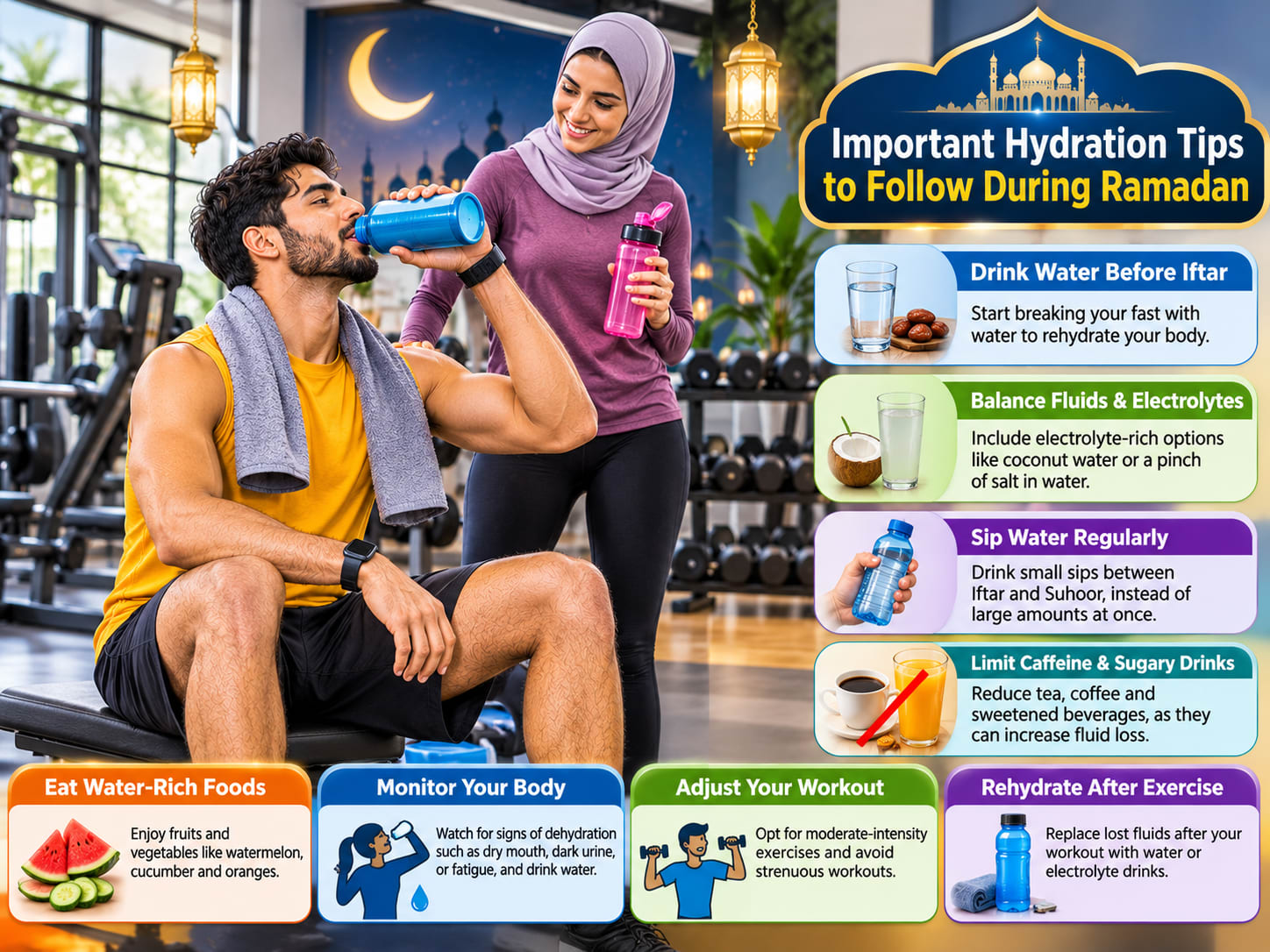
Important Hydration Tips to Follow During Ramadan
Hydration is one of the most important things to consider when exercising during Ramadan. Since you cannot drink water during fasting hours, you need to make good use of the time between Iftar and Suhoor. This is important in places where warm weather and high temperatures can increase fluid loss. Check out some simple hydration tips.
Drink Water Regularly
Do not try to drink all your water at once. Spread your fluid intake throughout the evening and early morning. Drink water when breaking your fast, between meals, after exercise, and during Suhoor. Your fluid needs depend on your activity level, body size, health, and weather conditions.
Include Water-Rich Foods
Certain foods can also help support hydration. Include options such as:
Watermelon
Cucumber
Oranges
Strawberries
Lettuce
Soups
These foods provide water along with other useful nutrients.
Be Careful With Caffeine
Coffee, tea, and energy drinks are common during Ramadan. However, too much caffeine may affect your sleep and can make it harder to manage your hydration routine. Try to limit excessive caffeine, especially late in the evening.
Consider Electrolytes When Needed
Electrolytes help maintain fluid balance in the body. For people who sweat heavily or complete longer workouts, an electrolyte drink may sometimes be useful. However, most people doing light home workouts can meet their needs through regular meals and adequate fluids. Avoid relying on sugary sports drinks for everyday hydration.
Recovery Tips to Stay Fresh During Ramadan
Exercise is only one part of fitness. Recovery is equally important, especially when your eating and sleeping schedules change during Ramadan. Here are some ways to help your body recover.
Get Enough Sleep
Late-night meals, prayers, and early Suhoor can affect your normal sleep routine. Try to maintain a consistent sleep schedule as much as possible. Most adults need around 7 to 9 hours of sleep every day. If your night sleep is shorter, a short daytime nap may help.
Avoid Training Every Day
You do not need to exercise seven days a week to maintain your fitness. Three to four workout sessions per week may be enough for many people, depending on their fitness level and routine. Use rest days for gentle walking or stretching.
Stretch After Exercise
Spend around five minutes stretching after your workout. Focus on the muscles you have used during exercise. Gentle stretching can help you relax and improve flexibility.
Listen to Your Body
Some days you may feel energetic, while other days you may feel tired. This is normal during Ramadan. If you feel exhausted, reduce your workout intensity or take a rest day. Never force yourself to complete a workout when your body is asking for rest.
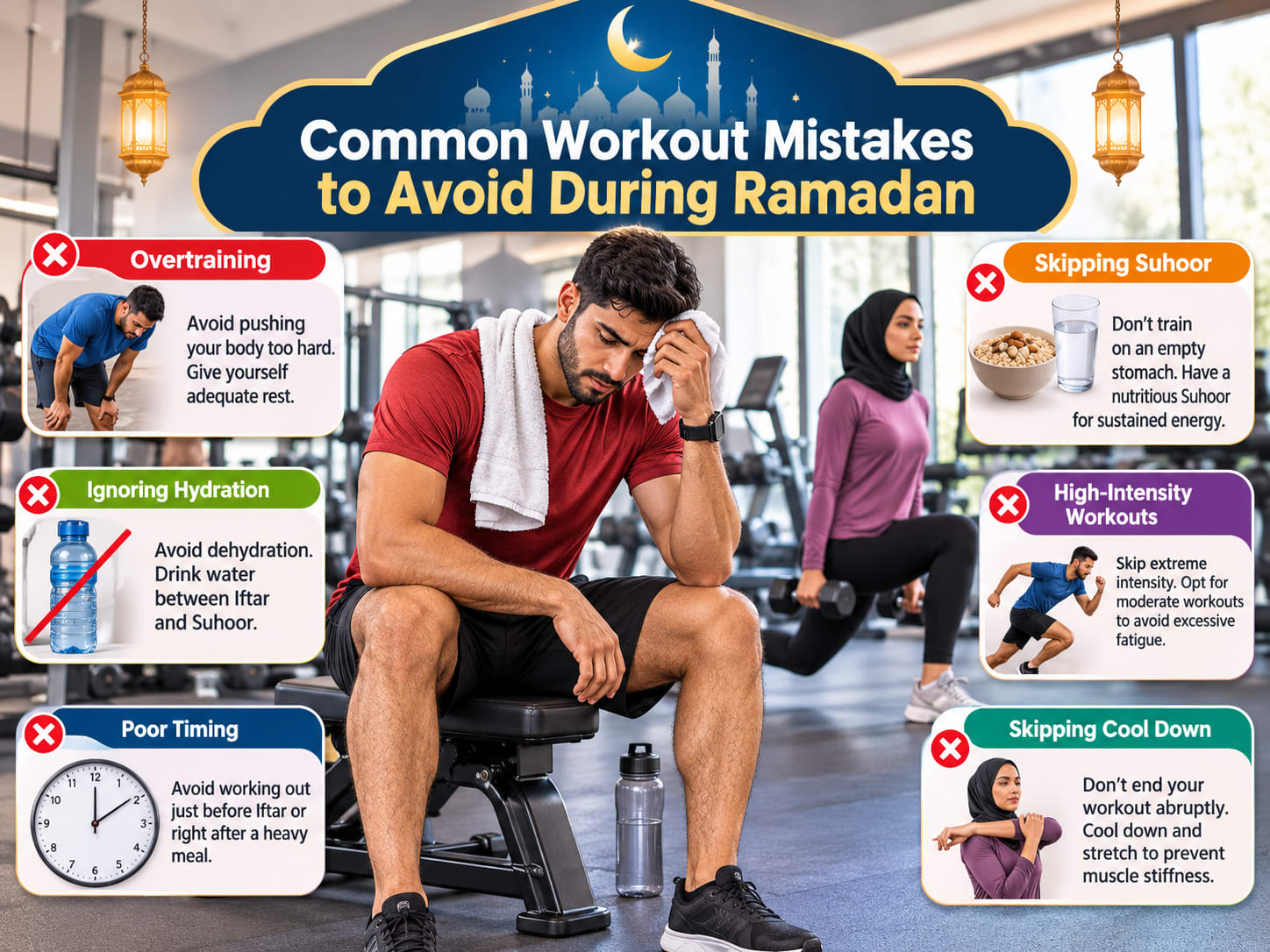
Common Workout Mistakes to Avoid During Ramadan
Many people make small mistakes when trying to maintain their fitness during Ramadan. Avoiding these mistakes can make your routine more comfortable and sustainable.
Doing intense workouts before Iftar: Heavy exercise without access to water can increase the risk of dehydration and exhaustion. Keep pre-Iftar workouts light.
Eating too much before exercising: A large meal just before exercise may cause stomach discomfort. Give yourself enough time to digest.
Not drinking enough water: Drinking very little between Iftar and Suhoor can affect your energy and workout performance.
Ignoring sleep: Poor sleep can affect your energy, recovery, and ability to exercise comfortably.
Trying to lose weight too quickly: Ramadan is not the time to follow extreme diets or push yourself with excessive workouts. Focus on balanced eating and regular movement.
Comparing your performance with normal days: Your energy levels may change during fasting. It is perfectly fine to lift lighter weights, walk more slowly, or exercise for a shorter time.
How to Create a Simple Weekly Ramadan Fitness Plan?
A weekly workout schedule can help you stay consistent without making exercise feel like a burden. You can adjust the following plan based on your work hours, fasting routine, and energy levels.
Monday: A light strength training can be considered post Iftar
Tuesday: Walking and stretching are advisable before Iftar
Wednesday: Some rest or gentle walking are recommended
Thursday: Dumbbell and resistance band are ideal post Iftar
Friday: Indulge in light yoga or stretching before Iftar
Saturday: Walking or stationary cycling post Iftar
Sunday: Absolute rest and recovery
You can replace any above workout routine suggestions with a simple 15 to 20-minute walk if you are feeling tired. The most important thing is to follow a plan that you can maintain throughout the month.
Fitness professionals across the UAE, whether you're planning to build your dream home gym, upgrade your commercial fitness centre, set up a training studio, or looking for premium fitness and sports equipment, Lifetime Fitness Store is your ultimate destination for everything fitness under one roof.
Conclusion
Staying fit during Ramadan does not have to be difficult. You do not need long workouts, expensive gym memberships, or complicated fitness plans to maintain an active lifestyle. The key is to understand your body's needs and make small changes to your routine.
Choose light pre-Iftar workouts if you prefer exercising before breaking your fast. If you want to do strength training or moderate cardio, consider working out after Iftar when you have had time to eat and drink.
Use simple fitness equipment such as resistance bands, dumbbells, yoga mats, and stationary bikes to make home workouts easier. Pay attention to hydration, eat balanced meals, get enough sleep, and allow your body to recover.
Most importantly, do not put too much pressure on yourself. Even a short walk or a few minutes of stretching can help you stay active. Make fitness a comfortable part of your Ramadan routine, and focus on staying healthy, energetic, and consistent throughout the holy month.
The best time to work out during Ramadan depends on your fitness goals and energy levels. Light workouts can be done 30–60 minutes before Iftar, while strength training and more intense exercises are best performed 1–2 hours after Iftar, when you have had time to eat and hydrate.
Lightweight and versatile fitness equipment is ideal for Ramadan workouts. Resistance bands, dumbbells, yoga mats, skipping ropes, and adjustable kettlebells can help you maintain strength, flexibility, and cardiovascular fitness without requiring long or exhausting sessions.
Yes, light to moderate exercise before Iftar can be safe for many healthy individuals. Walking, stretching, yoga, and low-intensity bodyweight exercises are good options. Avoid high-intensity workouts because you cannot replenish fluids during fasting. Stop if you experience dizziness, weakness, or unusual discomfort.
Drink water regularly between Iftar and Suhoor rather than consuming large amounts at once. Include water-rich foods such as watermelon, cucumber, and oranges, and eat balanced meals containing electrolytes. Limit excessive caffeine and avoid exercising in hot environments.
Prioritise adequate sleep, hydration, and balanced nutrition. After exercising, consume protein-rich foods such as eggs, chicken, fish, yoghurt, or lentils, along with carbohydrates to replenish energy. Include rest days, avoid overtraining, and adjust workout intensity according to your energy levels.







 Get a weekly dose of latest stories
and useful tips directly in your inbox!


 0














































































 Price Match Guarantee
 Free Shipping
 Product Warranty
 After-Sale Support
 Have Coupon Code?
 You'll Save 0.00 On This Order
 Safe And Secure Payments. Easy Returns. 100% Genuine Products