Pilates Studio Setup: Reformers, Equipment, Space & Planning Guide in the UAE
A training studio is not only a platform to encourage fitness buffs, but also a huge business opportunity. These days, pilates studio is one of the leading segments in this regard. Many people have realized the craze for the same and are setting up studios in bustling cities.
In the GCC, too, pilates has become a popular choice for those who crave for low-impact exercise, strength work, and flexibility. What people look forward to is a studio that offers a comfortable environment where clients can train safely and enjoy their sessions.
A few factors like the equipment, layout, lighting, flooring, and storage play a vital part in how comfortable clients feel. Interestingly, you do not need a huge space to create an ideal Pilates studio. It’s just that you need to plan the studio around the number of people you expect to train around the same time.
This blog explains in detail some of the key aspects to consider when planning a Pilates studio setup, such as reformers, rings, mats, accessories, spacing, client capacity, flooring, cleaning, storage, delivery and installation.
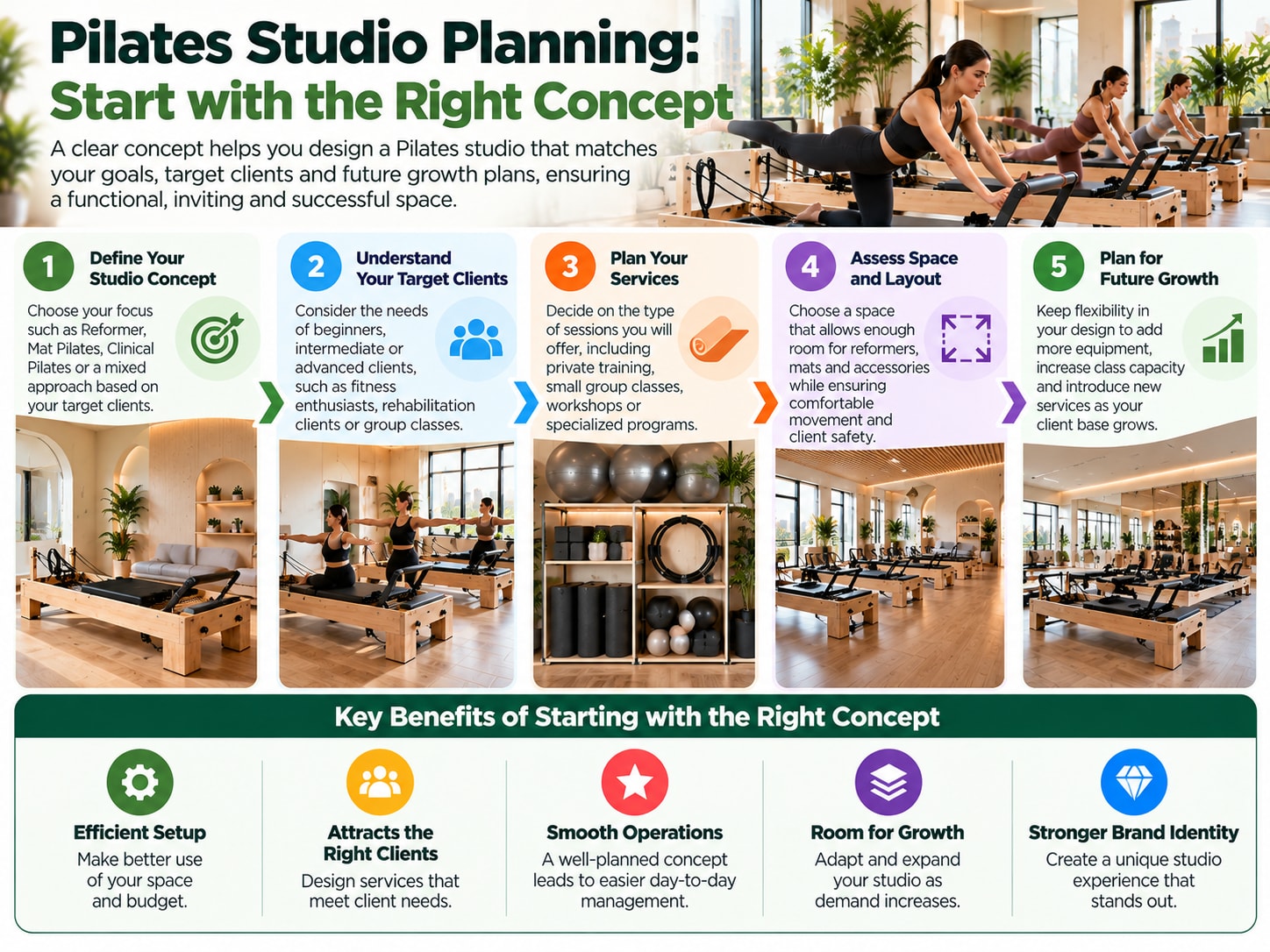
Pilates Studio Planning: Start with the Right Concept
Before buying equipment, you should decide what kind of Pilates studio you want to run. Check for yourself if you would offer the following factors to clients:
Reformer Pilates
Mat Pilates
Private sessions
Small group classes
Beginner classes
Fitness-focused Pilates
Pilates for mobility and flexibility
A combination of different formats
The answer will help you discover the plans you need to come up with for your studio. For example, a studio that focuses mainly on Reformer Pilates will need several reformers and ample space around each one. A studio that offers both Reformer and mat classes may need additional open floor space.
Similarly, private Pilates sessions may require fewer reformers, but more space for one-on-one training and assessments. Hence, it is better to decide the training model first and then create the equipment list.
Get to Know How Many Reformers You Need
For starters, the reformer is usually the main piece of equipment in a Reformer Pilates studio. The number you may need depends on your available space and expected class size.
A small studio may need four to six reformers. A medium-sized studio may have six to ten, while a larger facility can accommodate more. There is actually no universally fixed number that works for every studio.
The first step is to think about your business model. If you intend to offer small classes, you may prefer fewer reformers. If your business model depends on larger group sessions, you may need more.
Keep in mind that adding more reformers does not mean you can serve more clients comfortably. If the machines are placed too close together, needless to say, the studio can feel crowded.
All About Choosing the Right Reformer
Not all reformers are exactly the same. When comparing different models, look at the following aspects:
Overall dimensions
Frame construction
Carriage movement
Springs
Footbar adjustment
Shoulder rests
Ropes or straps
Weight capacity
Adjustment options
Available accessories
Warranty
Spare parts
Service support
For a commercial Pilates studio, durability matters the most. A reformer may be used several times every day by different clients. Choosing equipment designed for regular studio use can make more sense than selecting a model based only on its initial price.
Consider the Reformer Layout for the Studio
The position of the reformers can have a big impact on the studio. Avoid random placement of the machines wherever they fit. Think about how instructors and clients will move around them.
A trainer should be able to walk between reformers, demonstrate exercises and assist clients without frequently bumping into equipment.
Additionally, there should be enough space for clients to get on and off the reformer comfortably. If possible, keep a clear walkway through the studio. This becomes important when you have several clients using their reformers at the same time.
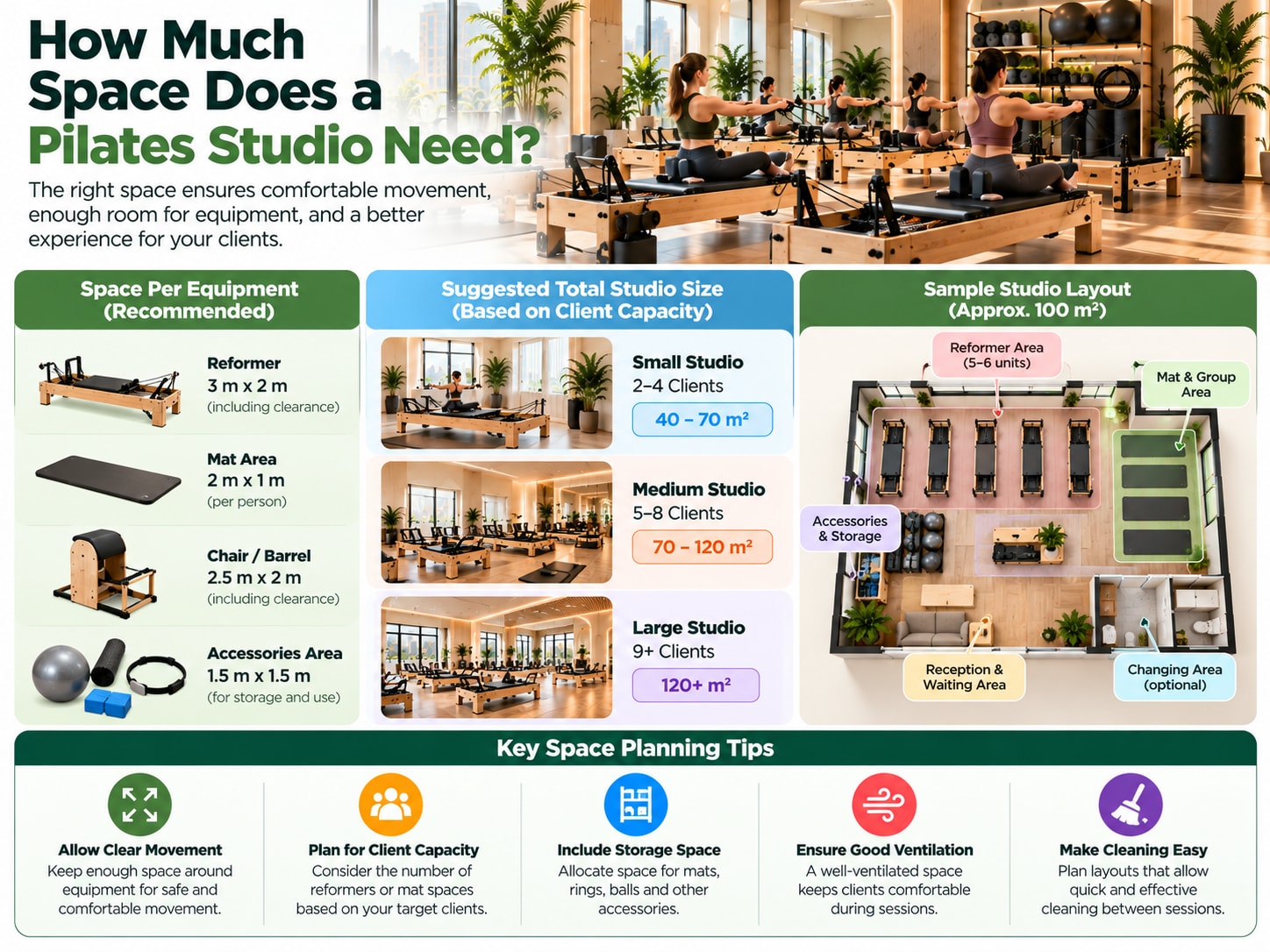
How Much Space Does a Pilates Studio Need?
There is no universal room size that suits every Pilates studio. The required space depends on these things:
Number of reformers
Reformer dimensions
Class size
Type of Pilates sessions
Open floor area
Storage
Reception
Changing facilities
Instructor movement
Instead of thinking only about the footprint of the reformer, consider the working space around it as well. A machine may physically fit into a particular room, but that does not mean the room is suitable for a class. Clients need space to move their arms and legs, and instructors need space to walk around and provide guidance.
Plan Client Capacity With Utmost Care
The client capacity aspect should be based on the actual space rather than the number of reformers you can fit inside.
For example, if you have eight reformers but the room becomes uncomfortable with eight people moving at once, reducing the class size may provide a better experience. A smaller class can also allow the instructor to spend more time with individual clients. Think about the below factors:
Maximum class size
Number of instructors
Class duration
Changeover time
Peak hours
Beginner versus experienced clients
A studio offering 45-minute or 60-minute sessions also needs time between classes for clients to leave, equipment to be checked and the next group to enter. Avoid scheduling sessions back-to-back with no time for preparation.
Mats and Small Accessories for a Studio
Mats are useful even in a Reformer-focused studio. Clients may use them for stretching, warm-ups, floor exercises or cool-downs. Some of the other useful accessories can include the following items:
Pilates balls
Resistance bands
Foam rollers
Pilates rings
Blocks
Small weights
Ankle weights
The exact equipment list depends on the classes being offered. Try to avoid buying accessories just because they are popular. Choose items that instructors will actually use.
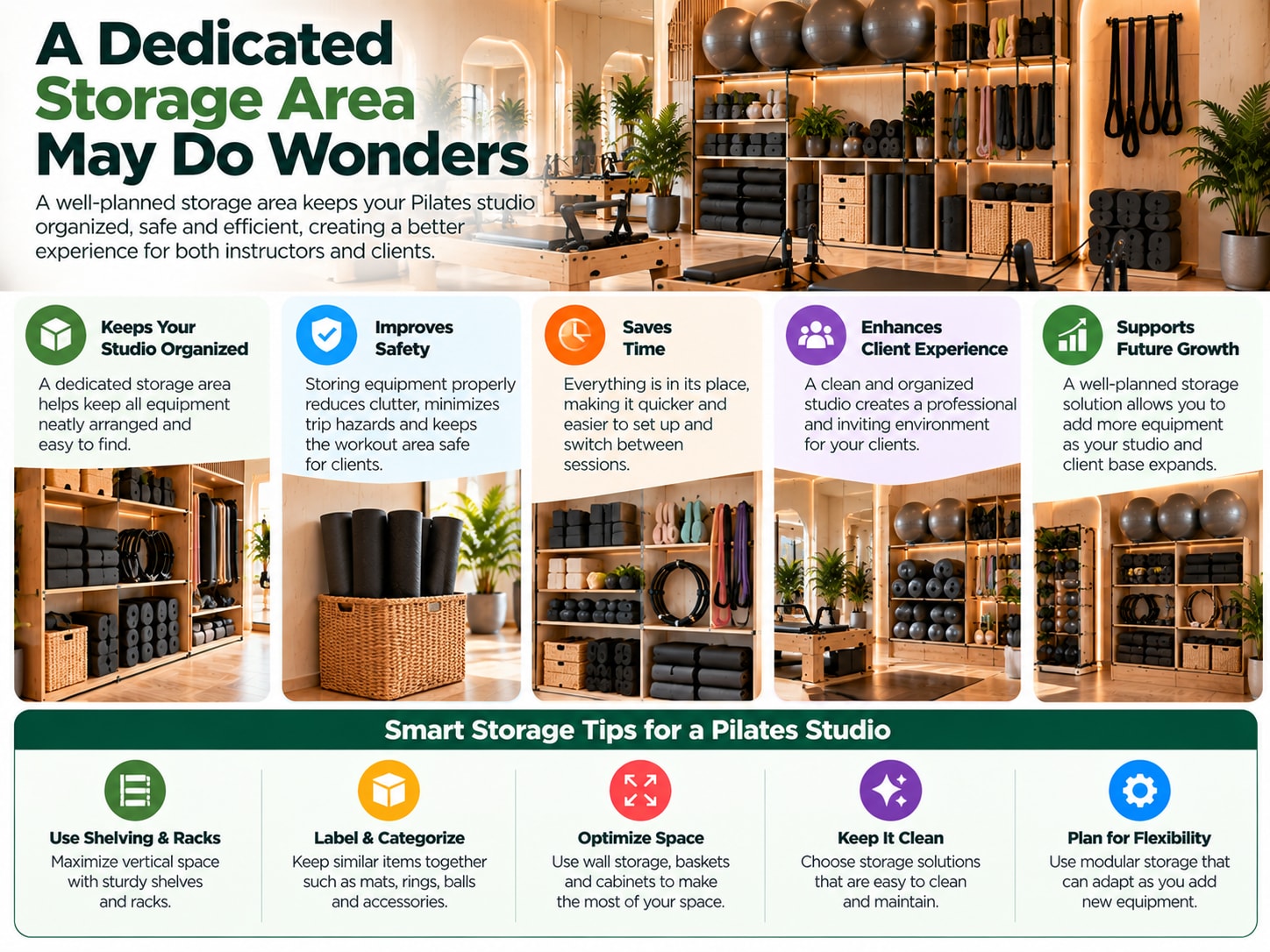
A Dedicated Storage Area May Do Wonders
Storage can make a big difference in a small Pilates studio. Accessories left around the floor can make the space look cluttered and create unnecessary obstacles. Plan storage for the following items:
Mats
Rings
Balls
Bands
Blocks
Foam rollers
Small weights
Towels
Cleaning supplies
Wall-mounted storage can be useful where floor space is limited. Keep frequently used items close to the training area, but avoid placing storage where it blocks walkways.
Flooring Requirements for a Pilates Studio
The floor should be comfortable, stable and easy to maintain. Reformer machines are generally placed on a firm, level surface. For mat work, clients may prefer a surface that feels comfortable while exercising barefoot.
The flooring should also be easy to clean because Pilates involves close contact between clients and the floor. When choosing flooring, consider the below factors:
Durability
Cleaning
Comfort
Noise
Equipment stability
Maintenance
Appearance
The flooring does not have to be the same throughout the entire studio. You may use a suitable surface for the reformer area and add mats in the floor exercise section.
The Importance of Cleaning and Hygiene
Cleaning should always be part of the studio routine from the beginning. It's a known thing that Pilates equipment comes into regular contact with clients, so surfaces should be cleaned regularly. This includes the following items:
Reformer surfaces
Handles
Footbars
Mats
Rings
Balls
Frequently touched areas
A simple cleaning routine can be followed between classes for high-contact surfaces, with a thorough cleaning at the end of the day. Make sure you use cleaning products that are suitable for the materials used on your equipment.
Moreover, always follow the manufacturer's recommendations, especially for upholstery and specialist surfaces.
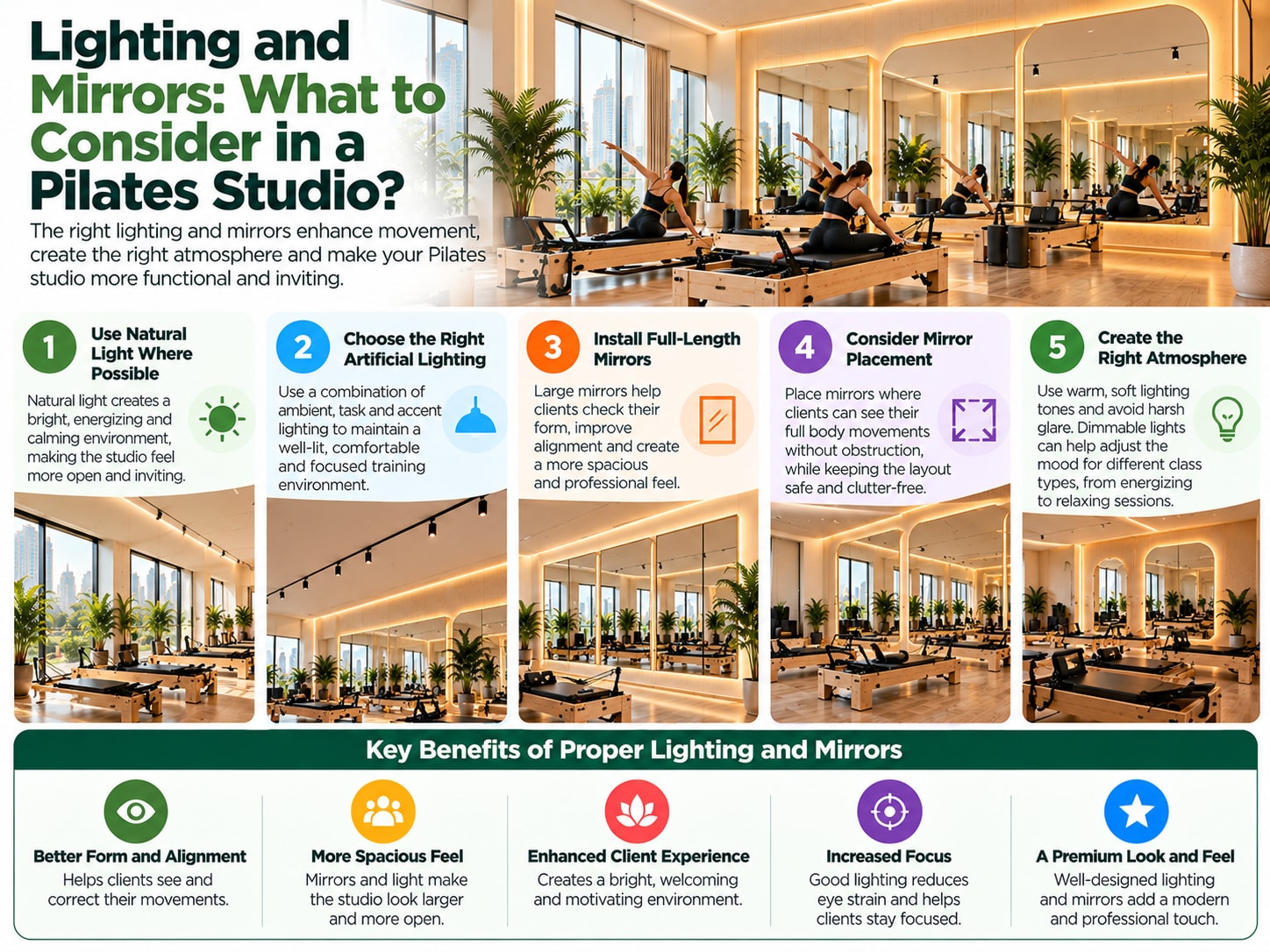
Lighting and Mirrors: What to Consider in a Pilates Studio?
Lighting can have a strong effect on the atmosphere of a Pilates studio. Natural light can make the room feel open and welcoming.
Artificial lighting should be bright enough for instructors to see clients clearly. Mirrors allow clients to observe their alignment and help instructors to demonstrate movement.
However, mirrors should be installed carefully and kept away from areas where equipment could accidentally hit them.
How to Create a Comfortable Client Experience?
People often choose Pilates for a focused and comfortable training experience. The studio should therefore feel organised rather than crowded. Simple things like the following aspects can make a difference:
Clean equipment
Good lighting
Comfortable temperature
Pleasant flooring
Clear walkways
Organised storage
Clean changing facilities
A welcoming reception area
You do not need a fancy interior. A clean and well-planned studio can feel more professional than a room filled with expensive equipment, but little space to move.
Useful Tips for Delivery Planning in the GCC
Large Pilates equipment needs to be delivered carefully. Before ordering reformers, check the delivery route. Consider the below factors:
Building entrance
Loading area
Lift size
Door width
Corridor width
Staircases
Studio entrance
A reformer may fit comfortably inside the studio, but still be difficult to bring into the building if the lift or doorway is too narrow.
If the studio is located in a commercial building, check whether there are specific delivery timings or access requirements. Discuss these details with the supplier before the equipment is shipped.
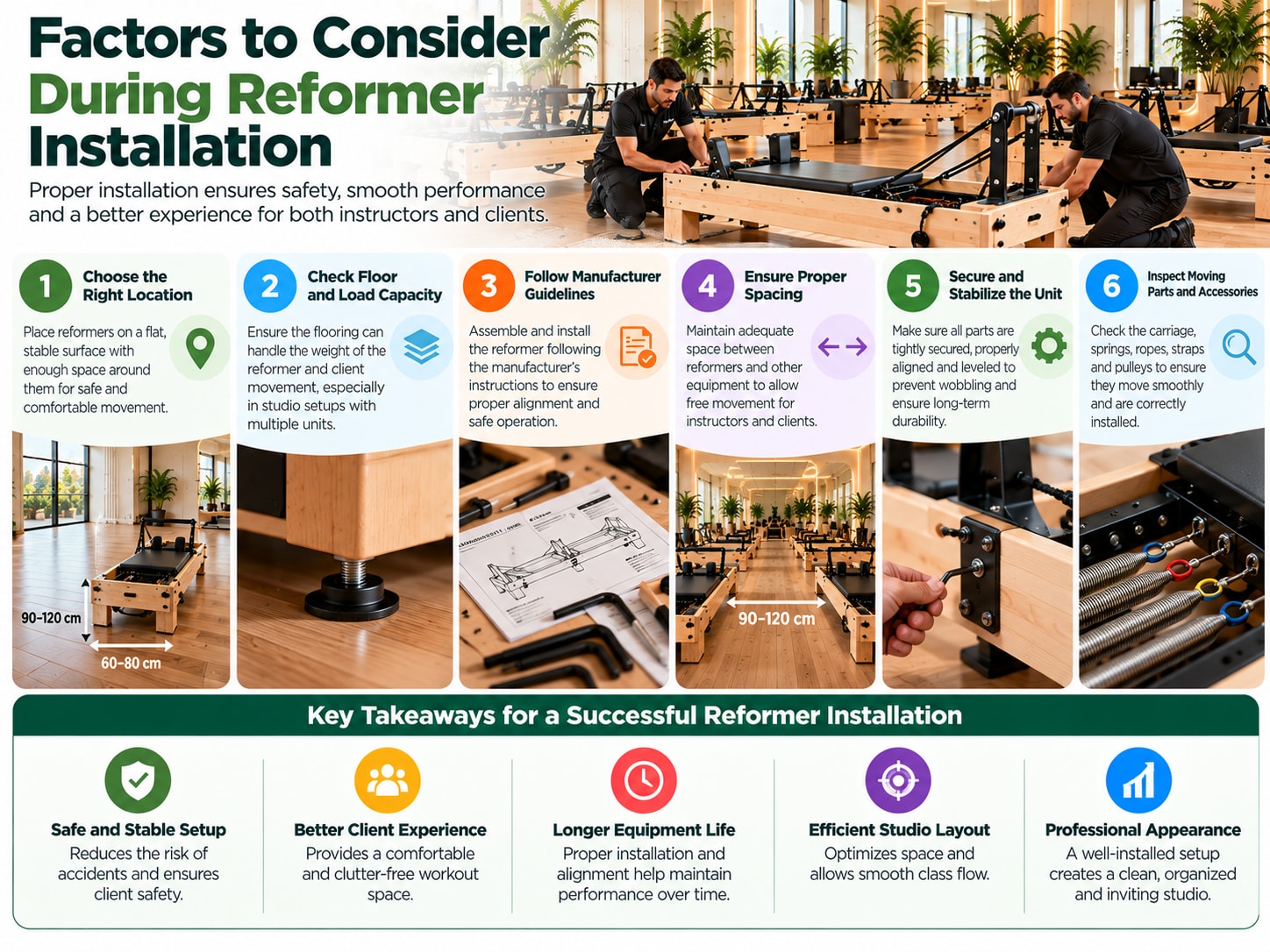
Factors to Consider During Reformer Installation
Proper installation is important for Pilates equipment. A reformer contains several moving parts, so it should be assembled and adjusted correctly. Depending on the equipment, installation may include:
Frame assembly
Carriage setup
Spring installation
Footbar adjustment
Rope or strap setup
Checking moving parts
Final positioning
Ask the supplier whether installation is included in the purchase. Professional installation can also help ensure that the reformers are positioned according to your floor plan.
Why is Product Availability an Unavoidable Aspect?
If you are opening a studio on a fixed schedule, product availability can affect your launch date. Before ordering, check for the following aspects:
Current stock
Expected delivery time
Available reformer models
Accessories
Spare parts
Warranty
Installation
After-sales service
If you need several reformers, check whether the full quantity is available at the same time. A delayed reformer can affect the planned class capacity.
Maintenance is the Key for Pilates Equipment
Reformers and other Pilates equipment need regular attention. The maintenance requirements depend on the model, but regular checks may include:
Springs
Ropes
Straps
Wheels
Carriage movement
Footbar
Shoulder rests
Bolts and connections
The equipment should be inspected regularly, especially when it is being used throughout the day. Follow the manufacturer's maintenance instructions rather than using a one-size-fits-all approach.
Keep a Plan B for Spare Parts Availability
A busy Pilates studio cannot afford unnecessary equipment downtime. Parts such as springs, ropes, straps and other small components may eventually need replacement.
Before purchasing your equipment, ask about spare-part availability and service support in the GCC. Having access to the right parts can make repairs much easier. It is also worth keeping commonly needed replacement items available if your supplier recommends doing so.
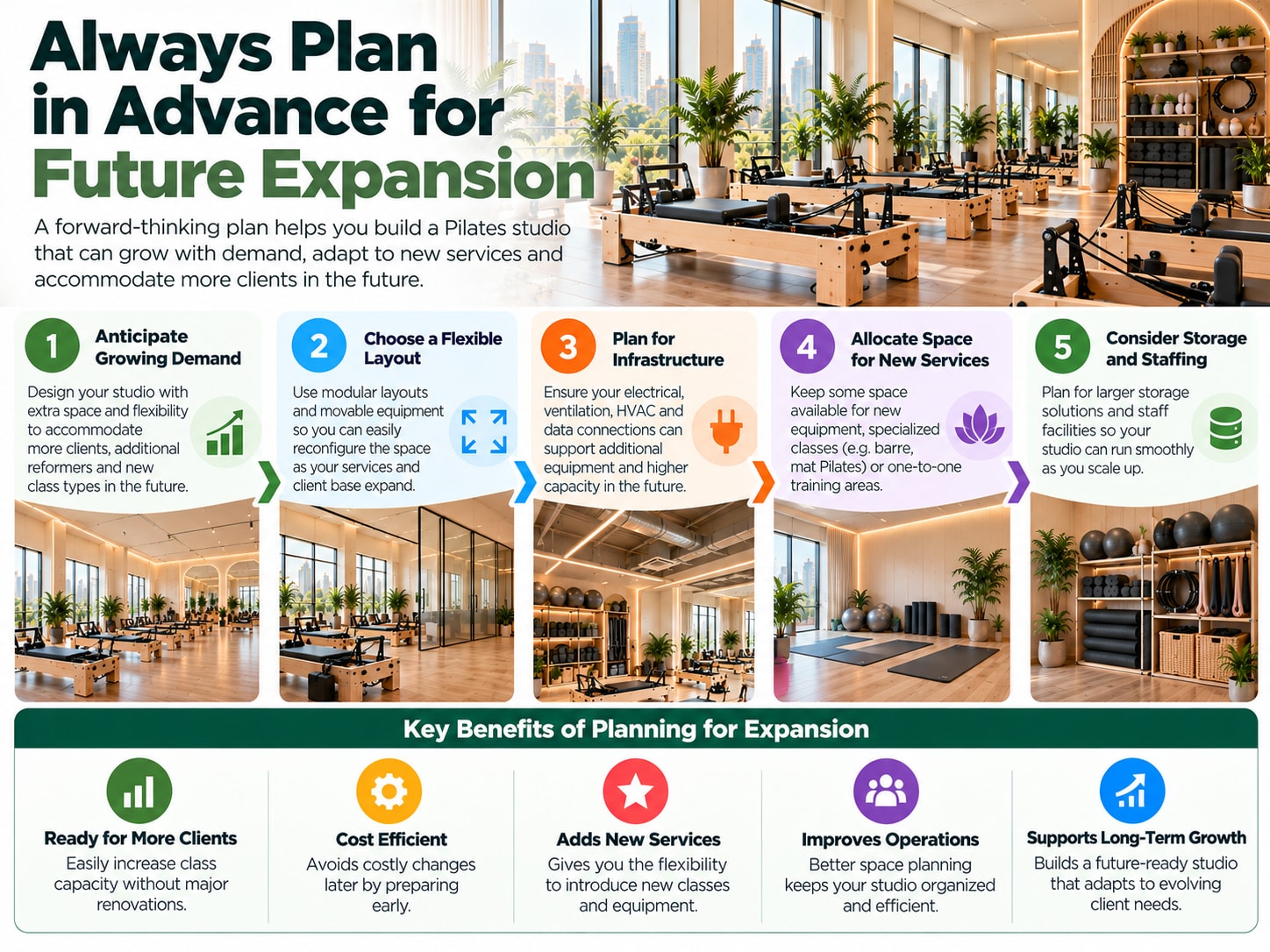
Always Plan in Advance for Future Expansion
You do not need to purchase every piece of equipment on the first day. Start with the equipment required for your initial classes and expand as your client base grows. For example, you might begin with:
First Stage
Four to six reformers
Mats
Rings
Resistance bands
Pilates balls
Basic storage
Second Stage
Additional reformers
More accessories
Larger mat area
Additional storage
Third Stage
Specialist Pilates equipment
Additional training areas
Expanded changing facilities
More reformers if demand supports them
This approach allows the studio to grow without making the initial investment unnecessarily large.
Pilates Studio: Common Mistakes People Make
Buying too many reformers: More machines are not always better if the room becomes crowded.
Ignoring spacing: Clients and instructors need room to move around the equipment.
Forgetting accessories: Small equipment can add variety to sessions.
Not planning storage: Loose accessories quickly make a studio look untidy.
Forgetting delivery access: Large reformers need to get through doors, lifts and corridors.
Not checking installation requirements: Some equipment needs professional assembly.
Choosing equipment based only on price: Durability and after-sales support matter for a busy studio.
Filling the entire room: Open space is useful for mat work, assessments and movement.
A Complete Pilates Studio Setup Checklist
Before opening your studio, check the following.
Equipment
Choose the right number of reformers
Add mats and rings
Select useful accessories
Provide suitable storage
Space
Measure the studio
Check reformer dimensions
Allow enough space around each machine
Keep clear walkways
Plan an open floor area
Client Capacity
Decide class size
Consider peak hours
Plan session duration
Allow time between classes
Hygiene
Create a cleaning routine
Clean high-contact equipment
Keep mats and accessories organised
Provide suitable cleaning supplies
Delivery
Check doors and lifts
Confirm building access
Plan delivery timings
Discuss handling requirements
Installation
Confirm whether installation is included
Arrange professional installation if required
Position equipment according to the floor plan
Maintenance
Follow equipment maintenance guidelines
Check moving parts
Monitor springs, ropes and straps
Keep spare parts available
UAE residents can rely on Lifetime Fitness Store for a wide range of quality fitness equipment, competitive offers, expert service, reliable delivery, and professional installation for a complete and hassle-free gym setup.
Conclusion
Setting up a Pilates studio in GCC is about more than choosing a room and filling it with reformers. The best studios are planned around the client experience.
Start by deciding what type of Pilates sessions you want to offer and how many clients you expect to train at one time. Then choose reformers and accessories that support those sessions without making the room feel crowded.
Leave enough space around each reformer for clients and instructors to move comfortably. Keep part of the studio open for mat work, assessments, stretching and other exercises.
Flooring, lighting, air conditioning and storage also deserve attention. These details may not seem as important as the reformers, but they have a direct effect on how the studio feels and functions.
Cleaning should be part of the daily routine, particularly for equipment and surfaces that are frequently touched. Regular maintenance is equally important when reformers are being used throughout the day.
Finally, think about delivery and installation before placing your equipment order. Check building access, door sizes and lift dimensions, and make sure there is a clear plan for getting the equipment into the studio.
You need not build the biggest studio from day one. Start with a practical equipment package, understand what your clients use most and expand as the business grows.
A successful Pilates studio is not just a room full of reformers. It is a comfortable, clean and well-planned space where clients can move freely, instructors can do their job properly and every piece of equipment has a clear purpose.
A new Pilates studio can include reformers, Pilates mats, rings, resistance bands, balls, blocks, barrels, chairs and other accessories based on the classes offered. Equipment selection should also consider available space, client capacity, instructor requirements and budget.
The required space depends on the number and dimensions of reformers, expected class capacity, mat-training areas, storage and additional equipment. Studios should also provide adequate clearance around each reformer for comfortable movement, instruction and access, following the equipment manufacturer's recommendations.
Reformers should be positioned on a stable, suitable floor with enough space between machines for clients and instructors to move comfortably. The layout should consider class flow, equipment access, mirrors, lighting, ventilation and storage without creating unnecessary congestion.
Choose surfaces and storage solutions that make routine cleaning practical, and establish a cleaning schedule for reformers, mats and frequently handled accessories according to manufacturer instructions. For future expansion, consider a flexible layout with room for additional reformers, new accessories, increased client capacity and additional training areas.





 Get a weekly dose of latest stories
and useful tips directly in your inbox!
Get a weekly dose of latest stories
and useful tips directly in your inbox!


 0
0

































































 Price Match Guarantee
 Free Shipping
 Product Warranty
 After-Sale Support
 Have Coupon Code?
 You'll Save 0.00 On This Order
 Safe And Secure Payments. Easy Returns. 100% Genuine Products