Pilates Reformer Buying Guide: Carriage, Springs, Frame, Size & Studio Capacity in the UAE
Pilates is one of the popular choices for those who wish to improve their flexibility, posture, and overall fitness. It has been gaining quite a lot of attention among home fitness freaks, personal trainers, boutique studios, and larger fitness centres.
Needless to say, choosing the right Pilates reformer has been considered as an important decision for both individuals and gym owners. The equipment’s design, build quality, resistance system, dimensions, and the comfort level it offers can affect the workout experience.
For home users, the concerns are often factors like space, ease of use, and budget. For gym owners, durability, user capacity, maintenance, and the number of clients who use the equipment are equally important.
The varied number of models available today are likely to leave people baffled, when they plan to buy a Pilates reformer. While some machines are designed for home workouts, others are built to handle frequent use in professional studios.
Understanding the differences can help you choose the one that meets your needs without spending unnecessarily. This blog on Pilates reformer covers the key factors to consider, including carriage quality, springs, frame construction, dimensions, user capacity, accessories, and studio throughput.
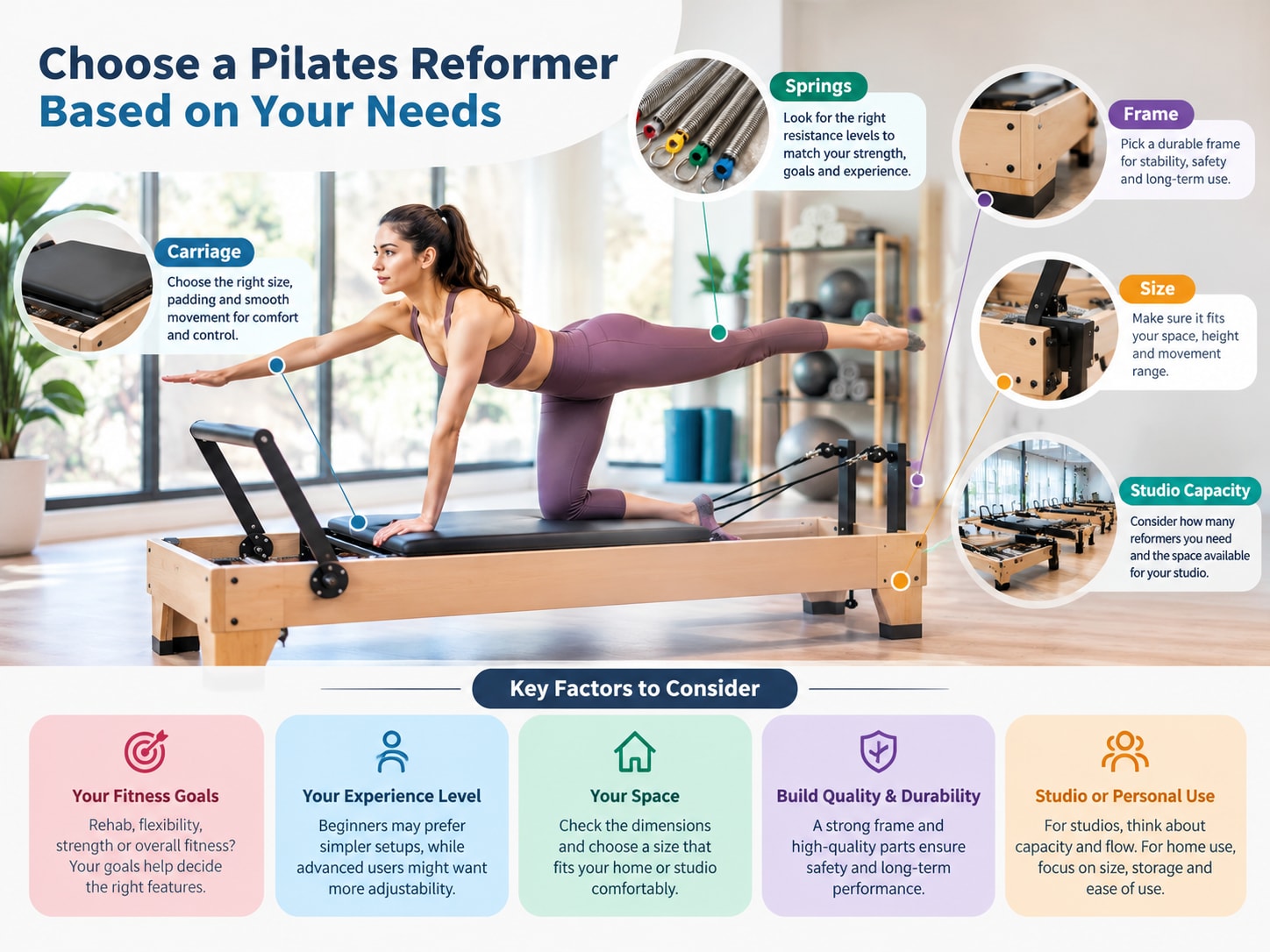
Choose a Pilates Reformer Based on Your Needs
Before comparing individual features, you need to decide how you are going to use the reformer. This is the first step towards making the right investment.
Pilates reformers for home use
If you plan to use the machine at home, look for a model that fits your available space and suits your fitness goals. A compact design can be useful for apartments and smaller rooms, which are common in many parts of the GCC countries. Consider the following features:
Compact dimensions that fit your workout area.
Smooth carriage movement for comfortable exercise.
Adjustable spring resistance for different fitness levels.
Easy access to footbars and straps.
Simple storage options, if available.
A frame that remains stable during regular workouts.
Home users may not need every accessory or adjustment available on a commercial machine. A well-built reformer with the right features is often a better choice than a larger model with unnecessary extras.
Pilates reformers for studios
A professional Pilates studio has different requirements. The equipment may be used by several clients with different body types, fitness levels, and training goals throughout the day.
Hence, studio owners should focus on durability, quick adjustments, user comfort, and ease of maintenance. The reformer should also allow instructors to move between exercises without wasting too much time.
For commercial use, consider a model designed for frequent sessions, with a strong frame, reliable springs, replaceable parts, and accessories that support a range of exercises. The right machine should match your business model, the type of classes you offer, and the number of clients you expect to serve.
Compare the Carriage for Comfort and Smooth Movement
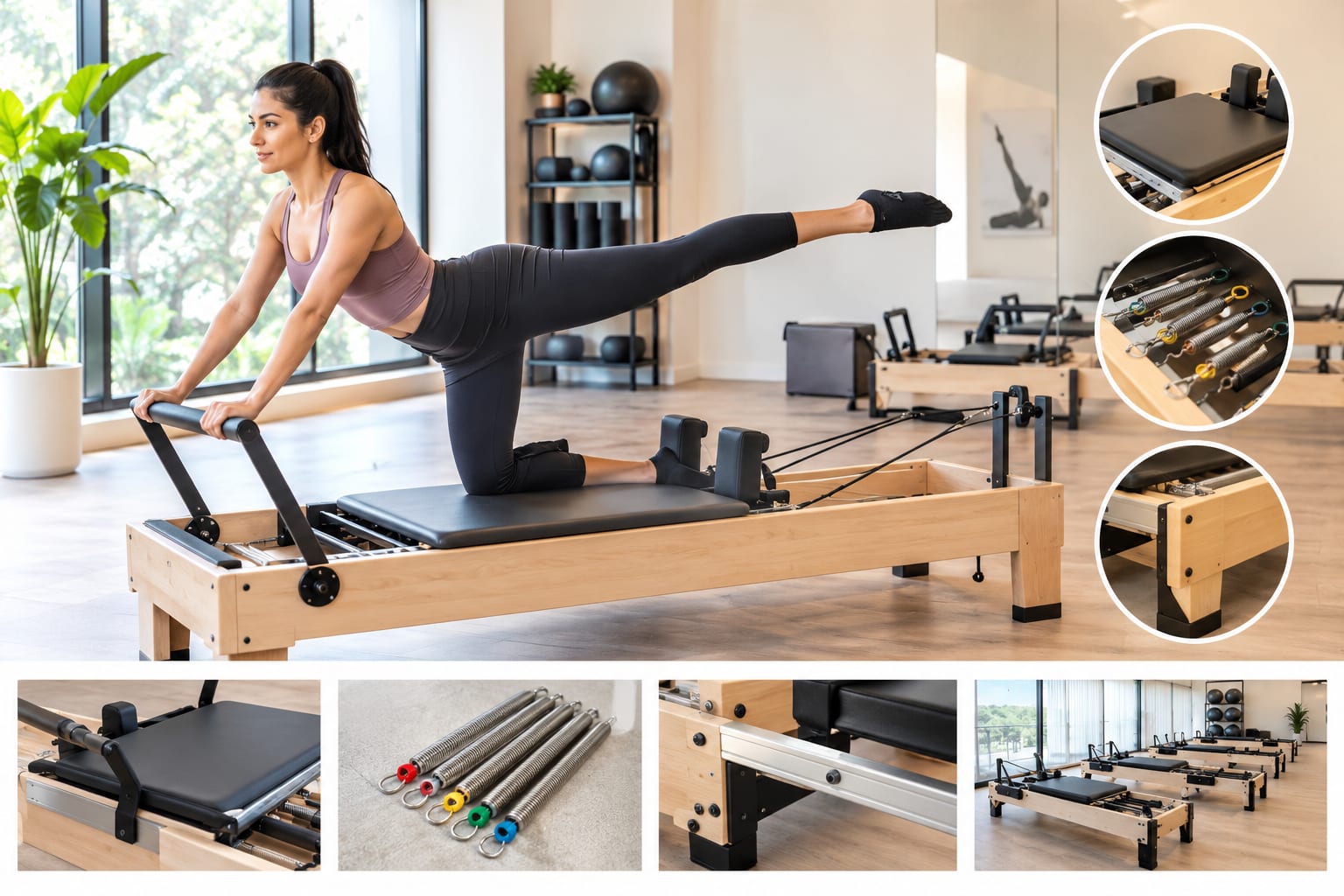
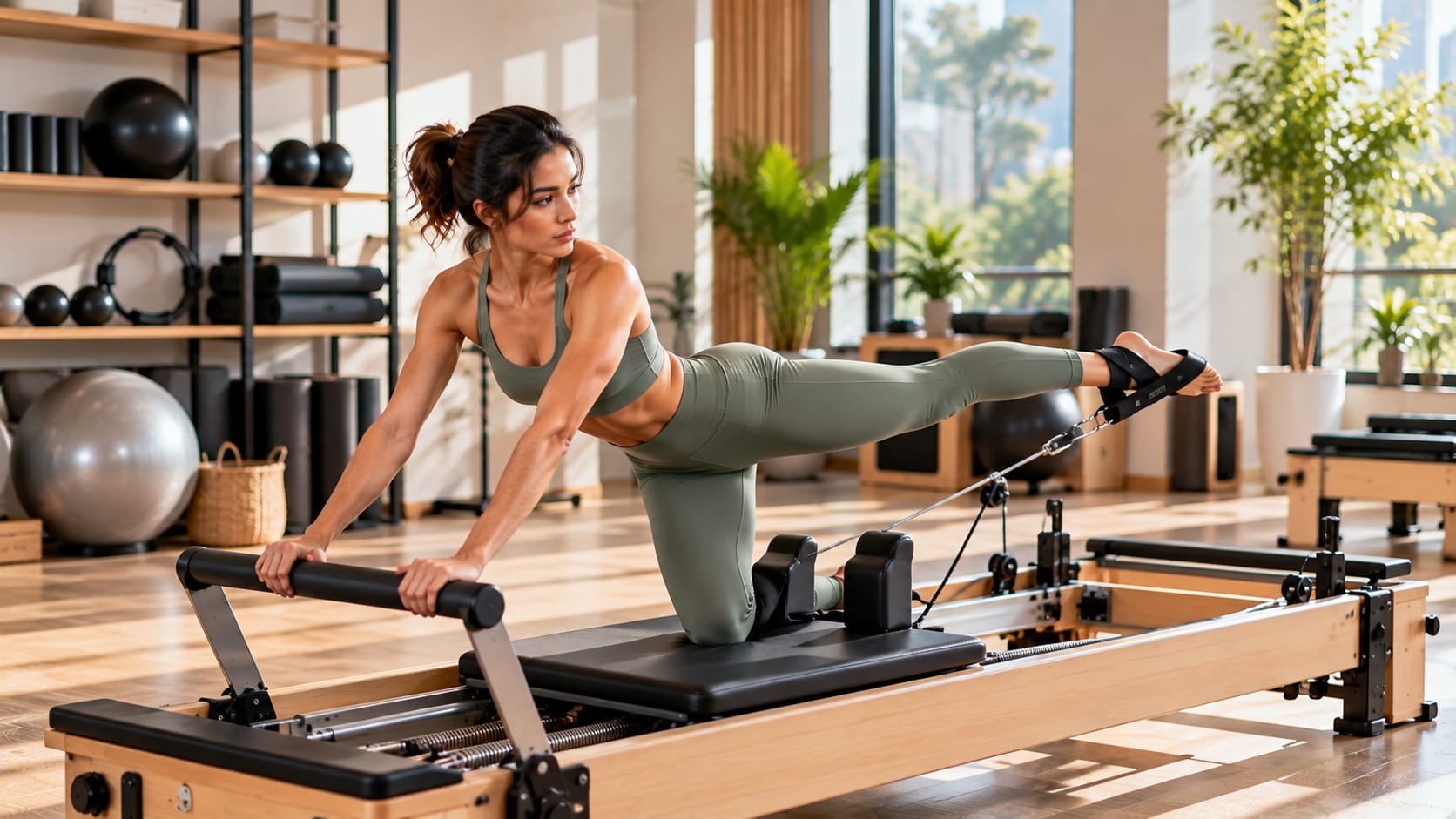
The carriage is the moving platform on which the user sits, kneels, or lies during a Pilates workout. It moves along the reformer's rails and works with the spring system to create resistance. Carriage quality is one of the most important factors to check before purchasing a reformer.
What makes a good carriage?
A good carriage should move smoothly without unnecessary noise, sticking, or sudden jerks. Its movement should feel controlled throughout the exercise, allowing users to focus on their posture and technique.
Look carefully at the following features when comparing models:
Smooth movement: The carriage should travel evenly along the rails.
Comfortable padding: Cushioning should provide support without feeling too soft or too firm.
Stable platform: The carriage should feel secure during different movements.
Suitable width and length: The platform should accommodate the intended users comfortably.
Quality upholstery: Materials should be easy to clean and suitable for regular use.
The rollers, bearings, and rail design also influence carriage performance. Ask the supplier about the components used and how they should be maintained.
Home use versus studio use
For home users, quiet operation and comfort may be the main priorities. A smooth carriage can make workouts more enjoyable, especially when exercising in a shared living space. For studios, the carriage must withstand repeated use throughout the day.
A durable design with reliable rollers and replaceable components can help reduce maintenance interruptions. Before buying, it is advisable to try the carriage if possible. Move it through its full range and listen for unusual sounds. Check whether it feels stable when changing direction.
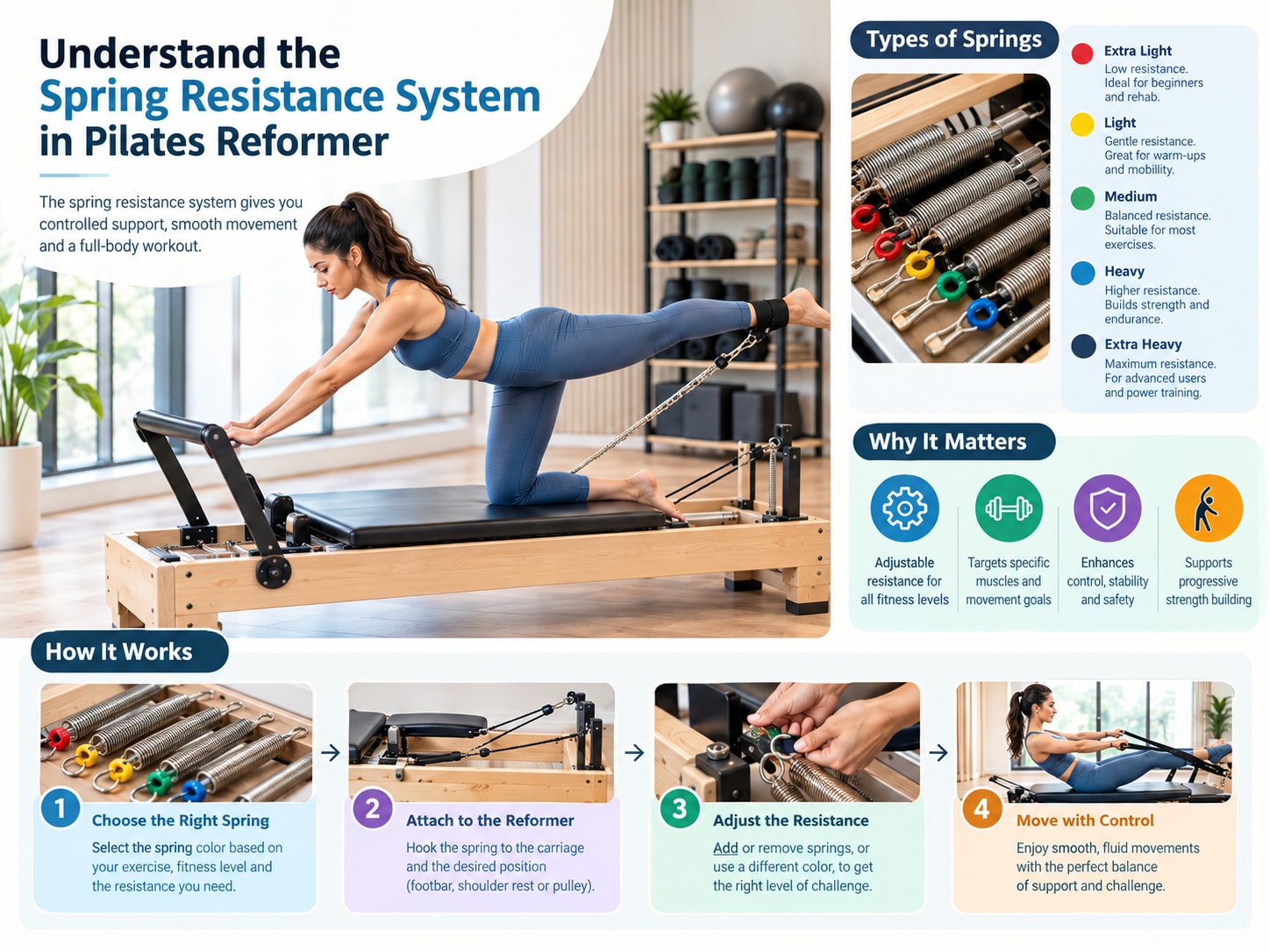
Understand the Spring Resistance System in Pilates Reformer
Springs provide the resistance that makes Pilates reformer exercises challenging. They connect the carriage to the frame and allow users to adjust the level of resistance according to the exercise.
Different reformers use different spring configurations, colours, and resistance levels. It is important to understand the system rather than choosing a machine based only on the number of springs.
What factors should you compare?
Spring resistance: Check the available resistance levels and whether they suit beginners, experienced users, and rehabilitation-focused exercises where appropriate.
Adjustability: Springs should be easy to attach and release. Clear markings or a simple colour-coding system can make adjustments faster.
Spring quality: Ask about the materials, expected service life, inspection requirements, and replacement availability.
Resistance options: A suitable combination of lighter and heavier springs gives instructors more flexibility when planning exercises.
More springs do not automatically mean a better reformer. What matters is the resistance range, the quality of the springs, and how easily the system can be adjusted.
Why do springs matter in a Pilates studio?
In a studio environment, instructors may need to change resistance between clients and exercises. A straightforward adjustment system can save time during busy sessions.
Reliable springs also help maintain a consistent workout experience. However, springs are wear components and should be inspected regularly for damage, deformation, corrosion, or other signs of deterioration. Follow the manufacturer's replacement schedule and safety instructions.
When comparing reformers, always check whether replacement springs are readily available and whether the supplier can provide after-sales support.
Pilates Reformer: Check the Frame Material and Build Quality
The frame supports the carriage, springs, footbar, and other working parts. It plays a major role in the stability and durability of the reformer. A machine may look attractive in a product photograph, but its real value depends on how well it is constructed.
Wooden frames
Wooden reformers are often chosen for their traditional appearance and warm finish. They can work well in homes and studios where design is an important consideration.
When comparing wooden models, check the type of wood, the quality of the joints, the finish, and the manufacturer's guidance for cleaning and maintenance. The frame should feel solid, with no unwanted movement during normal exercises.
Metal frames
Metal reformers are commonly used in commercial environments because they can offer a strong, practical structure. Aluminium and steel are among the materials used in reformer construction.
The actual performance depends on the design, material thickness, joints, finish, and manufacturing quality. Do not assume that every metal reformer is automatically stronger than every wooden model.
For metal frames, inspect the finish, connection points, and resistance to corrosion. This is relevant when equipment is transported, stored, or used in environments where moisture and cleaning products may affect its surfaces.
What should buyers look for?
Regardless of the material, check that the frame is stable, the rails are properly aligned, and the main components are securely fitted. Ask about the warranty, recommended maintenance, and availability of spare parts.
For studio owners, a durable frame can help limit downtime and replacement costs. For home users, it can provide a stable foundation for regular exercise over the long term.
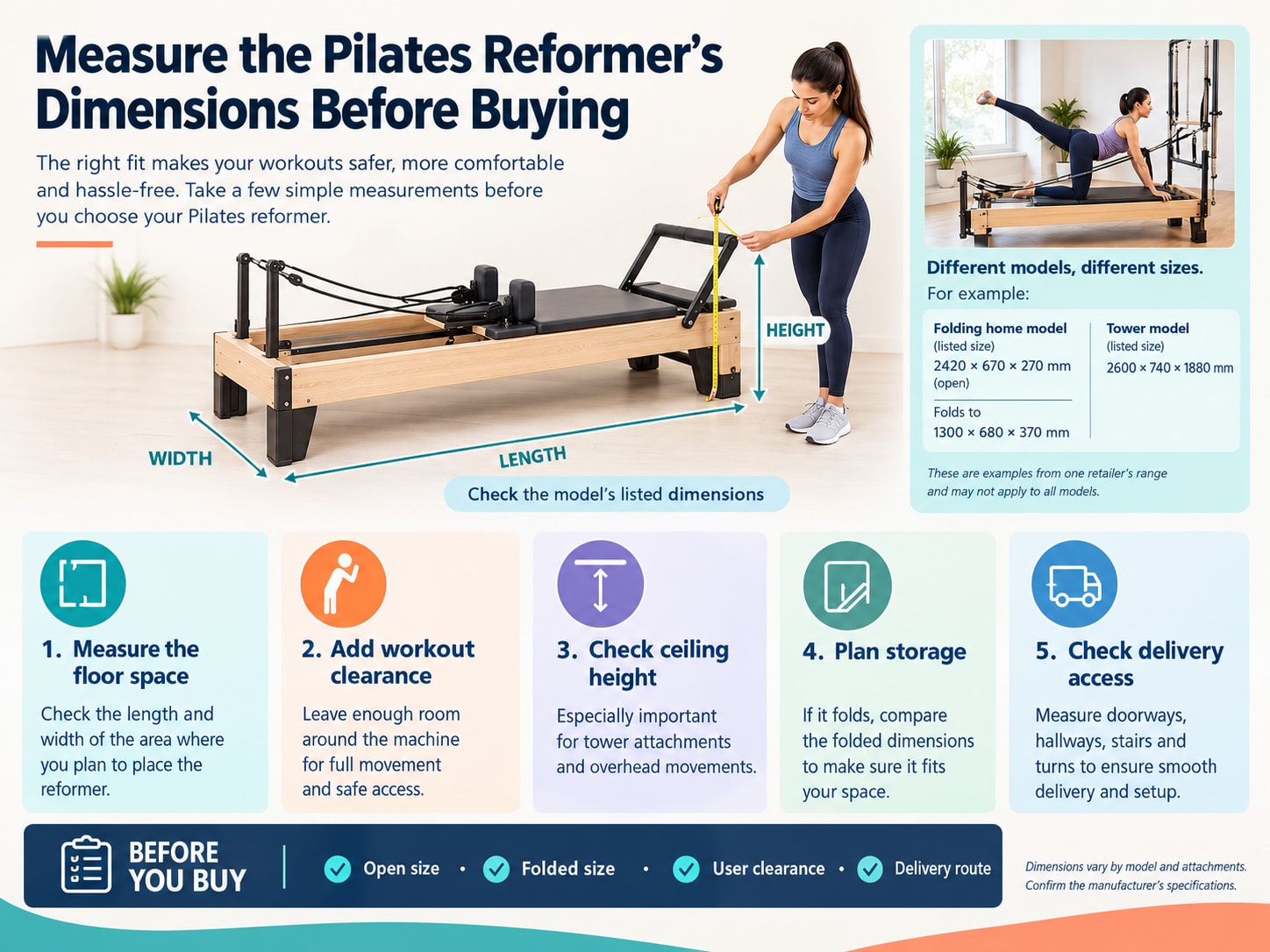
Measure the Pilates Reformer’s Dimensions Before Buying
The size of a Pilates reformer can affect where it fits, how comfortably it can be used, and how easily people can move around it. This is important, where available workout space can vary considerably between apartments, villas, personal training rooms, and commercial fitness facilities.
Consider the full footprint
Do not measure only the length and width of the machine. You should also allow space for mounting and dismounting, moving the carriage, adjusting the footbar, and performing exercises safely. Before ordering, confirm the following:
Overall length and width.
Height, including any raised components.
Space needed around the reformer.
Clearance required for standing and floor-based exercises.
Storage dimensions, if the model folds or can be stored upright.
Delivery access through doors, lifts, corridors, and stairways.
A reformer that fits into a room on paper may still be difficult to use if there is not enough clearance around it.
Compact versus full-size reformers
Compact reformers can be useful for home workouts or rooms with limited floor space. However, their shorter dimensions may not suit every user or exercise. Full-size models can provide more room for movement and may be better suited to studios serving a wide range of clients.
When comparing sizes, consider the height and body proportions of your intended users, the exercises you plan to perform, and the manufacturer's recommended usage requirements.
For studios, also plan the distance between reformers. Clients and instructors should be able to move safely without interfering with neighbouring sessions.
Why Does User Weight Capacity and Comfort Matter?
User capacity is an important specification that should never be overlooked. Each reformer has a stated maximum user weight or working-load limit, depending on the manufacturer's terminology. Always check the exact specification for the model you are considering. Do not estimate capacity from the machine's appearance or frame material.
What is the difference between user weight and working load?
Some manufacturers specify the maximum user body weight, while others may describe a working load or maximum load. These terms may not mean the same thing.
Ask the supplier to explain the stated rating and confirm that it covers the intended exercises and use conditions. Do not assume that a higher working-load figure automatically represents the permitted user body weight.
Why does capacity matter?
For home use, the reformer should accommodate the intended user within the manufacturer's stated limits. For studios, equipment may be used by people with different body weights and physical abilities. Choosing an appropriate capacity helps ensure that the machine suits the clients you expect to serve.
Comfort matters as well. Check the carriage dimensions, shoulder rests, footbar adjustments, strap lengths, and ease of getting on and off the machine. If your studio serves a broad range of clients, look for a model with suitable adjustment options and clear manufacturer guidance on safe use.
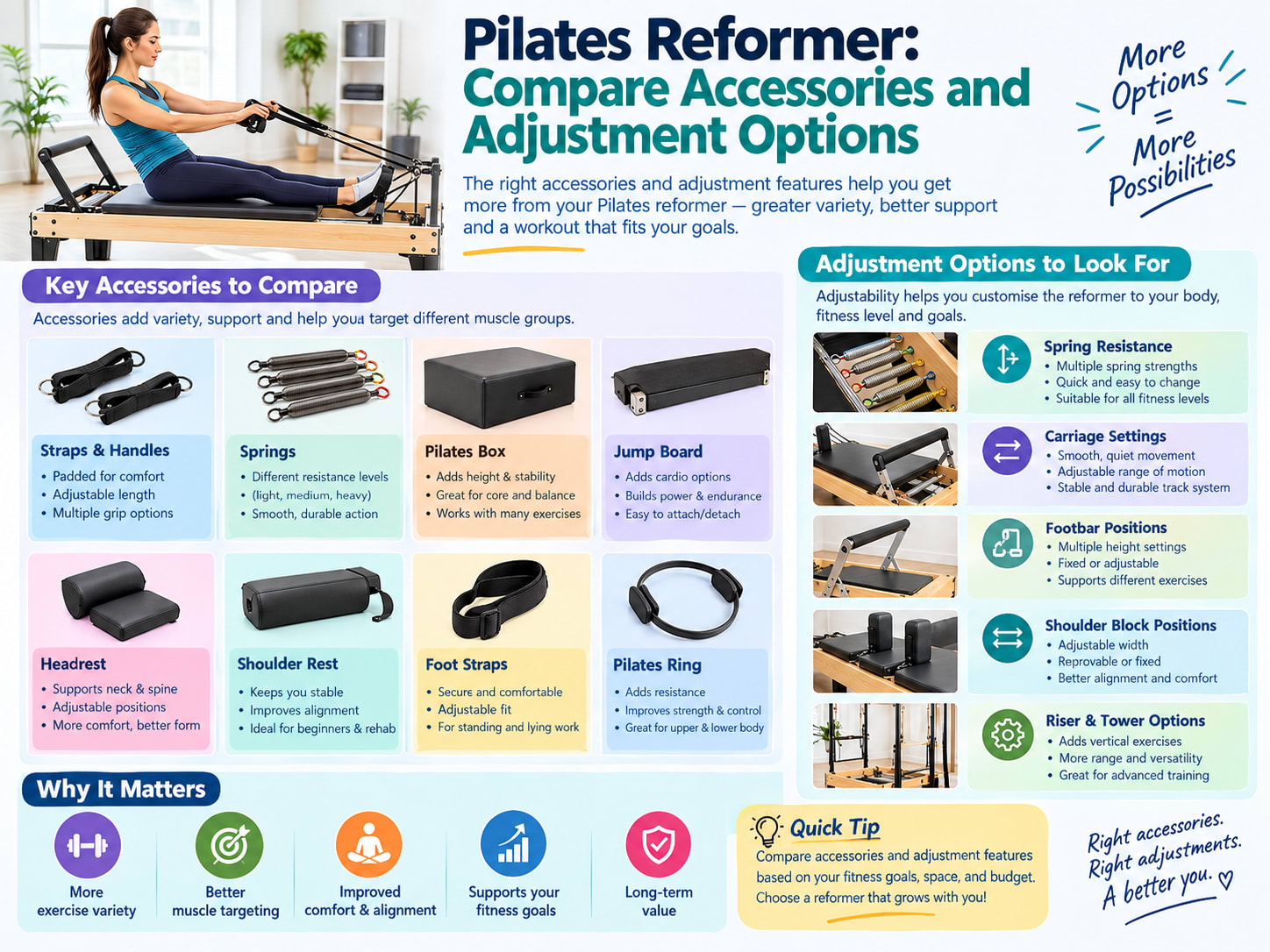
Pilates Reformer: Compare Accessories and Adjustment Options
Accessories can expand the range of exercises available on a Pilates reformer. However, the best package depends on your training needs rather than the total number of accessories included. Some accessories come standard with the reformer, while others may need to be purchased separately. Confirm exactly what is included before comparing prices.
Common Pilates reformer accessories
Footbar: Supports the feet or hands during different movements. Check its stability, padding, and available adjustment positions.
Shoulder rests: Help support the upper body during exercises performed on the carriage. They should be comfortable, secure, and appropriately positioned.
Straps and handles: Used for arm and leg exercises. Check their material, grip, length, and attachment system.
Headrest: Provides support for the head and neck in suitable positions. Adjustable options can improve comfort for different users.
Jumpboard: Provides a surface for controlled jumping movements while lying on the carriage, when supported by the reformer design and used appropriately.
Box: A padded accessory used for selected seated, prone, and other exercise variations.
Tower or additional attachment system: Available on some models to support a wider range of exercises. Confirm compatibility and installation requirements.
Standing platform and extension components: These may improve access to particular exercise variations, depending on the model.
How to choose the right accessories?
Home users may only need the standard equipment and a few accessories that support their preferred workouts. Studios may benefit from a more versatile setup, particularly when offering different class formats or individual training sessions.
Before purchasing additional equipment, check compatibility, weight limits, storage needs, cleaning requirements, and whether the accessory is included in the quoted price. A useful accessory is one that supports your training programme and is safe to use with your specific reformer.
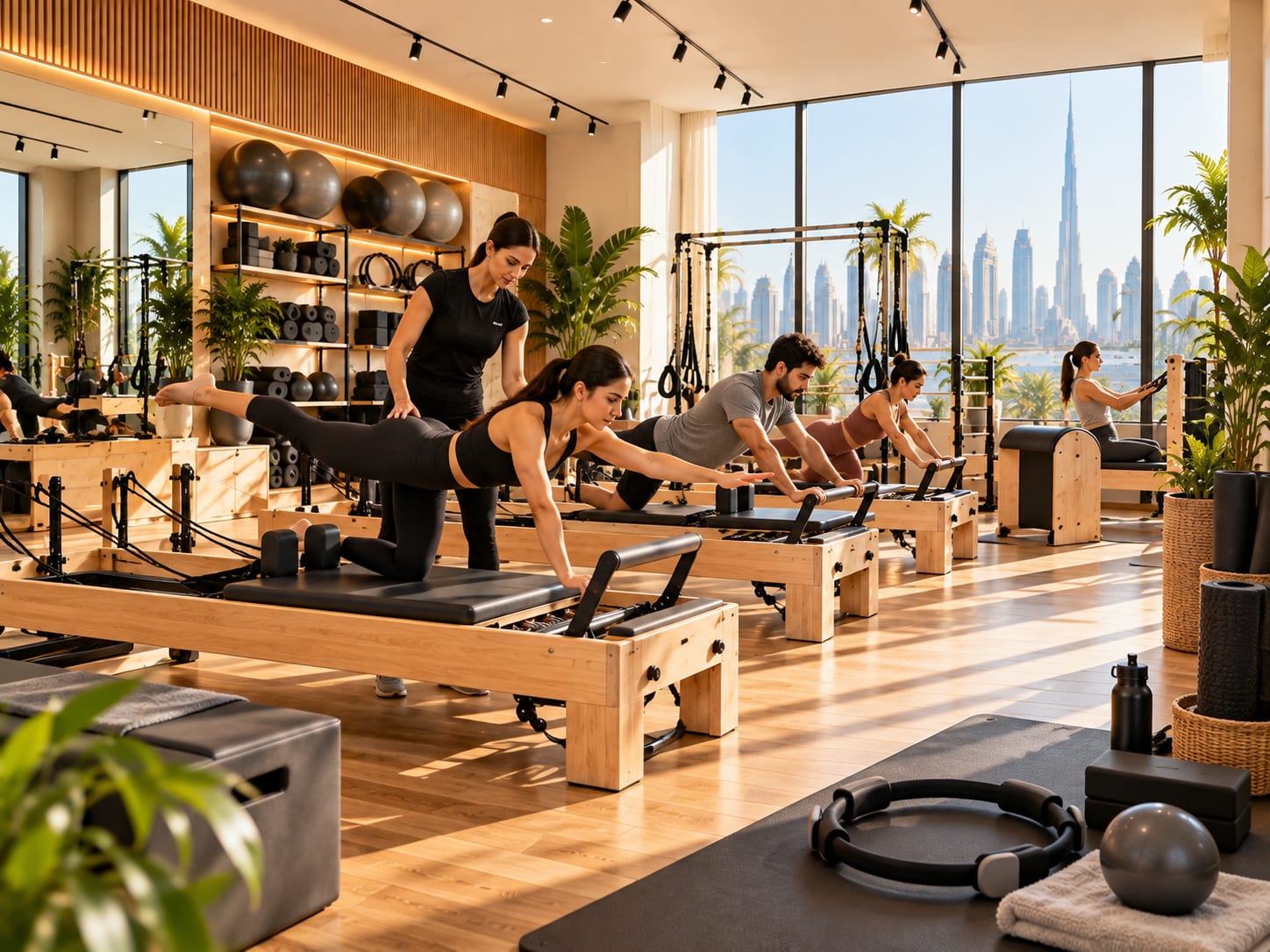
Consider Studio Throughput and Daily Usage
Studio throughput refers to how many clients a Pilates studio can serve over a particular period. It is an important consideration when buying commercial reformers because equipment choices can influence scheduling, session flow, and operating costs.
However, throughput is not determined by the reformer alone. Class duration, instructor availability, studio layout, cleaning routines, and booking demand also play a role.
How reformer design affects throughput
A reformer that is easy to adjust can help instructors transition between exercises and clients more efficiently. Clear resistance settings, accessible spring attachments, and convenient footbar adjustments can reduce unnecessary delays.
Durability also matters. Equipment that requires frequent repairs can interrupt sessions and reduce the number of bookings a studio can accommodate. When assessing commercial models, look for the following things:
Fast and straightforward adjustments.
Reliable springs, straps, rollers, and connection points.
Easy-to-clean surfaces and upholstery.
Readily available replacement parts.
Suitable dimensions for the planned studio layout.
Manufacturer support and maintenance guidance.
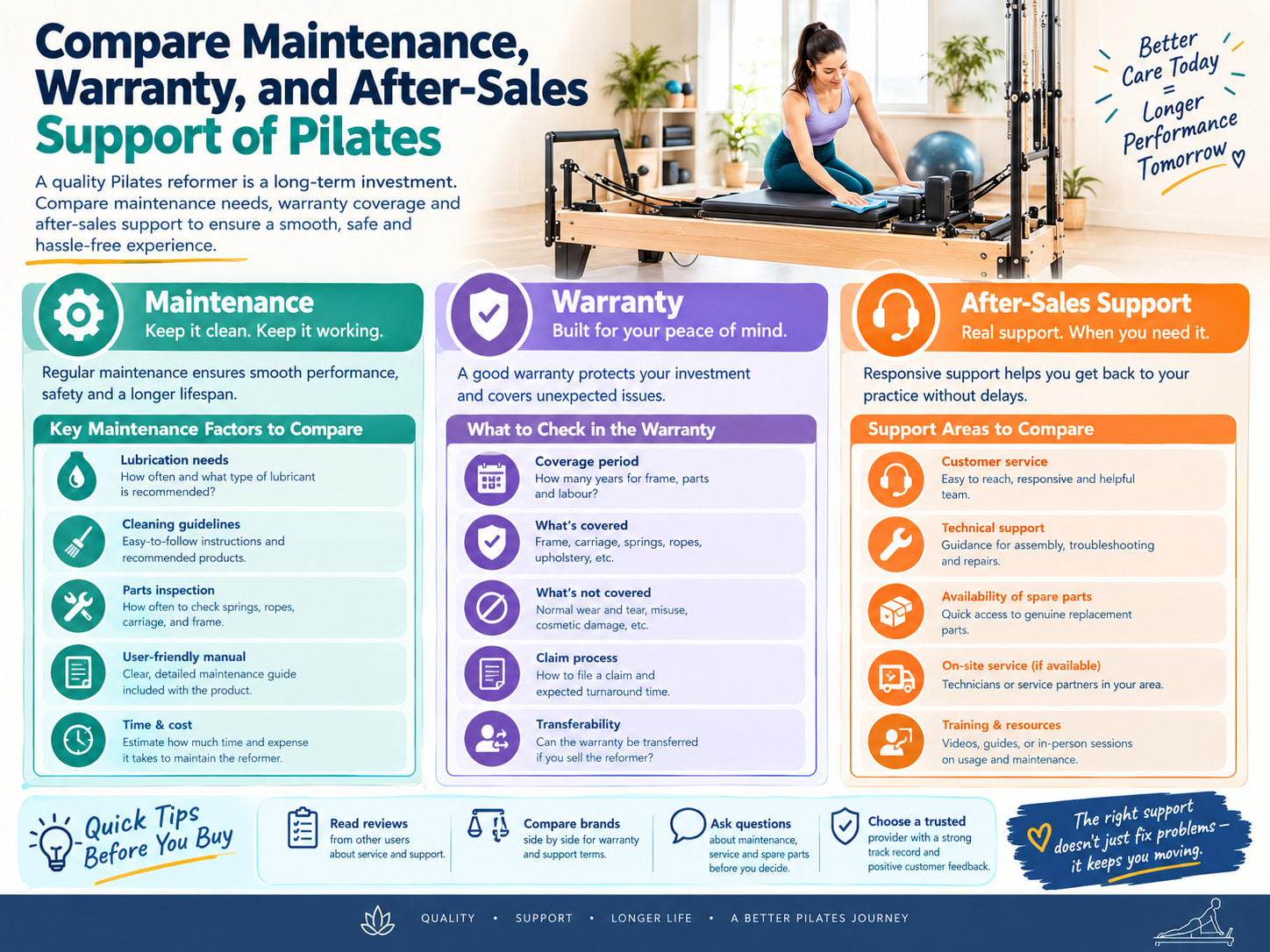
Compare Maintenance, Warranty, and After-Sales Support of Pilates
A Pilates reformer is a long-term investment, so the purchase price should not be your only consideration. Maintenance requirements and access to support can make a difference to the total cost of ownership.
Before buying, ask the supplier about the warranty period, what the warranty covers, and whether it applies to commercial use. Some warranties may have different conditions for home and studio equipment.
Check the availability of replacement springs, straps, rollers, upholstery components, and other parts that may wear over time. You should also understand the recommended inspection and maintenance schedule. Regular checks can help identify loose connections, worn components, or other issues before they affect normal use.
For studios, local service availability can be useful because it may reduce delays associated with sourcing parts from overseas. Confirm whether the supplier provides local technical support, spare parts, delivery, and installation.
Finally, consider the total cost over the expected life of the machine, including accessories, shipping, installation, maintenance, and possible replacement components.
What Is the Right Budget for a Pilates Reformer?
Pilates reformer prices can vary according to the frame material, brand, construction quality, included accessories, and intended use.
Entry-level models may suit occasional home workouts, while premium or commercial models may offer stronger construction, more adjustment options, and support for frequent use. Instead of choosing the cheapest available model, compare what each price includes.
Ask whether the quoted amount covers delivery, installation, accessories, warranty support, and any applicable taxes or additional charges. If you are buying several reformers for a studio, request a detailed quotation that lists the model, specifications, included components, and service terms.
It is also useful to compare the cost of ownership rather than just the initial purchase price. A less expensive machine may not offer the best value if replacement parts are difficult to obtain or the equipment is unsuitable for your intended workload.
The right budget is one that allows you to buy a reformer that fits your space, supports your users, and meets your expected frequency of use.
Common Mistakes to Avoid When Buying a Pilates Reformer
Even experienced fitness enthusiasts can overlook important details when comparing equipment. Here are some common mistakes to avoid:
Choosing based on price alone: Low upfront cost does not always mean better value over time.
Ignoring room dimensions: Always measure the available space and allow sufficient clearance around the machine.
Overlooking spring quality: Resistance options, condition, replacement availability, and adjustment convenience all matter.
Assuming all frames are equally durable: Compare construction details and warranty conditions.
Buying unnecessary accessories: Choose equipment based on the workouts and services you plan to offer.
Ignoring user capacity: Confirm the manufacturer's stated limits before purchasing.
Forgetting maintenance costs: Include servicing and replacement components in your budget.
Not checking commercial suitability: A model intended for occasional home use may not be appropriate for a busy studio.
Taking time to compare these details can help you make a more informed decision and avoid unnecessary expenses later.
People from across the UAE may visit Lifetime Fitness Store and experience the exceptional customer service, explore the wide range of high-quality products, enjoy reliable and timely delivery, and benefit from competitive prices and a hassle-free shopping experience.
Conclusion
Choosing the right Pilates reformer involves more than comparing brands or looking for the lowest price. The machine should suit your available space, intended users, exercise requirements, and expected frequency of use.
For home users, carriage comfort, compact dimensions, ease of adjustment, and overall value are often the main priorities. For Pilates studios, frame durability, spring reliability, user capacity, accessory compatibility, maintenance support, and daily throughput deserve closer attention.
Before making a purchase, compare the specifications of several models and ask the supplier about warranty coverage, replacement parts, delivery, installation, and after-sales service.
Most importantly, choose a reformer that matches your actual needs rather than paying for features you may never use. With careful planning, you can find equipment that supports comfortable workouts, reliable performance, and long-term value.
Whether you are setting up a home workout area or opening a professional Pilates studio, a well-chosen reformer can become a valuable part of your fitness routine or business for years to come.
When buying a Pilates reformer, consider the carriage quality, spring resistance, frame material, machine dimensions, weight capacity, and overall durability. Choose a model that suits your workout needs, available space, and expected usage, whether for home practice or a professional studio.
Springs control the resistance and intensity of Pilates exercises. Different spring tensions allow users to adjust workouts based on their fitness levels and training goals. Look for a reformer with durable springs, smooth resistance transitions, and easy-to-adjust settings for versatile training.
Pilates reformers commonly feature wooden or metal frames. Wooden frames offer a classic appearance and are popular in boutique studios, while aluminum and steel frames can provide a modern design and sturdy construction. The best choice depends on durability, maintenance requirements, portability, budget, and studio aesthetics.
Start by measuring your available floor space and considering the number of reformers needed for your classes. Account for instructor access, safe movement around each machine, and storage requirements. Compact models may suit smaller spaces, while larger studios can prioritize models designed for frequent commercial use and long-term durability.




 Get a weekly dose of latest stories
and useful tips directly in your inbox!


 0



































































 Price Match Guarantee
 Free Shipping
 Product Warranty
 After-Sale Support
 Have Coupon Code?
 You'll Save 0.00 On This Order
 Safe And Secure Payments. Easy Returns. 100% Genuine Products