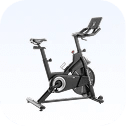




Fitness enthusiasts resort to various equipment to burn calories efficiently. One of the fascinating ways they depend on for their daily dose of exercise is indoor cycling. Spin bikes are an excellent tool that combines cardiovascular exercise and muscular endurance training. This unique feature makes them a reliable option for those who are keen to improve fitness, shed a few kilos, and enhance stamina. Among the varied fitness goals people set for themselves, burning 500 calories in a single session has become a fad these days. This is because many consider it as a mammoth, yet achievable target.
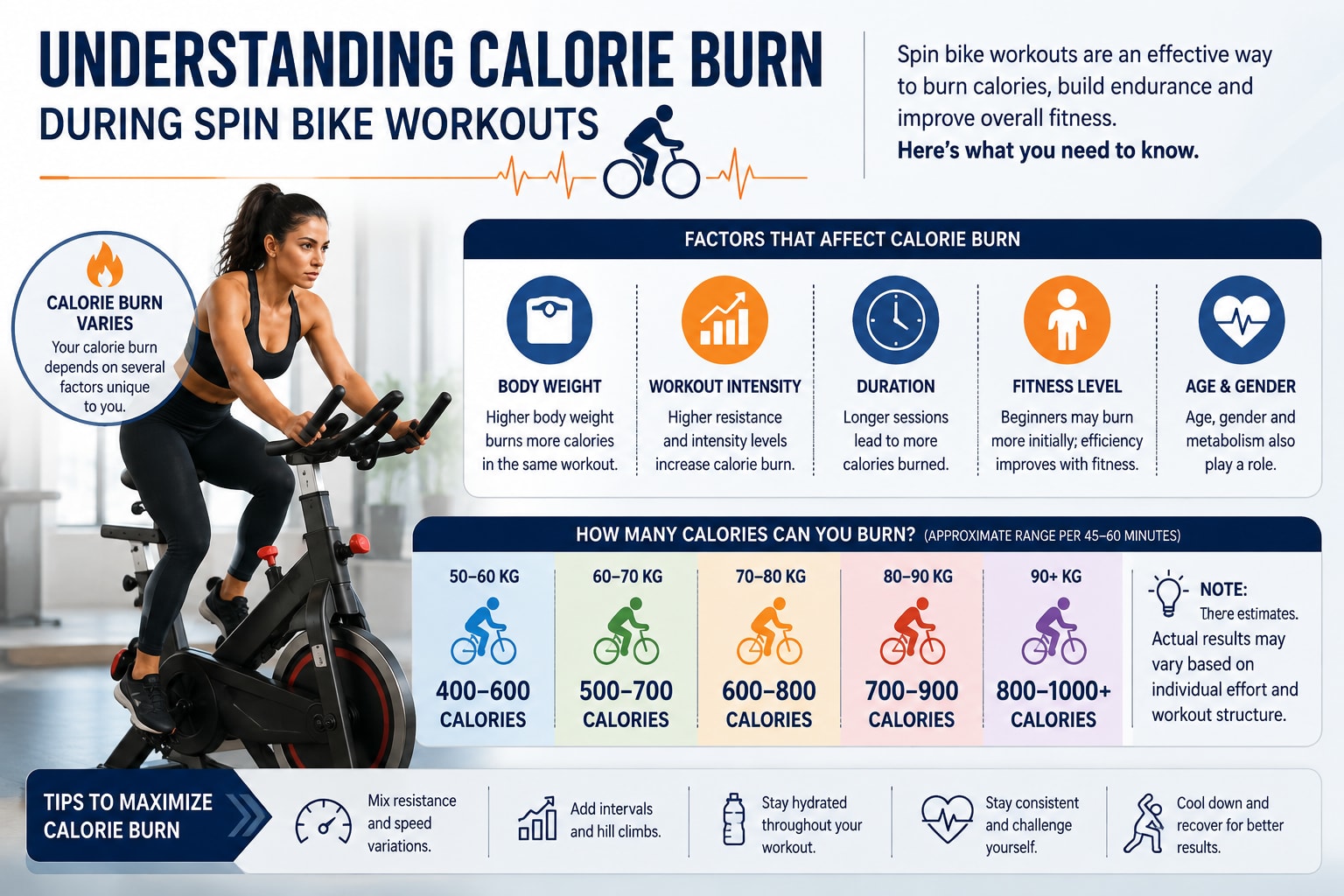
However, attaining that magical number is easier said than done. Burning huge calories depends on umpteen factors like body weight, workout intensity, resistance level, duration, age, and fitness level. As strange as it may sound, two people performing the same spin session workout may burn different amounts of calories, thanks to their bodies responding differently to exercise. This basic factor should be kept in mind before setting unrealistic expectations from workouts.
Understanding Calorie Burn During Spin Bike Workouts
One of the popular misconceptions with regard to burning calories is that longer workouts often produce better results. While it is true that workout duration plays a vital role, it is the intensity that really matters and produces a bigger impact. In fact, increasing resistance, interval training, and maintaining a proper cycling technique can significantly increase calorie burning than extending your workout time. This is why spinning is one of the most efficient ways to attain high calorie burn along with bettering cardiovascular fitness.
Another advantage of spinning is the versatility it offers. While beginners could start with moderate rides to build endurance, experienced ones could challenge themselves with high intensity intervals and simulated hill climbs. This adaptability enables people of different fitness levels to work toward higher calorie burning sessions without the risk of injury.
An interesting thing fitness freaks need to keep in mind is that burning calories is just one aspect of being fit. Spinning regularly strengthens the heart, improves lung function, builds muscular endurance, and supports mental wellbeing. Cycling becomes effective when it is combined with impressive eating habits and proper recovery.
How Your Body Burns Calories During Exercise
There is a general notion that calorie burning is all about sweating or feeling exhausted after a hectic workout, but the reality is far from it. Calories are actually units of energy that our body uses to perform various activities like breathing, digestion, walking, and exercising.
During a spin workout, our muscles require a continuous supply of energy to keep the pedals moving. The body meets this demand by converting stored carbohydrates and fats into usable energy. As the workout intensity increases, our muscles may need more oxygen, causing our heart rate to rise accordingly.
The harder our body works, the more calories it burns. High resistance climbs, sprint intervals, and sustained endurance efforts increase calorie burning because they require bigger muscular effort and cardiovascular output. As the fitness level improves, the body becomes better at performing the same activity with less effort, which is why experts suggest gradual increasing of workout intensity for continued progress.
Having an understanding about this connection between effort and calorie burning explains why structured workouts produce better results than working out at a comfortable pace for long periods.
Can You Burn 500 Calories in One Spin Bike Workout?
It is possible, but the amount of time and effort required varies from person to person. There is no such workout that guarantees exactly 500 calories burned because it depends on the individual effort.
One major factor that decides calorie burning is the body weight. People who weigh more than the body mass index tend to burn more calories because moving a bigger body requires more energy. It is quite common that beginners attain higher heart rates quickly, while experienced people may need longer sessions to achieve the same result.
Similarly, workout intensity plays an equally pivotal role. A leisure ride may burn only fewer calories than a session that involves repeated climbs and sprint efforts. A forty-five minutes high intensity workout may burn more calories than a ninety minute low intensity ride.
It is always advisable to focus on bettering workout quality, consistency, and overall fitness rather than getting obsessed with calorie targets during the workout. As time passes, the consistency factor contributes to increased calorie burning.
Why Intensity Matters More Than Duration
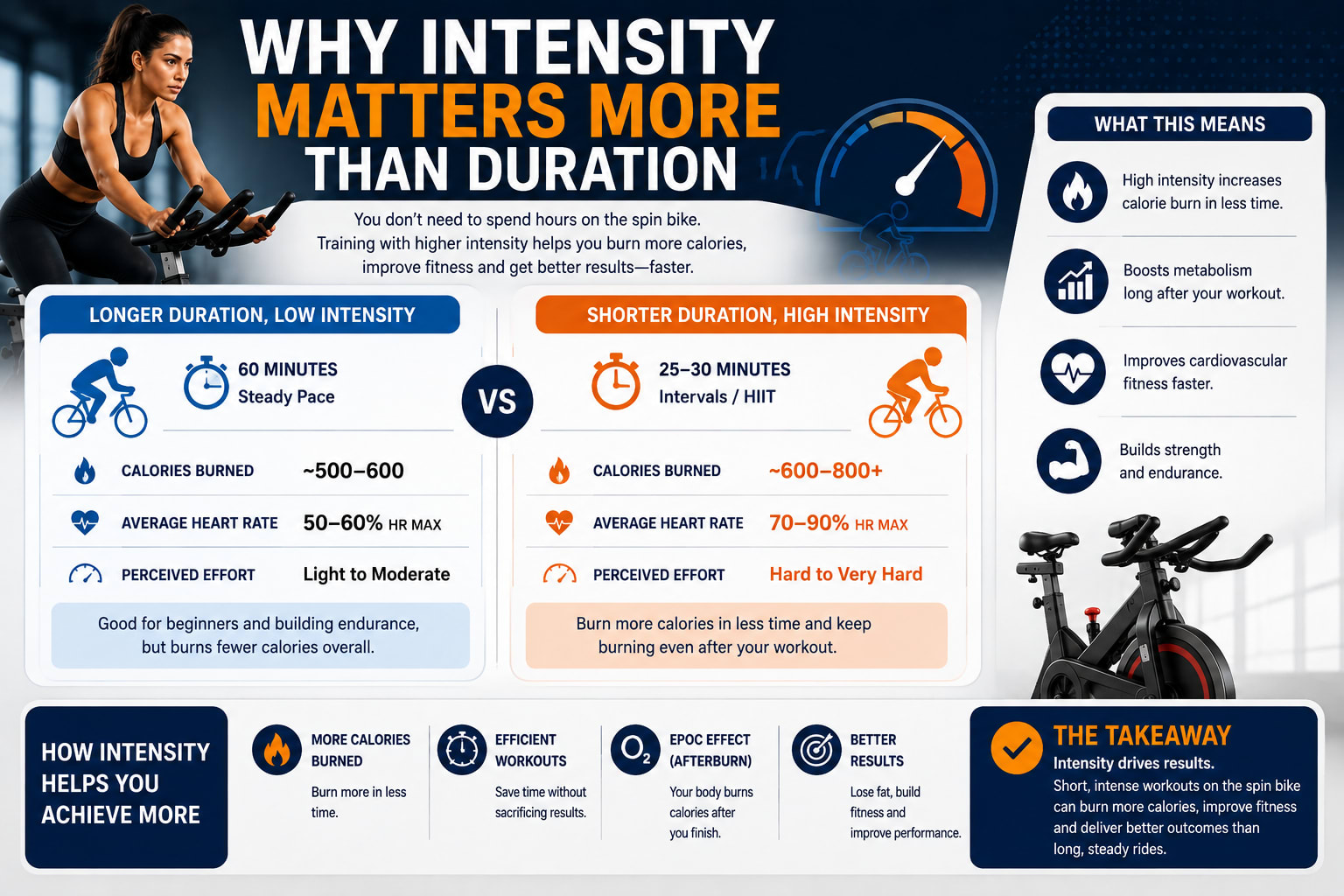
As we mentioned earlier, longer workouts do help burn calories, but it is the workout intensity that always contributes to fat loss and calorie burning. During an intense spin session, our heart rate gets elevated while muscles work harder to overcome increased resistance.
Interval training is considered effective because it repeatedly challenges our cardiovascular system. Shifting between periods of maximum effort and active recovery encourages the body to put in more effort while preventing the monotony associated with steady state cardio.
Higher intensity workouts may increase calorie burning after the session’s expiry because the body continues working to restore normal oxygen levels and recover from the varied exercise demands. Although this tends to vary between individuals, it contributes to the efficiency of interval based spinning workouts.
Ideally, the goal should not be to make every workout as strenuous as possible. The key lies in balancing moderate endurance rides with demanding interval sessions to create sustainable progress.
500-Calorie Spin Bike Workout: A Sample Training Plan
A smart way to accelerate calorie burn is to combine endurance riding with periods of higher intensity effort. Instead of maintaining the same pace throughout the workout, alternating between moderate cycling, hill climbs, and sprint intervals keeps our heart rate elevated even as we challenge different muscle groups. This workout style keeps the session mentally engaging, too, making it easier to stay focused from start to finish.
Though the exact number of calories burned depends on body weight, fitness level, workout intensity and resistance settings, the 500 calorie target could be attained by maintaining consistent effort in a 45 to 60 minute spin session.
One needs to keep in mind that every workout session should begin with a proper warm up, gradually build intensity through intervals, and finish with a cool down that enables the heart rate to return to normalcy.
How to Warm Up Properly
A warm up prepares our muscles, joints, and cardiovascular system for the workout session. Going directly into an intense cycling workout can lead to muscles feeling stiff and reduce overall performance. Spending the first few minutes to warm up allows the body to adapt naturally and helps lower the risk of discomfort.
Start pedaling with light resistance at a comfortable pace. Keep adding a small amount of resistance until breathing becomes deeper and muscles feel warm. Towards the end of the warm up session, our heart rate should be elevated, but make sure that the comfort factor remains intact.
Needless to say, a proper warm up not only enhances workout quality, but also helps produce more power during the challenging portions of the session.
Increase the Intensity with Interval Training
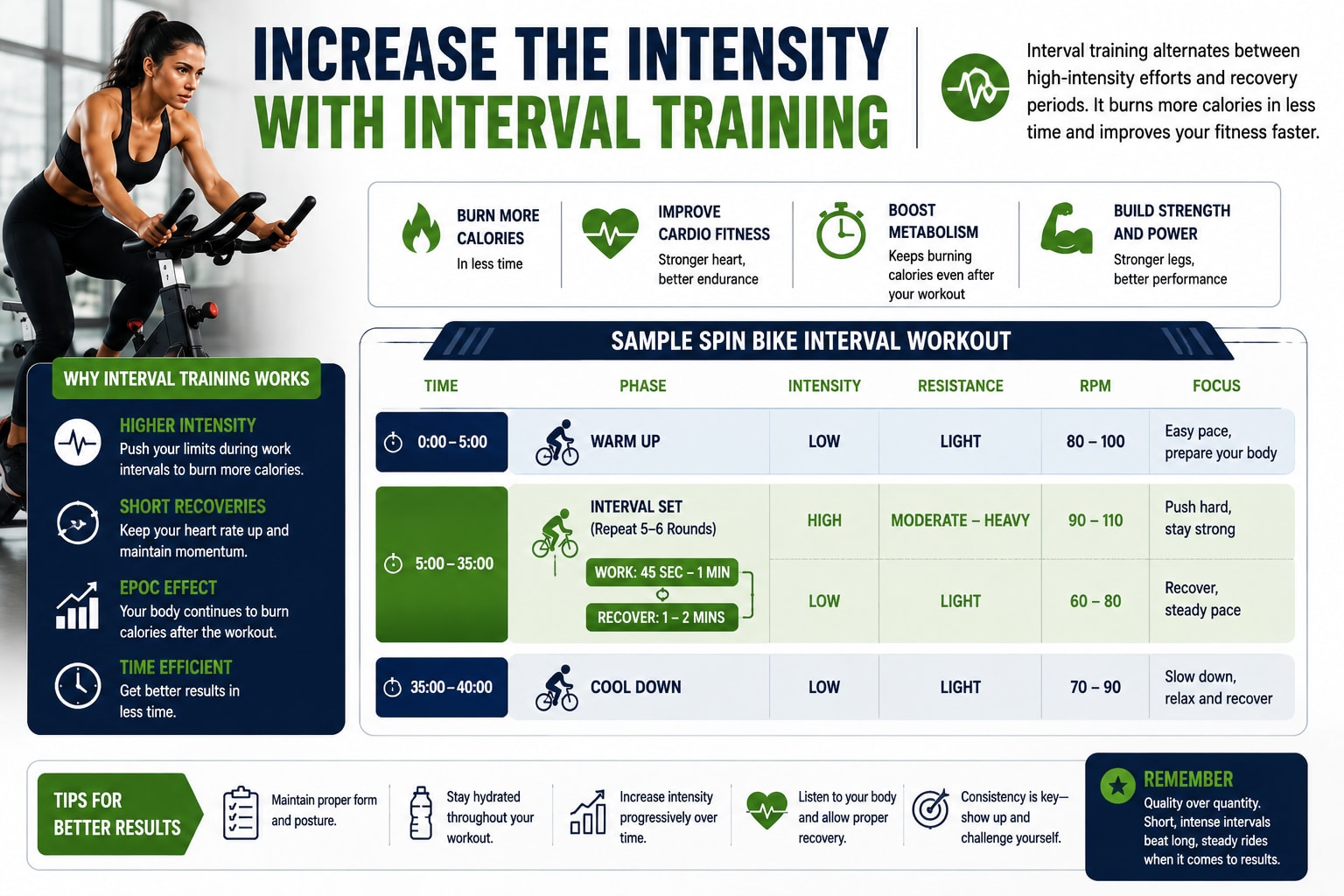
Interval training is one of the most proven methods to increase calorie burning on a spin bike. Constantly alternating between periods of hard effort and active recovery keeps our heart rate elevated while giving our muscles adequate time to prepare for the impending sessions.
During the high intensity intervals, increase both your cadence and resistance so that your effort feels challenging despite remaining controlled. The breathing should become noticeably faster in such a way that maintaining a conversation should become difficult.
During the recovery period, reduce the resistance and slow the pace without stopping it completely. Active recovery allows our heart rate to decrease slightly while keeping our muscles moving, making it easier to perform the next interval with significant effort.
Repeating numerous rounds of intervals throughout the workout session creates repeated spikes in energy burning while leading to an enhanced cardiovascular fitness and muscular endurance.
Add Hill Climbs for Higher Calorie Burn
Hill climbs are another fascinating way to increase calorie burn because they require your lower body muscles to generate greater force. Increasing the resistance simulates riding uphill, forcing the quadriceps, hamstrings, glutes, and calves to work much harder than during flat cycling.
As the resistance increases, maintain a steady cadence instead of allowing speed to drop significantly. Focus on smooth pedal strokes while keeping the core engaged and upper body relaxed. Standing occasionally during longer climbs also increases muscle activation and makes the workout feel more dynamic.
Hill intervals not only increase calorie burning, but also improve muscular endurance and cycling strength, making them a valuable addition to any fat burning spin session.
Add Sprint Intervals to Your Workout
Sprint intervals, too, provide an opportunity to elevate our heart rate and challenge the cardiovascular system. Unlike hill climbs, which emphasize the resistance aspect, sprints focus on increasing cadence while maintaining enough resistance to control the movement.
During each sprint, pedal as quickly as possible while maintaining proper posture and smooth technique. Avoid using resistance that is so light as this reduces workout efficiency and increases the risk of poor form.
These short bursts of maximum effort significantly increase cardiovascular demand and encourage our body to work harder throughout the workout. Sprint intervals, when combined with recovery periods, create an effective balance between intensity and sustainability.
Maintain Consistent Effort Throughout the Workout
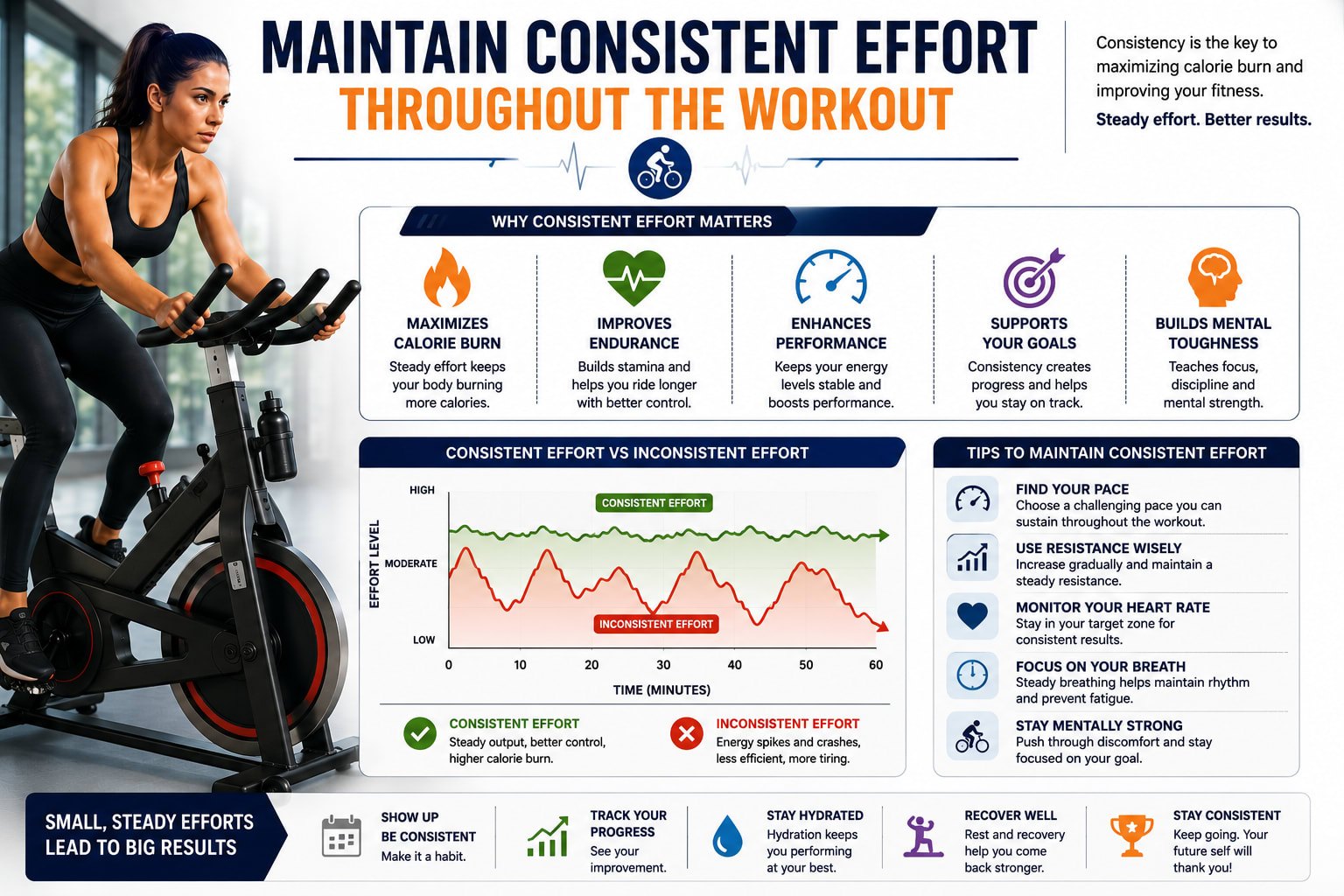
One big mistake people make when trying to burn more calories is starting aggressively. Riding at maximum intensity during the first few minutes leads to early fatigue, making it difficult to maintain quality effort for the rest of the workout.
Instead, aim for a pace that feels challenging, but sustainable. Increase the effort gradually throughout the session, allowing the body to adapt as the workout progresses. During intervals and climbs, push purposefully, then recover just enough to prepare for the next challenge.
Maintaining steady effort from beginning to end usually results in greater overall calorie burning than performing one or two extremely intense efforts followed by long periods of easy cycling.
How to Recover Properly After an Intense Workout
A cool down is an essential part of every spin session, especially after a high intensity exercise. Gradually reducing your pace during the final five to ten minutes allows your heart rate and breathing to return toward resting levels safely.
Continue pedaling with light resistance while allowing your muscles to relax. This movement helps improve circulation and may reduce post workout stiffness by encouraging blood flow to recovering muscles.
Once you are done with cycling, consider performing gentle stretches for the quadriceps, hamstrings, calves, hips, and lower back if your fitness level permits. Proper recovery supports muscle repair and prepares the body for future workouts.
Tips to Maximize Calorie Burn During Every Spin Session
Burning higher calories is about more than simply increasing workout intensity. Building a consistent routine that challenges your body while supporting recovery produces far better long term results.
Focus on maintaining proper bike setup before every workout. Correct seat height, handlebar position, and resistance settings improve pedaling efficiency and allow your muscles to generate more power throughout the ride.
Vary your workouts regularly by alternating endurance rides, interval sessions, hill climbs, and recovery rides. This variety prevents boredom while continually challenging your cardiovascular system and lower body muscles.
Stay hydrated before, during, and after your workout. Even mild dehydration can reduce performance and make it more difficult to sustain higher intensity efforts.
Finally, prioritize consistency over perfection. Burning 500 calories during one workout is a satisfying milestone, but completing regular spin sessions week after week produces much greater long term improvements in fitness, endurance, and overall health.
Do you have plans to purchase any fancy, effective equipment for your fitness requirements from the UAE? Visit lifetimefitnessstore.com to find all kinds of reliable fitness equipment at attractive prices.
Common Spin Bike Workout Mistakes to Avoid
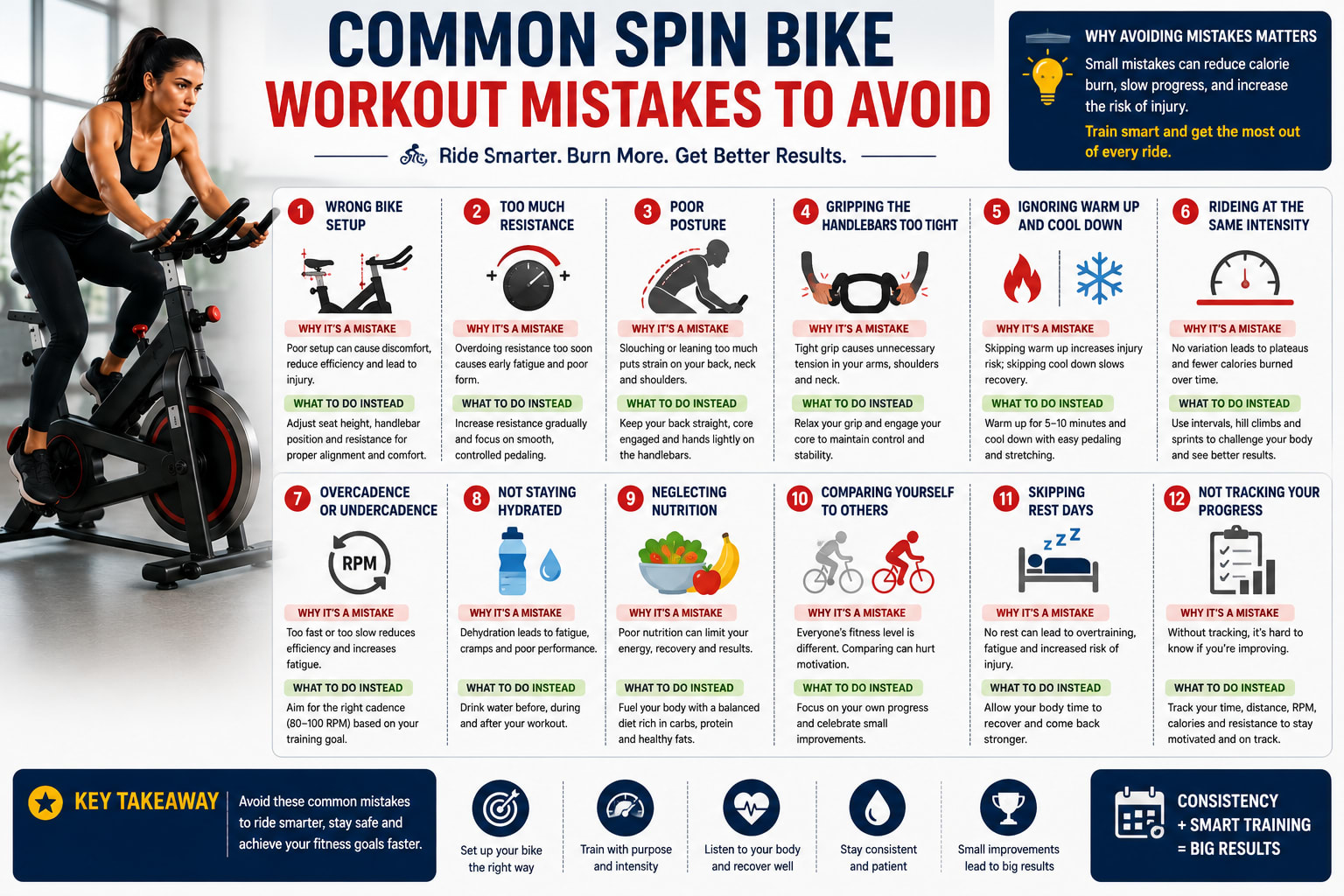
Many people tend to focus more on the number of calories displayed on the spin bike console. This leads to them overlooking the quality of their workout. While tracking calories is a motivating thing, relying completely on the display is one of the most common mistakes riders make. Calorie estimates vary between machines and may not accurately reflect your actual energy burning. Instead of chasing a specific number, we need to focus on maintaining proper technique, consistent effort, and gradual improvements in our fitness level.
Another common mistake is using resistance that is either too low or too high. Riding with light resistance often causes uncontrolled pedaling and excessive bouncing in the saddle, thus reducing workout efficiency and increasing the risk of poor technique. On the other hand, resistance that is too heavy may slow your cadence significantly and place unnecessary stress on your knees and lower back. Choosing a balanced resistance that allows smooth, controlled pedaling is more effective for long term progress.
Many riders skip their warm up because they are quite eager to start burning calories immediately. However, beginning an intense workout without preparing your muscles and cardiovascular system leads to poor performance and increases the risk of discomfort. A proper warm up helps our body transition gradually into higher intensity exercise, allowing us to perform better during the main session.
Ignoring recovery is another mistake that limits our progress. While challenging workouts are important, our body becomes stronger during recovery periods. Getting enough sleep, staying hydrated, and allowing sufficient rest between demanding spin sessions helps improve endurance and supports better long term performance.
Finally, make sure to refrain from comparing your calorie burn target with someone else's. Every individual burns calories differently depending on factors like body weight, age, fitness level, muscle mass, and workout intensity. Measuring your own progress over time is far more valuable than trying to match someone else's numbers.
Conclusion
Burning 500 calories during a spin session is an achievable goal for many people, but it should be viewed as the result of consistent effort rather than becoming obsessed about the target. An effective spin session combines proper bike setup, structured intervals, controlled resistance, and steady progression to challenge both the cardiovascular system and the lower body muscles.
It is also important to remember that burning calories varies from person to person. Factors such as body weight, fitness level, workout intensity, and duration all influence how many calories you burn during a ride. Instead of becoming overly focused on the numbers displayed on the console, concentrate on improving your endurance, technique, and overall fitness. These improvements naturally lead to greater energy expenditure over time.
Spinning offers much more than just calorie burning. Regular sessions strengthen the heart, improve lung function, build muscular endurance, increase stamina, and support long term weight management when combined with healthy nutrition and proper recovery. The flexibility of indoor cycling allows you to tweak every workout according to your fitness level, making it suitable for beginners as well as experienced riders.
The key to lasting results is consistency. Performing a well-planned spin workout several times each week, gradually increasing intensity, and allowing your body adequate time to recover will deliver far greater benefits than chasing a single calorie target. Over time, these habits contribute to better cardiovascular health, improved physical performance, and a more sustainable approach to fitness.
Whether your goal is burning 500 calories, improving endurance, or simply becoming more active, a spin bike provides an effective and enjoyable way to move closer to your fitness goals with every ride.


 0
0