Hanging vs Free-Standing Boxing Bags: How to Choose the Right Bag for Your Training Goals in the UAE?
If you are a boxing aficionado, you may know that choosing the right bag can create a stark difference in your training. The right boxing bag improves your technique, builds strength, and enhances the overall workout, irrespective of whether you are setting up a home gym or upgrading your equipment.
Despite numerous options available today, many find it difficult to choose between a hanging boxing bag and a free-standing boxing bag. Though both the types come in handy for boxing, kickboxing, and fitness training, their style works differently and suits different training needs.
Some people prefer hanging bags owing to them offering a better realistic boxing experience. A few others opt free-standing bags because they are easier to install and come across as convenient for home use.
We compare hanging and free-standing boxing bags in this blog with regard to aspects like design, weight, filling, installation requirements, space, and training goals. This comparative study is likely to fetch you a clear idea about the kind of boxing bag that meets your needs and expectations.
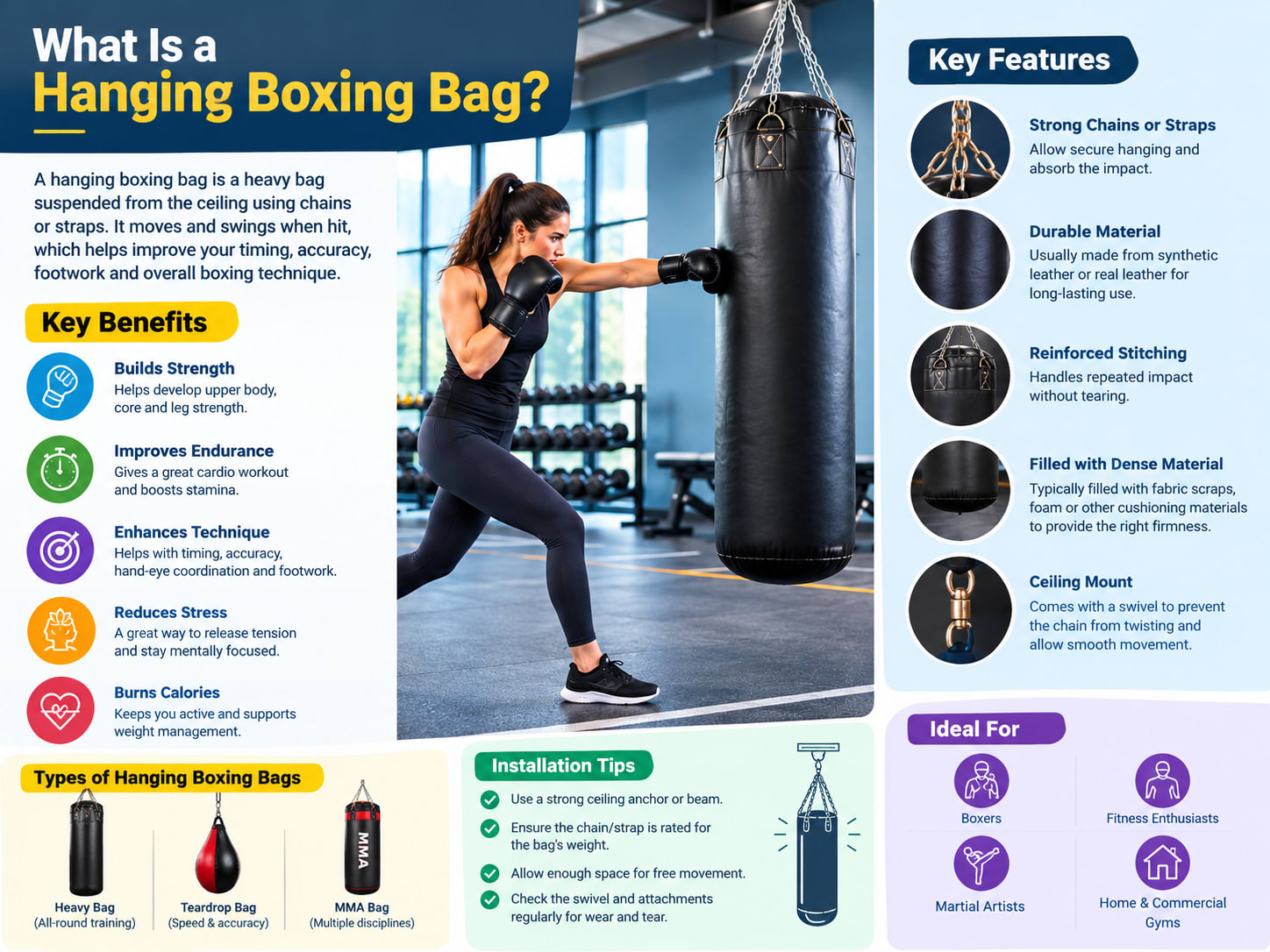
What Is a Hanging Boxing Bag?
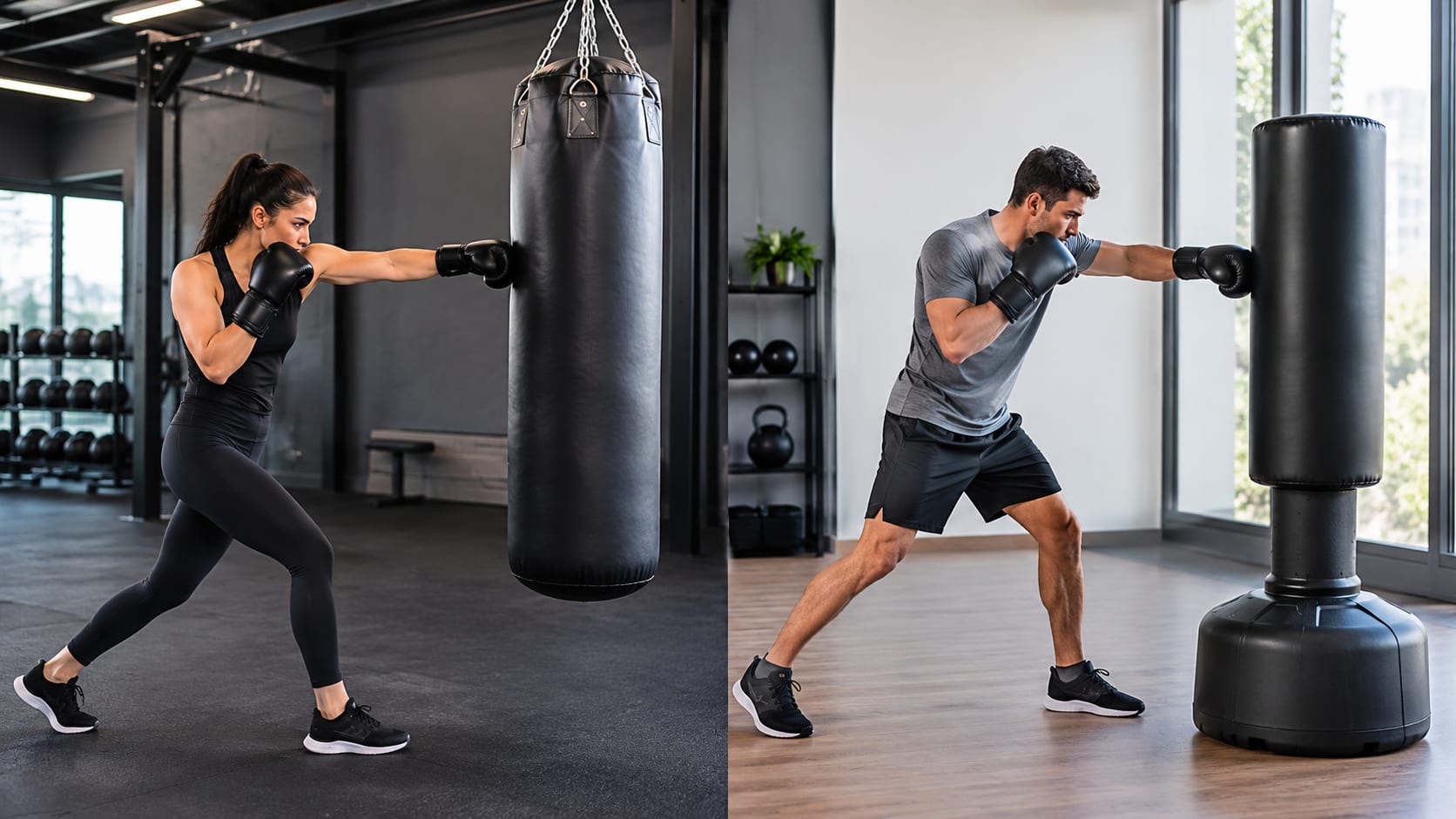
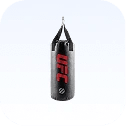
A hanging boxing bag is simply a traditional punching bag suspended from the ceiling, a wall-mounted bracket, or a dedicated stand. It hangs freely and moves when you punch or kick it.
They are commonly used in boxing gyms, martial arts centres, and home training spaces. They come in different sizes and weights, making them suitable for beginners as well as experienced fighters.
One of its main advantages is its natural movement. When you strike the bag, it swings back and forth, helping you practise timing, distance, footwork, and combinations. Some hanging bags are long and heavy for kickboxing and Muay Thai, while others are shorter and designed only for boxing.
Benefits of Hanging Boxing Bags
Realistic training experience: The swinging movement helps you practise controlling distance and timing.
Suitable for powerful strikes: A properly installed, sufficiently heavy bag can handle repeated punches and kicks.
Better footwork practice: You can move around the bag, practise angles, and work on your positioning.
Different training options: Hanging bags are available for boxing, kickboxing, and other striking sports.
Long-term training value: A quality bag with suitable mounting hardware can be a good investment for regular training.
What to Consider Before Buying?
The biggest challenge with a hanging boxing bag is installation. You need a strong mounting point that can safely support the bag and handle the forces created during training.
You also need enough clearance around the bag for it to swing without hitting walls, furniture, or other equipment. If you live in an apartment or rent your home, installing a hanging bag may require extra planning or permission.
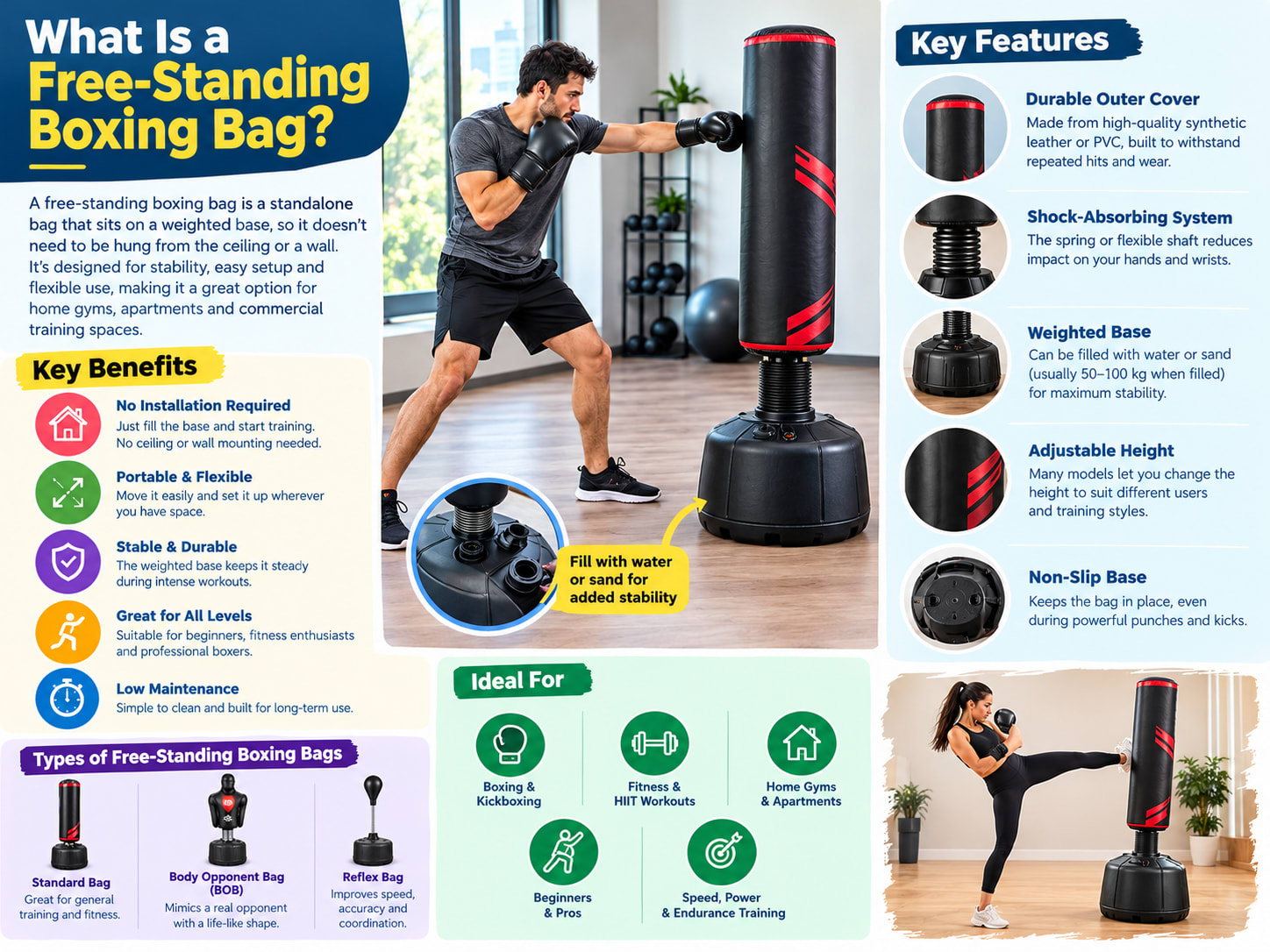
What Is a Free-Standing Boxing Bag?
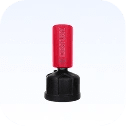
A free-standing boxing bag is designed to stand on the floor using a weighted base. Instead of hanging from the ceiling, it stays upright and is supported by its base.
Most free-standing boxing bags have a base that can be filled with water or sand to improve stability. The striking surface may be made from foam, synthetic leather, or other durable materials.
These bags are popular among home users because they usually do not require drilling into ceilings or walls. You can place them in a garage, home gym, or suitable training area. Some models can also be moved when needed, although moving a filled base can take considerable effort.
Benefits of Free-Standing Boxing Bags
Easy installation: Most models can be assembled without permanent ceiling or wall fixtures.
Suitable for home gyms: They are useful when you have limited installation options.
Flexible placement: You can position the bag in a convenient training area.
Good for fitness workouts: They work well for cardio boxing, basic combinations, and general conditioning.
Useful for shared spaces: Some models can be moved aside when the training area is needed for another activity.
What to Consider Before Buying?
Free-standing bags can move, wobble, or tip over if the base is not heavy enough for the intensity of your workout. They may also feel different from traditional hanging bags, especially during powerful punches and kicks.
The base can sometimes get in the way of certain footwork patterns or low kicks, depending on the design. For this reason, it is important to choose a model that matches your training style and expected striking power.
All About Choosing the Right Boxing Bag Weight
The weight of a boxing bag affects how it moves when you strike it. Choosing the right weight is important for both beginners and experienced users. A bag that is too light may swing excessively during powerful punches. A bag that is too heavy may offer less movement and may not feel ideal for every training style.
What Weight Should You Choose?
For hanging boxing bags, a common starting point is to look at bags weighing around half your body weight. Note that this is only a rough guideline, and not a strict rule. Your strength, striking power, experience, and preferred training style also matter.
For example, a person weighing 70 kg might consider a hanging bag in the 30 to 40 kg range for general boxing practice. Someone who trains with greater power may prefer a heavier bag, depending on their experience and the manufacturer's recommendations.
Here are some general options to consider:
Light bags: Often useful for beginners, speed work, and lighter fitness sessions.
Medium-weight bags: A practical choice for many recreational boxers and home gym users.
Heavy bags: Often preferred for power training and more intensive striking workouts, provided the mounting system is suitable.
Free-standing bags work differently as their stability depends on the striking section and the weighted base. A tall bag with a heavy base may move significantly when hit hard. When choosing a free-standing bag, check the manufacturer's training intensity and the amount of weight the base can hold.
Boxing Bag Filling: Sand, Fabric, Foam, and Other Materials
The filling inside a boxing bag affects its firmness, impact absorption, and overall feel. The right filling can make your workouts more comfortable and help the bag hold up during regular use.
Fabric Filling
Many traditional hanging bags use shredded fabric or textile filling. This material can provide a balanced striking surface when packed evenly. Fabric-filled bags are often suitable for general boxing workouts, although the feel depends on the type of fabric, how tightly it is packed, and the quality of the bag.
Over time, the filling may settle towards the bottom. Some bags need occasional adjustment to maintain an even striking surface.
Foam Filling
Foam is commonly used in free-standing bags and some other punching bag designs. It provides a consistent outer striking surface, depending on the bag's construction.
Foam-filled models may suit fitness boxing and regular recreational training. However, the quality and density of the foam make a difference, so it is worth checking the product specifications before buying.
Sand Filling
Sand is often used to add weight to a free-standing bag's base rather than to fill the striking section itself. A sand-filled base can help keep the bag stable during training. The result, however, depends on the base design, the amount of sand used, and the force of your strikes.
Some bases can also be filled with water, but water and sand do not necessarily provide the same level of stability. Always follow the manufacturer's instructions.
What About Water-Filled Bags?
Some specialised boxing bags use water to create a different impact feel. These are different from ordinary bags with water-filled bases.
Water-filled striking bags can offer a softer, more responsive feel, but they may cost more and require additional care. When comparing boxing bag filling materials, think about comfort, durability, maintenance, and the type of training you plan to do.
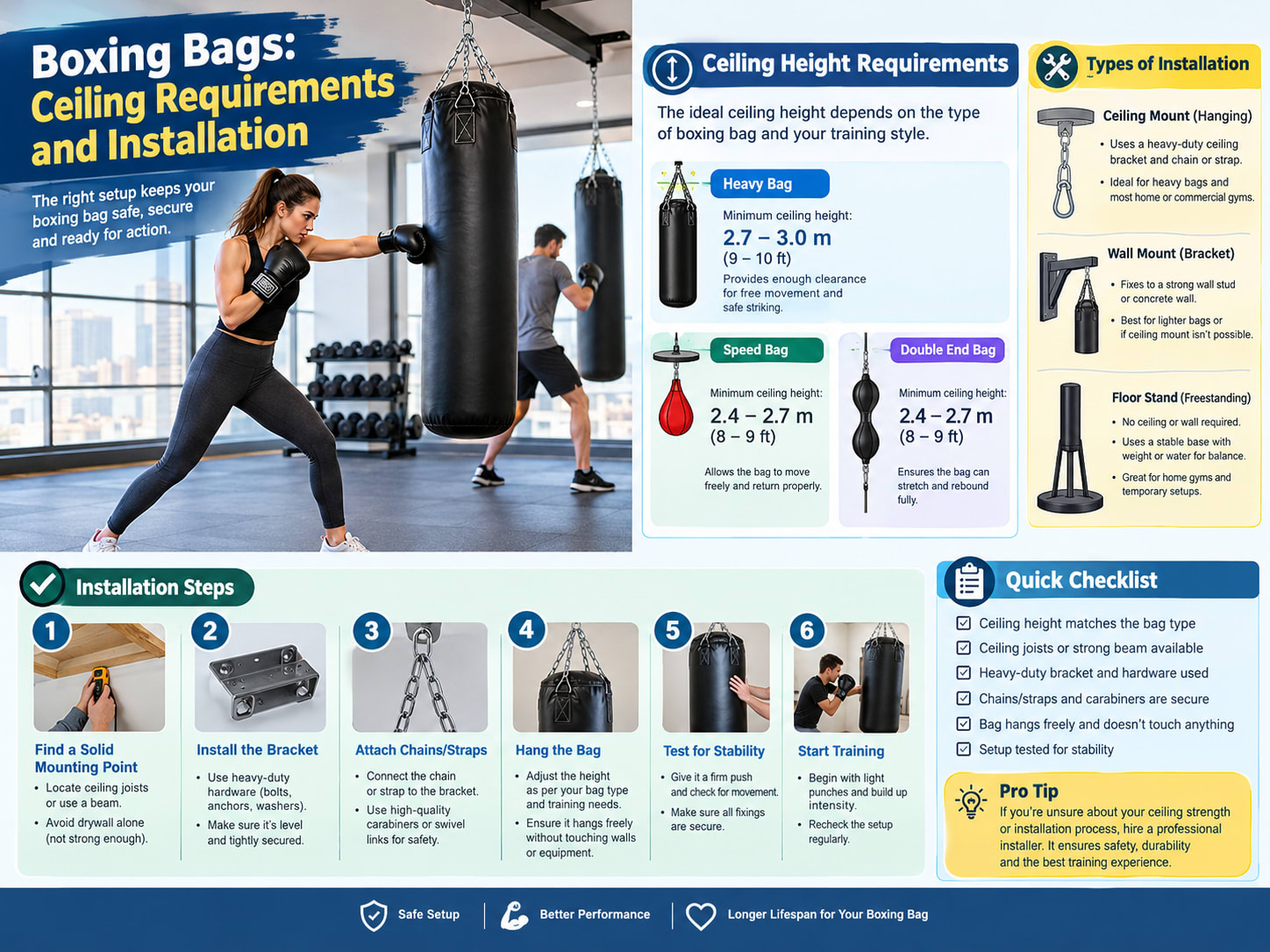
Boxing Bags: Ceiling Requirements and Installation
Installation is one of the biggest differences between hanging and free-standing boxing bags. A hanging bag needs a secure mounting system, while a free-standing bag generally needs a level floor and enough room for safe movement.
Installing a Hanging Boxing Bag
Before installing a hanging bag, check the strength and suitability of the ceiling or support structure. A heavy bag creates more than a simple downward load. Repeated punches cause swinging forces and vibrations, which can put extra stress on the mounting point.
Keep the following factors in mind:
Ceiling strength: The support must be suitable for the bag's weight and the forces created during training.
Mounting hardware: Use a purpose-designed bracket, mount, or support system rated for the intended load.
Ceiling type: Concrete, timber joists, and other structures require different installation methods.
Available clearance: Leave enough space for the bag to swing and for you to move safely around it.
Professional installation: If you are unsure about the structure or mounting method, consult a qualified professional.
Never assume that a standard ceiling hook or an ordinary drywall fixing can safely hold a heavy boxing bag.
Setting Up a Free-Standing Boxing Bag
Free-standing bags usually offer a simpler setup because they do not need overhead support. You will still need to choose an appropriate location. The floor should be level, stable, and suitable for the weight of the bag and its base.
Make sure the bag is not placed too close to glass doors, furniture, walls, or other people. You need enough room to move around it without losing your balance or hitting nearby objects. If you plan to use the bag on a delicate floor, check its weight and the manufacturer's guidance on floor protection.
For people who cannot make permanent changes to their homes, a free-standing bag is often the more practical choice.
Which Boxing Bag Is Better for Different Training Goals?
The best boxing bag depends on what you want to achieve. A person learning basic punches may need something different from a boxer preparing for competition.
For Beginners
If you are new to boxing, either type can work. A free-standing bag is often a convenient starting point because it is easy to set up and does not require a permanent installation. It can help you practise basic punches, simple combinations, and general fitness routines.
A hanging bag is also a good option if you have a safe mounting point and want to develop your movement around a swinging target. Focus on learning proper technique before increasing the power of your strikes.
For Weight Loss and Cardio
Both hanging and free-standing bags can be used for cardio boxing workouts. You can alternate short rounds of punching with rest periods, bodyweight exercises, or footwork drills. This can help make your exercise routine more varied and engaging.
A free-standing bag may be more convenient for people who want to fit workouts into a small home gym. A hanging bag may be better if you prefer moving around a swinging target. Remember that your overall results depend on your training consistency, workout intensity, nutrition, and recovery.
For Power Training
A heavy hanging bag is often a strong choice for people who want to practise powerful punches and combinations. Its weight and swinging movement can provide useful feedback on striking technique and force control. However, the bag and its mounting system must be suitable for your workout intensity.
Some free-standing bags are also designed for harder training, but their stability varies considerably. Always check the model's specifications before using it for powerful strikes.
For Boxing Techniques and Footwork
Hanging bags generally offer an advantage for practising distance, timing, angles, and movement around a moving target. As the bag swings, you can work on stepping in, moving out, changing angles, and controlling the distance between you and the target.
Free-standing bags can still be useful for combinations and technique drills, especially if the model provides a suitable striking surface.
For Kickboxing and Martial Arts
If your training includes both punches and kicks, look for a bag with enough height and a suitable striking area. Long hanging bags are often useful for practising body kicks, low kicks, and combinations involving different target heights.
Free-standing bags can also support kickboxing workouts, but their shape and base design may limit certain movements. Check whether the bag is intended for punches only or for both punches and kicks.
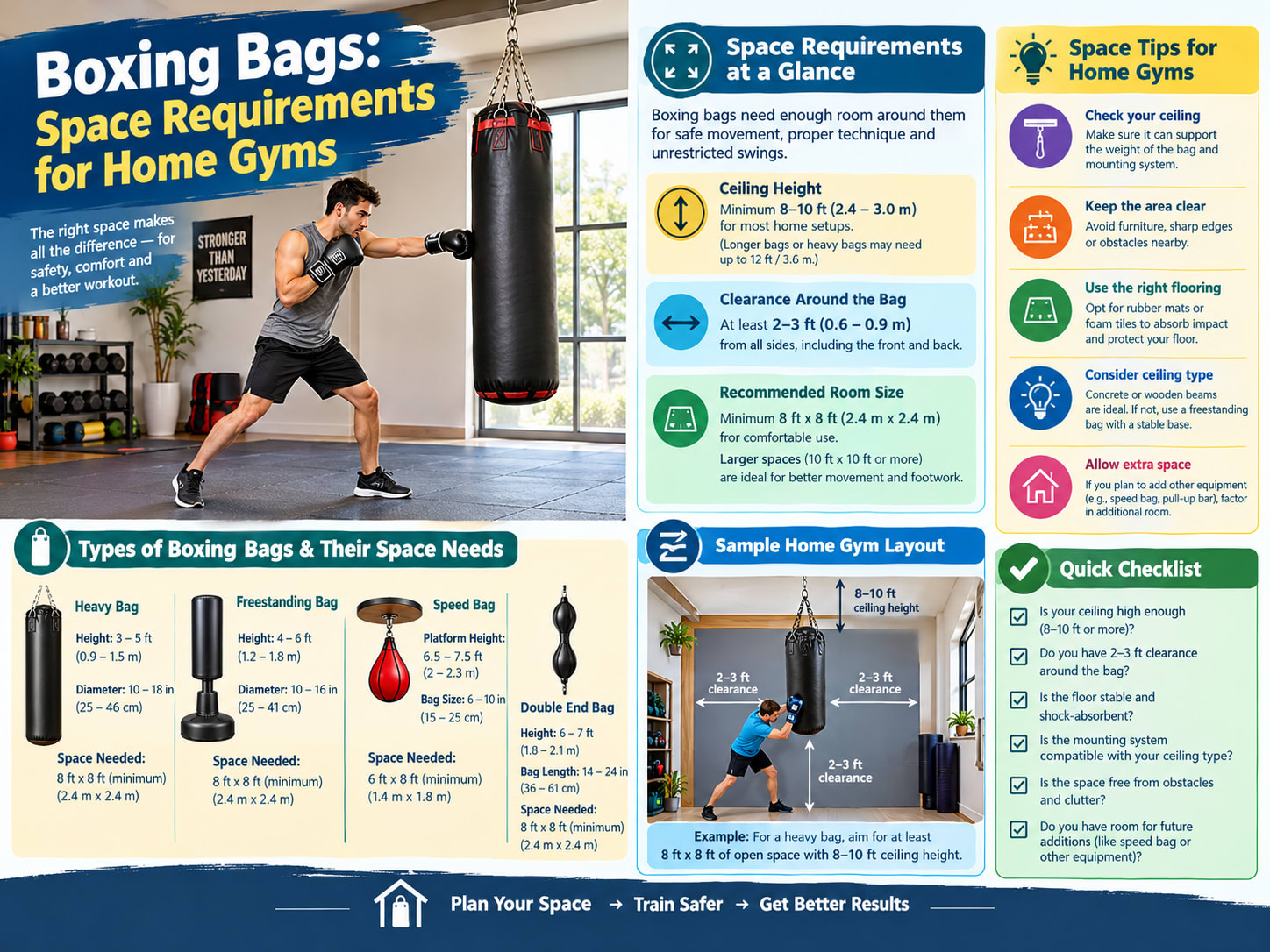
Boxing Bags: Space Requirements for Home Gyms
The amount of space you have should play a major role in your decision. A hanging boxing bag does not need a floor-standing support, but it needs space to swing. You must also have enough room to move around it safely.
A free-standing bag needs floor space for both the base and your movement. Although some models can be repositioned, they still require a clear training area. Before purchasing either type, measure your available space.
Think about the height of the room, the distance from walls, nearby furniture, and whether other people use the same area. You should be able to punch, step back, move sideways, and maintain your balance without worrying about hitting something.
If you have a small apartment or a shared room, a free-standing bag may be easier to manage. If you have a dedicated garage gym or training room, a hanging bag may be worth considering.
How do Factors Like Maintenance and Durability Matter?
Since a boxing bag is also an investment, it makes sense to choose one that can handle your regular workouts. The lifespan of a bag depends on its construction, materials, training intensity, and maintenance.
For hanging bags, inspect the chains, straps, mounting hardware, stitching, and outer material regularly. Look for signs of wear, loose connections, or damage around the suspension points. For free-standing bags, check the base, connecting parts, outer covering, and striking section.
For both types, wipe away sweat after training and allow the bag to dry. Keep it away from excessive moisture and direct sunlight if the manufacturer recommends doing so. Using suitable boxing gloves and hand wraps can also help protect your hands during training.
Do not continue using a bag if its suspension system, base, or outer material is damaged in a way that could make training unsafe.
Common Mistakes to Avoid When Buying a Boxing Bag
Before making your final decision, avoid these common mistakes.
Choosing a bag that is too light: A bag that moves excessively may make it harder to practise controlled combinations.
Ignoring installation requirements: A hanging bag needs an appropriate support structure. Never compromise on mounting safety to save time or money.
Buying without checking the filling: The material inside the bag affects its feel, firmness, and maintenance requirements.
Forgetting about space: Even a compact bag needs enough room for safe movement during training.
Choosing the wrong bag for your sport: A bag designed mainly for boxing may not provide the height or shape needed for kickboxing or Muay Thai.
Focusing only on price: A cheaper bag may not offer the durability, stability, or training features you need. Compare the overall quality and suitability instead.
Ignoring your experience level: Beginners should prioritise technique, comfort, and control rather than buying equipment designed only for high-power training.
Taking a little time to compare these factors can help you choose a boxing bag that you will actually enjoy using.
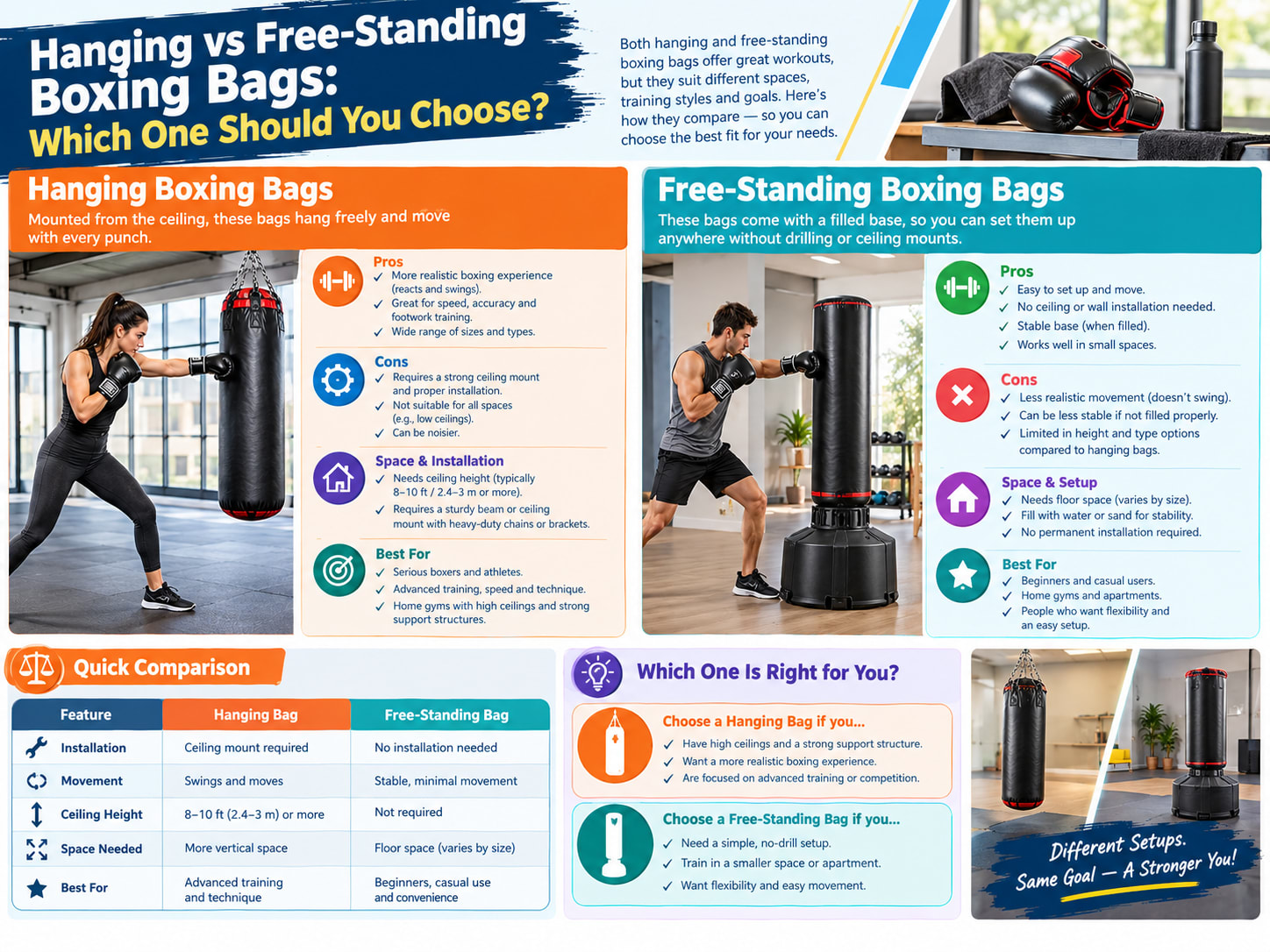
Hanging vs Free-Standing Boxing Bags: Which One Should You Choose?
There is no single boxing bag that is best for everyone. The right choice depends on your training goals, available space, installation options, and budget.
Choose a hanging boxing bag if you have a suitable mounting point and want a more traditional boxing experience. It is particularly useful for practising footwork, timing, distance, and powerful combinations with a properly matched bag.
Choose a free-standing boxing bag if you want a convenient option for home workouts without permanent ceiling or wall installation. It can be a practical choice for beginners, fitness enthusiasts, and people working with limited space.
If you are still unsure, think about how you plan to use the bag over the next few months. Will you mainly use it for cardio workouts, or do you want to develop more advanced boxing skills? Will you train occasionally, or will the bag be used several times a week? Answering these questions will make it easier to narrow down your options.
For all your fitness needs in the UAE, Lifetime Fitness Store is your trusted destination, offering an extensive collection of high-quality fitness equipment, competitive prices, reliable customer service, and expert guidance. Whether you are setting up a home gym, upgrading a professional fitness centre, or creating a complete workout space, we are committed to helping you find the right products to achieve your fitness goals.
Conclusion
Both hanging and free-standing boxing bags can be excellent additions to a home gym or professional training space. The key is to choose a bag that matches your goals rather than simply picking the most popular option.
Hanging bags offer natural movement and are often well suited to traditional boxing practice, footwork, and power training. Free-standing bags provide flexibility, easier setup, and a convenient solution for people who cannot install permanent equipment.
Before buying, compare the bag's weight, filling material, stability, installation requirements, and intended use. Also, make sure your training area has enough space for safe movement.
A boxing bag can help you improve your technique, build endurance, and make your workouts more enjoyable. Whether you choose a hanging bag or a free-standing model, start with good technique, use appropriate protective equipment, and increase your training intensity gradually.
A hanging boxing bag is often better for practising footwork, distance, timing, and powerful combinations. A free-standing bag is generally more convenient for home use because it does not require a permanent ceiling or wall mount. The better option depends on your training goals and available space.
A beginner can start by considering a medium-weight hanging bag, with around half their body weight serving as a rough starting guideline. However, the right weight also depends on striking power, experience, and training style. For free-standing bags, check the model's stability and intended use.
Yes, provided you have a suitable support structure and the correct mounting hardware. The installation must safely handle the bag's weight and the forces created during training. If you are unsure about your ceiling or mounting point, seek professional advice.
Yes. Free-standing boxing bags can be used for cardio workouts, interval training, and general fitness routines. Your results will depend on your workout intensity, consistency, diet, and overall activity level.
Fabric filling is common in traditional hanging bags, while foam is used in many free-standing models. Sand is often used to add weight to free-standing bases. The best choice depends on the bag's design, the feel you prefer, and how you plan to train.
Get a weekly dose of latest stories
and useful tips directly in your inbox!
Help Us Enhance Your Experience or Report a Website Problem!
We value your feedback! Let us know if there’s anything we can improve or if there’s a feature you’d love to see on our website.
Need Help? We're Here.
Our Fitness Experts Can Help With Products, Orders, Delivery And Installation





 Get a weekly dose of latest stories
and useful tips directly in your inbox!


 0






















































 Price Match Guarantee
 Free Shipping
 Product Warranty
 After-Sale Support
 Have Coupon Code?
 You'll Save 0.00 On This Order
 Safe And Secure Payments. Easy Returns. 100% Genuine Products