



There are plenty of advantages to a well-organised gym. It helps members to use the equipment and available space easily, enabling them to workout at their own comfort. Most of the fitness centres falter when equipment starts spreading across the floor, leading to congestion and making the area crowded.
There are commercial gyms where dumbbells kept beside benches, weight plates collected near machines, barbells leaned against walls, and resistance bands ending up in drawers or corners have become a common sight.
These may seem to be trivial problems, but this practice can affect the way people move through the gym and use the equipment. Having a good gym storage solves these issues. It helps every item secure a proper place, keeps walkways clear and assists members find what they need in no time.
Whether you are setting up a home gym, a personal training studio, an apartment fitness room or a large commercial gym, storage should be an integral part of your original layout plan. It should not be something you think about only after the space becomes cluttered.
This blog delves into the basics of planning gym storage for dumbbells, weight plates, barbells, kettlebells and accessories. It also touches upon factors like space planning, equipment placement, safety, cleaning and practical storage ideas for gyms in the GCC.
Why is Gym Storage Considered Significant?
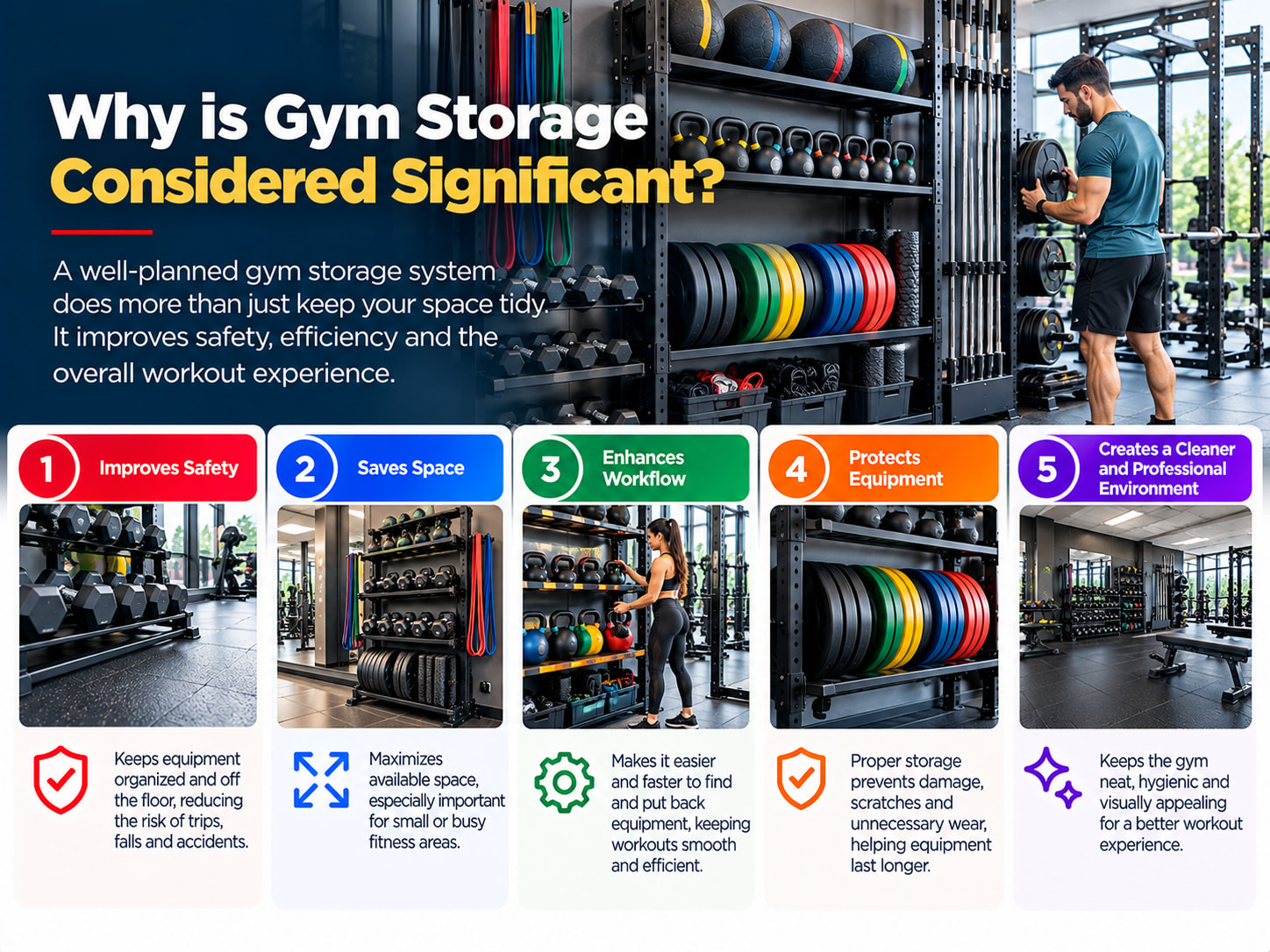
In simple words, gym storage is not just about keeping equipment out of sight. The storage aspect is necessary for safety, workout flow, equipment condition and the amount of usable floor space.
When weights and accessories are stored properly, members can move between exercises without stepping around loose equipment. Additionally, staff can clean the floor more easily, and the gym looks more professional.
Proper storage can also help protect equipment. Dumbbells left on the floor may get kicked or knocked over. Weight plates stacked carelessly can fall, while barbells placed against walls can roll or slide. A good storage system helps you gain the following:
- Keep walkways and training areas clear.
- Make equipment easier to find and return.
- Reduce the risk of trips and falls.
- Protect weights and accessories from damage.
- Improve cleaning and maintenance.
- Make better use of limited floor space.
- Create a more professional gym environment.
- Support smoother movement during busy sessions.
For commercial gyms, these benefits become more important during peak hours. For home gyms, the right storage can make a small room feel much more spacious.
Storage Solutions: Start With Your Gym Layout
Before buying storage racks, look at the entire gym layout. Consider the equipment people use most often, where exercises take place and how members move between stations. An ideal storage should support these activities.
For example, dumbbell storage should be close to the free-weight area. Resistance bands and small accessories should be easy to reach without occupying valuable training space. According to experts, dividing the gym into several practical zones is a constructive idea.
1. Free-Weight Zone
This area can include dumbbells, barbells, weight plates, kettlebells, benches and racks. Place storage close to the equipment where the weights are used. This reduces unnecessary movement and makes it easier for members to return everything after a workout.
2. Strength Machine Zone
Selectorized machines and plate-loaded machines need enough room for users to enter, adjust the equipment and complete exercises. Keep storage racks away from moving arms, weight stacks and access points. Do not use the space beside a machine to leave spare plates.
3. Functional Training Zone
This area can include resistance bands, medicine balls, slam balls, kettlebells, skipping ropes and suspension trainers. Wall-mounted racks, accessory shelves and compact storage units can help keep these items organised without taking up too much floor space.
4. Stretching and Mobility Zone
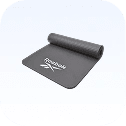
Mats, foam rollers, yoga blocks and mobility accessories should be easy to access, but should not cover the floor when they are not in use. Wall-mounted holders and dedicated shelves can work well in this area.
Dumbbells: Choosing the Right Rack for Storage
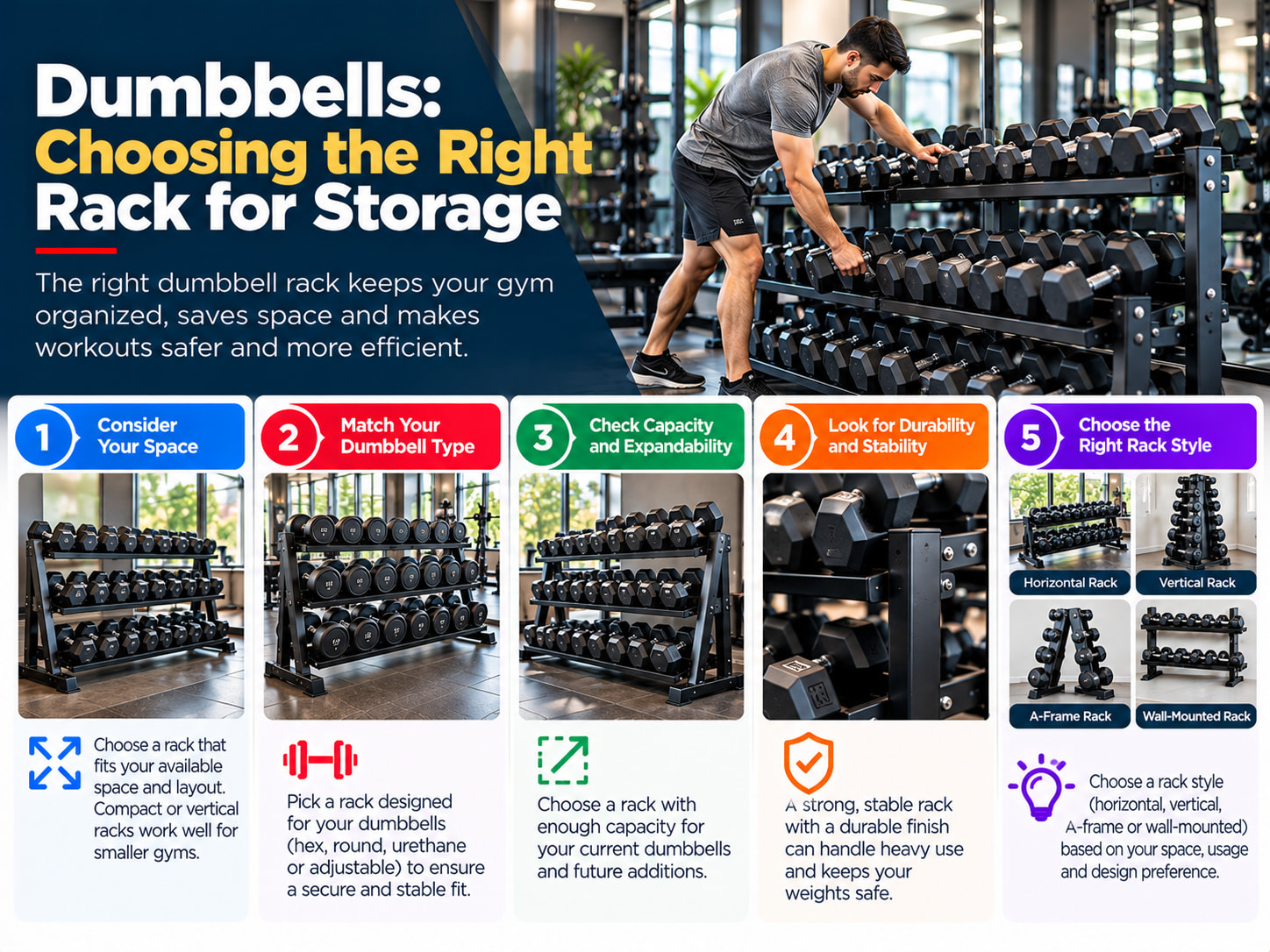
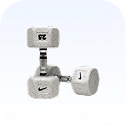
Dumbbells are one of the most frequently used items in many gyms. They come in different weights and are often used for exercises that require quick changes between pairs. Without proper storage, dumbbells can take up a huge amount of floor space.
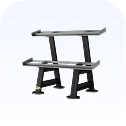
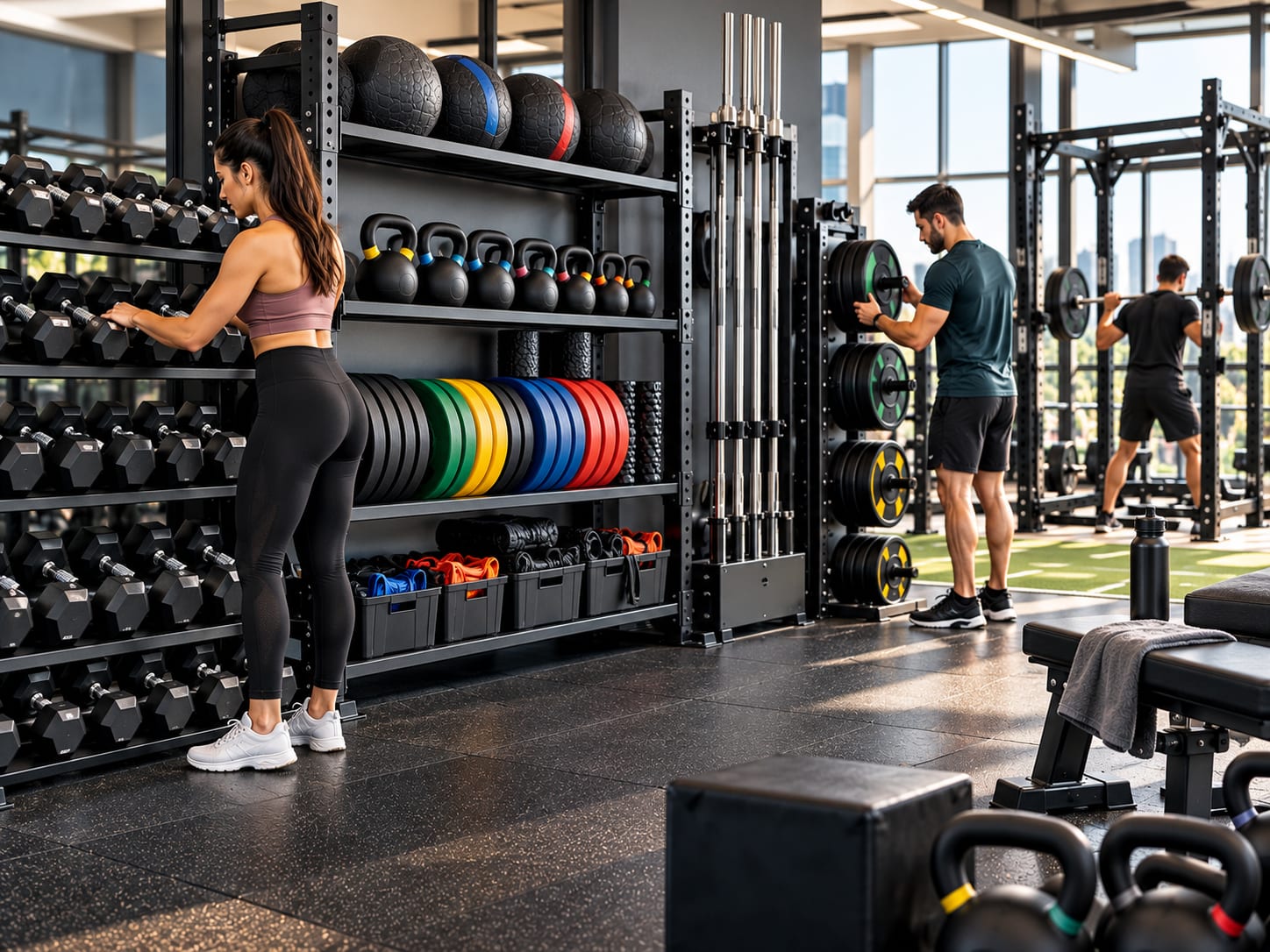
The most common options include horizontal racks, vertical racks and compact storage stands. Horizontal dumbbell racks hold dumbbells across one or more shelves. They work well in commercial gyms and larger home gyms because users can see and select weights easily.
Vertical dumbbell racks store selected dumbbell sets in a smaller footprint. They may suit compact rooms, although it is recommended to check their capacity and accessibility before buying. Compact dumbbell stands are useful for adjustable dumbbells or smaller collections.
Where Should Dumbbell Racks Go?
Place dumbbell racks close to the benches and free-weight training area. Leave enough room for people to pick up and return weights without blocking others who are exercising. Avoid placing racks directly across narrow walkways or beside the entrance.
For a busy gym, several smaller storage points may work better than one long rack that everyone has to share. Arrange dumbbells in a consistent order, usually from lightest to heaviest. Clear weight markings help members return them correctly. Always check the rack's stated capacity before loading it.
Keep Bars Away From Busy Walkways
Never leave barbells leaning loosely against a wall. They can roll, slide or fall when someone bumps into them.
Make sure to place barbell storage near the racks where the bars are used, but outside the area needed for lifting and loading plates. If wall-mounted storage is used, ensure that the wall and fixings can safely support the expected load.
Storage Solutions: Practical Tips for Barbells
Barbells are long, heavy and difficult to store safely when left on the floor. They need a dedicated storage solution that prevents rolling, protects the bars and keeps them out of walkways.
1. Vertical Barbell Holders
Vertical holders store barbells upright in individual slots. They use relatively little floor space and can work well in home gyms and commercial free-weight areas. Before choosing one, check that the holder suits your barbell type and length. It should support the bars securely without damaging the sleeves or shaft.
2. Horizontal Barbell Racks
Horizontal racks store barbells across a wall or a dedicated frame. They come in handy when you have several bars for different exercises, including specialty bars. However, they require enough wall space and careful installation.
All You Need to Know About Kettlebell Storage
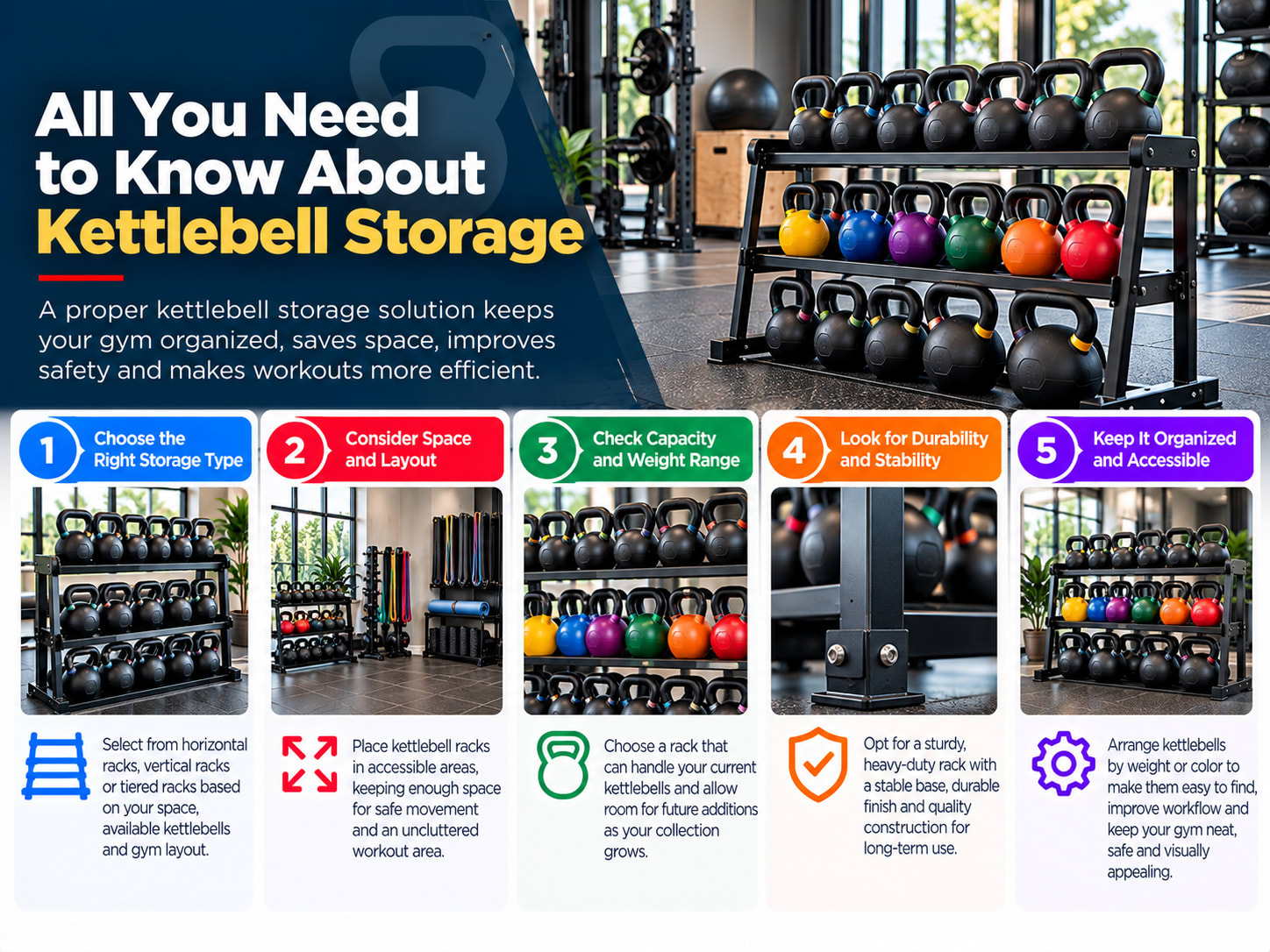
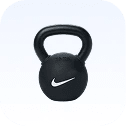
Kettlebells are versatile training tools, but their shape makes them awkward to stack or leave in a corner. A dedicated kettlebell rack is usually the most practical solution.
For home gyms, a smaller stand may be enough if you have only a few kettlebells. Choose a stable design that supports the combined weight of your collection. The base should not wobble when kettlebells are removed or returned.
It’s advisable to keep kettlebells in a consistent order and make sure the weight markings remain visible. Do not pile them on top of each other or place them where users need to bend awkwardly to retrieve heavier weights. Storage should also allow several people to return kettlebells without crowding.
Storage Solutions for Gym Accessories
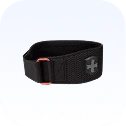
Smaller accessories are often the first items to become disorganised. Resistance bands, skipping ropes, lifting belts, ankle straps, and exercise mats can spread across a room quickly. The best solution is to group accessories according to their purpose. Check out the following ways to deal with it.
1. Wall-Mounted Hooks and Racks
Hooks can hold skipping ropes, resistance bands and certain cable attachments. They keep items off the floor and make them easy to find. Make sure the hooks are suitable for the items being stored and do not create sharp or protruding hazards.
2. Shelves and Storage Bins
Shelves and bins are useful for smaller items such as collars, straps, yoga blocks and other accessories. Use labels when several types of equipment look similar. This is helpful in shared gyms where members may not know where everything belongs.
3. Foam Roller and Mat Holders
Vertical holders can keep foam rollers and exercise mats organised without taking up much floor space. Allow enough space for members to remove and replace them easily.
4. Cable Attachments
Commercial gyms may have several handles and attachments for cable machines. A dedicated attachment rack helps prevent them from being misplaced. Place it near the relevant cable station, but avoid blocking the machine's movement or access.
How Much Space Should Gym Storage Take?
This is a significant question that leaves many confused. However, there is no single storage footprint that suits every gym. The space required depends on the amount and size of equipment, the rack design and how people use the area.
Rather than selecting racks first and trying to fit them into the room, measure the available space and plan the layout around actual equipment dimensions.
Always include the space needed to access storage. A rack may fit against a wall, but that does not mean users can comfortably remove a heavy dumbbell or plate from it. Consider the following points:
- Measure the length, width and height of each storage unit.
- Check how far drawers, doors or movable parts extend.
- Leave enough room to remove and return equipment.
- Keep main walkways clear.
- Allow room around benches and racks for exercise movements.
- Avoid placing storage where it blocks exits or access to safety equipment.
- Check the manufacturer's recommended clearances.
Storage should not reduce the space needed for safe exercise. Follow applicable building, fire-safety and equipment requirements when planning commercial facilities.
Consider Traffic Flow While Planning Gym Storage
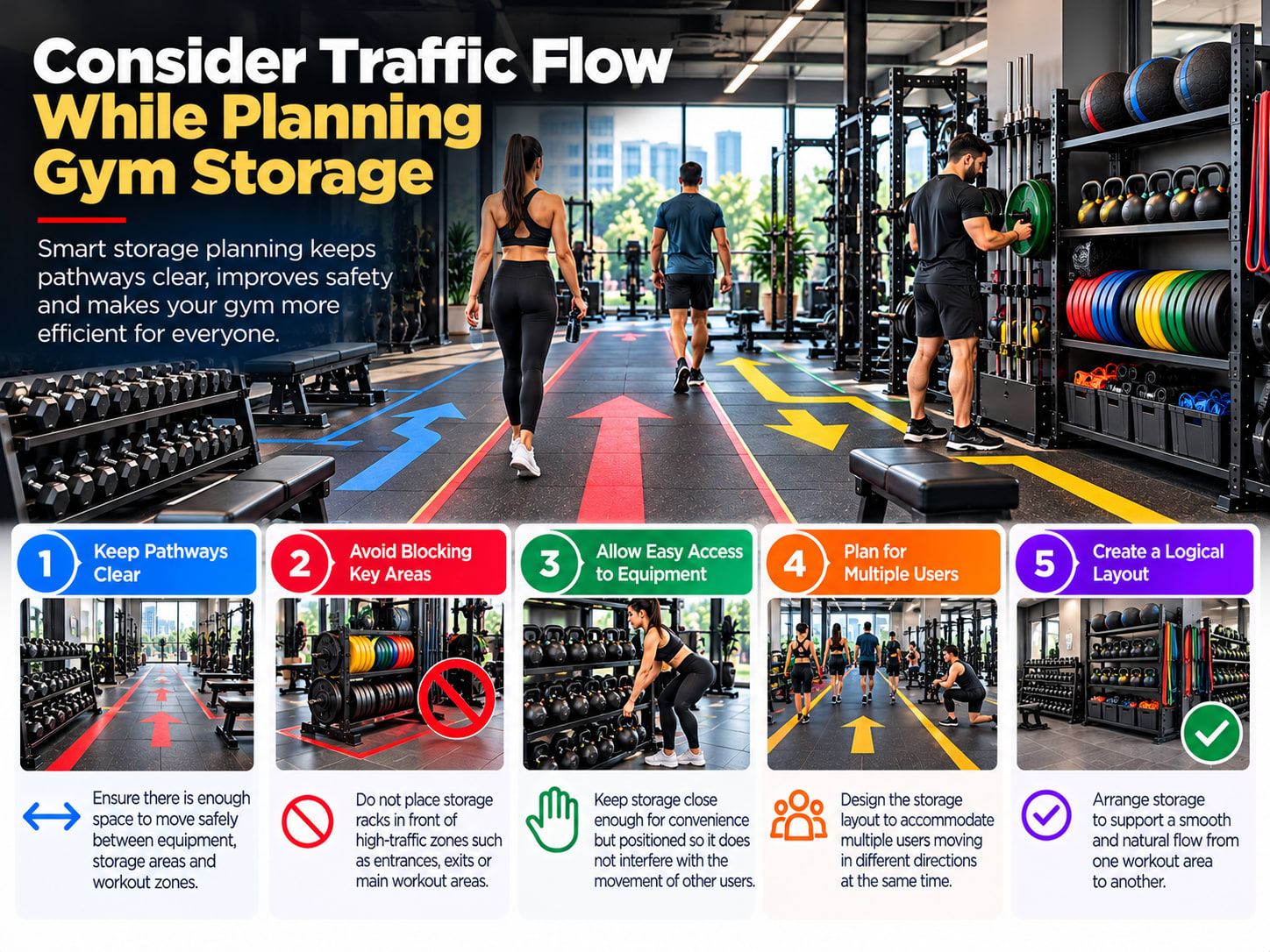
Traffic flow is one of the most important parts of gym layout planning. You need to have an idea about where members enter the room, where they collect weights and how they move between stations.
If everyone has to walk through the middle of a lifting area to reach the dumbbell rack, the layout will quickly become frustrating. A better arrangement places storage close to the relevant training zone without blocking movement.
For example, dumbbells can sit near benches, plate racks near squat racks, and accessory holders beside functional training equipment. In busy commercial gyms, avoid placing frequently used items in narrow corners where members may have to wait for access.
Also, consider what happens when several people use the same area at once. A storage rack should be accessible without forcing people to stand behind someone lifting weights.
Storage Planning for Small Home Gyms
Small home gyms need a different approach from large commercial fitness centres. The idea is to keep the equipment accessible while maintaining enough open floor space to exercise comfortably. Check out some of the following productive ways for the same.
1. Use Vertical Space
Wall-mounted accessory holders and suitable vertical storage racks can reduce clutter on the floor. Before mounting anything heavy, check the wall construction, fixings and rated load. Some equipment may require professional installation.
2. Choose Multi-Purpose Storage
If you use adjustable dumbbells, you may not need a separate rack for a large collection of fixed dumbbells. Compact storage units can also hold smaller accessories in one organised location.
3. Keep Equipment Near Its Main Use
Place the dumbbell stand near the workout bench and keep bands and mats near the stretching area. This helps prevent equipment from being moved around the room after every session.
4. Make Storage Easy to Reach
A storage solution is only useful if you can use it comfortably. Avoid placing heavy weights on high shelves or putting frequently used accessories behind larger equipment. For small apartments, it is especially important to check that storage does not interfere with doors, windows or normal movement through the room.
Storage Planning for Commercial Gyms
Commercial gyms usually need more storage capacity because they hold larger equipment collections and serve more people. Durability, stability and accessibility should be key considerations. Choose racks designed for the expected load and daily use.
Think about how members will use the gym during peak hours and plan accordingly. Multiple storage points can reduce crowding, while clearly marked weight positions can make it easier to return equipment correctly.
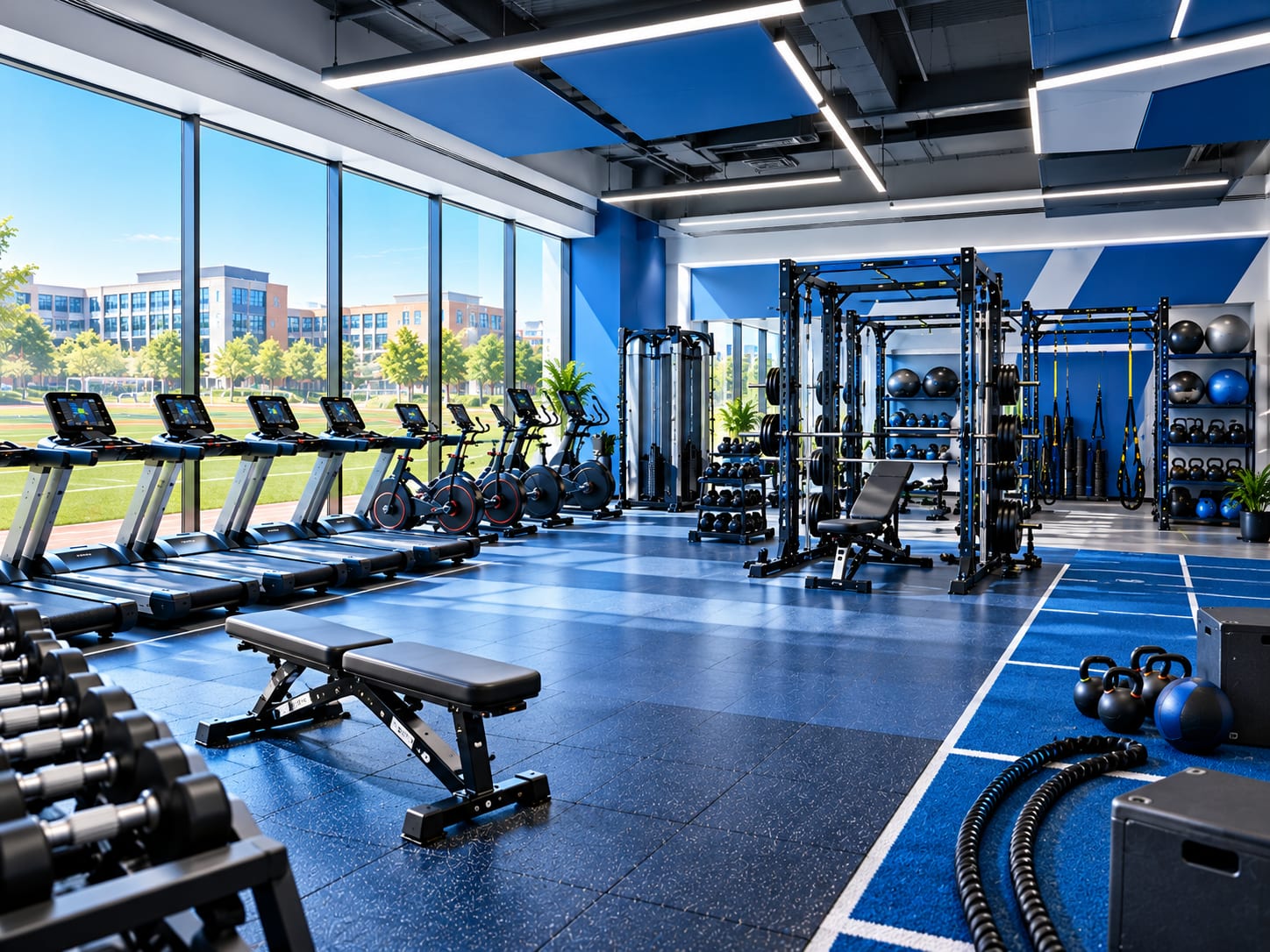
Staff should also be able to inspect and clean storage areas without moving large amounts of equipment every day. For larger gyms, storage should be included in the layout plan alongside cardio machines, strength equipment, free-weight stations and functional training zones.
Critical Safety Tips for Gym Storage
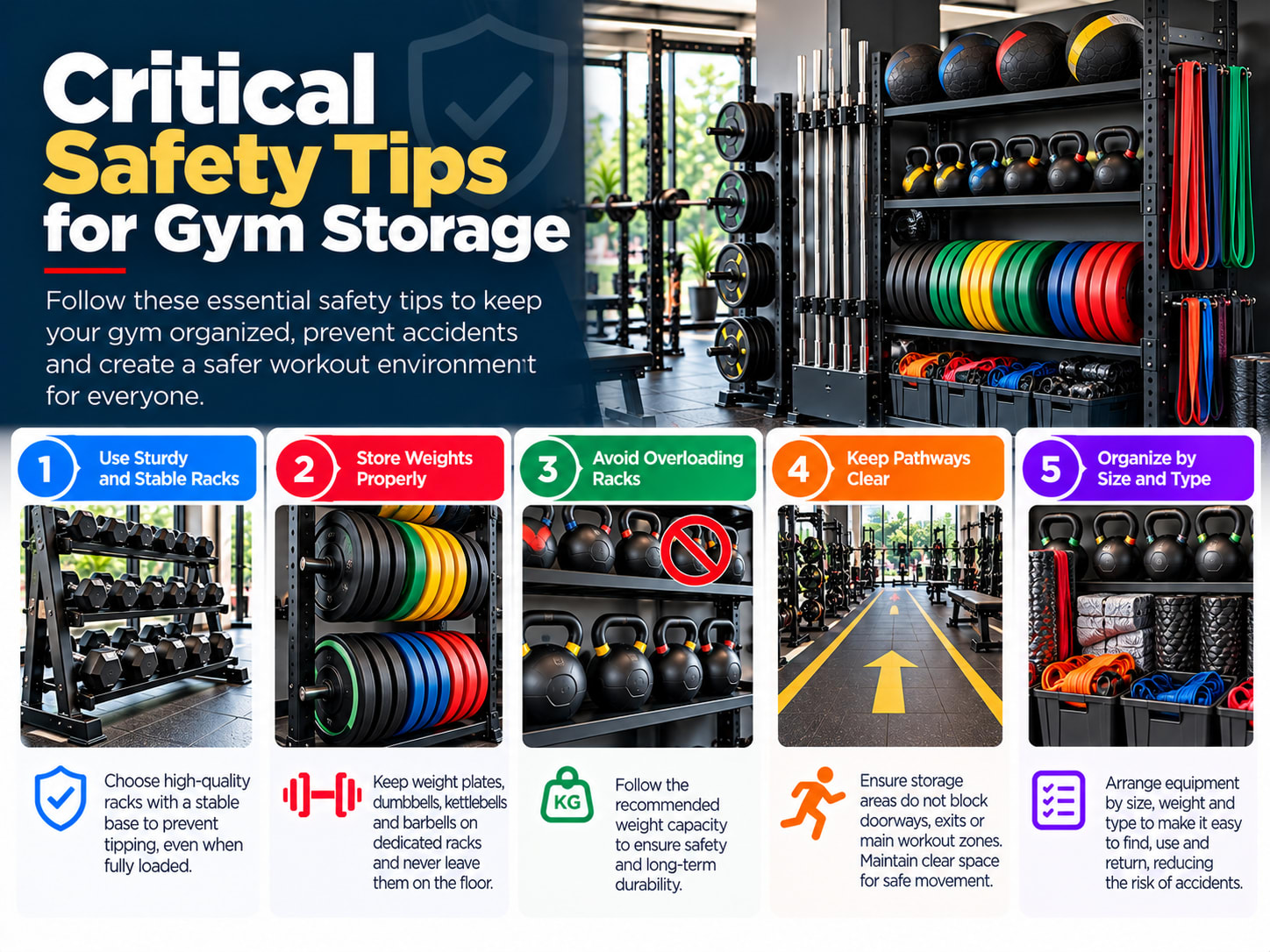
A good storage layout should reduce risks rather than create new ones. Keep these points in mind:
- Use racks designed for the load. Check the manufacturer's weight capacity and intended use.
- Keep heavy items low where appropriate. Avoid unnecessary lifting to high shelves.
- Store barbells securely. Do not leave them leaning against walls or lying across walkways.
- Avoid overloading shelves and pegs. Stay within the specified capacity.
- Secure wall-mounted units properly. Confirm that the wall and fixings are suitable for the load.
- Keep exits clear. Storage should never block emergency routes or safety equipment.
- Inspect storage regularly. Look for loose bolts, cracks, wobbling frames and damaged hooks.
- Keep the floor clear. Return weights and accessories after use.
In commercial gyms, simple signs and clear storage labels can help members understand where equipment belongs.
Cleaning and Maintaining Gym Storage
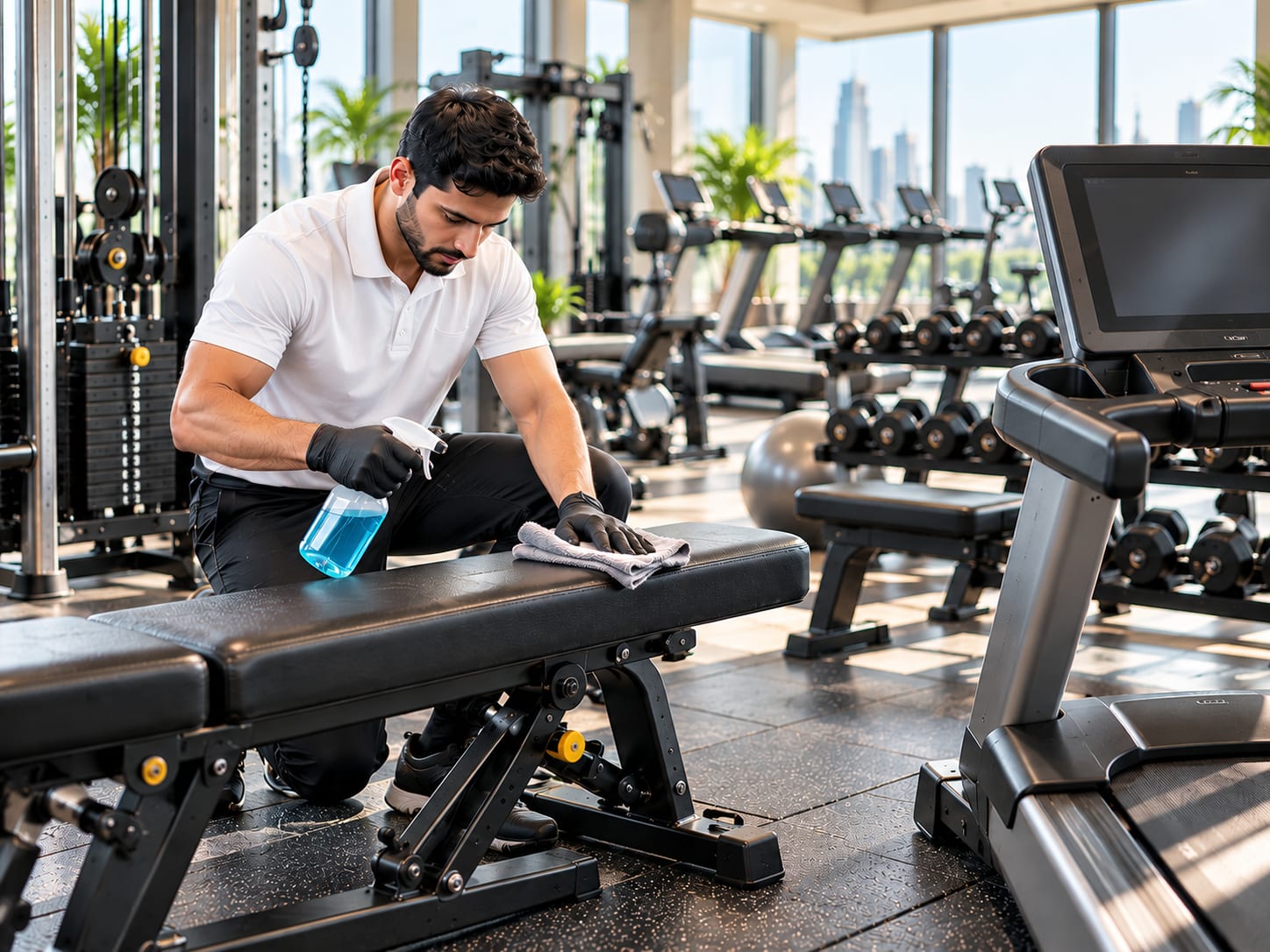
Storage racks need regular cleaning and inspection, too. Dust can build up on shelves, pegs and rack frames, particularly in GCC countries. Sweat may also collect on surfaces that are frequently touched.
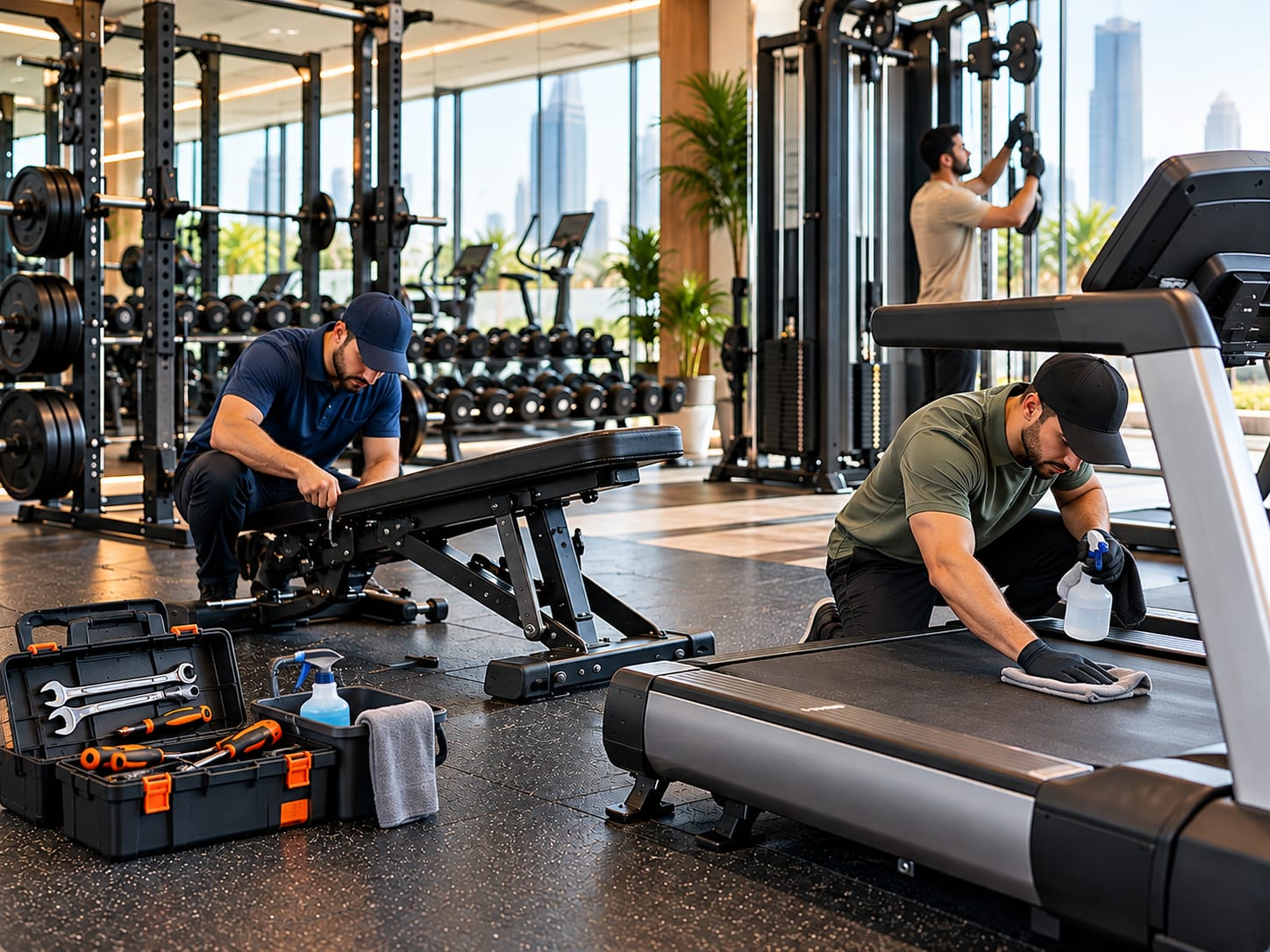
Wipe racks with a suitable cleaner and dry them where necessary. Use products that are compatible with the rack's finish. During routine checks, look for loose fasteners, corrosion, bent pegs, damaged welds or unstable frames.
For wall-mounted systems, inspect the fixings and the surrounding wall for signs of movement or damage. If a storage unit appears unstable, stop using it until it has been assessed and repaired. Keeping storage clean and in good condition helps protect both the equipment and the people using it.
Common Gym Storage Mistakes
A few common mistakes can make even a well-equipped gym difficult to use.
- Buying storage without measuring: The rack may not fit the room or leave enough access space.
- Placing storage too far from equipment: Members end up carrying weights across the gym and leaving them in the wrong places.
- Ignoring traffic flow: Storage blocks walkways or forces people through active lifting areas.
- Choosing racks with insufficient capacity: The unit becomes overloaded or unstable.
- Using the floor as storage: Loose dumbbells, plates and accessories create clutter and trip hazards.
- Forgetting future expansion: A gym that adds equipment later may quickly run out of organised storage space.
- Choosing appearance over function: A stylish rack is not useful if it is difficult to access or unsuitable for the equipment.
Before buying, check dimensions, load capacity, equipment compatibility, installation requirements and how the rack will fit into the daily routine.
Fitness enthusiasts across the UAE can visit Lifetime Fitness Store for a wide selection of premium-quality gym equipment, innovative features, trusted brands, competitive offers, expert guidance, reliable delivery, professional installation, and dedicated after-sales support to create the perfect home or commercial gym.
Conclusion
Good gym storage makes a real difference to how a fitness space works. It keeps equipment organised, protects the floor, improves access and helps create a safer training environment.
Dumbbells need racks that make weights easy to select and return. Weight plates should be stored securely near racks and plate-loaded machines. Barbells need dedicated holders to prevent rolling, while kettlebells and accessories benefit from clearly defined storage areas.
The best layout depends on the available space, equipment collection and number of people using the gym. A small home gym may need compact stands and wall-mounted accessory storage, while a commercial fitness centre may require heavy-duty racks and several storage points across the floor.
For gyms in the GCC, also consider dust, cleaning access, delivery routes and installation requirements when planning the space.
Most importantly, do not treat storage as an afterthought. Plan it alongside your gym equipment so every item has a proper place.
A well-organised gym is not necessarily the one with the most storage. It is the one where equipment is easy to find, safe to return and never gets in the way of a good workout.
 Get a weekly dose of latest stories
and useful tips directly in your inbox!
Get a weekly dose of latest stories
and useful tips directly in your inbox!


 0
0