Commercial Gym Equipment Checklist for 50, 100 & 200 Members: From Cardio to Recovery in the UAE
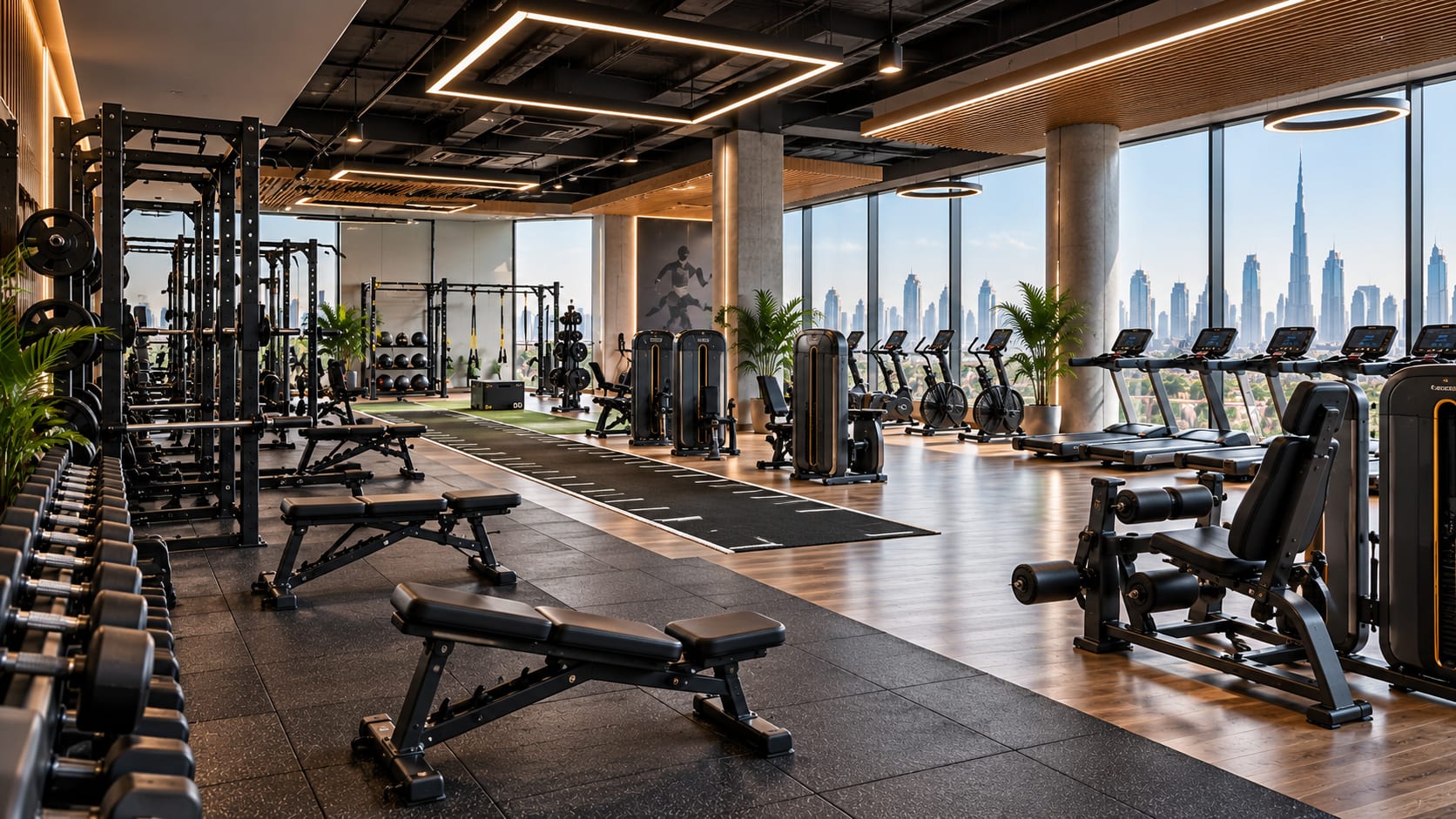
An efficient commercial gym is not just about having several equipment like a few treadmills, dumbbells, and strength training machines. If you plan to set up a gym, the first and foremost thing to do is to choose the right equipment based on the number of members you expect to serve.
For example, a gym with 50 members will have different needs compared to one with 100 or 200 members. Buying only a few pieces of equipment can lead to long waiting times and unsatisfied members. Similarly, buying too much equipment at the beginning increases your investment.
The ideal thing to avoid these problems is to plan your gym equipment based on member capacity, available space, and the type of training members prefer. Whether you are opening a new gym or expanding an existing one, a proper equipment checklist can make the process easier.
This blog delves deep into the details with regard to commercial gym equipment that are needed for 50, 100, and 200 members. It also touches upon cardio machines, strength equipment, free weights, storage solutions, and recovery equipment.
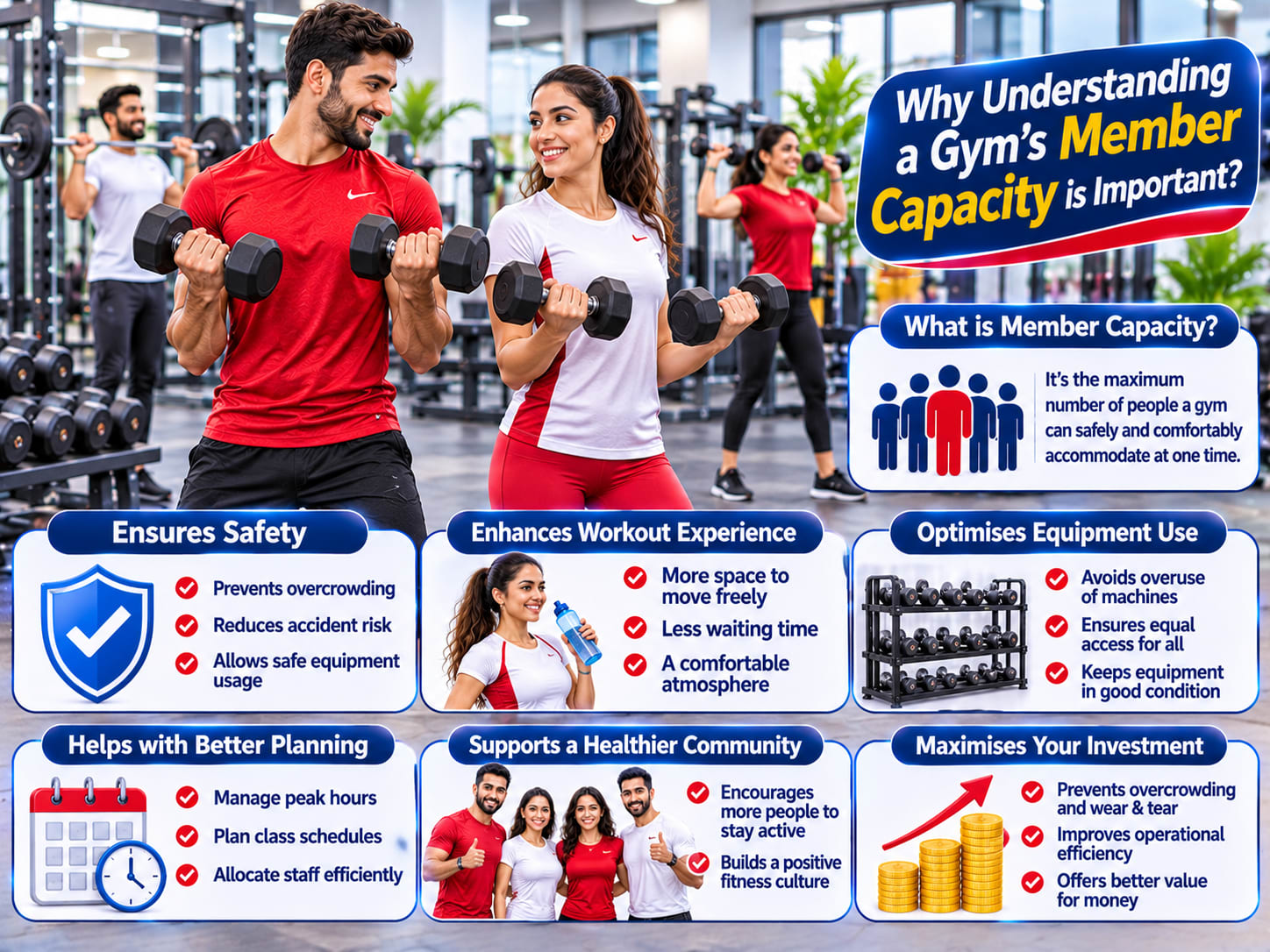
Why Understanding a Gym's Member Capacity is Important?
Before purchasing gym equipment, you need to understand how many people will use the gym regularly. Note that having 100 registered members does not mean all of them will turn up at the same time. Most gyms experience higher footfall during morning and evening hours.
A gym with 100 members may have 15 to 25 people working out during peak hours. This number can change depending on the location and working hours. Here is a simple way to look at different gym sizes:
50 members: A small gym with basic cardio, strength, and free-weight equipment.
100 members: A medium-sized gym that needs more equipment variety and enough machines to reduce waiting time.
200 members: A larger gym that needs multiple workout stations, more cardio machines, and better space management.
These numbers are mere starting points for planning. You should adjust them based on factors like floor space, peak-hour traffic, budget, and training style.
Cardio Equipment Checklist for Different Gym Sizes
Cardio equipment is one of the most important parts of a commercial gym. Many members start their workout with cardio exercises. Some use it for weight loss, while others use it to improve stamina and heart health. A good cardio section should have different types of machines. This allows members to choose exercises based on their fitness levels and preferences.
Cardio equipment for a 50-member gym
A small gym can start with a basic selection of cardio machines. Recommended equipment:
2 commercial treadmills
1 elliptical trainer
1 upright exercise bike
1 rowing machine
This setup covers the basic cardio needs of a small gym. Treadmills are useful for walking, jogging, and running. Elliptical trainers offer a low-impact workout, while exercise bikes are suitable for people who prefer cycling. A rowing machine adds another option because it works both the upper and lower body.
Cardio equipment for a 100-member gym
As the number of members increases, you need more machines to avoid overcrowding. Recommended equipment:
4 commercial treadmills
2 elliptical trainers
2 upright exercise bikes
1 recumbent bike
2 rowing machines
This setup provides more options and helps distribute members across different cardio stations. Adding a recumbent bike is also useful for members who prefer a seated cycling position.
Cardio equipment for a 200-member gym
A larger gym needs a more complete cardio section. Recommended equipment:
6 to 8 commercial treadmills
3 elliptical trainers
3 upright exercise bikes
2 recumbent bikes
2 to 3 rowing machines
1 stair climber
The number of machines can be increased if cardio workouts are popular among your members. For a commercial gym, always choose machines designed for regular and heavy use. Look for strong frames, reliable motors, comfortable controls, and easy maintenance. Commercial-grade equipment may cost more initially, but it is usually a better choice for a busy gym.
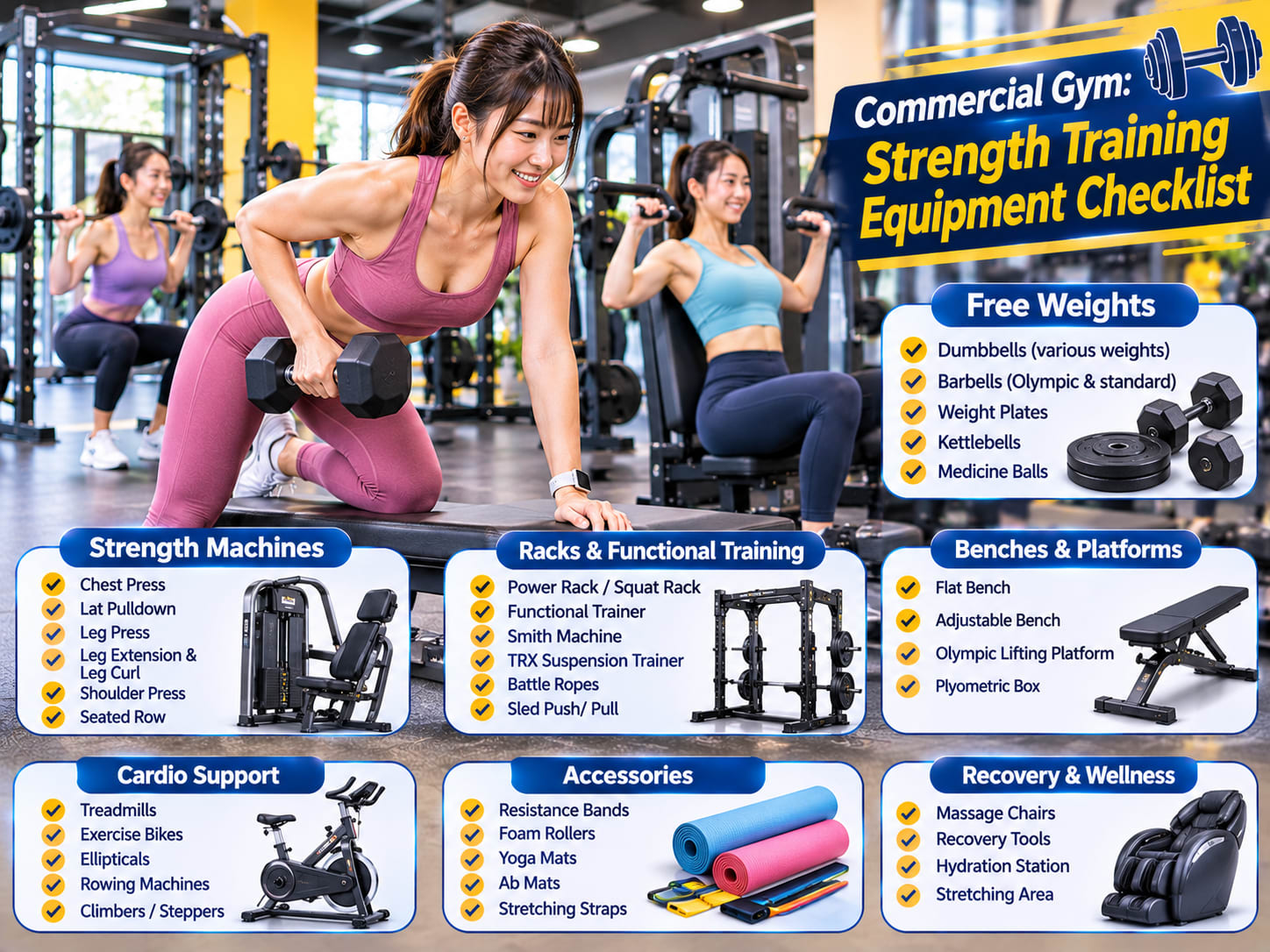
Commercial Gym: Strength Training Equipment Checklist
Strength training is an important part of almost every gym. People use strength equipment to build muscle, improve fitness, and increase overall strength. Your gym should have a mix of machines that target different muscle groups. This includes the chest, back, shoulders, arms, legs, and core.
Strength equipment for a 50-member gym
A small gym can begin with essential strength machines. Recommended equipment:
1 chest press machine
1 lat pulldown machine
1 seated row machine
1 leg press machine
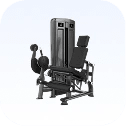
1 leg extension machine
1 leg curl machine
1 shoulder press machine
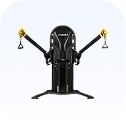
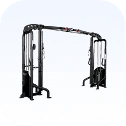
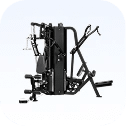
1 functional trainer or cable crossover
These machines cover the main muscle groups and allow beginners to perform guided exercises. A functional trainer is useful because members can perform several exercises using the same machine. It can be used for cable chest movements, triceps pushdowns, biceps curls, and many other workouts.
Strength equipment for a 100-member gym
For a medium-sized gym, you should provide more variety. Recommended equipment:
1 to 2 chest press machines
1 lat pulldown machine
1 seated row machine
1 leg press machine
1 leg extension machine
1 leg curl machine
1 shoulder press machine
1 pec deck machine
1 functional trainer
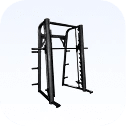
1 Smith machine
1 assisted pull-up and dip machine
This setup provides more training options for members. It also allows beginners and experienced gym users to follow different workout routines.
Strength equipment for a 200-member gym
A larger gym should have enough machines to support different workout styles. Recommended equipment:
2 chest press machines
2 lat pulldown or back training stations
2 seated row stations
2 leg press machines
1 to 2 leg extension machines
1 to 2 leg curl machines
2 shoulder press stations
1 pec deck and rear delt machine
2 functional trainers or cable stations
1 to 2 Smith machines
1 assisted pull-up and dip machine
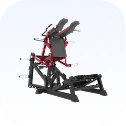
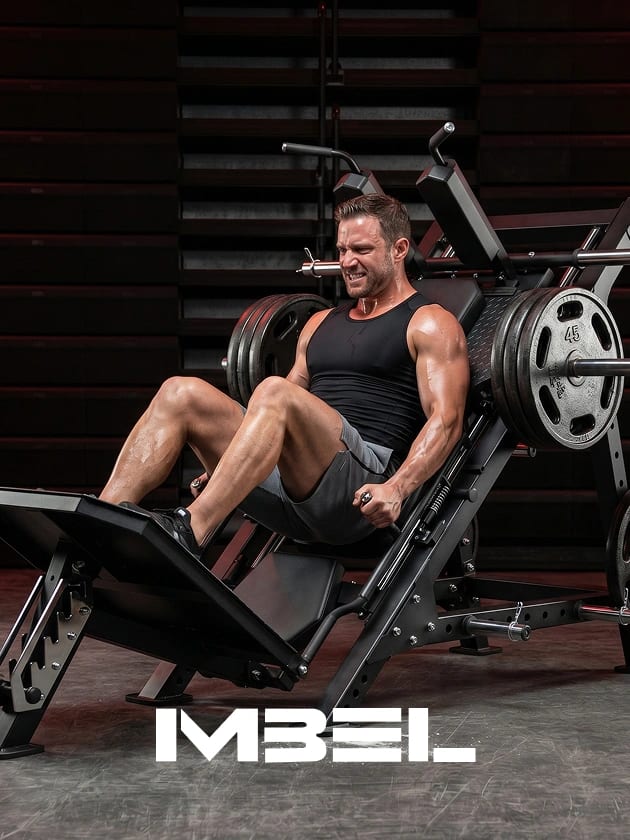
1 hack squat machine
For a gym with 200 members, it is important to avoid having only one machine for popular exercises. Multiple stations help reduce waiting times, especially during busy hours.
Free-Weight Equipment Checklist for the Gym
Free weights are an essential part of commercial gym equipment. Many members prefer dumbbells and barbells because they allow different types of exercises. Unlike fixed machines, free weights give users more freedom to train different muscle groups. They are also useful for functional training and strength development.
Free weights for a 50-member gym
A small gym should have the basic free-weight equipment. Recommended equipment:
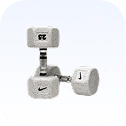
Dumbbell sets from 2.5 kg to 25 kg
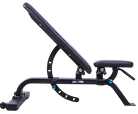
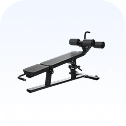
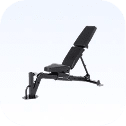
1 to 2 adjustable benches
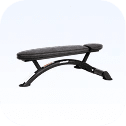
1 flat bench
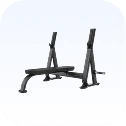
1 Olympic barbell
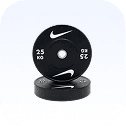
Weight plates
1 squat rack
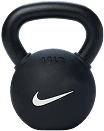
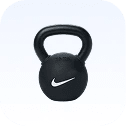
1 pair of kettlebells in different weights
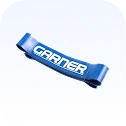
1 set of resistance bands
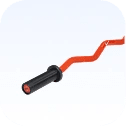
1 EZ curl bar
This equipment is enough to support common exercises such as dumbbell presses, squats, lunges, curls, and deadlifts.
Free weights for a 100-member gym
A medium-sized gym should provide more weight options and workout stations. Recommended equipment:
Dumbbell sets from 2.5 kg to 35 kg
2 adjustable benches
1 to 2 flat benches
2 Olympic barbells
Weight plate sets
1 to 2 squat racks
1 kettlebell set
1 EZ curl bar
1 fixed barbell set
1 preacher curl bench
Resistance bands
Having more than one bench and squat station can make a big difference during peak hours.
Free weights for a 200-member gym
For a larger gym, free-weight equipment should support beginners, intermediate users, and experienced lifters. Recommended equipment:
Dumbbell sets from 2.5 kg to 50 kg or more
3 to 4 adjustable benches
2 flat benches
3 to 4 Olympic barbells
Multiple weight plate sets
2 to 3 squat racks
1 to 2 deadlift platforms
Complete kettlebell sets
Multiple EZ curl bars
Fixed barbell sets
1 to 2 preacher curl benches
Resistance bands in different resistance levels
1 to 2 adjustable utility benches
The free-weight area should have enough space for safe movement. Avoid placing benches, dumbbell racks, and squat stations too close to each other.
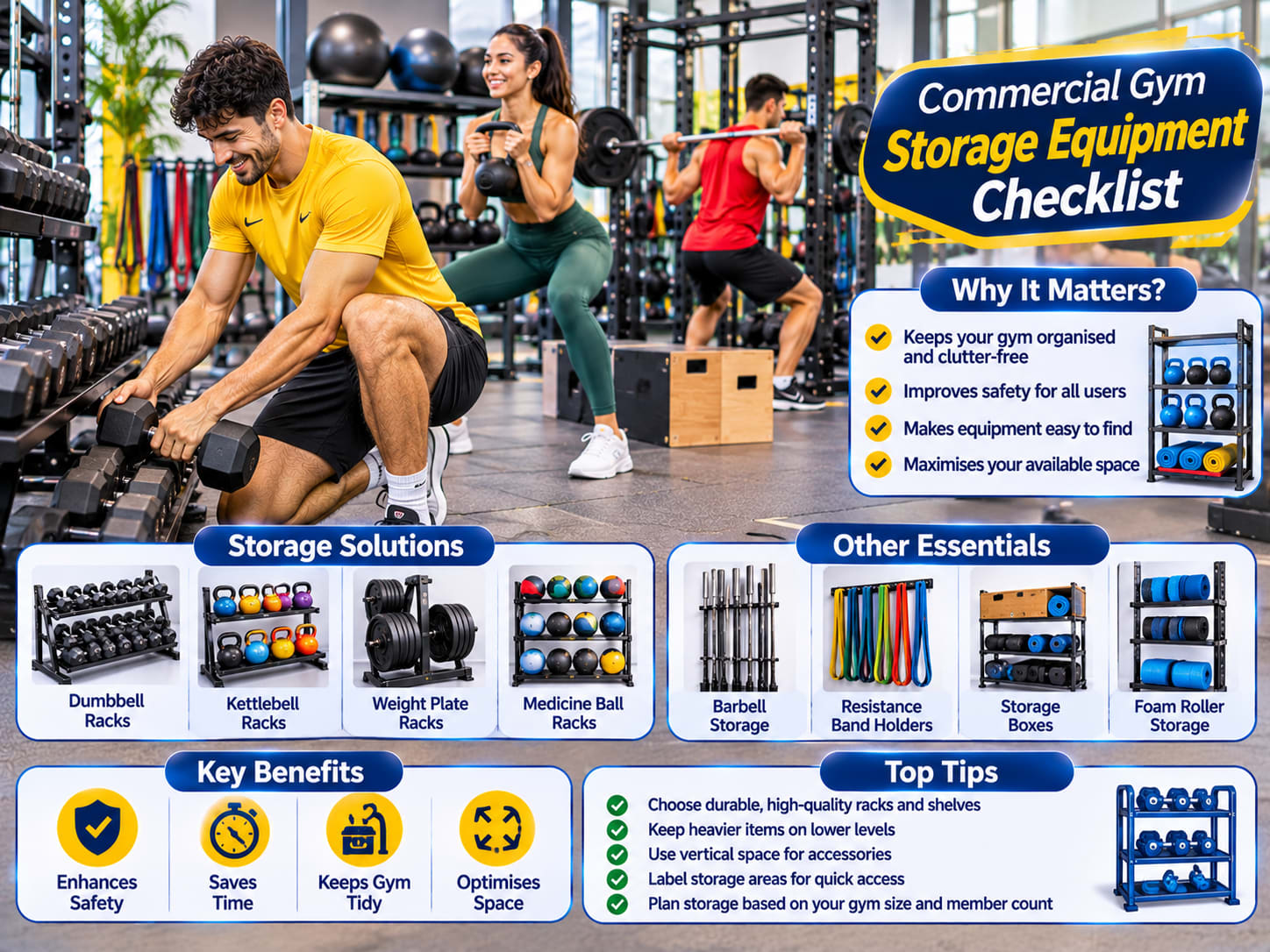
Commercial Gym Storage Equipment Checklist
The storage factor is often overlooked when setting up a gym. However, it plays an important role in keeping the workout area clean and organised. When weights and accessories are left on the floor, they can create safety problems. Proper storage also makes it easier for members to find the equipment they need.
Storage equipment for a 50-member gym
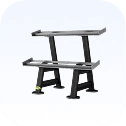
1 dumbbell rack
1 weight plate storage rack
1 barbell storage stand
1 kettlebell rack
1 wall-mounted accessory rack
Basic gym lockers
Storage equipment for a 100-member gym
2 dumbbell racks
1 to 2 weight plate storage racks
1 barbell storage rack
1 kettlebell rack
1 to 2 accessory storage racks
Member lockers
Storage shelves for resistance bands and workout accessories
Storage equipment for a 200-member gym
Multiple dumbbell racks
2 to 3 weight plate storage racks
Multiple barbell storage stands
2 kettlebell racks
Wall-mounted accessory storage systems
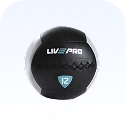
Dedicated storage for medicine balls and exercise balls
Adequate member lockers
Cleaning and maintenance storage area
Choose storage racks based on the weight they need to hold. Strong metal racks are generally a good option for commercial gyms. You should also make sure that storage areas do not block walking paths or emergency exits.
Recovery Equipment Checklist in a Commercial Gym
The recovery aspect is an important part of fitness. People need time to relax their muscles and recover after back-to-back workout sessions. A gym does not need to have an expensive recovery centre from day one. Even a small recovery corner with basic accessories can be useful.
Recovery equipment for a 50-member gym
Foam rollers
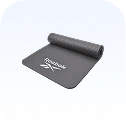
Exercise mats
Stretching mats
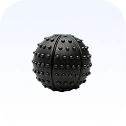
Massage balls
Resistance bands
Basic stretching area
These accessories are affordable and do not take up much space. People can use them for warm-ups, cool-downs, and simple stretching exercises.
Recovery equipment for a 100-member gym
A medium-sized gym can offer a slightly larger recovery area. Recommended equipment:
4 to 6 foam rollers
6 to 8 exercise mats
Massage balls
Stretching straps
Resistance bands
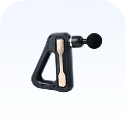
1 percussion massage gun
Dedicated stretching space
A separate stretching area helps members cool down without occupying space in the main workout area.
Recovery equipment for a 200-member gym
A larger gym can provide more recovery options. Recommended equipment:
8 to 12 foam rollers
10 to 15 exercise mats
Multiple massage balls
Stretching straps
Resistance bands
2 to 3 percussion massage guns
Dedicated mobility and stretching area
Yoga mats
Optional recovery accessories based on member demand
If you have enough space and budget, you can also consider advanced recovery facilities. However, these are not essential for every commercial gym.
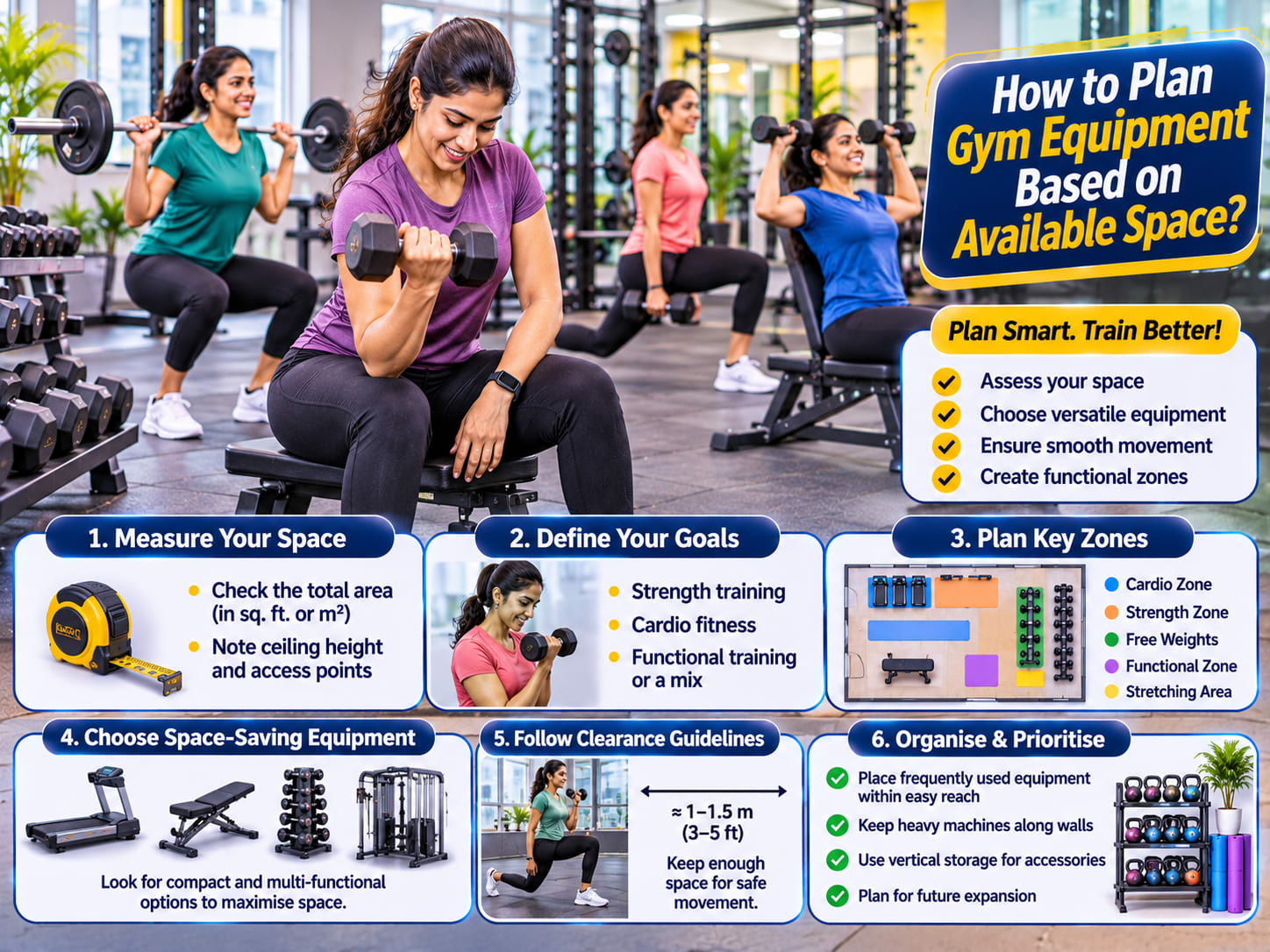
How to Plan Gym Equipment Based on Available Space?
Buying the right equipment is only one part of setting up a gym. You also need to arrange everything properly. A gym with good equipment but poor layout can become uncomfortable during busy hours. Here are some simple tips to plan your gym space:
Create separate workout zones: Keep cardio machines, strength machines, free weights, and recovery areas in separate sections. This makes the gym easier to navigate.
Leave enough walking space: Members should be able to move between machines without bumping into other people or equipment.
Place popular equipment carefully: Treadmills, dumbbells, benches, and cable machines are commonly used. Make sure these areas have enough space.
Keep heavy equipment on suitable flooring: Free-weight areas need strong and appropriate flooring to handle heavy weights and reduce impact.
Keep storage close to workout stations: Dumbbell racks should be near benches, and weight plate racks should be close to squat racks and other lifting stations.
Plan for future expansion: If you expect your membership to grow, leave some space for additional machines and workout stations.
Important Things to Check Before Buying Commercial Gym Equipment
Before placing an order, take ample time to compare different equipment options. The cheapest option may not always be the best choice for a commercial gym. Here are a few things to consider:
Equipment quality
Commercial gym equipment should be strong enough to handle regular use. Check the frame, cables, pulleys, upholstery, and moving parts before making a purchase.
Warranty and service support
Machines may need repairs or replacement parts over time. Choose suppliers who provide proper warranty coverage and after-sales support.
Member requirements
Think about the type of people who will use your gym. A gym mainly serving beginners may need more guided strength machines. A gym focused on bodybuilding may need more free weights and strength stations.
Available space
Always measure your gym before ordering equipment. Check the machine dimensions and allow enough space for people to use them safely.
Budget planning
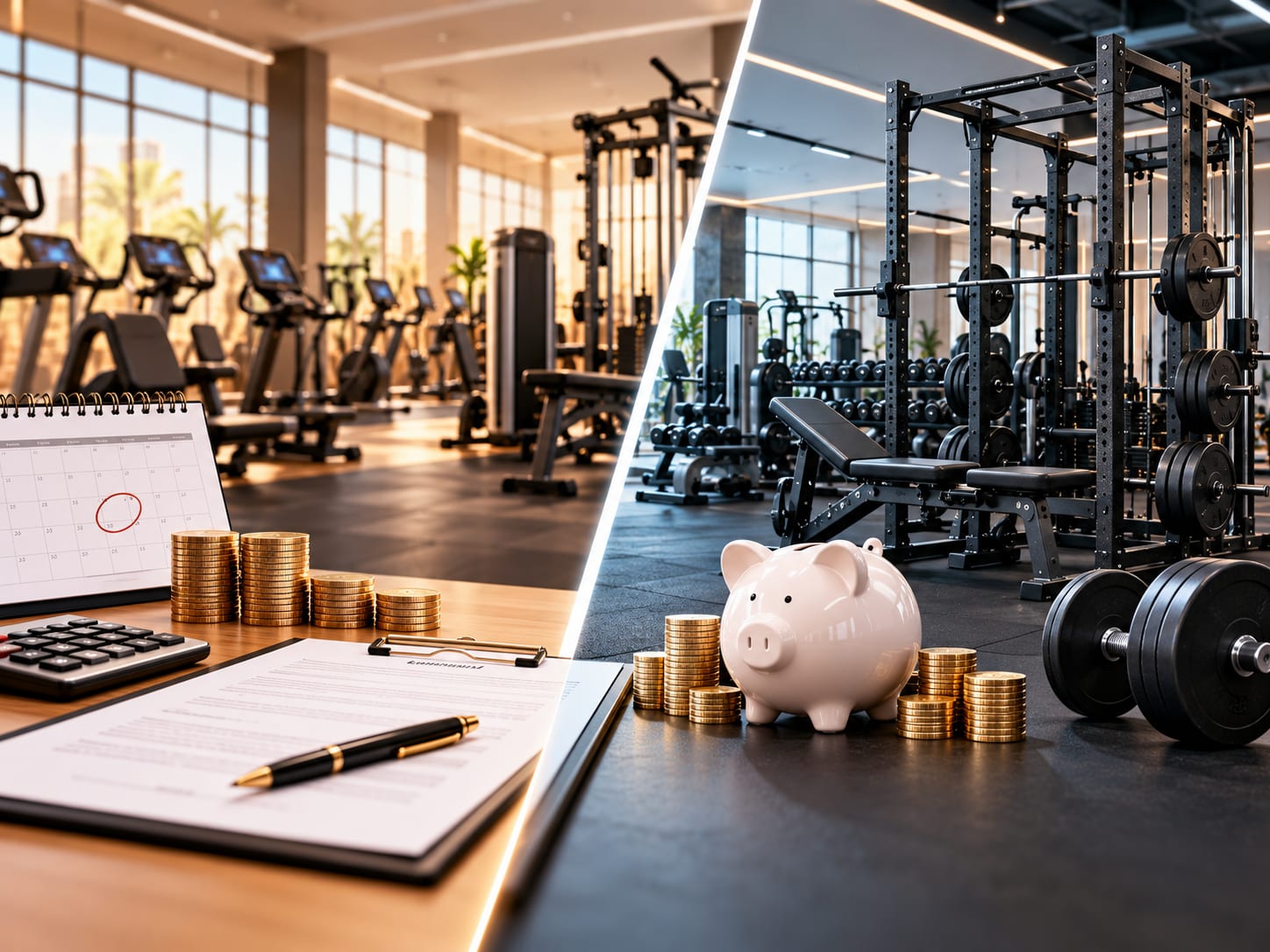
Do not spend your entire budget on cardio machines or strength equipment alone. Divide your investment across all major workout sections. It is also a good idea to keep some money aside for flooring, installation, maintenance, and future equipment additions.
Build a Gym That Can Grow with Your Members
One of the biggest mistakes gym owners make is buying all their equipment based only on their current membership numbers. For example, if you are opening a gym for 50 members but expect to reach 100 members within a year, you should plan for that growth from the beginning.
You do not need to buy every machine immediately. Instead, start with the essential equipment and add more machines as your membership increases. Check out an ideal growth plan:
With 50 members: Focus on essential cardio machines, basic strength equipment, free weights, storage, and recovery accessories.
With 100 members: Add more cardio machines, strength stations, benches, and free-weight options to support higher footfall.
With 200 members: Expand popular workout stations, improve storage, add recovery facilities, and create separate training zones.
This approach helps you manage your investment and avoid unnecessary purchases.
Fitness freaks in the UAE may consider Lifetime Fitness Store to meet their fitness solution needs that includes a wide range of premium-quality gym equipment, attractive offers, competitive prices, expert guidance to help choose the right products, and customised solutions for home and commercial gyms.
Conclusion
Setting up a commercial gym requires proper planning. The equipment you need for 50 members will be different from what you need for 100 or 200 members. The key is to choose equipment that matches your expected footfall, available space, budget, and member requirements.
Start with the essentials, including cardio machines, strength equipment, free weights, storage racks, and recovery accessories. As your gym grows, expand the areas that experience the most demand.
Most importantly, do not focus only on the number of machines. Think about how comfortable and convenient the gym will be for your members. A well-planned gym with the right equipment can improve the workout experience and help your business grow over time.
If you are planning a new commercial gym or upgrading an existing fitness centre, consider this checklist as a starting point to build a practical and scalable gym setup.
A commercial gym with 50 members needs basic cardio machines, strength training equipment, and free weights. You can start with 2 treadmills, 1 elliptical, 1 exercise bike, essential strength machines, dumbbell sets, a squat rack, benches, and basic recovery accessories like foam rollers and exercise mats.
A gym with 100 members needs a wider range of equipment to handle daily workouts. A good starting setup includes 4 treadmills, 2 elliptical trainers, 3 exercise bikes, rowing machines, strength machines for different muscle groups, multiple benches, dumbbells, barbells, weight plates, and proper storage racks.
A 200-member gym needs a larger selection of cardio machines, strength equipment, and free weights. This may include 6–8 treadmills, 3 elliptical trainers, 5 exercise bikes, multiple strength machines, 2–3 squat racks, dumbbell sets, Olympic barbells, weight plates, and dedicated recovery and stretching areas.
Consider your expected peak-hour attendance, available floor space, budget, and the type of workouts your members prefer. Start with essential equipment and add more machines as your membership grows. Focus on popular workout stations to reduce waiting times and provide a comfortable workout experience.
Yes, recovery equipment is useful for members who want to stretch, relax their muscles, and improve mobility after workouts. Basic items such as foam rollers, exercise mats, massage balls, and resistance bands are good starting options. Larger gyms can also consider percussion massage guns and dedicated stretching areas.





 Get a weekly dose of latest stories
and useful tips directly in your inbox!


 0

































 Price Match Guarantee
 Free Shipping
 Product Warranty
 After-Sale Support
 Have Coupon Code?
 You'll Save 0.00 On This Order
 Safe And Secure Payments. Easy Returns. 100% Genuine Products