Treadmill Belt Size Guide: Choose the Right Running Surface for Your Height and Weight in Saudi Arabia
Most of the fitness freaks who plan to buy a treadmill take utmost care to focus on aspects like motor, speed settings, display and price. However, there is an important feature that people tend to overlook because of their lack of awareness.
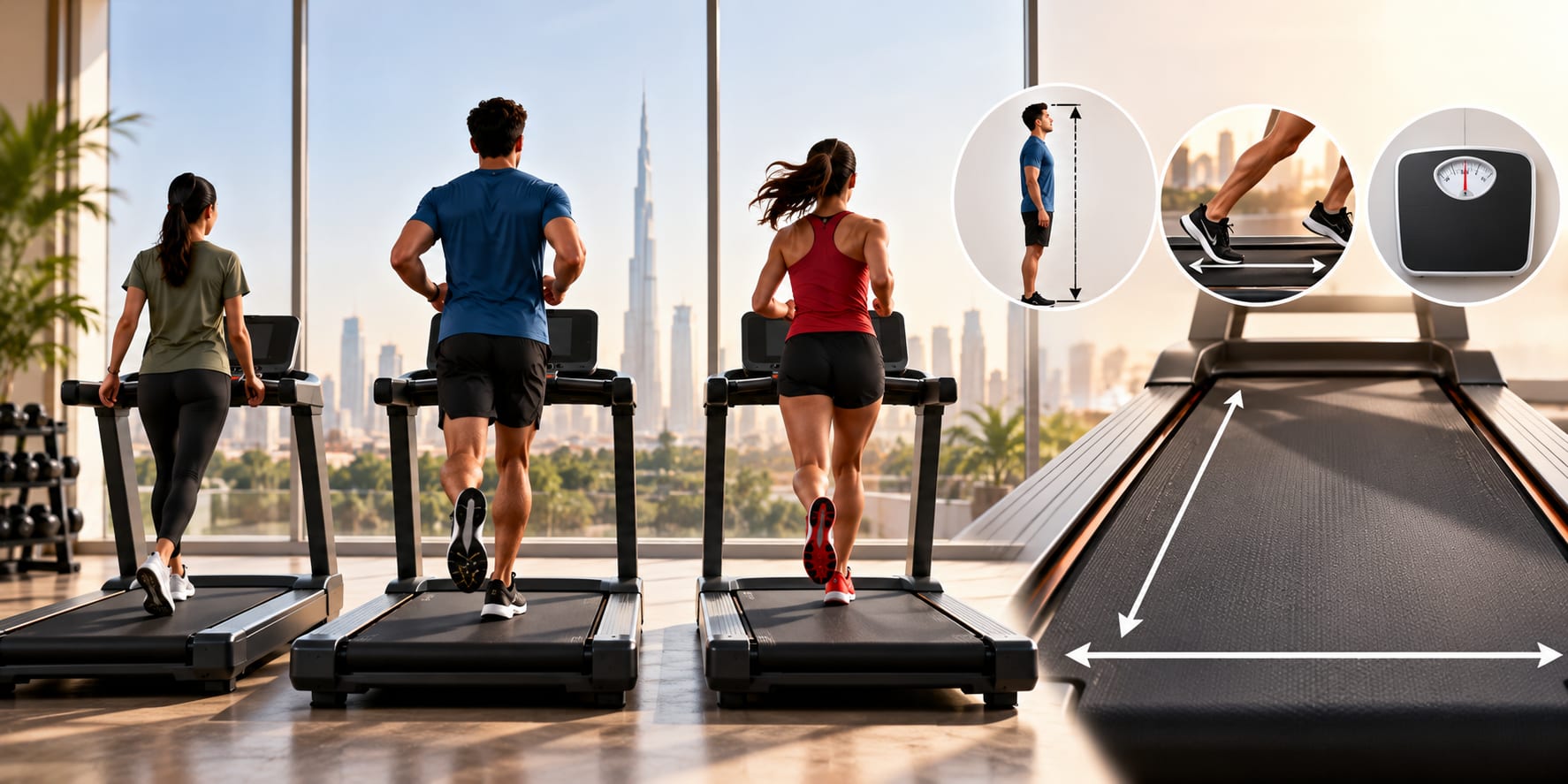
It is the size of the running belt, an underrated factor that can make a big difference to your workout. The running belt is the moving surface you walk or run on. If it is too short, you may feel restricted when taking longer strides. If it is too narrow, you may feel uncomfortable moving at higher speeds.
Hence, choosing the right size helps you exercise more naturally and confidently. Additionally, your height, body weight and workout style, too, play vital roles in finding the right treadmill.
A person who is into walking may be comfortable on a smaller running surface, while a taller person who runs regularly may need a longer and wider belt. Maximum user weight and overall construction are other things one needs to focus on while purchasing a treadmill.
If you are planning to buy a treadmill, this blog will come in handy in understanding everything about belt size dimensions and what to keep in mind to avoid common buying mistakes.
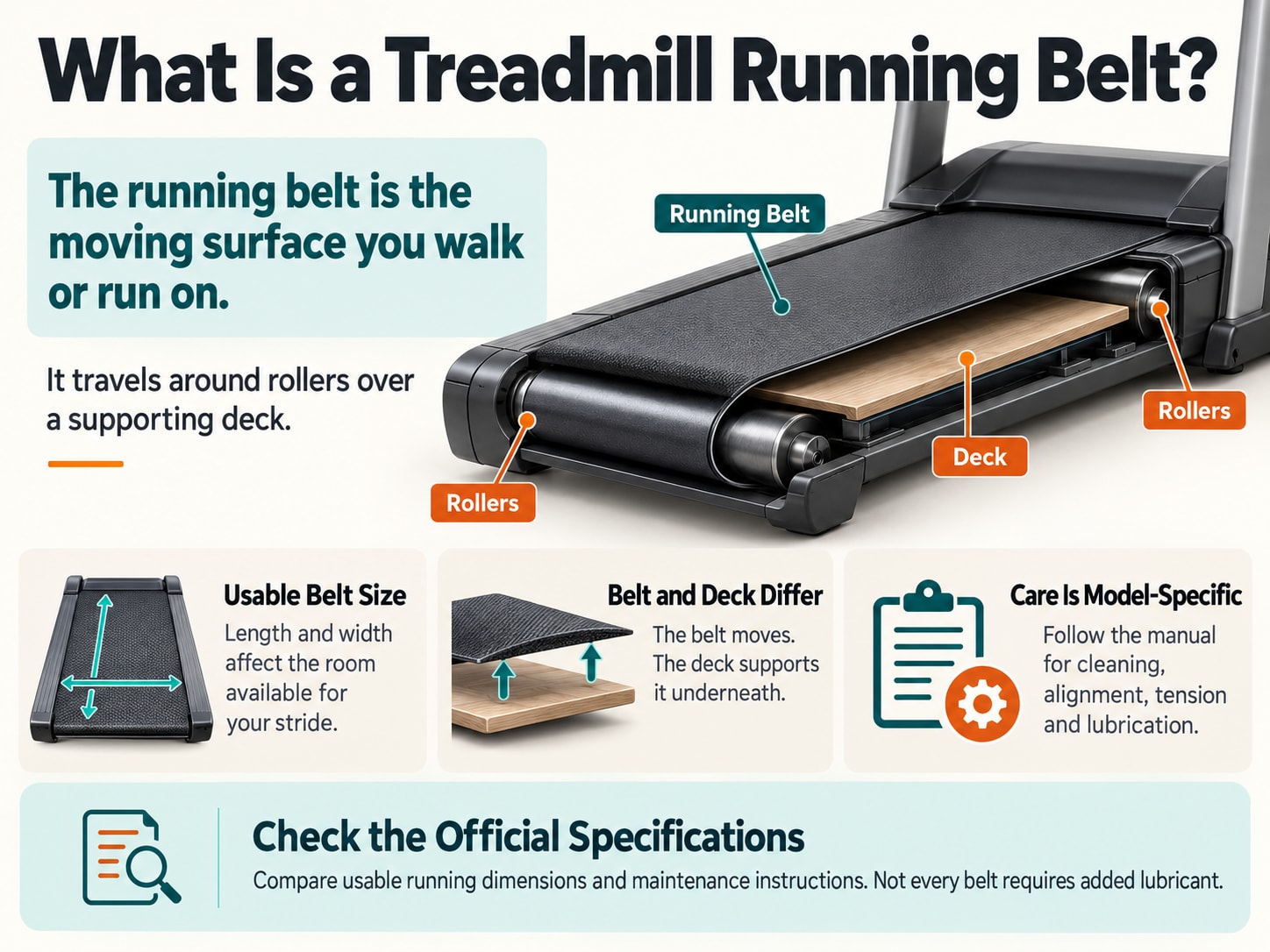
What Is a Treadmill Running Belt?
The running belt is the surface that moves around the treadmill deck. It is powered by the motor and allows you to walk, jog or run indoors. For beginners, the two following measurements are really important:
Belt length: The distance from the front to the back of the usable running surface.
Belt width: The distance from one side of the running surface to the other.
These measurements are usually listed in centimetres or millimetres, although some manufacturers use inches. For example, a treadmill with a running belt measuring 140 cm long and 50 cm wide provides a running surface of 140 × 50 cm.
The correct size depends on how you plan to use the treadmill. A shorter belt may work well for walking, but running usually requires more space because your stride becomes longer and your body moves more dynamically.
Always remember that the running belt is not the same as the treadmill's total dimensions. The full machine includes the frame, motor cover, handlebars and console, so it will take up more space than the belt measurements suggest.
Why Does Treadmill Belt Size Matter?
An ideal treadmill allows you to walk or run with a natural stride. If the belt is too small, you may feel that you need to shorten your steps or pay extra attention to where your feet land. This makes exercise less comfortable, especially during longer sessions. A proper running surface offers the following benefits:
More comfortable movement: Enough length allows you to maintain your usual stride without feeling restricted.
Better confidence while running: Additional width gives you more room for natural side-to-side movement.
Suitable for different workout speeds: A belt that works for slow walking may not feel as comfortable during jogging or faster running.
Better for different users: If several family members will use the same treadmill, a more generous running surface can accommodate different heights and stride lengths.
More room for incline workouts: Walking uphill can change your stride and body position. A suitable belt helps you feel comfortable during these sessions.
Apart from the belt size, correct speed settings, suitable footwear, proper use of the safety key and following the manufacturer's instructions are also important for ensuring a smooth workout routine.
Treadmill Belt Width: How Wide Should It Be?
Width is another factor that affects your comfort. A narrow belt can feel restrictive, especially when you run at higher speeds. A wider belt gives you more freedom to move naturally and can help you feel less concerned about stepping close to the edges. Check out a general guide to running belt width.
Around 40 to 45 cm: Walking and compact home treadmills
Around 45 to 50 cm: Walking, jogging and some regular running
Around 50 to 55 cm: Comfortable running and a wider range of users
Above 55 cm: Users who prefer extra space, subject to the model's design
These are approximate categories and not fixed rules. Some people are comfortable running on a narrower belt, while others prefer extra width even for walking. A belt around 40 cm wide may be suitable for walking, if you have limited space at home.
A 50 cm belt can be a practical option for many home users who walk, jog or run. It offers more room than many compact walking models without requiring the width of some larger commercial treadmills. If you are buying a treadmill for a whole family, compare both the width and length.
Choosing a Treadmill Belt for Walking, Jogging and Running
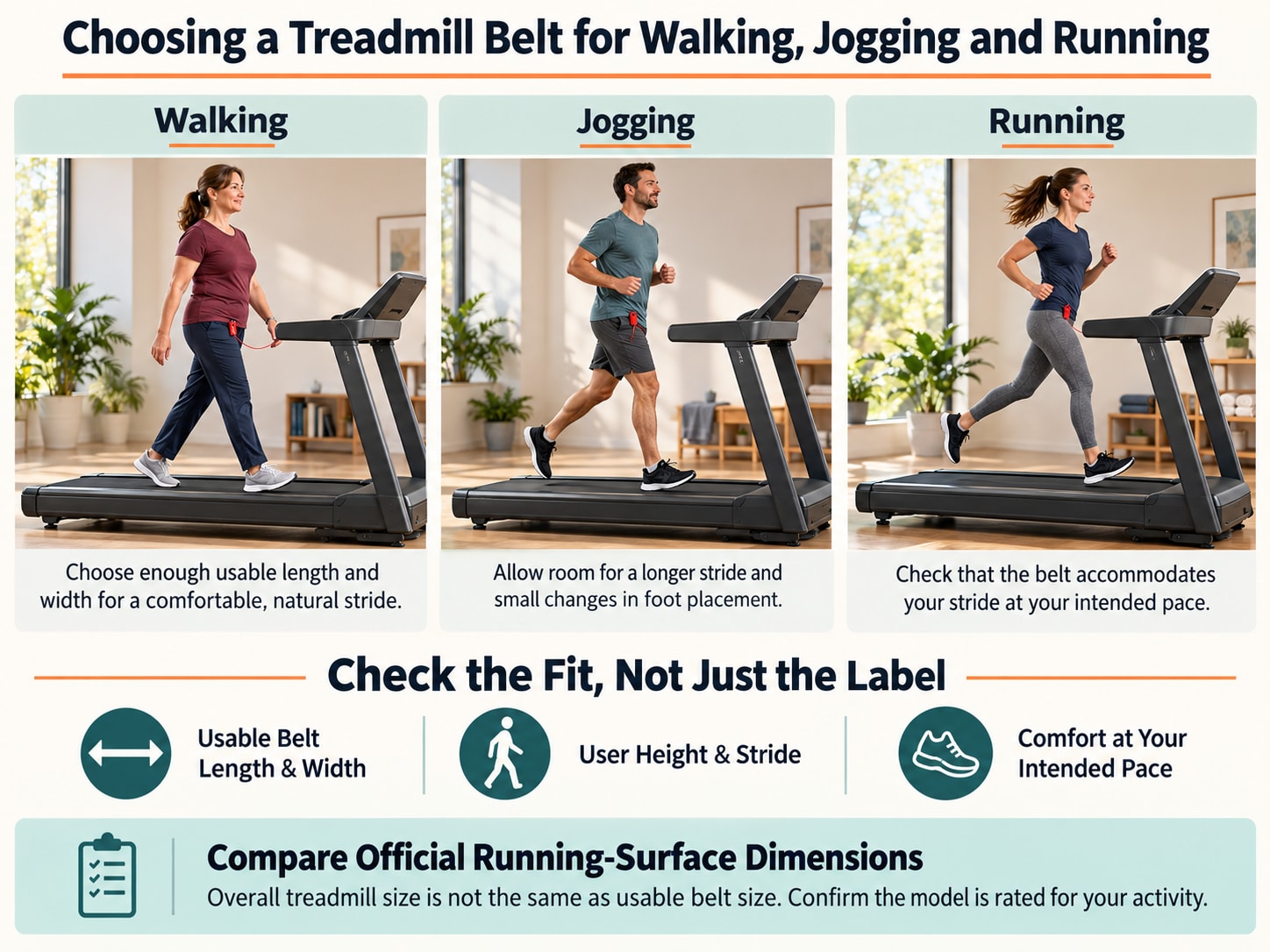
Your workout style is one of the most important factors in selecting a treadmill. Read the following in detail to know which treadmill suits your favourite physical activities:
For walking
If you plan to walk at a comfortable pace, you may not need the longest running belt available. A compact treadmill can be suitable for daily steps, light exercise and general fitness.
However, make sure you have enough room to walk naturally without taking unusually short steps. If you plan to walk for long periods, use an incline or increase your speed over time, consider a larger belt rather than choosing the smallest model.
For jogging
Jogging usually involves a longer stride than slow walking. A belt that feels comfortable during a warm-up may seem too short once you increase your pace. For regular jogging, look for a treadmill with sufficient length and width to match your height and movement.
For running
Running generally requires more space because your stride length and speed increase. A longer and wider belt can make workouts more comfortable, particularly if you run frequently. Taller users and people who prefer faster running should pay close attention to the running surface.
If possible, test the treadmill at a realistic pace. Walking on it for a few seconds in a showroom may not tell you whether it will feel comfortable during a 30-minute run.
For incline walking
Incline walking changes your body position and movement. You may find that a belt that feels adequate on a flat setting feels less comfortable when the incline increases. If incline training is part of your routine, consider the belt size, incline range and stability together.
How Are Body Weight and Treadmill Weight Capacity Related?
Your body weight is important when choosing a treadmill, but it should not be used to determine belt size on its own. Two users with the same body weight may have different heights, stride lengths and workout preferences. One may predominantly walk, while the other may run regularly.
For this reason, separate your decision into two parts: choose a comfortable running surface and make sure the machine is rated for your weight and workout intensity.
Check the maximum user weight
Every treadmill has a stated maximum user weight. Choose a model with a capacity that comfortably accommodates the heaviest person who will use it.
For example, if a treadmill has a maximum user weight of 120 kg, do not assume it is suitable for every user below that limit regardless of workout intensity or usage frequency. Follow the manufacturer's recommendations for both weight and intended use.
A machine's capacity should be considered alongside frame construction, motor specifications, deck design and warranty conditions.
Does a higher body weight mean you need a wider belt?
Not necessarily. Belt width is mainly about comfort, movement and the space you need to walk or run. However, people who feel restricted on a narrow belt may prefer a wider surface. It is also important to check that the treadmill's overall design and capacity are appropriate for the user.
Does a heavier user need a stronger treadmill?
The treadmill must be rated for the user's weight and intended activity. Motor performance, frame strength, belt and deck construction contribute to suitability. For frequent running, do not rely on maximum user weight alone. Check the manufacturer's guidance for running, continuous usage and the expected number of users.
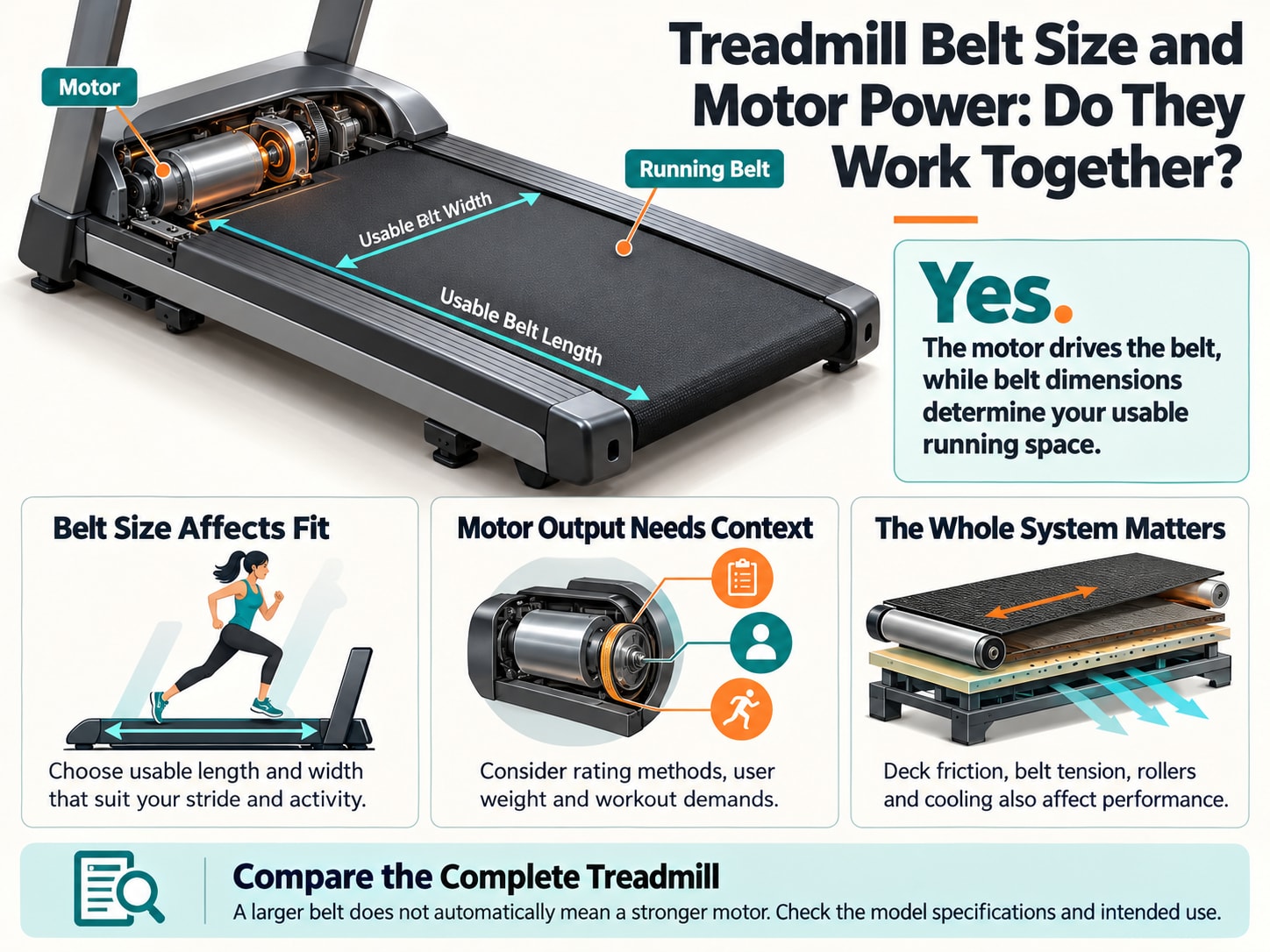
Treadmill Belt Size and Motor Power: Do They Work Together?
The running belt and motor serve different purposes, but both affect your workout experience. The belt provides the surface for movement, while the motor drives the belt at the selected speed.
A larger belt does not automatically mean the treadmill has a stronger motor, and a powerful motor does not guarantee that the running surface is large enough for you. When comparing treadmills, consider the following:
Belt length and width: Must suit your height and movement.
Motor rating: Should match your intended use and workout frequency.
Speed range: Should support your walking, jogging or running goals.
Incline settings: Useful if you want to add uphill walking or running.
User weight capacity: Must suit everyone who will use the treadmill.
Construction and warranty: Help you assess long-term suitability.
For example, a treadmill may offer a powerful motor, but have a short running belt. It may not be the best choice for a tall person who runs with long strides.
Another model may have a generous running surface, but not be designed for frequent, high-speed running. The best treadmill is one where the key specifications work together.
Compact Treadmills vs Large Running Decks
A larger running belt can improve comfort, but it also affects the overall size of the machine. This matters if you live in an apartment or have limited space for exercise equipment.
Compact treadmills
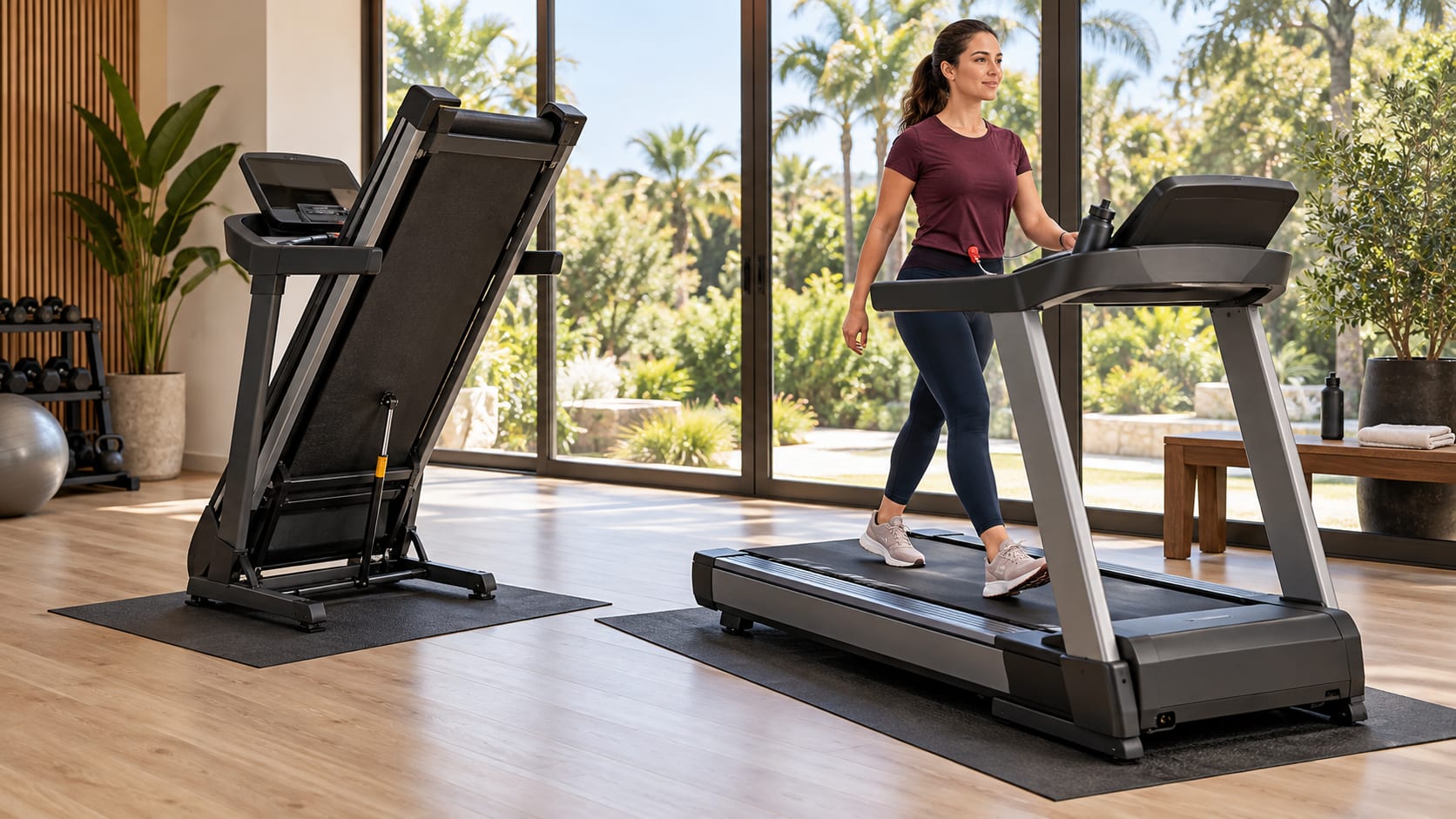
Compact models are often designed for walking, light exercise and homes where floor space is limited. They may have shorter or narrower belts, smaller frames and lower overall weight. Some models also fold for easier storage.
Before buying, make sure the compact design still gives you enough room to exercise comfortably. Saving space is not useful if the belt feels too restrictive for your needs.
Treadmills with larger running surfaces
Larger models are often suitable for people who run regularly, have longer strides or prefer additional room. They may also offer more substantial frames and extra features, although this depends on the individual model.
The trade-off is that they require more room for installation and use. They may also be heavier and more difficult to move through narrow corridors or doorways.
Which one offers better value?
Choose the smallest treadmill that comfortably supports your intended workouts, not simply the smallest machine available. If you are into walking, you may not need a large running deck. If you run regularly, paying for a longer and wider surface may be worthwhile.
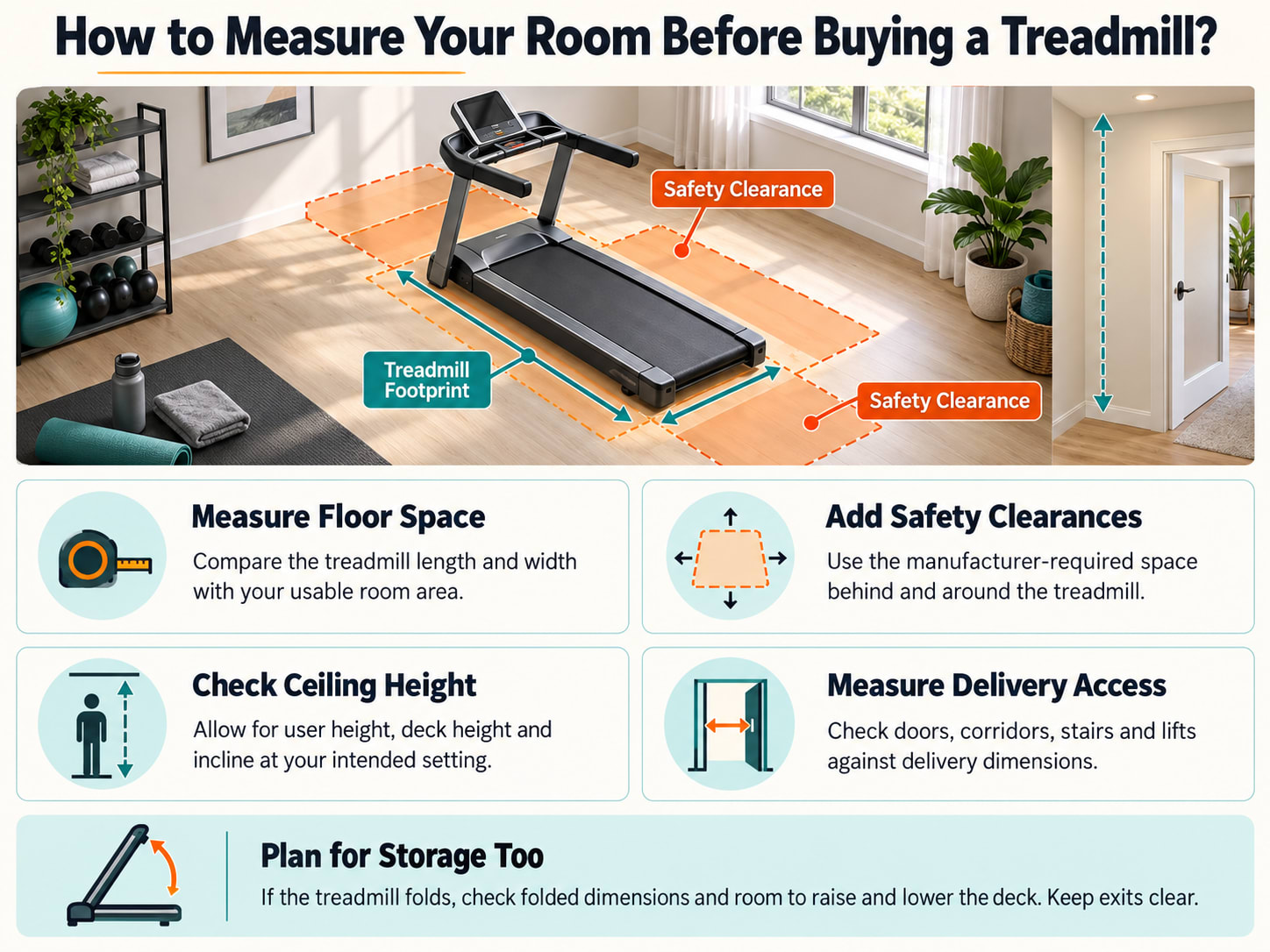
How to Measure Your Room Before Buying a Treadmill?
Running belt dimensions are only part of the space you need to consider. The treadmill's full footprint is larger than its belt, and you must also leave enough room to get on and off safely. Before placing an order, measure the area where you intend to use the treadmill.
Measure the available floor space: Measure the length and width of the intended location. Compare these measurements with the treadmill's full operating dimensions, not just the running belt.
Check the safety clearance: Follow the manufacturer's recommendations for clearance behind and around the treadmill. Keep the rear area free from walls, furniture and other obstructions as directed in the manual.
Check ceiling height: If you plan to use incline settings, remember that your body position and effective height may change. Check the manufacturer's recommendations, particularly if the treadmill is in a room with a low ceiling.
Measure access routes: Check doorways, hallways, stairs and lifts before ordering. This is especially important if you are buying a large or heavy treadmill for an apartment or villa. Confirm the packaged dimensions and delivery arrangements with the supplier.
Plan the electrical connection: Make sure a suitable power outlet is available and the cable can be positioned safely. Follow the treadmill's electrical requirements and avoid placing the cord across a walking route.
Consider flooring and noise: A suitable treadmill mat may help protect the floor, depending on the surface and machine. In apartments, consider vibration and noise transmission to neighbouring rooms or homes.
Choosing the Right Treadmill Belt Size for Home Gyms
For a dedicated home gym or villa workout room, you may have more flexibility to choose a longer and wider belt. This can be useful if several family members will use the machine.
Climate and storage conditions also deserve attention. Keep the treadmill within the manufacturer's recommended temperature and humidity range. If you are considering a garage or enclosed outdoor area, check whether the conditions are suitable for the equipment.
As dust can collect around the belt, regular cleaning and maintenance are mandatory. When comparing treadmill options, check availability, delivery access, installation arrangements, warranty terms and after-sales service. These details help you avoid problems post purchase.
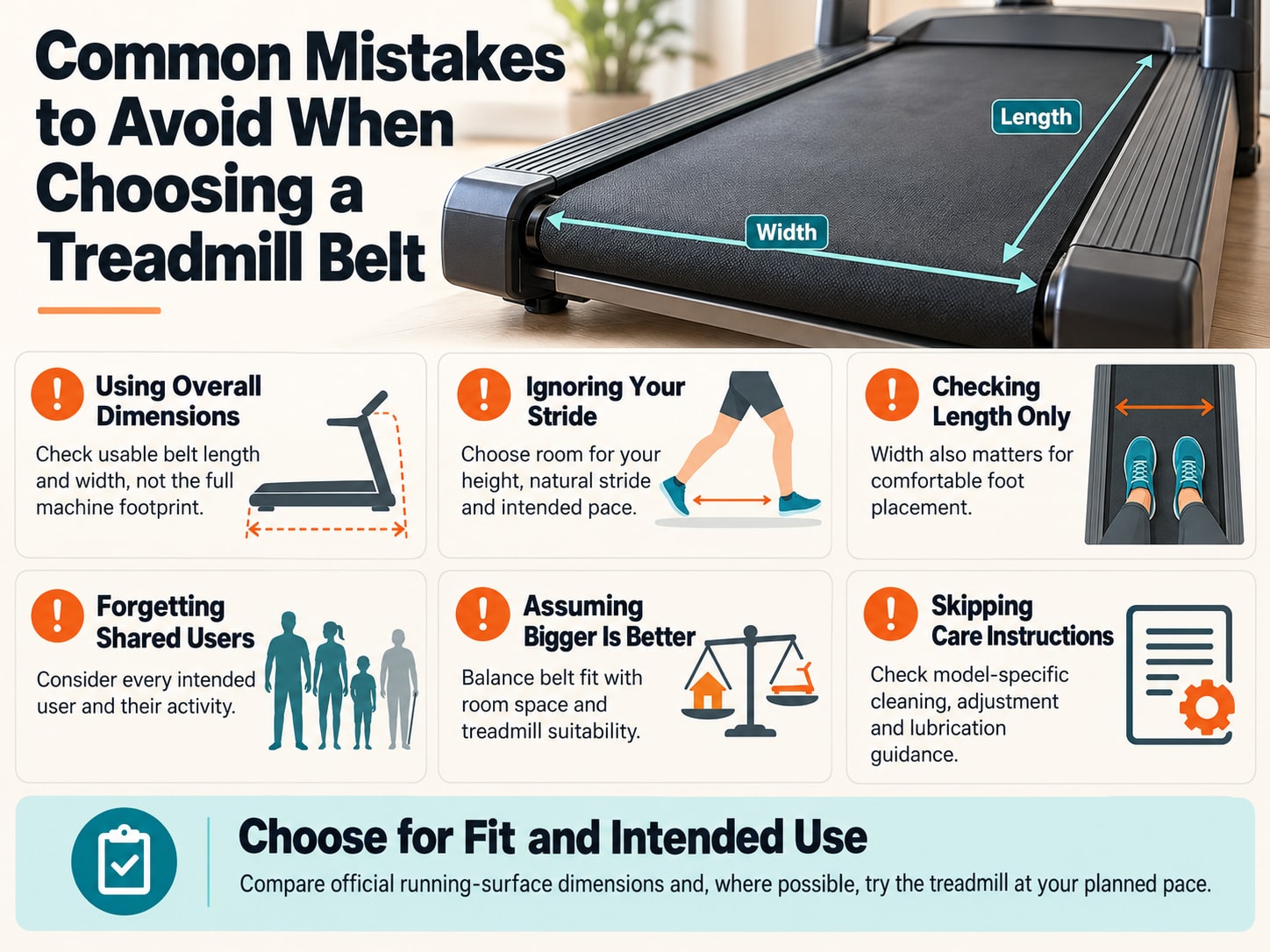
Common Mistakes to Avoid When Choosing a Treadmill Belt
A few simple mistakes can lead to an uncomfortable buying experience. Check out some of them:
Choosing by height alone: Height provides a useful starting point, but your stride and workout speed also matter.
Ignoring belt width: A treadmill may be long enough but still feel too narrow for comfortable running.
Using body weight as the only measure: Check the maximum user weight and intended usage separately from belt dimensions.
Buying a walking treadmill for regular running: Compact models may not offer the belt size or performance you need for faster workouts.
Confusing belt size with machine size: The full treadmill requires more floor space than the moving belt itself.
Ignoring future fitness goals: If you currently walk but expect to start running, consider a treadmill that can support your planned progress.
Skipping the specifications: Always check the actual running surface dimensions instead of relying on product photos or general descriptions.
A Simple Checklist Before You Buy
Use the following checklist when comparing treadmills.
Measure your height and consider your natural stride.
Decide whether you will walk, jog, run or use incline training.
Compare running belt length and width.
Check the maximum user weight and recommended usage.
Review motor specifications and speed range.
Measure your room and the treadmill's full dimensions.
Check folded dimensions if storage is important.
Confirm delivery access and installation requirements.
Review warranty coverage and service support.
Test the treadmill if possible before making a decision.
Taking a little time to compare these details can help you find a treadmill that feels comfortable and suits your home.
For fitness enthusiasts across Saudi Arabia, Lifetime Fitness Store is your trusted destination for premium fitness equipment, a wide range of leading brands, exciting offers, competitive prices, convenient delivery, professional installation and reliable after-sales support to make every fitness journey easier.
Conclusion
Choosing the right treadmill belt size is about finding a balance between comfort, performance and available space. Your height helps you estimate the length you may need, while your workout style determines how much room you require for walking, jogging or running.
Your body weight should be considered separately when checking the treadmill's maximum user capacity. For many buyers, a longer and wider running surface can make regular running more comfortable. For people who mainly walk or have limited space, a compact model may be a practical choice.
Before buying, compare the actual belt dimensions, machine capacity, motor specifications and full footprint. If you are setting up a home gym, also consider delivery, installation, room conditions and service support.
For someone around 180 cm tall, a running belt approximately 140–150 cm long may be a useful starting point for regular running. The ideal length depends on stride, speed and personal comfort. A belt around 45–55 cm wide may also be worth considering.
A belt around 120 cm long may suit some users for walking, especially on compact treadmills. It may feel restrictive for taller users or regular runners. Check your stride and the manufacturer's intended usage before buying.
It can work for some runners, but others may prefer a wider belt. If you run frequently or want more room for natural movement, compare models around 50 cm wide or more.
Body weight does not directly determine the required belt dimensions. Height, stride length and workout style are more relevant to belt size. Body weight is important when checking the treadmill's maximum user capacity and suitability for your intended use.
Running belt size refers to the usable moving surface. Overall treadmill dimensions include the frame, motor cover, console and other components. You need the overall dimensions to plan the space required in your home.





 Get a weekly dose of latest stories
and useful tips directly in your inbox!


 0



































 Price Match Guarantee
 Free Shipping
 Product Warranty
 After-Sale Support
 Have Coupon Code?
 You'll Save 0.00 On This Order
 Safe And Secure Payments. Easy Returns. 100% Genuine Products