Padel Racket Buying Guide: Choosing the Right Shape, Weight and Balance for Your Playing Level in Saudi Arabia
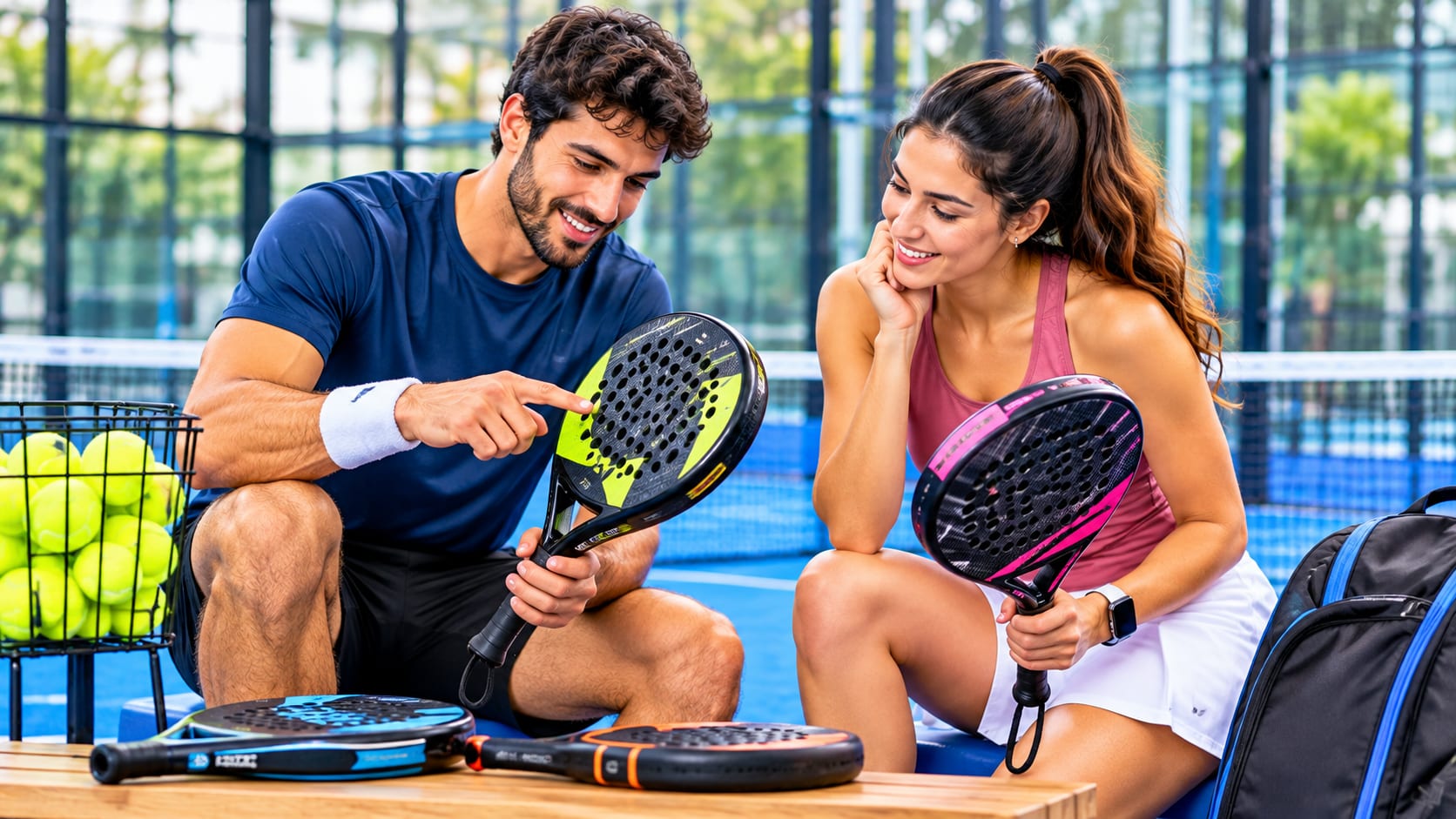
Not every sport enthusiast may be familiar with a padel racket. Buying one could be quite confusing for someone who is new to the game. There are several options in different sizes and shapes in sports shops or online stores, though.
Some of them come in varied weight, balance and materials as well. The challenge is to identify which one suits your needs. The right choice depends on your playing style, your experience, your expectations and strength.
A racket that works well for an experienced player may not be the best option for a beginner. The comfort aspect, too, matters. For example, a racket that is too heavy or difficult to handle is likely to put unnecessary pressure on your wrist, elbow and shoulder.
This blog touches upon some of the important things you need to consider before buying a padel racket. It delineates the different racket shapes and other factors like weight options, balance points and choosing one based on your playing level.
Understand the Three Main Padel Racket Shapes
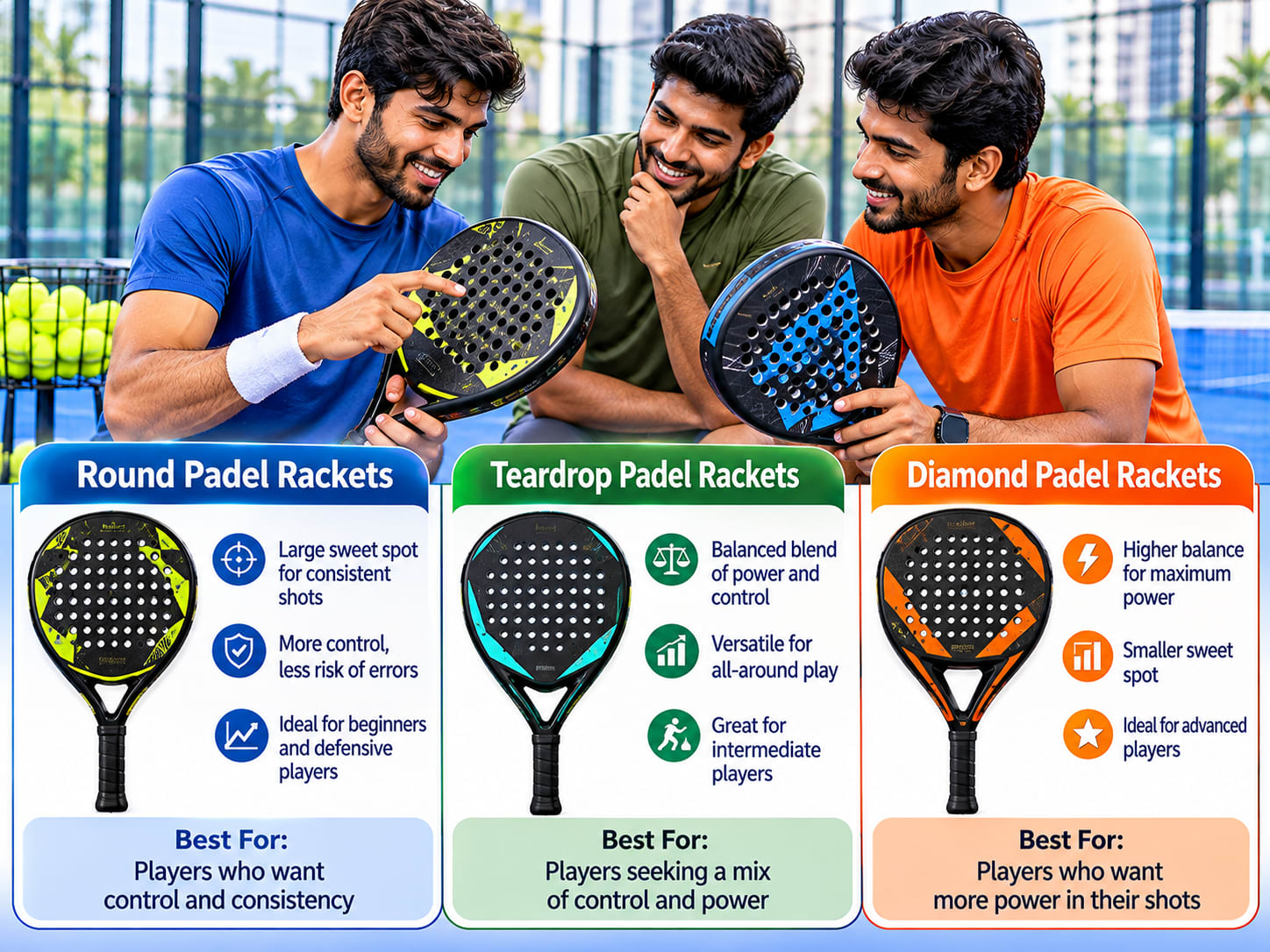
The shape of a padel racket has a direct impact on how it feels when you play. It affects the sweet spot, power and control you get while hitting the ball. There are three common shapes: round, teardrop and diamond.
Round Padel Rackets
Round rackets are generally a good choice for beginners and players who prefer control over power. The sweet spot is usually larger and sits closer to the centre of the racket. This makes it easier to hit the ball cleanly, even when your timing is not perfect.
For someone who is learning the game, this can make a big difference. You do not have to worry about hitting the ball at exactly the right spot every time. Round rackets also offer good control during defensive shots.
Teardrop Padel Rackets
Teardrop rackets offer a mix of power and control. They are a popular choice among intermediate players who have developed their basic skills and are looking forward to improving their overall game.
The sweet spot is usually positioned slightly above the centre of the racket. This gives players a good balance between controlled shots and powerful hits. For example, if you enjoy playing defensive shots, but also want to attack when you get the opportunity, a teardrop racket can be a good option.
It gives you enough control to manage rallies while offering additional power for smashes and attacking shots. Teardrop rackets are also a good option for players who are still improving their technique and do not want to move to a power-focused racket soon.
Diamond Padel Rackets
Diamond-shaped rackets are mainly designed for players who want more power in their shots. The sweet spot is usually smaller and positioned higher towards the top of the racket. This design helps generate more power when the ball is hit correctly.
On the downside, diamond rackets pose a threat when you do not hit the ball in the right spot. They also tend to have a higher balance point, which can make them feel heavier when swinging.
If you are an experienced player who enjoys attacking, smashing and finishing points, a diamond racket may suit your game. However, it may not be the easiest option for beginners. You need good technique and timing to make the best out of it.
Why Does Padel Racket Weight Matter?
Weight is another important factor when choosing a padel racket. It affects how easily you can move the racket, how quickly you can react and how comfortable you feel during a match.
Most adult padel rackets weigh somewhere between 340 and 390 grams, although the exact range varies by brand and model. A lighter racket is generally easier to move, while a heavier racket can provide more stability and help generate power. Let's look at the differences.
Lightweight Padel Rackets
Lightweight rackets are usually easier to handle. They allow you to move your racket quickly and react faster when your opponent hits the ball towards you. They can be useful when playing at the net, where quick reactions are important.
If you are a beginner, a lightweight racket may help you feel more comfortable while learning basic shots. They can also be a good choice for players who prefer a racket that does not feel too demanding during longer matches.
However, lighter does not always mean better. Some lightweight rackets may feel less stable when returning hard shots.
Medium-Weight Padel Rackets
Medium-weight rackets offer a good balance between handling and stability. They are suitable for players who want a racket that feels comfortable but still provides enough weight behind their shots.
If you have been playing for some time and are comfortable with your technique, a medium-weight racket is worth considering. It can work well for players who move between defensive and attacking positions during a match.
Heavy Padel Rackets
Heavier rackets can provide greater stability and help generate powerful shots. They may suit experienced players who have good strength and technique.
But they require more effort to move, especially during fast exchanges on the net. If you are not used to heavier rackets, your arm may feel tired after playing for some time. A heavy racket cannot be considered as more powerful or better. You need to be comfortable handling it.
Which Weight Is Right for You?
Your ideal racket weight depends on your strength, playing style and comfort.
Beginners can start by looking at lighter rackets.
Intermediate players can explore lightweight and medium-weight options.
Advanced players can consider medium or heavier rackets based on their playing style.
It is always better to choose a racket you can handle comfortably rather than buying one simply because it is heavier or more expensive.
What Is the Significance of Padel Racket Balance?
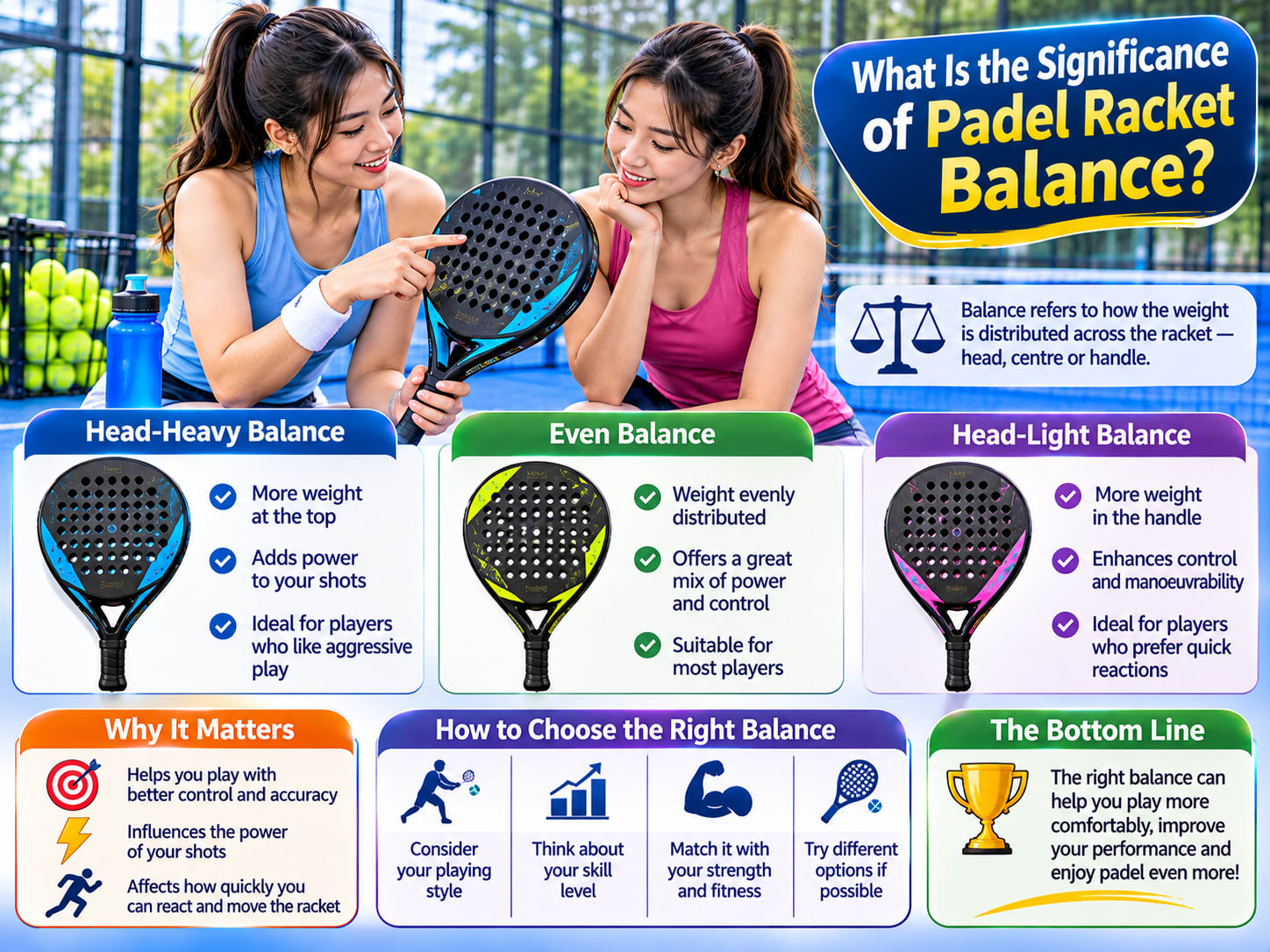
When shopping for a padel racket, you will often see terms like low balance, medium balance and high balance. These terms describe how the racket's weight is distributed.
Two rackets can have almost the same overall weight, but feel completely different when you hold and swing them. This is because their balance points may be different. There are three main types of balance.
Low Balance
Low-balance rackets have more of their weight towards the handle. This makes them easier to move and control. They generally feel lighter when you swing them, even if their actual weight is not very low.
They are useful for quick reactions, defensive shots and players who prefer better manoeuvrability. Low-balance rackets are often a good option for beginners and players who value comfort.
Medium Balance
Medium-balance rackets distribute weight more evenly. They offer a mix of control, handling and power. This makes them suitable for players who do not want to focus only on attacking or defending. If you are an intermediate player who enjoys different types of shots, a medium-balance racket is worth considering.
High Balance
High-balance rackets have more weight towards the racket head. This can help generate power during attacking shots, especially smashes. However, they can feel harder to move quickly. Players may also find them more demanding during long rallies and fast net exchanges.
High-balance rackets are generally preferred by experienced players who have the technique and strength to handle them.
Choose a Padel Racket Based on Your Playing Level
Your experience plays an important role in buying decisions. A common mistake is choosing a racket based on what professional players use. Just because an advanced player uses a diamond-shaped racket does not mean you need the same one. Your racket should match your current ability.
Padel Rackets for Beginners
If you have just started playing padel, focus on control and comfort. At this stage, you are still learning how to position yourself, return the ball and play different shots. A racket that is easy to handle can help you develop these skills.
Look for the following aspects:
Round racket shape.
Lightweight or comfortable medium weight.
Low balance.
A large and forgiving sweet spot.
A comfortable grip.
You do not need an expensive professional racket when starting out. A simple, good-quality racket that helps you enjoy the game is enough.
Padel Rackets for Intermediate Players
Intermediate players usually have a better understanding of the game. They can control rallies, play different shots and start using more attacking techniques. At this stage, you may want a racket that offers more versatility. Check out the following factors:
Teardrop or round shapes, depending on your preferences.
Medium weight.
Low or medium balance.
A good combination of power and control.
You can also start experimenting with different racket materials and surfaces to understand what feels best.
Padel Rackets for Advanced Players
Advanced players generally have better control over their shots and understand their playing style. If you prefer attacking and finishing points quickly, a diamond-shaped racket may suit you. If you prefer a more balanced game, a teardrop racket may still be the better option. Watch out for the following things:
Teardrop or diamond shapes.
Medium or heavier weight, depending on your strength.
Medium or high balance.
Materials and construction that suit your playing preferences.
Remember, even experienced players do not all need the same racket. Your style of play matters more than the label on your skill level.
Prioritize Injury Prevention When Choosing a Padel Racket
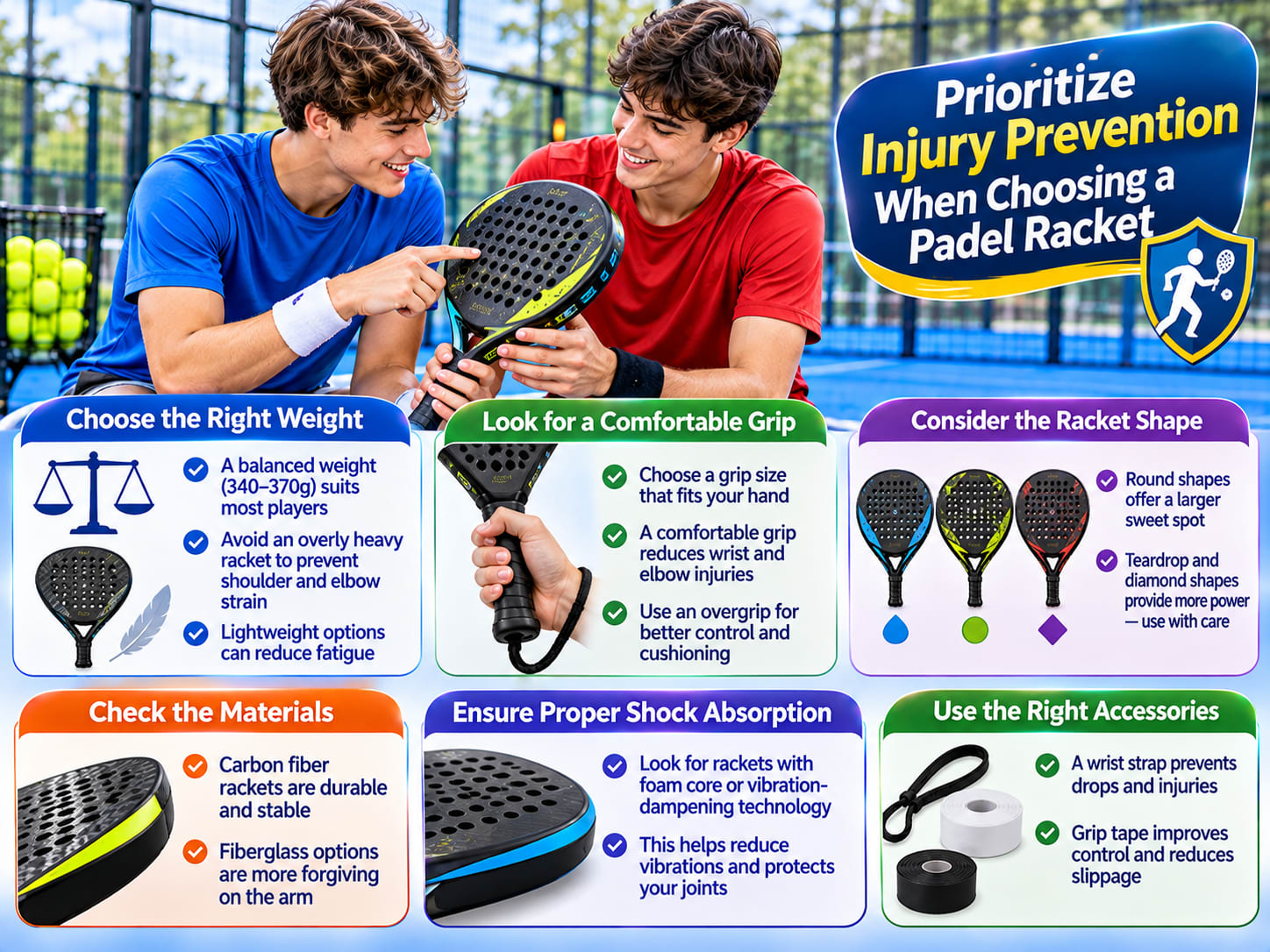
This is one of the most important things to consider, especially if you play regularly. Padel involves repeated swinging, hitting and quick movements. If your racket is uncomfortable or difficult to handle, it may put extra stress on your wrist, elbow and shoulder.
Some players also experience discomfort around the elbow, commonly known as tennis elbow. Although several factors can contribute to this problem, racket weight, grip size, playing technique and playing frequency may all play a role. Listed below are a few things to keep in mind.
Choose a Comfortable Weight
Do not choose a heavy racket just because you think it will give you more power. If the racket feels too heavy, you may struggle to move it comfortably. This can lead to unnecessary fatigue, especially during long matches. A lighter or medium-weight racket may be a better starting point if you are concerned about arm comfort.
Check the Balance
A racket with high balance can feel heavier towards the head. Even if the overall weight is reasonable, this can make the racket harder to manoeuvre. If you have experienced arm discomfort, consider trying a lower-balance racket and see whether it feels easier to handle.
Get the Grip Size Right
Grip size is often overlooked when buying a racket. If the grip is too small, you may end up holding the racket too tightly. If it is too large, it may be difficult to hold and control properly.
Both situations can make playing uncomfortable. Make sure the handle feels natural in your hand. You should be able to hold it firmly without squeezing too hard. You can also use an overgrip to adjust the handle thickness and improve comfort.
Look at Vibration and Materials
Some rackets are designed with materials and technologies that aim to reduce vibrations during ball impact. If comfort is a priority, look for models that mention vibration-dampening features. However, do not depend only on marketing claims. Try the racket if possible and see how it feels when hitting the ball.
Do Not Ignore Pain
If you regularly experience pain in your wrist, elbow or shoulder, changing your racket alone may not solve the problem. Take a break when needed and consider consulting a sports physiotherapist or healthcare professional. Improving your technique and avoiding sudden increases in playing time can also help.
The most important thing is to choose a racket that feels comfortable throughout the match, not just during the first few minutes.
What Materials Should You Look for in a Padel Racket?
Apart from shape, weight and balance, the materials used in a racket can affect how it feels and performs. Most padel rackets have a foam core and a frame and surface made using materials such as fibreglass or carbon fibre.
Fibreglass
Fibreglass is commonly used in entry-level and intermediate rackets. It generally offers a softer feel and can make the racket more forgiving. It is a good option for players who are learning the game and want something comfortable.
Carbon Fibre
Carbon fibre is used in many mid-range and high-end rackets. It is known for its strength and stiffness. Depending on the type of carbon and racket construction, it can provide a firmer feel and different levels of responsiveness.
Foam Core
The foam inside the racket also plays an important role. Some rackets use softer foam, while others use firmer foam.
Softer foam can provide a more comfortable feel and may be easier for beginners to use. Firmer foam can feel more direct and responsive, depending on the racket design. If possible, try different options before making a decision.
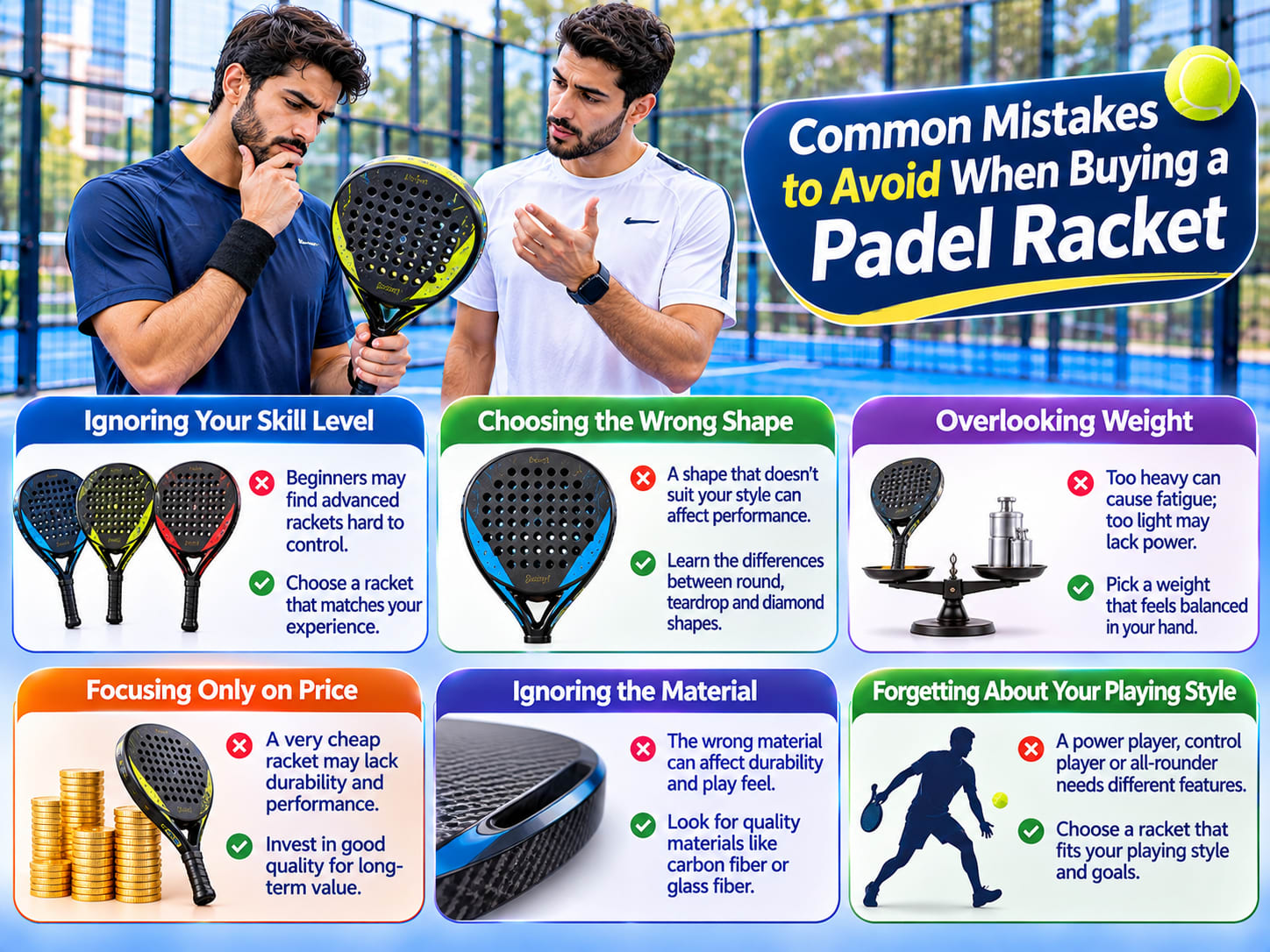
Common Mistakes to Avoid When Buying a Padel Racket
Before you make your purchase, keep the following common mistakes in mind.
Choosing a racket because of its look: A stylish racket may catch your attention, but appearance should not be the main reason for buying it. Focus on comfort, handling and performance.
Buying a professional racket as a beginner: Advanced rackets can be difficult to handle if you are still learning the basics. Start with something that offers better control.
Assuming heavier rackets provide more power: Weight is only one factor. Balance, technique and racket construction also influence shot performance.
Ignoring grip comfort: An uncomfortable grip can affect your control and make playing less enjoyable. Always check how the handle feels.
Not considering physical comfort: A racket that feels fine for five minutes may become uncomfortable during a full match. Think about how it feels during longer playing sessions.
Buying without understanding playing style: Think about whether you prefer attacking, defending or playing a balanced game. Your playing style should help guide your choice.
Final Checklist Before Buying a Padel Racket
Still unsure which racket to choose? Use the following checklist before making your purchase.
Choose a round shape if you are a beginner or prefer control.
Choose a teardrop shape if you want a balance of power and control.
Choose a diamond shape if you are an experienced attacking player.
Consider lighter rackets if easy handling is important to you.
Check the balance to understand how the racket feels when swinging.
Make sure the grip fits comfortably in your hand.
Consider the materials and foam used in the racket.
Think about your playing level and how often you play.
Try the racket before buying if you have the opportunity.
People across Saudi Arabia may rely on Lifetime Fitness Store for high-quality equipment products, efficient delivery solutions and professional support to ensure smooth operations, timely supply and dependable service for all your fitness needs.
Conclusion
Buying the right padel racket does not have to be complicated. You just need to understand what each feature offers and how it matches your game.
If you are a beginner, a round racket with a comfortable weight and low balance is usually a good place to start. If you have some experience, a teardrop racket can give you a good mix of power and control. Advanced players who enjoy attacking may prefer diamond-shaped rackets with a higher balance.
Most importantly, do not forget about comfort. The best racket is not necessarily the most expensive or the one used by professional players. It is the one that feels right in your hand, suits your playing style and allows you to enjoy the game without unnecessary discomfort.
Take your time, compare a few options and, if possible, try them before buying. Once you find the right racket, you can focus on what really matters: improving your game and enjoying every match.
Round-shaped padel rackets are generally best for beginners because they offer a larger sweet spot, better control and easier handling. They help new players develop consistency and improve their technique.
The ideal padel racket weight depends on your strength, playing style and experience. Lighter rackets are easier to manoeuvre and suitable for beginners, while heavier rackets can provide greater stability and power for experienced players.
Round: Offers maximum control and a larger sweet spot, making it ideal for beginners and defensive players.
Teardrop: Provides a balance of power and control, making it suitable for intermediate players.
Diamond: Focuses on power and aggressive shots, making it a popular choice among advanced players.
Balance refers to how the racket's weight is distributed. Head-light rackets offer better manoeuvrability and control, even-balanced rackets provide versatility, and head-heavy rackets generate more power but can be harder to manoeuvre.
Intermediate players generally benefit from teardrop-shaped rackets that offer a combination of power and control. Advanced players often prefer diamond-shaped rackets with a higher balance point for aggressive shots and greater attacking potential. However, the best choice ultimately depends on individual playing style and comfort.
Get a weekly dose of latest stories
and useful tips directly in your inbox!
Help Us Enhance Your Experience or Report a Website Problem!
We value your feedback! Let us know if there’s anything we can improve or if there’s a feature you’d love to see on our website.
Need Help? We're Here.
Our Fitness Experts Can Help With Products, Orders, Delivery And Installation




 Get a weekly dose of latest stories
and useful tips directly in your inbox!


 0











































 Price Match Guarantee
 Free Shipping
 Product Warranty
 After-Sale Support
 Have Coupon Code?
 You'll Save 0.00 On This Order
 Safe And Secure Payments. Easy Returns. 100% Genuine Products