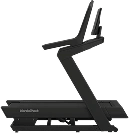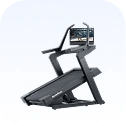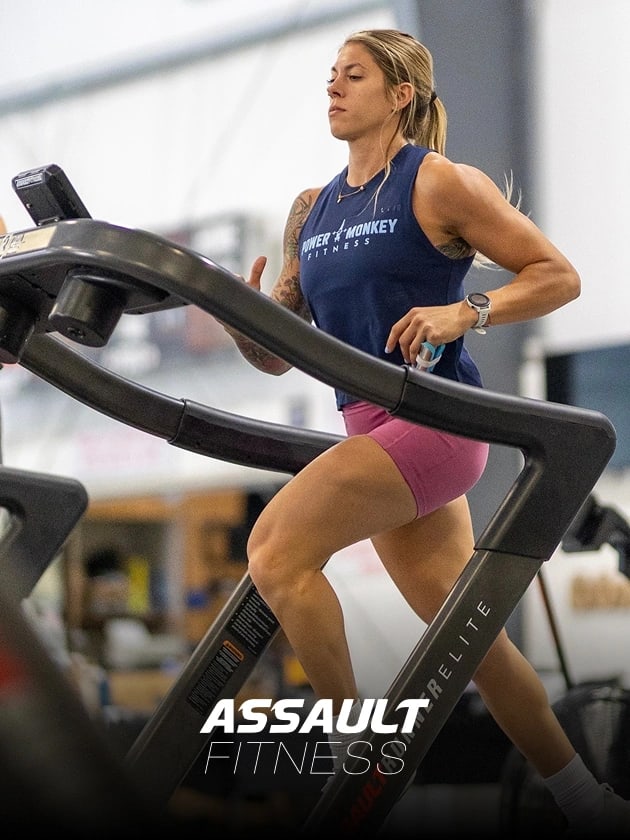




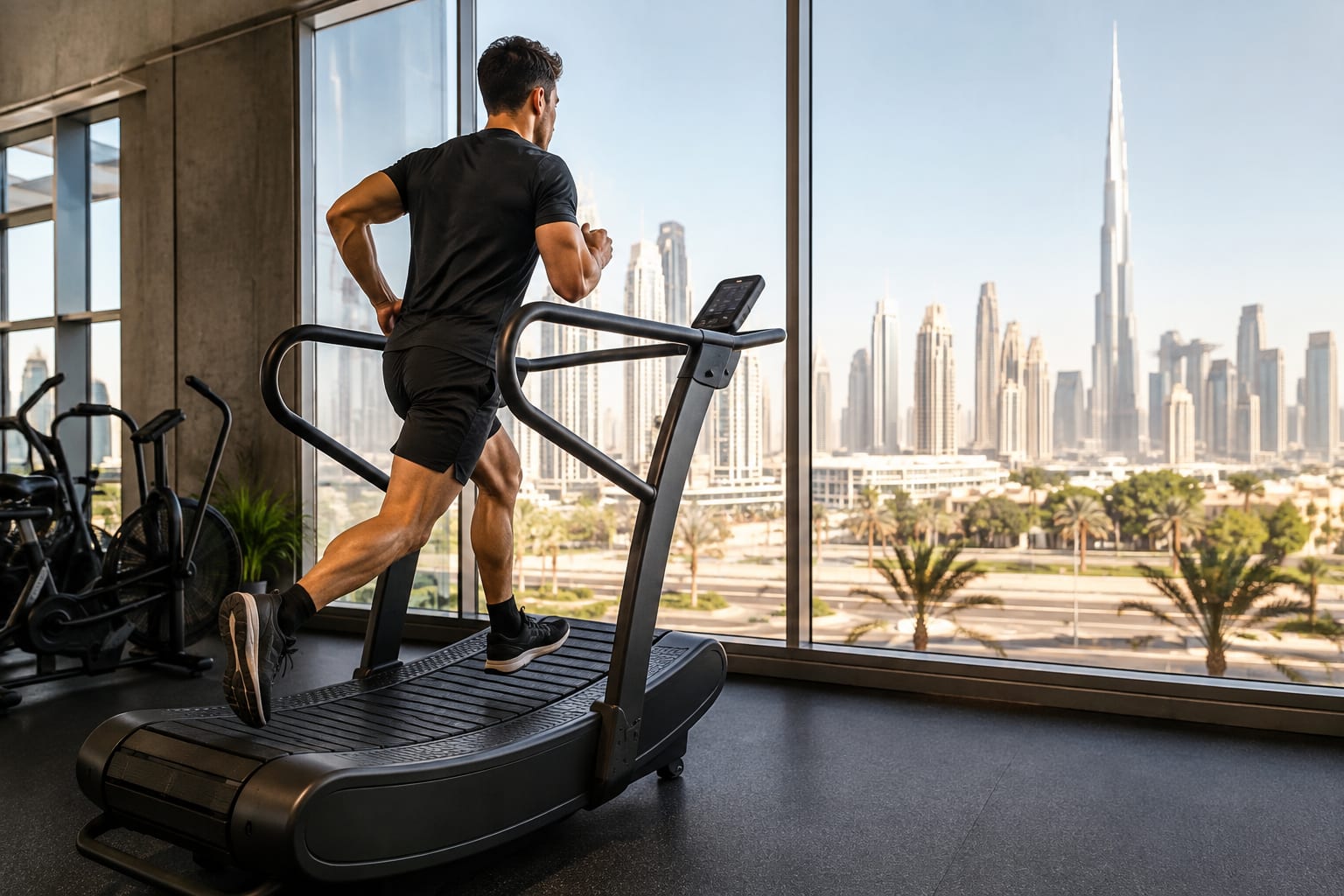
It’s a known fact that curved treadmills, unlike their traditional counterparts, are self-powered. This gives an upper hand to the users as they are able to control every aspect of the movement. The mechanism is such that the harder you push, the faster the belt moves. Similarly, the machine slows down when you reduce the aggression. The movement is directly proportional to the force you exert on the machine.
While the concept appears simple, many beginners find it challenging to adapt to curved treadmills as they have been accustomed to let a motor control their speed by just pressing a button.
When it comes to curved treadmills, what matters the most is the way you handle them. A proper technique enhances workout efficiency, increases calorie burn, reduces fatigue, and creates a safe training experience. Understanding the fundamentals of curved treadmills will help you attain better results, irrespective of your workout goals.
How Curved Treadmills Work: A Guide for Beginners
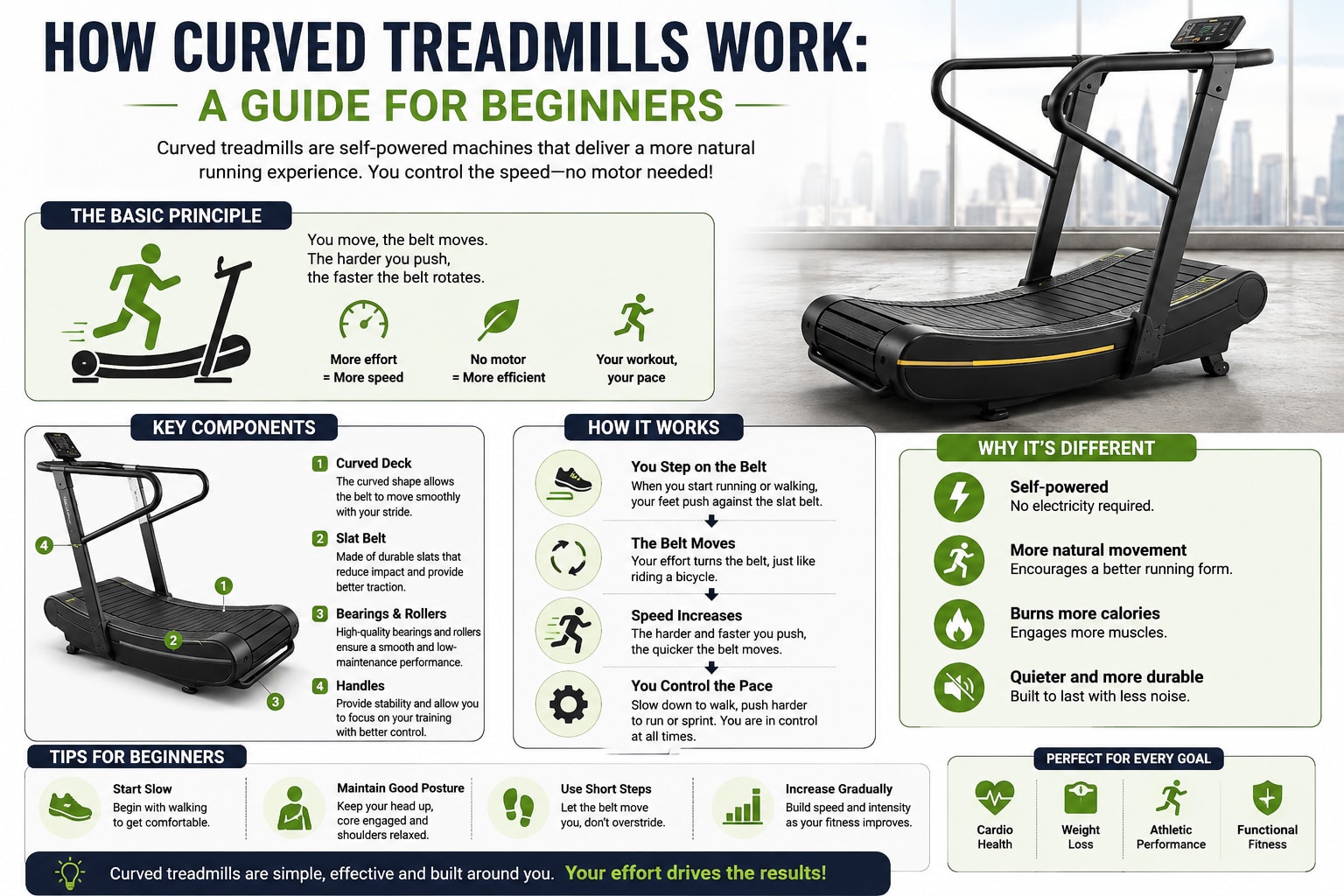
Before beginning a workout routine on a curved treadmill, you need to have the know-how about its operation. While the traditional treadmills use an electric motor to move the running belt, curved treadmills rely entirely on user-generated force. The treadmill responds to the movement and positioning. The front section of the curve is where speed increases. The middle section is where activities like walking and jogging happen. The rear section naturally slows the belt down. This unique design allows users to control pace without touching buttons or adjusting settings. Once you understand the connection between position and speed, handling a curved treadmill becomes easier.
Start With Walking Before Running
One of the most common mistakes beginners make as soon as they start using a curved treadmill is running faster on it. The ideal thing to do is to start by indulging in slow walking. Get to know how the belt responds to your movement. Pay attention to how shifting forward increases speed and how moving backward slows the treadmill. Spend some time to make yourself comfortable with the mechanics before taking up jogging or running. This slow and steady approach builds confidence and reduces the risk of losing balance.
Best Posture for Walking and Running on a Curved Treadmill
Good posture plays an important role in curved treadmill training. Keep your head up and look forward rather than down at your feet. Looking down affects balance and leads to poor movement patterns. Avoid excessive leaning forward or backward. Keep your shoulders relaxed and allow your arms to swing naturally. Good posture helps improve overall efficiency and reduces unnecessary strain on the neck, shoulders, and lower back. The more natural your movement is, the smoother the workout becomes.
Use Proper Arm Movement on a Curved Treadmill
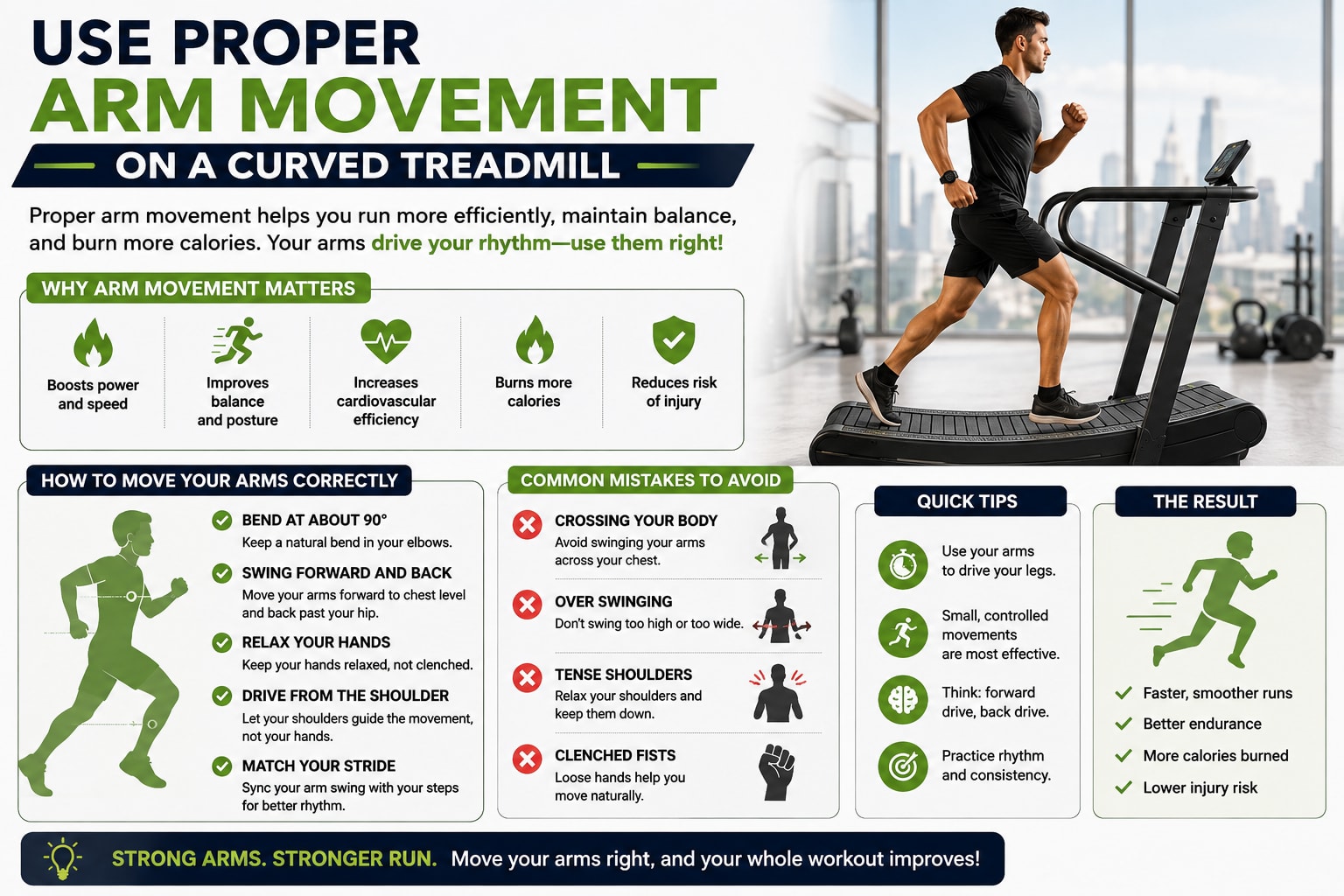
Arm movement is often overlooked during treadmill workouts. On a curved treadmill, your arms help generate momentum and support efficient movement patterns. Allow your arms to swing naturally alongside your body. Avoid gripping the side rails unless necessary for safety while learning. Using your arms effectively improves balance, supports acceleration, and contributes to running efficiency. Athletes often rely on coordinated arm movements to maximize speed and power, and the same principle applies on curved treadmills.
How Body Position Changes Your Speed
One of the unique features of curved treadmills is speed control through positioning. The treadmill maintains a moderate pace when you stand closer to the center of the running surface. Moving slightly forward on the curve increases belt speed because gravity and force production work together to create momentum. Moving slightly toward the rear slows the treadmill naturally. Understanding this basic concept allows users to control the intensity smoothly without affecting the workout. Once you master the concept of position-based speed control, it becomes one of the most enjoyable aspects of curved treadmill training.
How Short, Quick Strides Improve Curved Treadmill Running
Many beginners tend to take long strides while using a curved treadmill. Needless to say, this leads to inefficiency and unnecessary fatigue. Instead, focus on shorter, quicker steps. A higher cadence allows smoother movement and better control over belt speed. Shorter strides help maintain balance and reduce excessive impact forces. As confidence grows, stride length can adjust naturally based on workout intensity and individual running style.
How to Avoid Overstriding
Overstriding occurs when the foot lands too far in front of the body. This can reduce efficiency and make the workout feel more difficult than necessary. Curved treadmills naturally encourage a more efficient running style by promoting midfoot landings and quicker turnover. Focus on landing beneath your center of mass whenever possible. This helps improve running mechanics while making movement feel smoother and more controlled.
Start With Short Workout Sessions
As curved treadmills come across as more demanding than traditional treadmills, beginners should refrain from long workouts. Make sure to complete sessions that last 10 to 15 minutes. This allows the body to adapt to the increased cardiovascular demands. As fitness and confidence improve, the workout duration can gradually increase. Many users discover that shorter curved treadmill sessions can feel just as effective as longer workouts on traditional equipment.
Different Curved Treadmill Workout Styles for Better Fitness Results
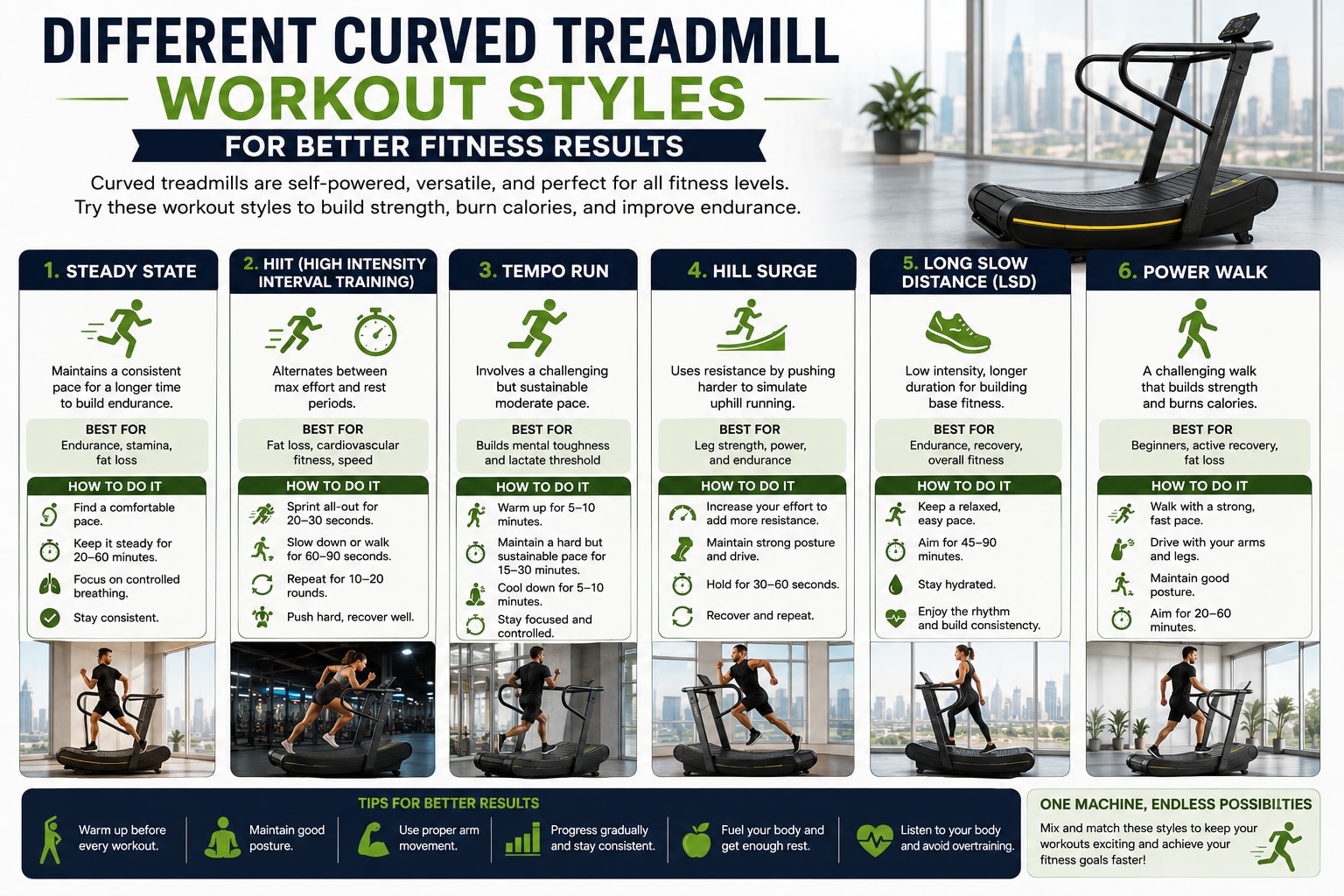
One advantage of curved treadmills is their versatility. They can support a variety of training methods depending on your fitness goals.
- Walking Workouts: Walking sessions are ideal for beginners and for those who are in their recovery phase. The self-powered design creates a meaningful workout while remaining accessible to users of different fitness levels.
- Jogging Sessions: Jogging helps improve cardiovascular fitness while allowing users to practice controlling speed and positioning.
- HIIT Workouts: Curved treadmills have been proved effective for high intensity interval training because of speed changes that occur instantly. Users can alternate between sprinting and recovery periods without adjusting machine settings.
- Sprint Training: Athletes often use curved treadmills for acceleration drills and repeated sprint workouts because of the treadmill's immediate responsiveness.
Curved Treadmill Mistakes Beginners Should Avoid
Many new users make several mistakes that limit their overall performance, leading to constant disappointments.
- Holding the Handrails: Holding the rails reduces natural movement and interferes with proper running mechanics. Use them only if necessary during training.
- Looking Down Constantly: Looking at your feet during training can affect posture and balance. Keep your head straight whenever possible.
- Starting Too Fast: Many users attempt high-intensity workouts before understanding the treadmill's mechanics. Take time to learn the movement pattern first.
- Ignoring Recovery: Curved treadmill workouts can be demanding. Allow adequate recovery time in between high-intensity sessions.
How Athletes Use Curved Treadmills for Performance Training
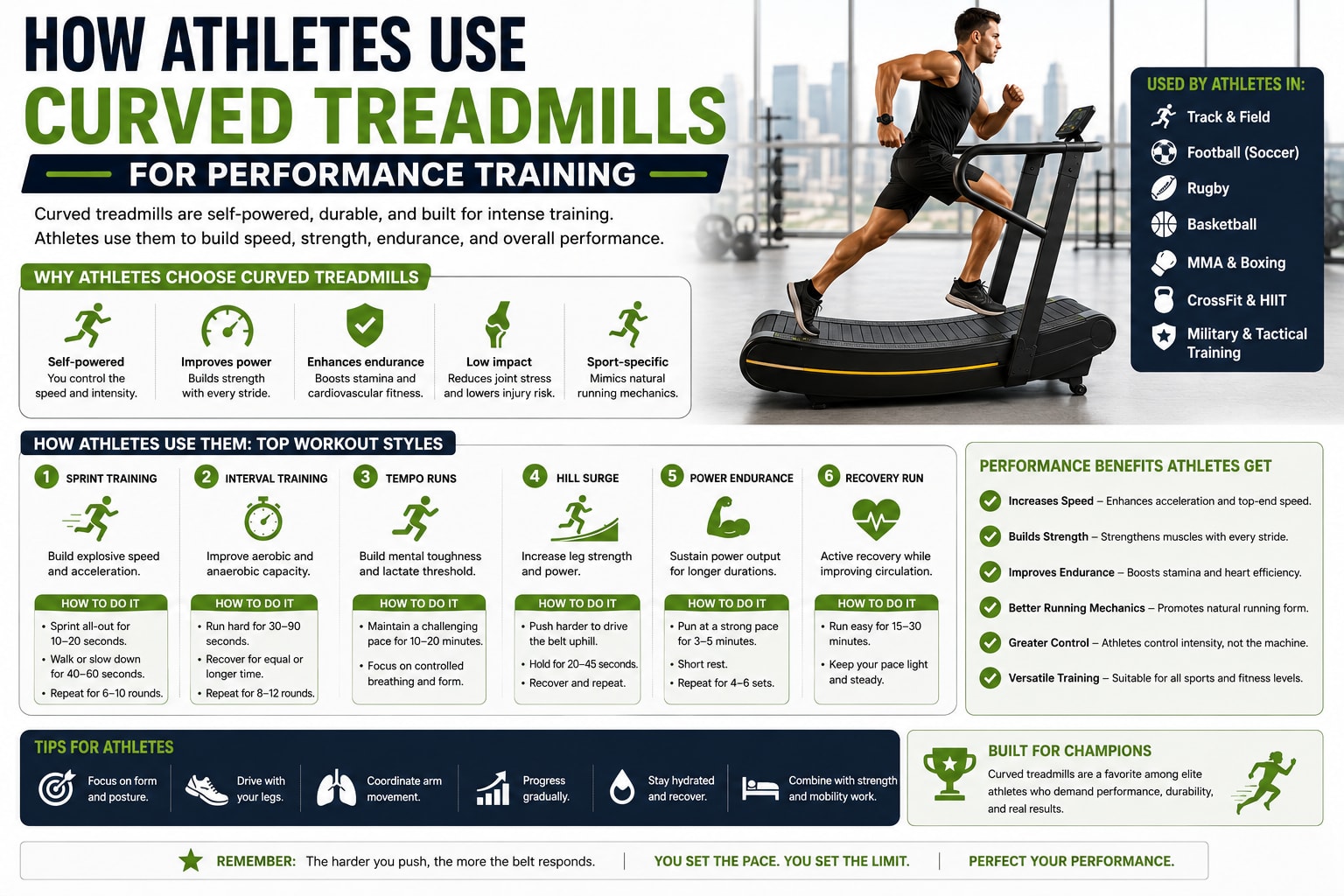
Athletes use curved treadmills in a different manner when compared to other fitness freaks. The former indulges in various conditioning programs, sprint development sessions, and performance-oriented workouts. The treadmill's responsiveness allows athletes to perform repeated accelerations and rapid changes in intensity that resemble sports competition. This feature makes curved treadmills a preferred option for sportspeople who are into football, basketball and rugby among other games.
Why Proper Technique Matters
Handling a curved treadmill in the appropriate manner improves more than just workout comfort. Embracing proper techniques maximize training benefits and helps reduce wasted energy.
Efficient movements allow users to sustain higher intensities and burn more calories. As time passes, good techniques can also contribute to better running mechanics outside the gym. The goal should not be restricted to just moving the belt, but to move efficiently and purposefully, too.
How to Progress From Walking to Sprinting
One of the biggest advantages of a curved treadmill is that it can be of help to people with multiple fitness levels. Beginners can use it for walking, while advanced athletes can perform maximum-effort sprint intervals. Most of the new users should spend their initial sessions observing and learning how the treadmill responds to movements.
Experts observe that walking at a comfortable pace develops confidence, thus allowing users to understand how positioning affects speed. They may shift to jogging after their walking appears natural. The focus should be on maintaining smooth movement and consistent posture rather than attempting to increase speed immediately. As comfort improves, users can experiment with short acceleration bursts. These efforts need not be intense print sessions.
Instead, they should serve as opportunities to learn how the treadmill responds during faster movement. Gradually, users can progress toward more demanding intervals and sprint workouts. This approach helps reduce injury risk while allowing the body to adapt to the unique demands of curved treadmill training.
How Curved Treadmill Training Supports Fat Loss
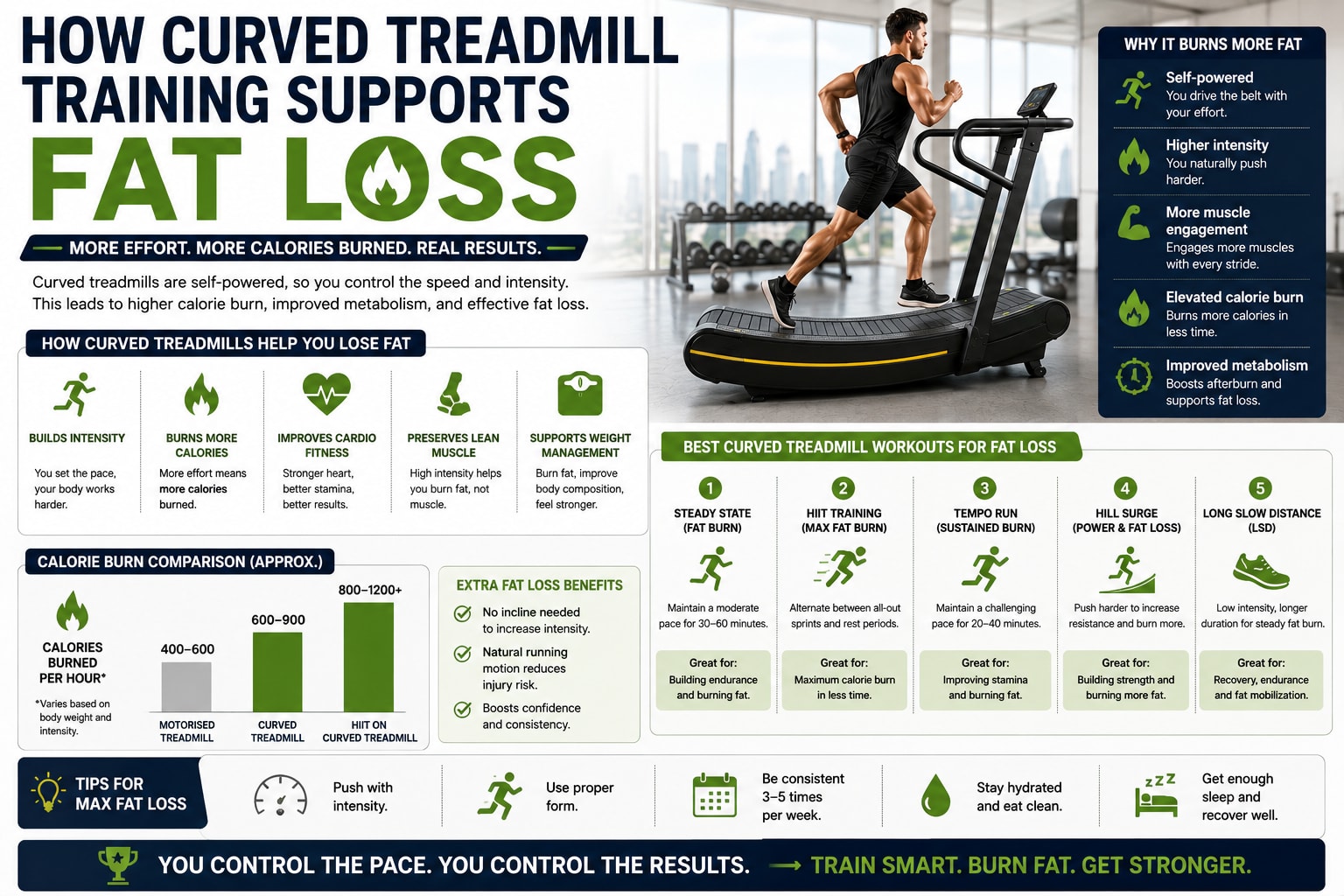
Many people rely on curved treadmills with the sole intention of burning calories. In order to gain the maximum fat-loss benefits, workout intensity should be adjusted based on fitness level and experience. Beginners often benefit from brisk walking sessions that last a little more than 10 to 15 minutes. As curved treadmills require users to move the belt themselves, even slow walking could end up as a challenging process.
When it comes to intermediate users, they may incorporate jogging intervals mixed with brisk walking. This creates variation in intensity while maintaining manageable effort levels. Advanced users often use HIIT workouts that alternate between sprinting and active recovery. These sessions could significantly elevate heart rate. What matters finally is the consistency factor. Regular curved treadmill workouts combined with proper nutrition often produce better results than occasional high-intensity sessions.
Using a Curved Treadmill for HIIT
High-Intensity interval training is one of the most effective ways to use a curved treadmill. Unlike traditional treadmills that require manual speed adjustments, curved treadmills allow users to change pace through movements.
Beginners May Perform
- 30 seconds fast walking
- 30 seconds easy walking
- Repeat for 10 to 15 minutes
Intermediate Users May Perform
- 20 seconds jogging
- 40 seconds walking
- Repeat for 15 to 20 minutes
Advanced Athletes May Perform
- 15 seconds sprinting
- 45 seconds recovery walking
- Repeat for 15 to 20 rounds
The benefit of performing HIIT on a curved treadmill is that the speed changes happen naturally, which makes the overall workout efficient.
Best Breathing Techniques for Curved Treadmill Workouts
Breathing plays an important role while doing intense workouts. Many beginners tend to hold their breath when the magnitude of the exercise increases. This leads to fatigue and reduced performance. It is always advisable to do controlled breathing during the workout. During lower-intensity sessions, maintain a comfortable breathing pattern that feels sustainable. As intensity increases, breathing will naturally become faster. The goal is not to completely avoid heavy breathing, but to keep it controlled. Good breathing habits improve oxygen delivery to working muscles and allow users to maintain effort for longer periods.
Curved Treadmill Resistance: How to Train Without Incline
Traditional treadmills often use incline settings to increase workout difficulty. Curved treadmills create resistance differently. The effort required to move the belt acts as a form of natural resistance. Every stride contributes to belt movement, meaning users are constantly working against the treadmill's mechanical resistance. This creates a training effect that many users compare to running uphill, particularly during sprint intervals. Rather than relying on electronic incline adjustments, curved treadmills use user-generated effort to increase workout intensity. Understanding this concept helps explain why many people find curved treadmill sessions more demanding than expected.
Building Endurance on a Curved Treadmill
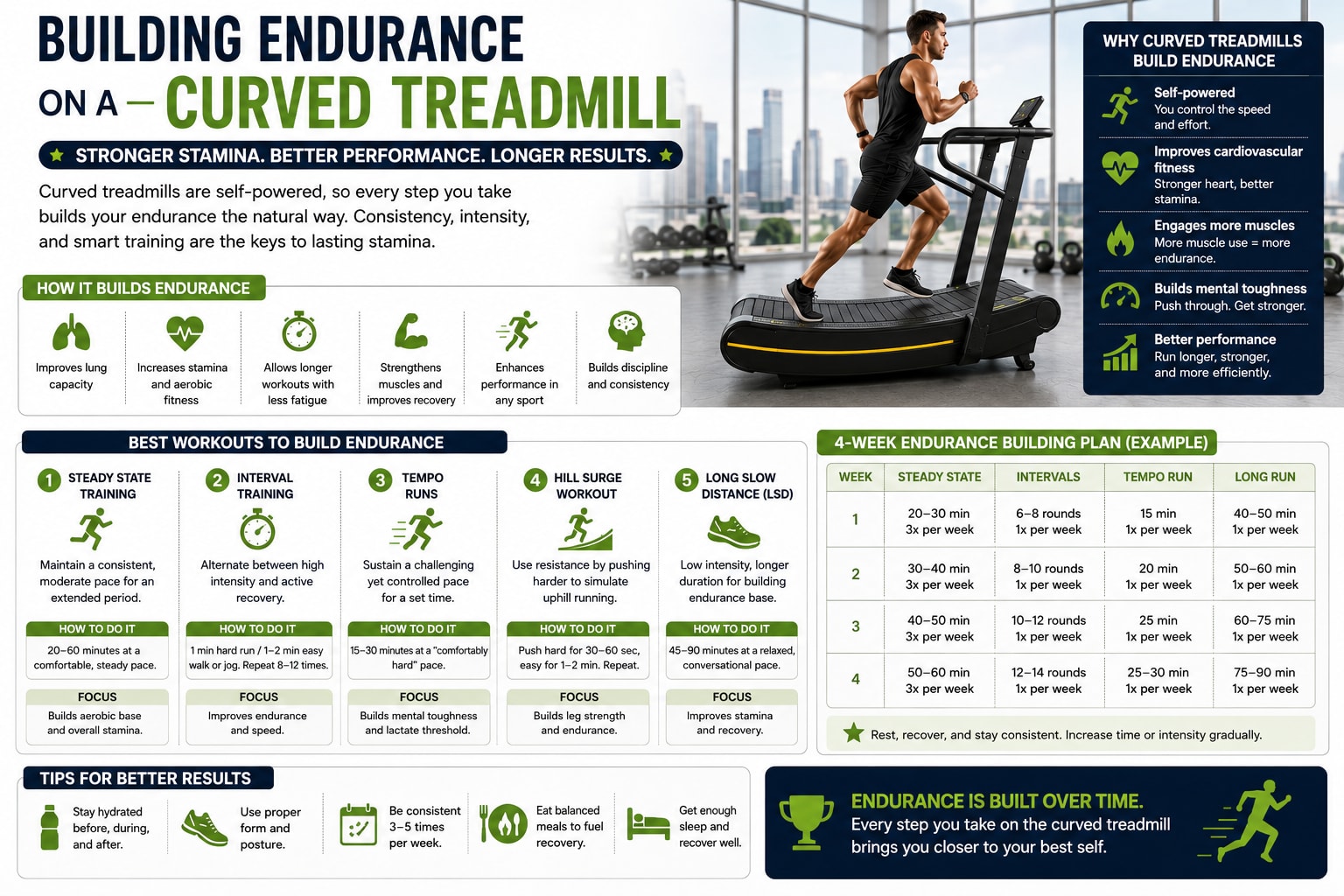
Although curved treadmills are often associated with sprint training, they can also be highly effective for endurance development. The key is controlling intensity. Rather than sprinting, users can maintain a steady jogging pace for extended periods. This approach improves cardiovascular fitness while allowing the body to adapt gradually. As endurance improves, workout duration can increase. Many users begin with 10 to 15-minute sessions before progressing to 20, 30, or even 45-minute workouts. The self-powered design encourages efficient movement throughout these longer sessions, helping users build both stamina and running economy.
How Often Should You Use a Curved Treadmill for Best Results?
Training frequency depends on individual goals and recovery capacity. Beginners often benefit from two or three sessions per week while learning proper technique. Intermediate users may increase usage to three or four sessions weekly. Athletes and advanced fitness enthusiasts often incorporate curved treadmill training alongside strength training, sport-specific practice, and recovery workouts. Because curved treadmill sessions can be highly demanding, adequate recovery remains important. Balancing intense workouts with lighter training days helps maximize performance while reducing the risk of overtraining.
How to Know If You Are Using a Curved Treadmill Correctly
Many users wonder how to know whether they are using the treadmill properly. Several indicators suggest good technique:
- Movement feels smooth and controlled.
- Speed changes occur naturally.
- Posture remains upright.
- Arm swing feels comfortable.
- Breathing remains manageable.
- Balance feels stable throughout the workout.
If movement feels awkward or excessively difficult, small adjustments to posture, positioning, or stride length often resolve the issue. Learning to recognize these signs can help users build confidence and improve workout quality.
Long-Term Benefits of Proper Curved Treadmill Running Technique
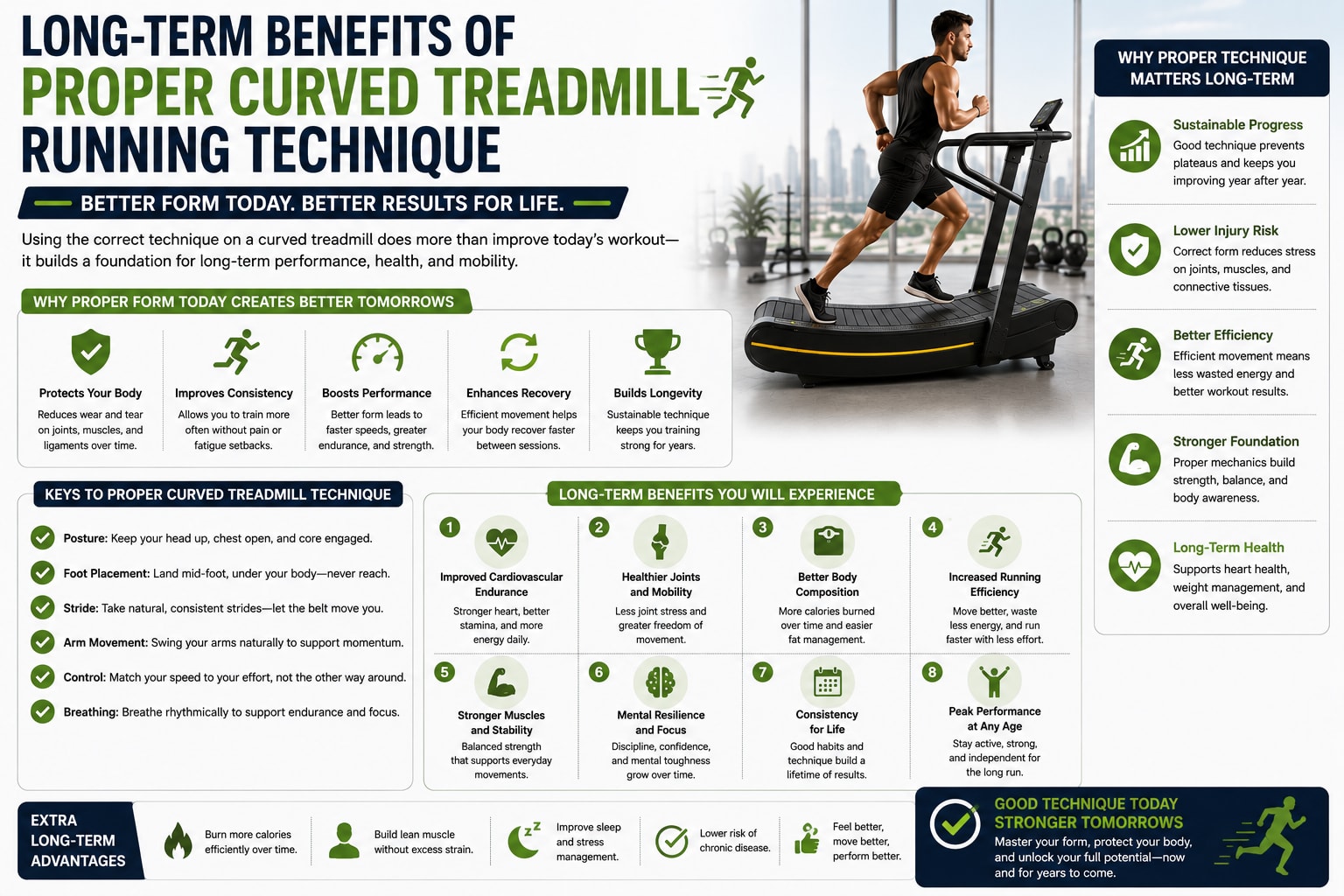
Taking the time to learn proper curved treadmill technique provides benefits that extend beyond the treadmill itself. Improved posture, running awareness, coordination, and conditioning often carry over into other forms of exercise. Many users report feeling more confident during outdoor running, sports participation, and general fitness activities after becoming comfortable with curved treadmill training. Because the equipment encourages active movement rather than passive exercise, it can help develop physical qualities that support overall athletic performance and long-term fitness.
If you are an avid fitness enthusiast based out of Saudi Arabia, who is keen on purchasing different kinds of treadmills and other accessories, visit lifetimefitnessstore.com for attractive offers.
Final Thoughts
Learning how to use a curved treadmill properly is one of the best ways to maximize its benefits. While the equipment may initially feel unfamiliar, most users adapt quickly once they understand how positioning, posture, and effort influence movement. Starting slowly, focusing on proper technique, and progressing gradually can transform the curved treadmill from a challenging piece of equipment into one of the most effective tools for cardiovascular fitness, conditioning, fat loss, and athletic performance. Whether your goal is walking, jogging, sprinting, HIIT training, or sports conditioning, mastering the fundamentals of curved treadmill use will help you train more efficiently and achieve better results over the long term.
Conclusion
Curved treadmills provide a unique training experience that differs significantly from traditional motorized treadmills. Because the user controls all movement, learning proper technique is essential for maximizing results. By starting slowly, maintaining good posture, controlling speed through positioning, using natural arm movement, and avoiding common mistakes, users can quickly become comfortable with curved treadmill training. Whether your goal is fat loss, cardiovascular fitness, athletic performance, or high-intensity conditioning, mastering the fundamentals of curved treadmill use can help you unlock the full potential of this increasingly popular piece of fitness equipment.


 0
0