Delivery to guest, Columbus
See It. Try It | Visit Our Showroom Today | Mon-Sun: 9.30 AM-9.30 PM
Store Location
 Delivery To Guest, Columbus
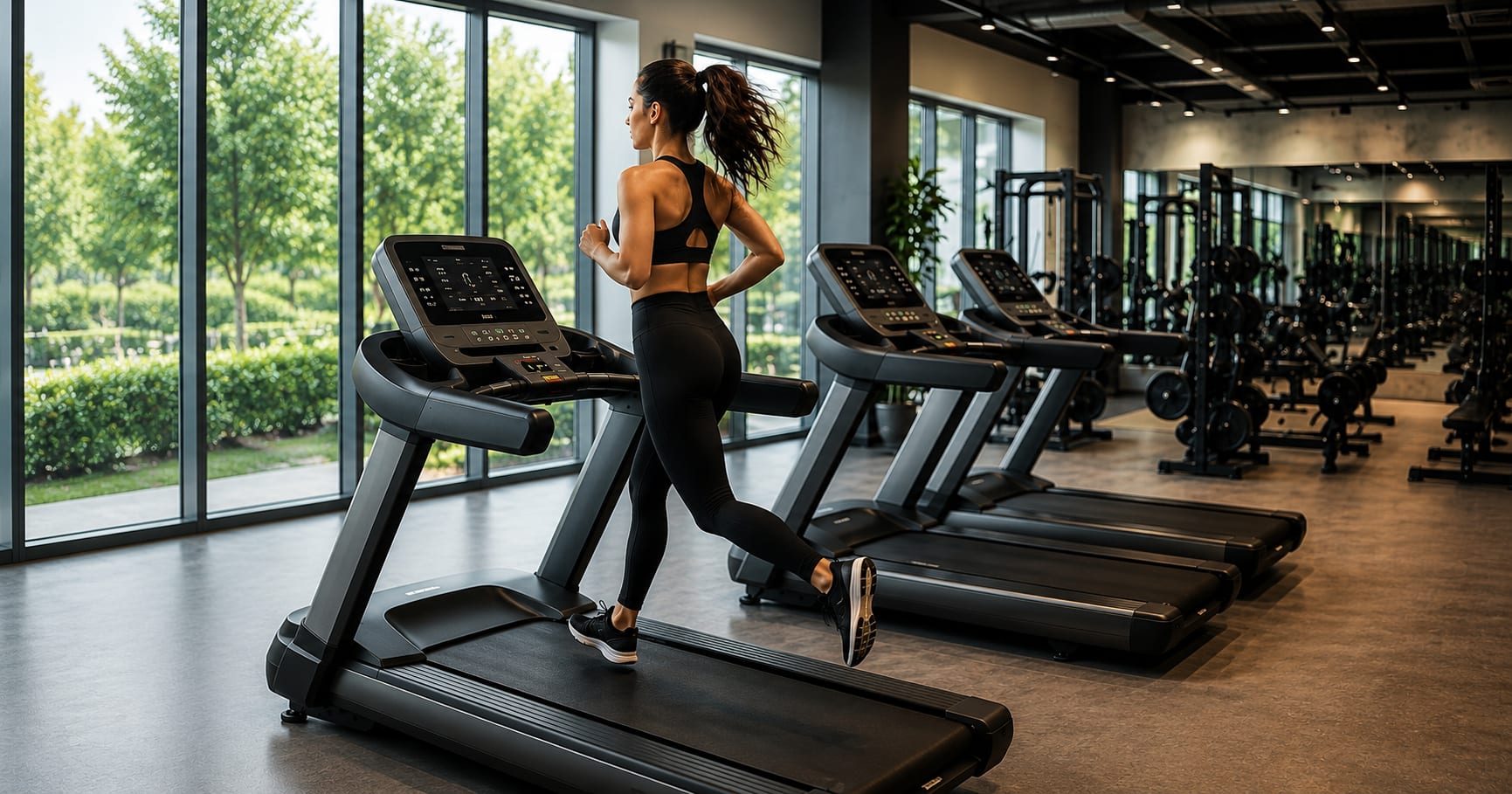
A treadmill is the favourite equipment of those who love running and brisk walks to keep themselves fit. The popular exercise machine consists of a moving belt on which you need to stand on and a handle to which you hold on to while you walk or run. There were times when treadmills were found only in gyms, but these days, many purchase them to use at home, too. Needless to say, they are a common choice for fitness freaks who prefer cardiovascular workout, as they allow you to maintain a consistent pace while exercising.
There are various reasons why some people are keen on reaping the benefits of a treadmill. While a few of them rely on its cardiovascular health gains, there are others who depend on the machine for the comfort factor. Walking on a treadmill is one of the best ways to stay fit for people who have limited outdoor space for exercise.
The machine is also considered to be an appropriate choice for those who are recovering from any form of illness or injury. The low-impact of treadmills strengthen the muscles and improve cardiovascular fitness without putting too much strain on the joints. They are used by runners who train themselves for various events like marathons as well. The equipment controls the intensity and duration of their workouts.
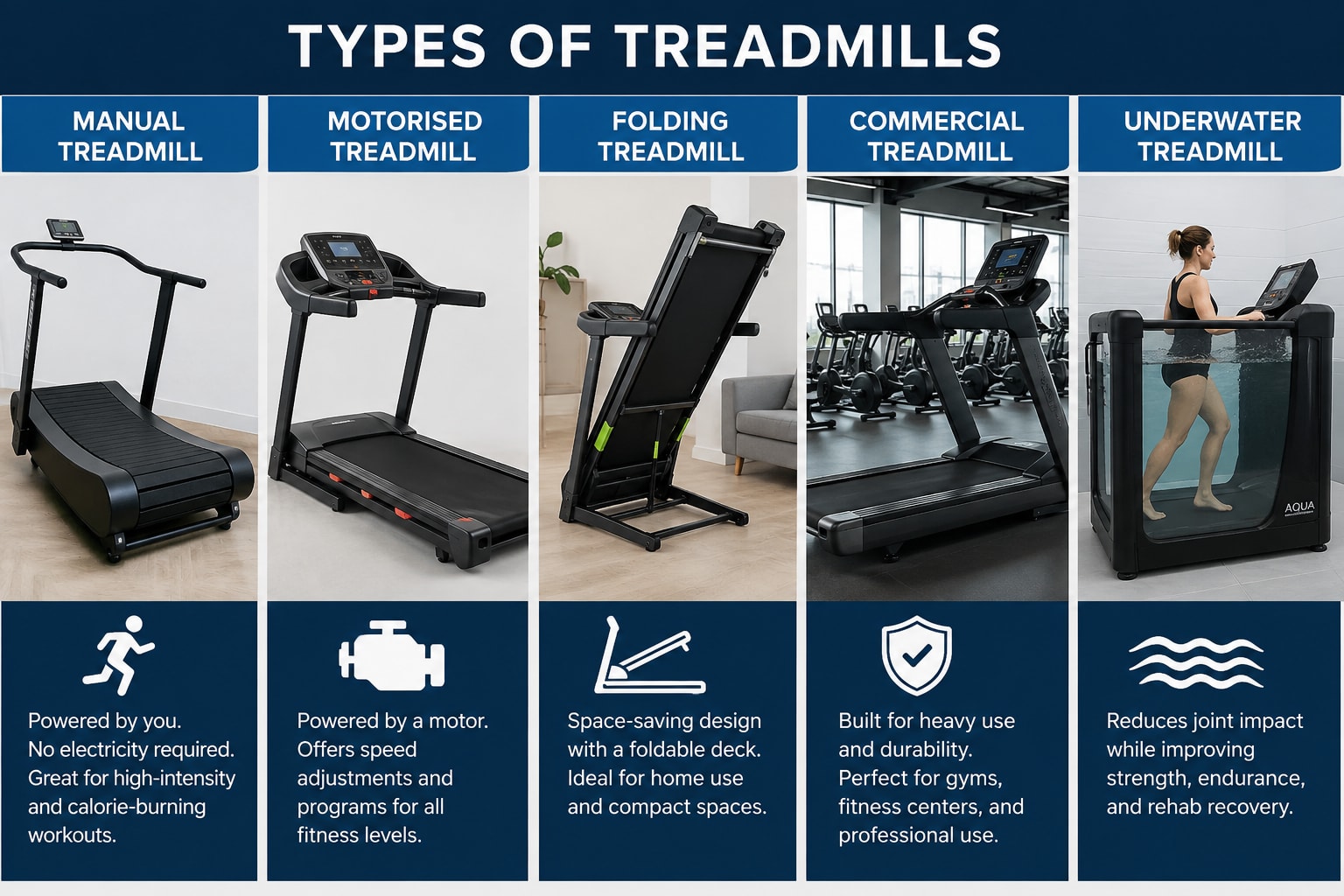
Several types of treadmills are currently available in the market, with each of them having distinct features and capabilities. Some of the common types of treadmills include:
There are a few factors to consider while choosing the right type of treadmill for you:
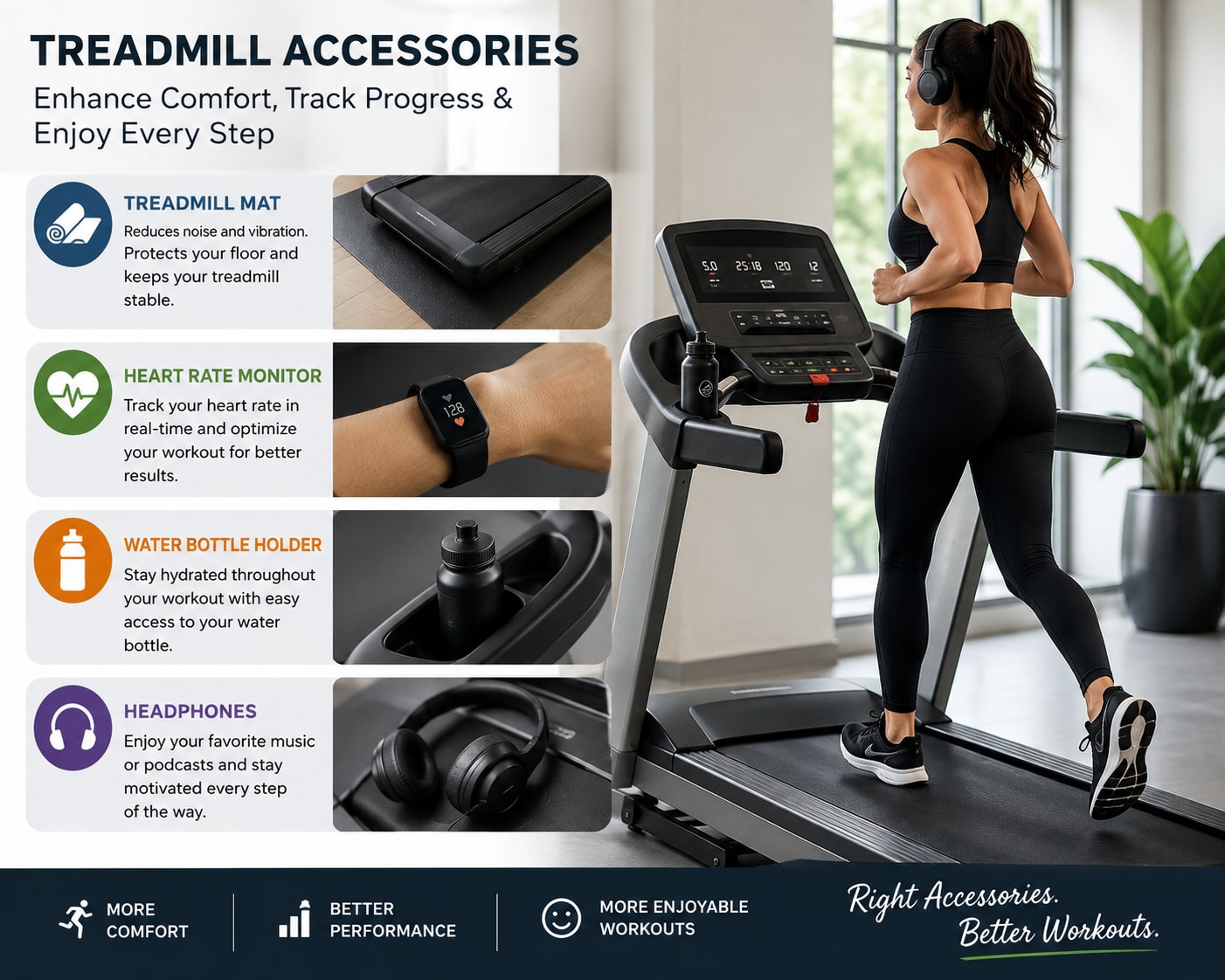
Here are some of the accessories that you may want to consider to make treadmill usage a wholesome experience.
There are several places where you can buy treadmill machines from.
It is always advisable to compare prices to find the best deal on a treadmill machine. You may also consider purchasing a used treadmill machine, but ensure that it is in good condition and check the warranty and return policy.
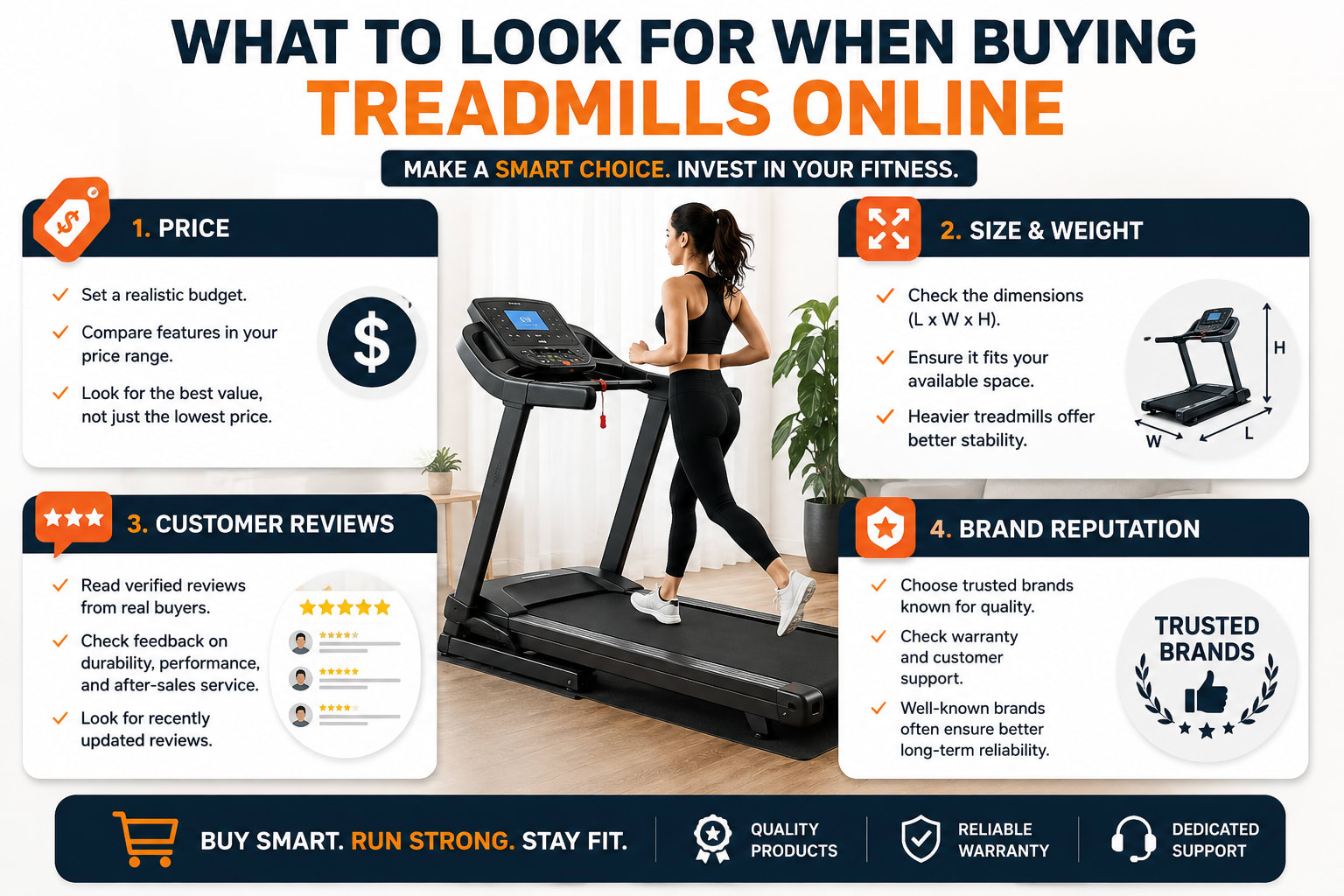
Here are a few points to keep in mind while purchasing a treadmill machine online:
Like most of the fitness equipment, treadmill prices, too, vary depending on the available features and quality of the machine.
Treadmills come in a variety of shapes and sizes that cater to various requirements and specifications.
If you are from Saudi Arabia and wish to purchase a commercial treadmill or other high quality fitness equipment, visit lifetimefitnessstore.com/treadmills/commercial-treadmills.
Treadmills are a popular exercise equipment that offer a number of benefits. Check out some of them below.
Here are a few tips you could consider to keep your treadmill last for a long time.
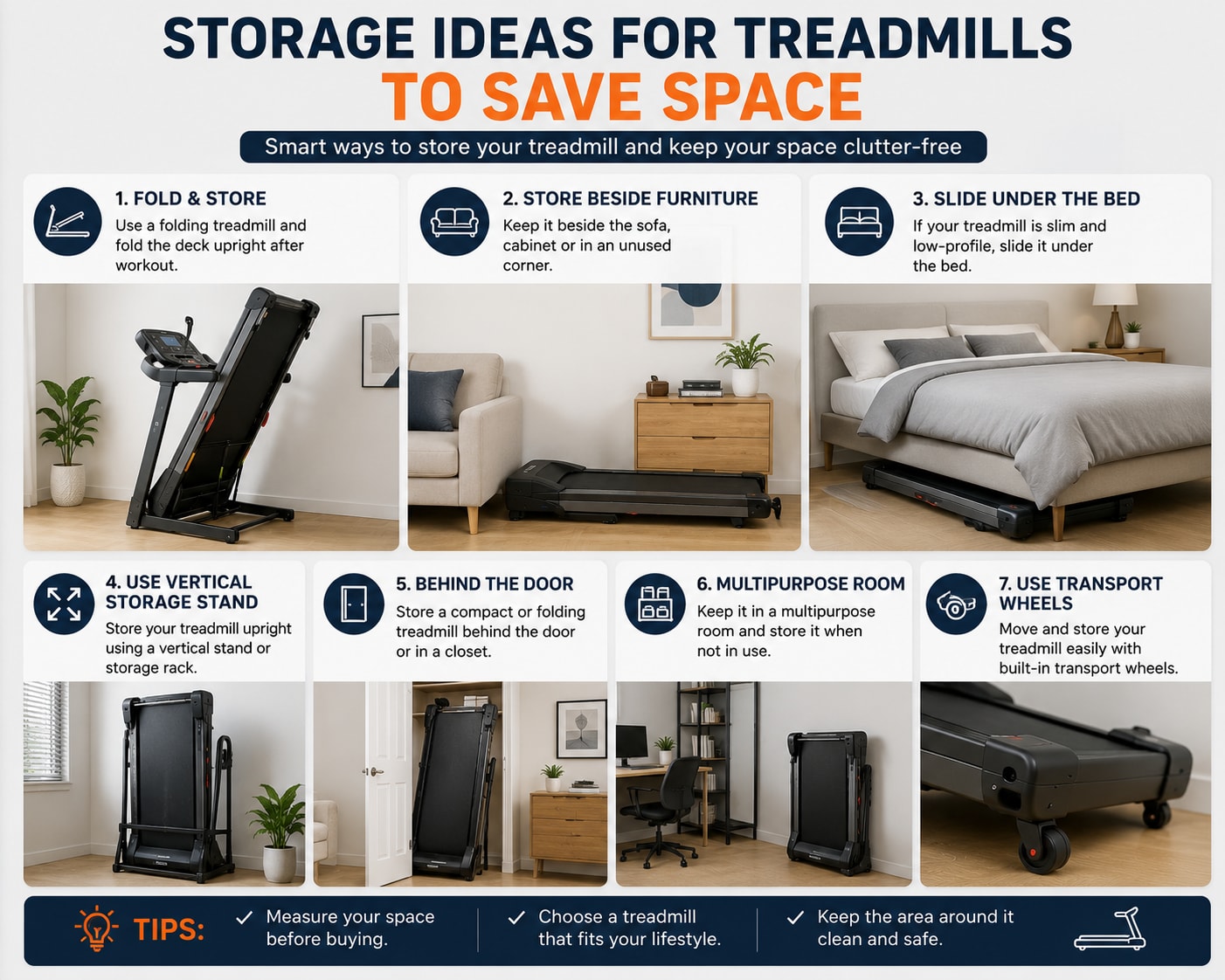
Below are some of the effective storage ideas that help you save enough space and keep your home look tidy.
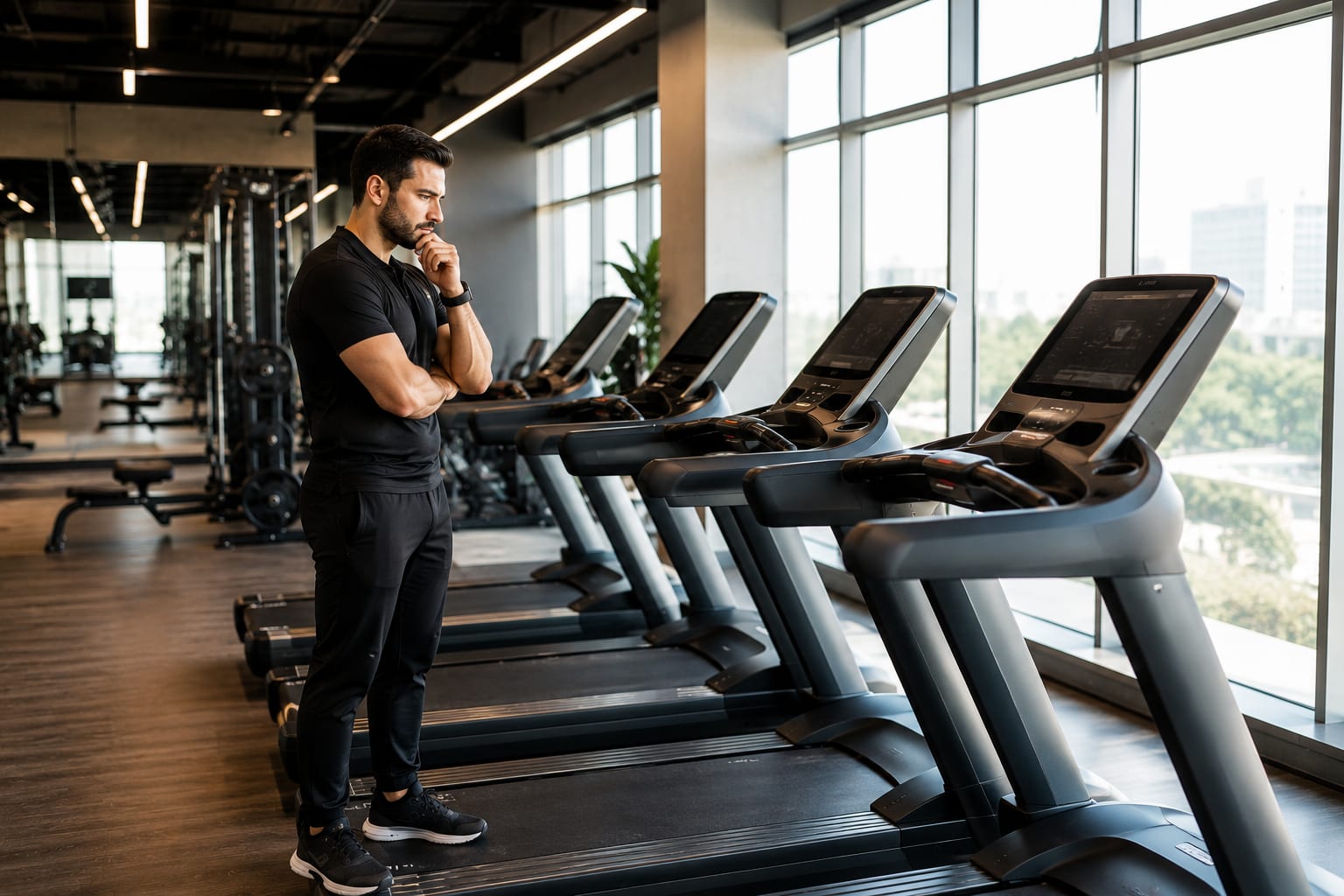
Commercial treadmills are one of the most commonly found training equipment you could come across in any fitness centre. Be it an advanced gym, a fitness studio, a corporate wellness centre or a sports performance centre, treadmills always attract customers and are the go-to equipment for people of all ages.
What makes them unique is the effective results they produce without complex moves and mechanisms. Buying commercial treadmills for a professional gym, however, is different from purchasing them for a home gym. At regular gyms, treadmills go through daily usage, and hence, there can’t be even the slightest of compromise. Durability becomes a vital factor while purchasing the equipment for high-performance gyms. A bland purchasing decision is likely to result in costly repairs, unsatisfied members, and equipment replacement.
It isn’t surprising that the variety of options available today can make us feel overwhelmed. However, a proper understanding of the dos and don’ts will help one make the right decision with regard to purchasing treadmills.
Generally, the first step we initiate before purchasing is comparing the specifications of different products. It is no different in the case of commercial treadmills as well. We need to assess the various needs of the gym for which we are making a purchase. A commercial gym may have to meet the requirements of hundreds of treadmill sessions every week, while a hotel fitness centre may witness only occasional usage. A rehabilitation clinic, on the other hand, may require lower-speed options and more safety features, while a sports performance facility may prioritize advanced training options.
So, having a basic understanding of your expected target audience, available space, and training requirements form the foundation for the purchasing process. A certain treadmill that appears best for one category may not be the best choice for another. The key is to focus on choosing treadmills that align with the specific needs of your customers.
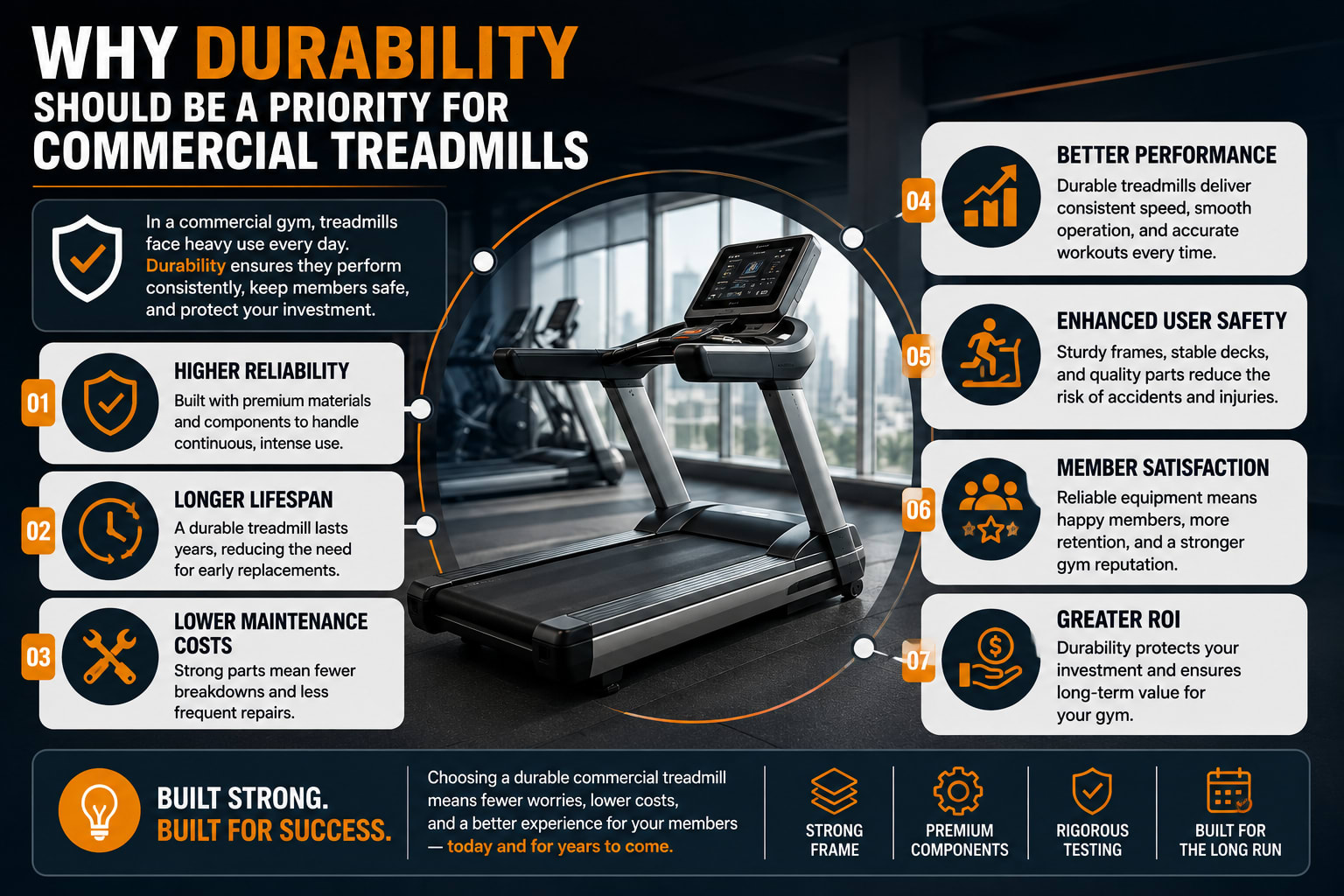
The most important point to keep in mind while purchasing a commercial treadmill is the durability factor. Unlike home treadmills, commercial treadmills are operated continuously for several hours every day. As multiple users use the equipment, it puts pressure on the frame, motor, deck, and rollers. Needless to say, the treadmills must be able to withstand the heavy pressure without any compromise on performance.
Durable treadmills are generally built with a heavy-duty steel frame to minimize movement and vibration during workouts. Strong construction improves stability, enhances user confidence, and reduces wear on internal components. While premium construction may increase the initial investment, it often results in lower long-term ownership costs because the equipment requires fewer repairs and replacements over time.
The motor is often considered the heart of a treadmill. Commercial treadmills require motors that are capable of delivering consistent performance throughout the day. Unlike residential machines that may be used for short workout sessions, commercial treadmills frequently operate for extended periods without interruption.
A high-quality motor is believed to contribute to smoother belt movement, accurate speed control, and enhanced reliability. It also helps reduce stress on other components by maintaining efficient operation during heavy workloads. When comparing between various treadmill options, gym owners should look beyond horsepower numbers alone. Finally, what matters is the overall quality, durability, and usage level of the motor.
The size and quality of the running surface in treadmills directly affect a user’s comfort and safety. A bigger running space accommodates users of different heights and stride lengths while allowing more natural movement during exercise. This becomes relevant for runners and taller people who require additional space.
Customers should feel comfortable walking, jogging, or running without feeling restricted in the running space. A spacious surface can drastically enhance the workout experience and encourage customers to spend more time on the equipment. The quality of the running belt also plays a significant role.
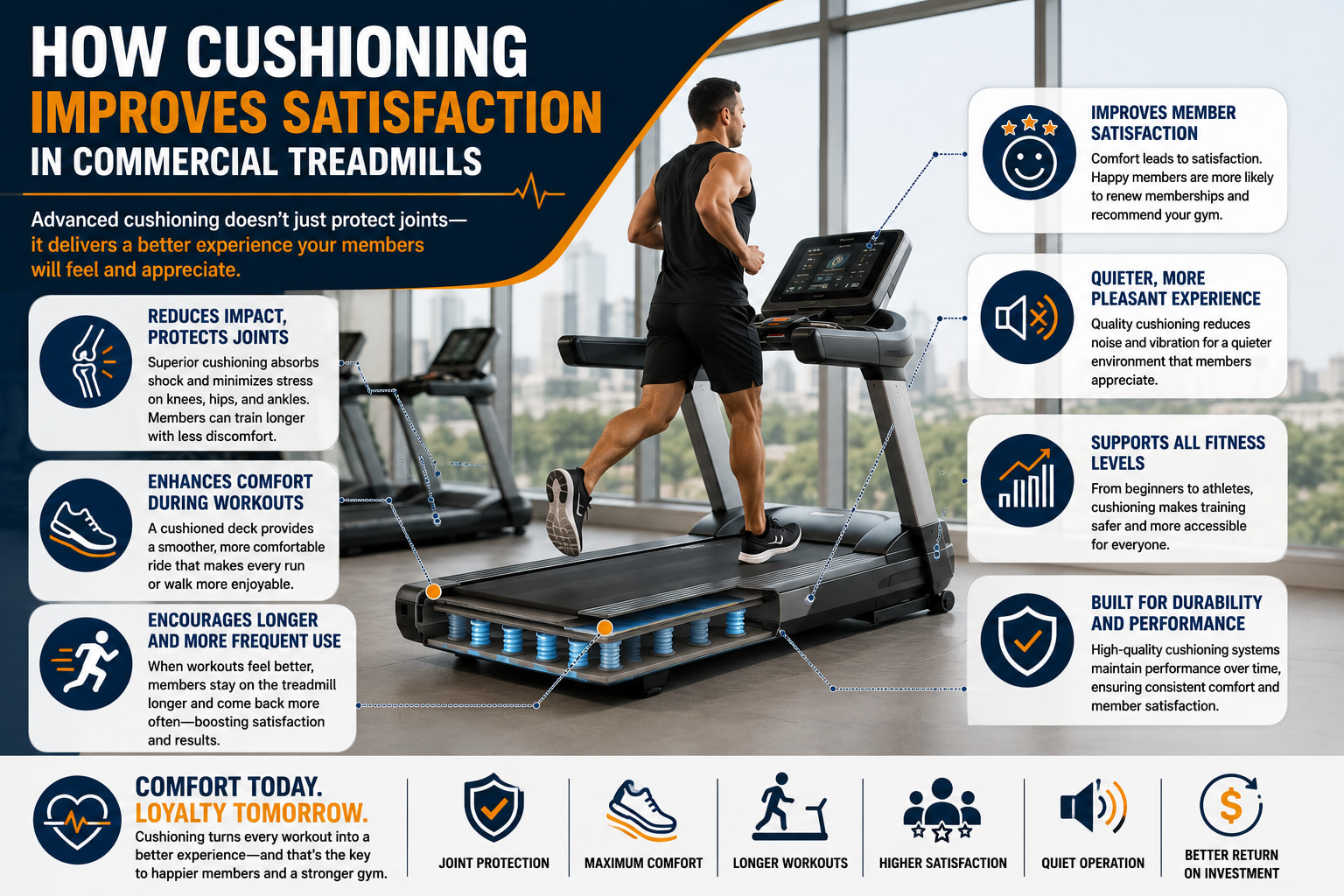
Many gym owners focus on performance specifications while they overlook treadmill cushioning systems. The absorption technology aids in reducing stress on the knees, ankles, hips, and lower back. Hence, this aspect is of utmost importance for users who spend a long time on treadmills.
Users easily notice the difference between a treadmill with ideal cushioning and one that feels rigid during workout. Since treadmills are one of the most frequently used pieces of equipment in workout stations, comfort should be considered as a major factor while making a purchase.
Though the aspect of weight capacity is considered as a mere user specification, it also provides insight into the overall treadmill construction. Higher weight capacities generally indicate stronger frames, more durable components, and better engineering. Commercial treadmills must accommodate a wide variety of users, making structural strength essential.
A treadmill capable of supporting heavier individuals delivers improved durability. It is obvious that stronger construction reduces stress on the machine and contributes to longer lifespan. Gym owners should consider future flexibility while evaluating weight capacities rather than focusing on current user demographics.
The best commercial treadmill is not necessarily the one with several advanced features, but the one that delivers a fulfilling experience for users. Customers should be able to control the settings and access workout information without any confusion.
While evaluating equipment, it is often productive to spend personal time with the treadmill. Experiencing the machine firsthand reveals important details that specifications alone cannot communicate.
Modern commercial treadmills offer a variety of technological features. Large touchscreens, workout tracking systems, virtual training programs, connectivity options, and entertainment platforms have become quite common these days. Though it is true that these features could enhance engagement, they should be evaluated based on user preferences rather than marketing appeal.
There are a few facilities that benefit greatly from advanced technology, particularly those targeting tech-savvy users. Others may find that simplicity, reliability, and ease of use are more important than extensive entertainment features. At the end of the day, technology should enhance the workout experience without complicating daily operations or increasing maintenance requirements.
Many gym owners focus on the equipment price while they overlook long-term maintenance requirements. Every treadmill requires regular servicing, but some models are designed to simplify maintenance procedures. Easy access to internal components, clear maintenance guidelines, and readily available replacement parts could significantly reduce downtime.
Equipment that is difficult to maintain often becomes more expensive over its lifespan. Before making a purchase, facility owners should understand the maintenance expectations associated with each model. A treadmill that remains easy to service throughout its life can provide significant operational advantages.
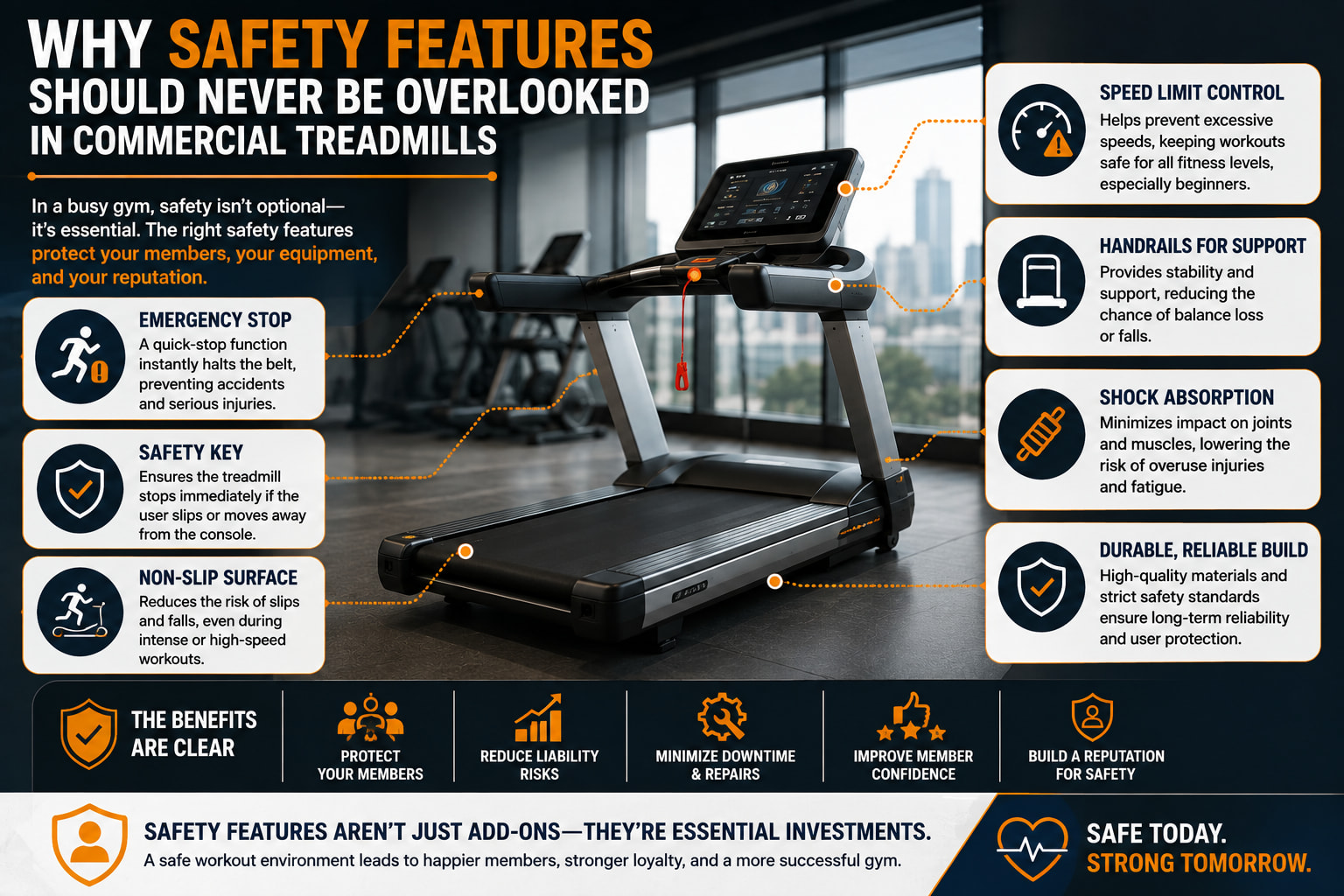
Safety remains one of the most important considerations when selecting commercial fitness equipment. Commercial treadmills should include reliable emergency stop systems, intuitive controls, stable handrails, and secure running surfaces. These features help protect users while creating a safer exercise environment.
Facilities serving older adults, beginners, or rehabilitation clients may place even greater emphasis on safety-related features. Understanding the needs of your target audience helps ensure equipment selection aligns with user expectations. A safer treadmill not only protects members but also reduces operational risk for the facility.
Noise can have a surprising impact on the overall gym environment. A treadmill that generates excessive noise may negatively affect the workout experience for users throughout the facility. High-quality construction, precision components, and efficient motors often contribute to quieter operation.
While no treadmill is completely silent, smoother and quieter equipment generally creates a more pleasant atmosphere. This becomes especially important in boutique studios, hotels, corporate wellness facilities, and mixed-use spaces. Noise levels should be evaluated as part of the overall user experience rather than viewed solely as a technical specification.
Commercial treadmills require adequate space for safe and comfortable operation. Facility owners should consider not only the footprint of the treadmill itself but also the surrounding clearance required for user safety, maintenance access, and facility flow.
Overcrowding equipment can create an uncomfortable environment and reduce the overall functionality of the facility. Proper space planning helps maximize both safety and member satisfaction. Before purchasing equipment, it is important to ensure the facility layout can accommodate current and future needs.
Not all commercial treadmills are built for the same level of usage. Some models are designed for full commercial environments where continuous daily operation is expected. Others are classified as light commercial equipment and are intended for moderate usage levels. Facilities should select equipment based on realistic workload expectations rather than assuming all commercial treadmills offer identical durability. Choosing equipment that matches actual usage requirements helps avoid both underinvestment and unnecessary overspending.
Price is an important consideration, but it should never be the only factor driving a purchasing decision. The cheapest treadmill may initially seem attractive, but lower-quality equipment often results in increased maintenance costs, more frequent repairs, and shorter service life. Conversely, the most expensive model may include features your facility does not actually need.
The goal is to identify the treadmill that provides the best combination of durability, performance, user experience, and long-term value. A thoughtful purchasing decision often delivers better financial outcomes than simply choosing the lowest-priced option.
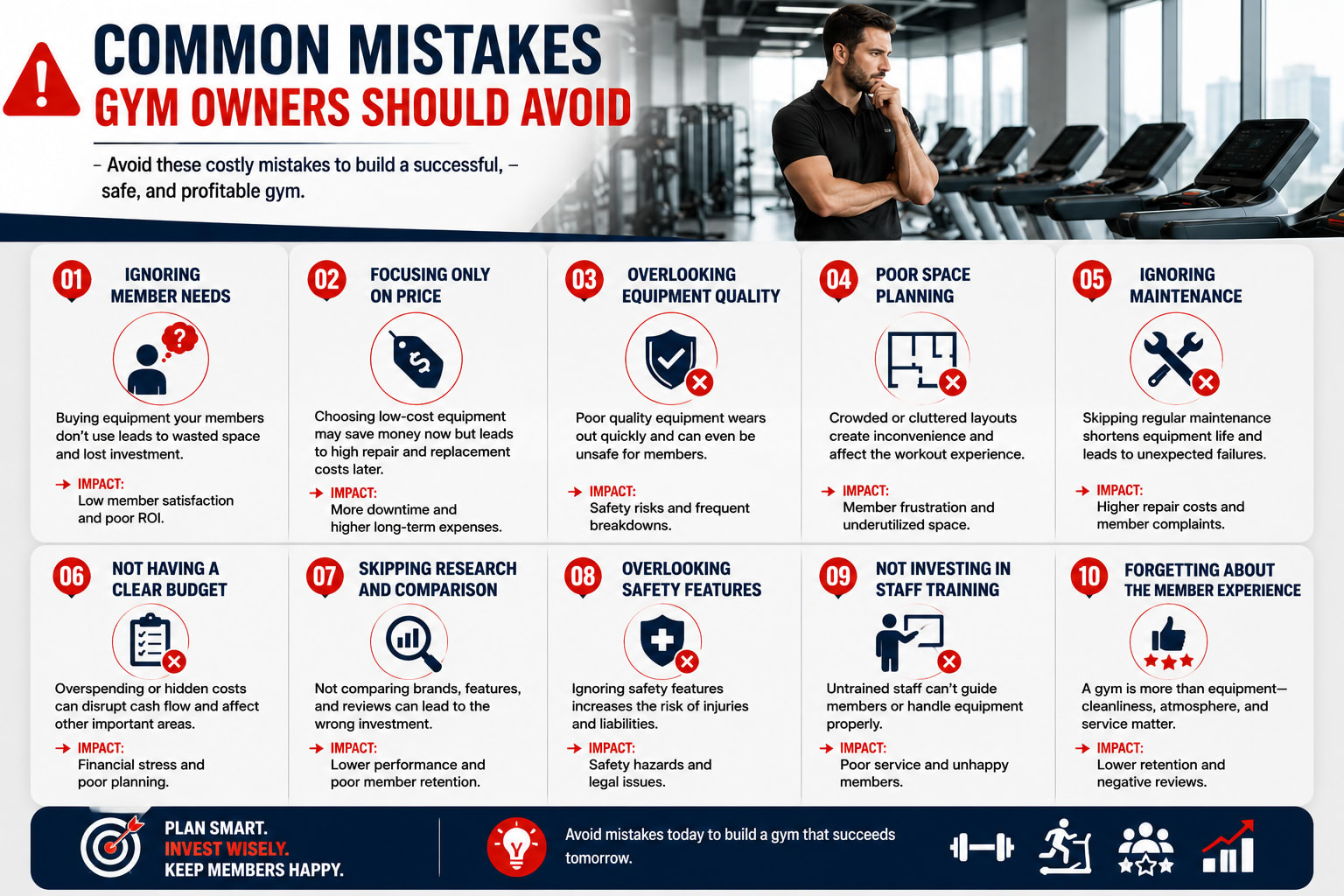
Many treadmill purchasing mistakes occur because buyers focus on marketing claims rather than operational realities. Some facilities purchase equipment with features members rarely use. Others underestimate usage levels and select machines that cannot withstand the demands of a commercial environment.
Another common mistake involves overlooking maintenance requirements. Equipment that appears attractive during the purchasing process may become difficult and expensive to maintain over time. Successful facility owners evaluate treadmills based on long-term performance rather than short-term impressions.
Many gym owners assume that purchasing identical treadmills is always the best option. While there are advantages to maintaining consistency across the cardio area, there are situations where a mixed equipment strategy may be more effective.
A facility that serves a broad audience often benefits from offering multiple treadmill options. Some members prefer simple controls and straightforward workouts, while others look for advanced technology, higher incline ranges, or performance-focused features. Providing a variety of options can help accommodate these different preferences.
However, standardizing equipment also has advantages. Staff become more familiar with maintenance procedures, replacement parts are easier to manage, and members enjoy a consistent experience regardless of which machine they choose.
The right approach depends on the size of the facility and the needs of its members. Smaller gyms may benefit from equipment consistency, while larger facilities often have the flexibility to offer multiple treadmill styles that cater to different user groups.
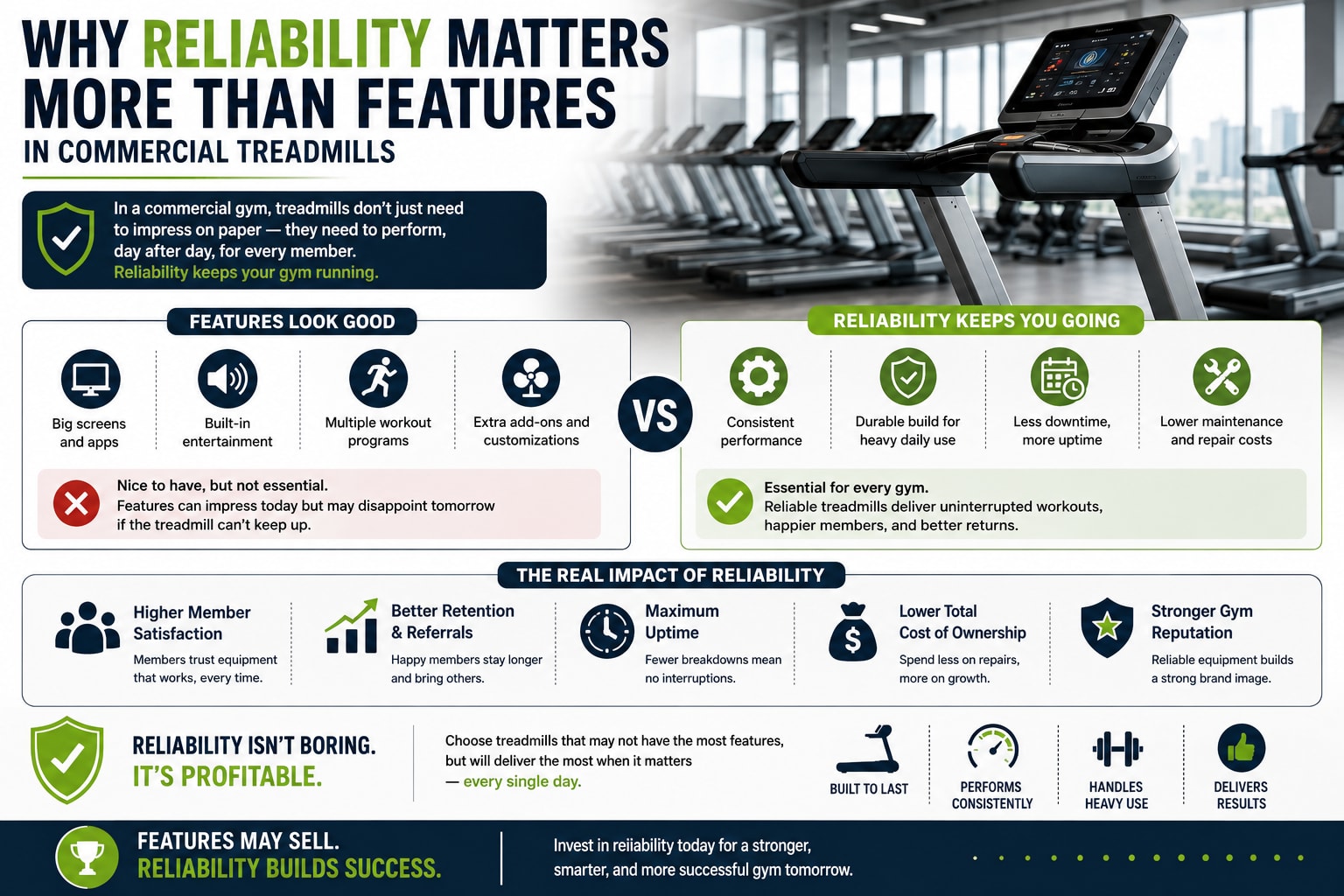
Many treadmill buyers are drawn toward large touchscreens, entertainment systems, virtual training programs, and advanced connectivity features. While these additions can enhance the workout experience, reliability should remain the primary consideration.
Members may appreciate advanced technology, but they will quickly become frustrated if the treadmill is frequently out of service. A treadmill that operates consistently every day often provides greater value than a feature-rich machine that requires constant attention.
Gym owners should evaluate whether specific features genuinely improve the member experience or simply add complexity. The best commercial treadmill balances modern functionality with long-term dependability. Ultimately, users expect equipment that works whenever they need it. Reliability builds trust and contributes to overall satisfaction within the facility.
One factor that many buyers underestimate is the cost of equipment downtime. When a treadmill becomes unavailable, the impact extends beyond repair expenses. Members may have to wait longer for equipment, adjust their workouts, or become frustrated with the facility. In busy gyms, even one treadmill being out of service can affect traffic flow throughout the cardio area.
Repeated equipment issues can also influence how members perceive the facility. People often associate equipment reliability with overall quality. A gym with well-maintained and dependable treadmills creates a stronger impression than one with frequent maintenance problems. This is why many successful facility owners focus heavily on equipment quality during the purchasing process. Investing in reliable treadmills often reduces downtime and improves the member experience over the long term.
When purchasing commercial treadmills, it is important to think beyond immediate needs. A facility may currently have a certain number of members, but future growth can dramatically increase equipment usage. Buying treadmills that barely meet current demands may create limitations as the business expands.
Choosing equipment with stronger durability and higher usage capacity can help future-proof the facility. As membership grows, the treadmills remain capable of handling increased workloads without compromising performance. This approach often provides better long-term value because the equipment continues meeting operational requirements even as the facility evolves. Forward-thinking purchases help prevent costly upgrades and equipment replacements in the future.
Gym owners often view treadmills simply as cardio machines, but they can have a direct impact on member retention. For many individuals, treadmills are among the first pieces of equipment they use when joining a gym. They are familiar, accessible, and suitable for users across different fitness levels. As a result, the quality of the treadmill experience can influence how members perceive the entire facility.
Smooth operation, comfortable cushioning, intuitive controls, and reliable performance all contribute to positive experiences. Members are more likely to return when equipment consistently meets their expectations. On the other hand, uncomfortable or unreliable treadmills can create frustration and reduce satisfaction. Even small issues can affect a member's perception of the gym over time. Investing in quality equipment is therefore not only an operational decision but also a customer experience strategy.
If you are keen to buy commercial treadmills or other fitness machines and accessories from Saudi Arabia, visit lifetimefitnessstore.com for the incredible options we offer at an affordable price.
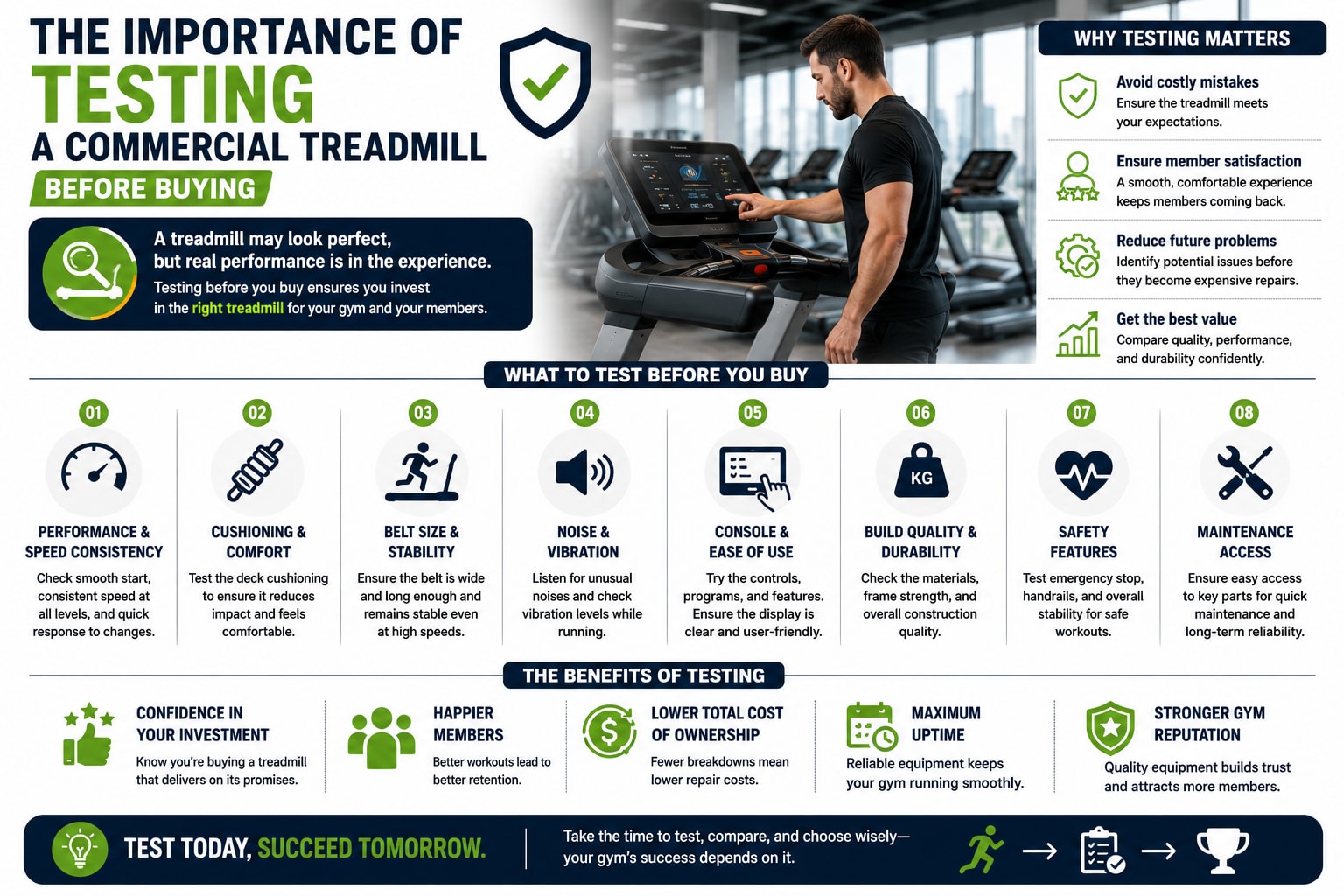
Specifications and brochures provide valuable information, but nothing replaces hands-on testing. Whenever possible, gym owners should spend time using the treadmill before making a purchase. Walking, jogging, and running on the machine allows buyers to evaluate stability, cushioning, noise levels, responsiveness, and overall comfort.
Testing also provides insight into console usability and control placement. Features that appear impressive on paper may not feel practical during actual workouts. If multiple stakeholders are involved in the purchasing process, allowing trainers, managers, and maintenance personnel to evaluate the equipment can provide valuable perspectives. A treadmill may look excellent in a showroom, but real-world testing often reveals details that influence long-term satisfaction.
The true value of a commercial treadmill becomes apparent over years of use rather than at the point of purchase. A lower-priced treadmill may initially reduce expenses, but if it requires frequent repairs or replacement, overall costs can increase substantially. Conversely, a higher-quality machine may provide years of dependable performance with fewer interruptions.
When evaluating options, gym owners should consider factors such as durability, maintenance requirements, warranty coverage, service support, and expected lifespan. These elements often have a greater impact on long-term value than purchase price alone. Thinking beyond the initial investment helps facility owners make decisions that support both financial performance and member satisfaction.
The treadmill section is often one of the busiest areas in a fitness facility. Members use these machines for warm-ups, endurance training, interval workouts, weight-loss programs, and general cardiovascular exercise. Because of this, treadmill quality plays an important role in shaping the overall cardio experience. Comfortable equipment encourages longer workouts, while reliable performance helps members stay focused on their fitness goals rather than equipment limitations.
When treadmills are carefully selected and properly maintained, they become valuable tools that support member success. They contribute to a professional environment where users feel confident in the quality of the facility and the equipment provided.
Purchasing commercial treadmills is a significant investment that affects member satisfaction, facility reputation, and long-term operational costs. The best treadmill is not necessarily the one with the highest specifications or the most advanced technology. Instead, it is the machine that aligns with the needs of your facility and delivers reliable performance over many years.
By focusing on durability, motor quality, running surface design, cushioning, user experience, maintenance requirements, safety features, and overall value, gym owners can make more informed purchasing decisions.
A carefully selected commercial treadmill becomes more than just a piece of equipment. It becomes a long-term asset that supports member success, enhances the facility experience, and contributes to the growth and reputation of the business.
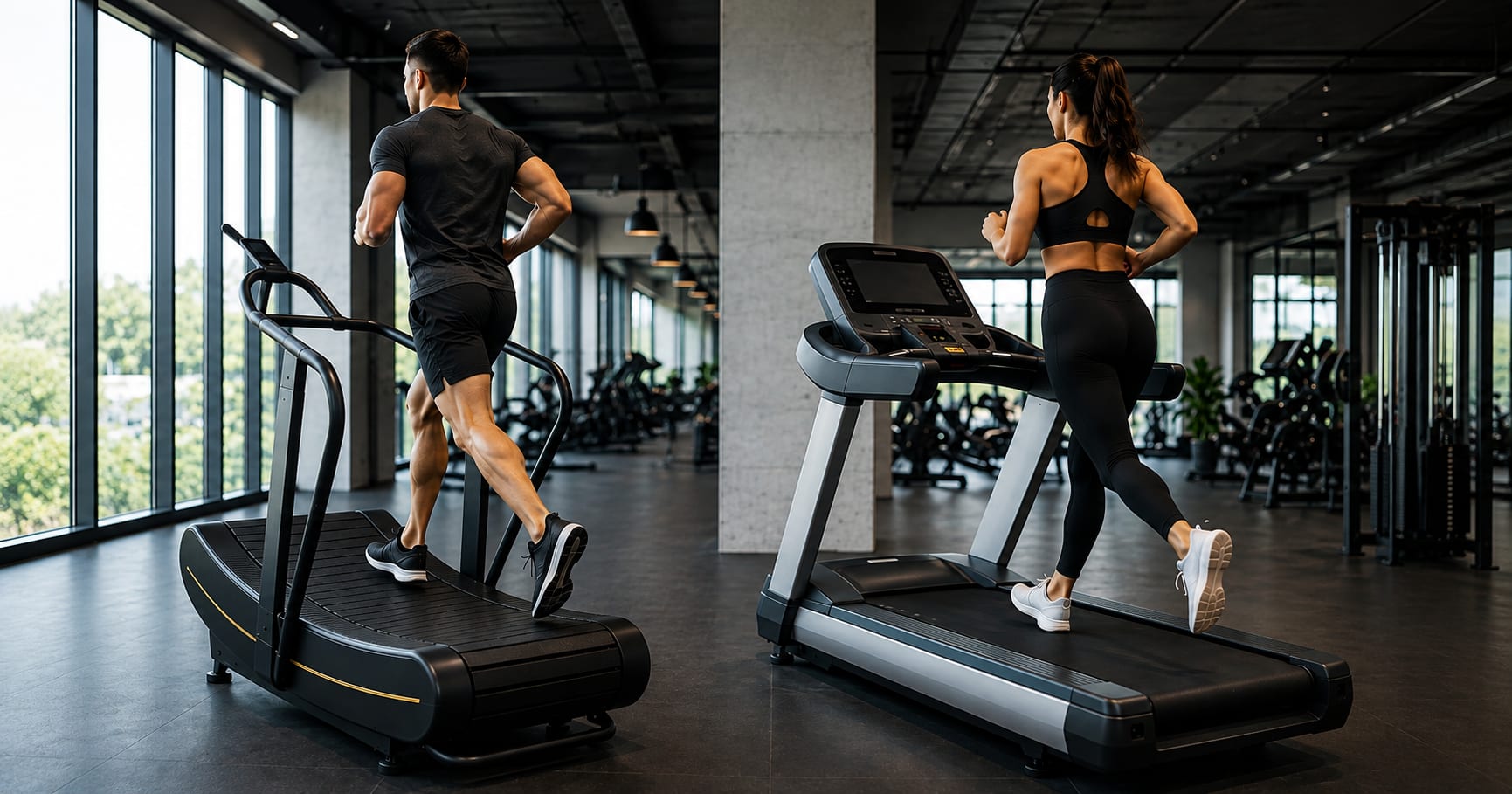
Treadmills have always been considered as a common exercise machine found in gyms, homes and sports performance centres. Most of us are quite familiar with motorized treadmills that require an electric motor for the running belt to function. In recent years, a new treadmill type has gained trust among athletes and fitness enthusiasts - the curved treadmill.
A curved treadmill is different from a traditional treadmill in various ways. The former’s running surface curves upward at both ends as opposed to the latter’s flat surface. Similarly, there is no motor and power cord, apart from having only a few electronic controls. The stark contrast in their appearance leads us to an important question: how does a curved treadmill work?
In fact, the answer lies in its self-powered design. The curved treadmills depend completely on the user's movement while the traditional treadmills move the belt for the user. The pace of the belt is directly proportional to the pace with which you work. This system in curved treadmills offers a unique workout experience and has resulted in its immense popularity among athletes and those who love cardio training. Let’s take a deep dive into the functioning of curved treadmills and its various benefits. It aids in understanding whether they are appropriate for your fitness goals.
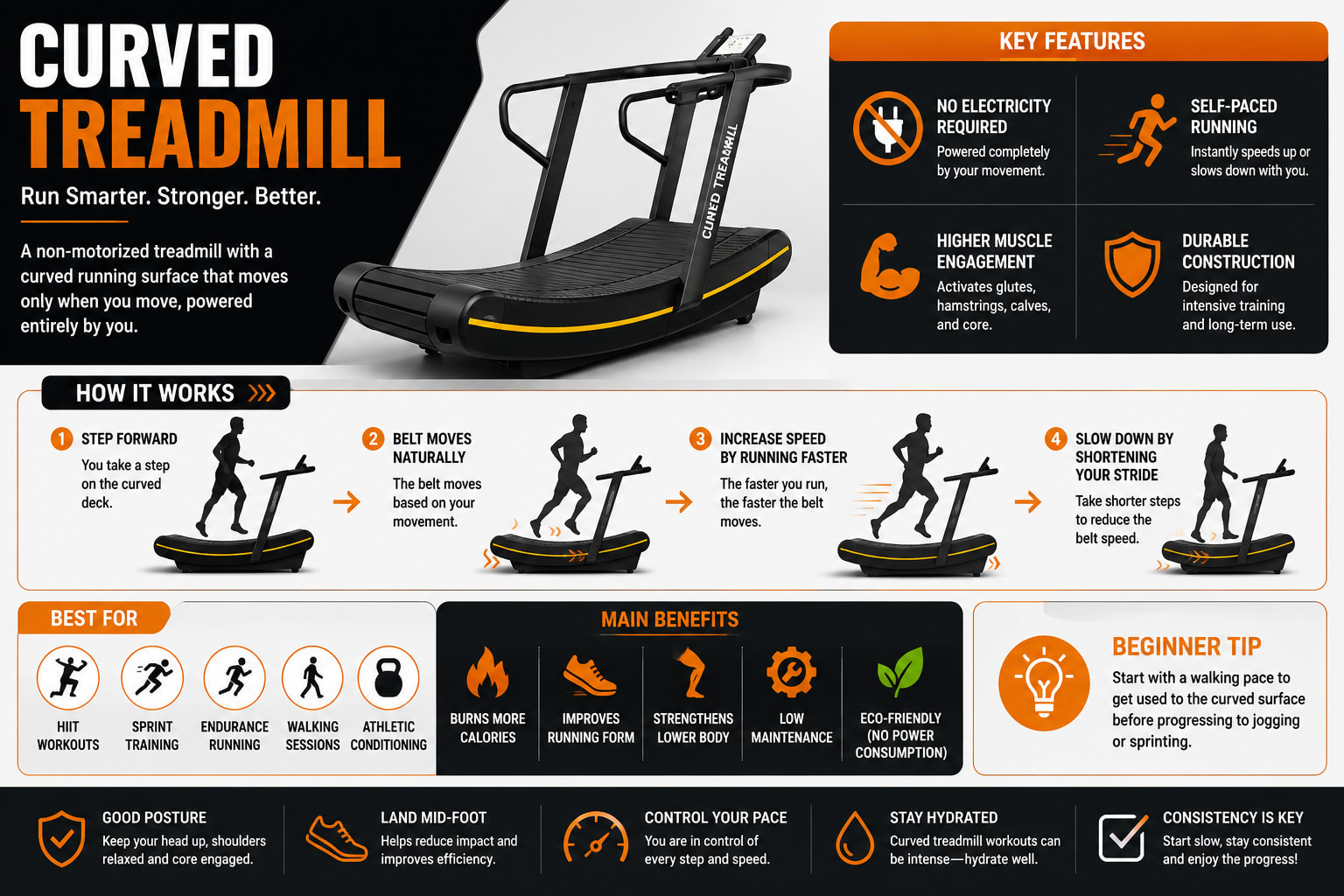
A curved treadmill is essentially a non-motorized treadmill that features a specially designed running surface. It is the user's movement that drives the treadmill here, instead of electricity in the conventional treadmill. The curved shape of the deck encourages the movement and leads to a forward-running motion. The co-relation between one’s effort and speed is the primary characteristic of a curved treadmill. While a slow walk generates a slower belt speed, faster running ensures better movement.
The mechanism behind a curved treadmill is quite simple. When a user stands near the center of the running surface, the belt either moves slowly or remains idle. The belt starts functioning when the user moves forward on the curve and applies force. One needs to note that moving toward the rear portion of the treadmill slows down the belt. This automatic design allows users to gain control over the speed without relying on other settings. Every slow and fast movement in pace is solely based on the users’ effort. A stand out factor in curved treadmills that turn out to be beneficial for athletes is the lack of delay between the user's movement and the machine's response.
The unique curved design of the treadmill serves an interesting purpose. The shape of the running deck helps users to land naturally on the mid-foot. This enables effective running, in addition to the curve assisting with flawless belt movements. The belt rotates around the curved deck without any hassles when the users make forward and backward movements. The combination of self-powered operation and bio-mechanics makes curved treadmills a go-to equipment.
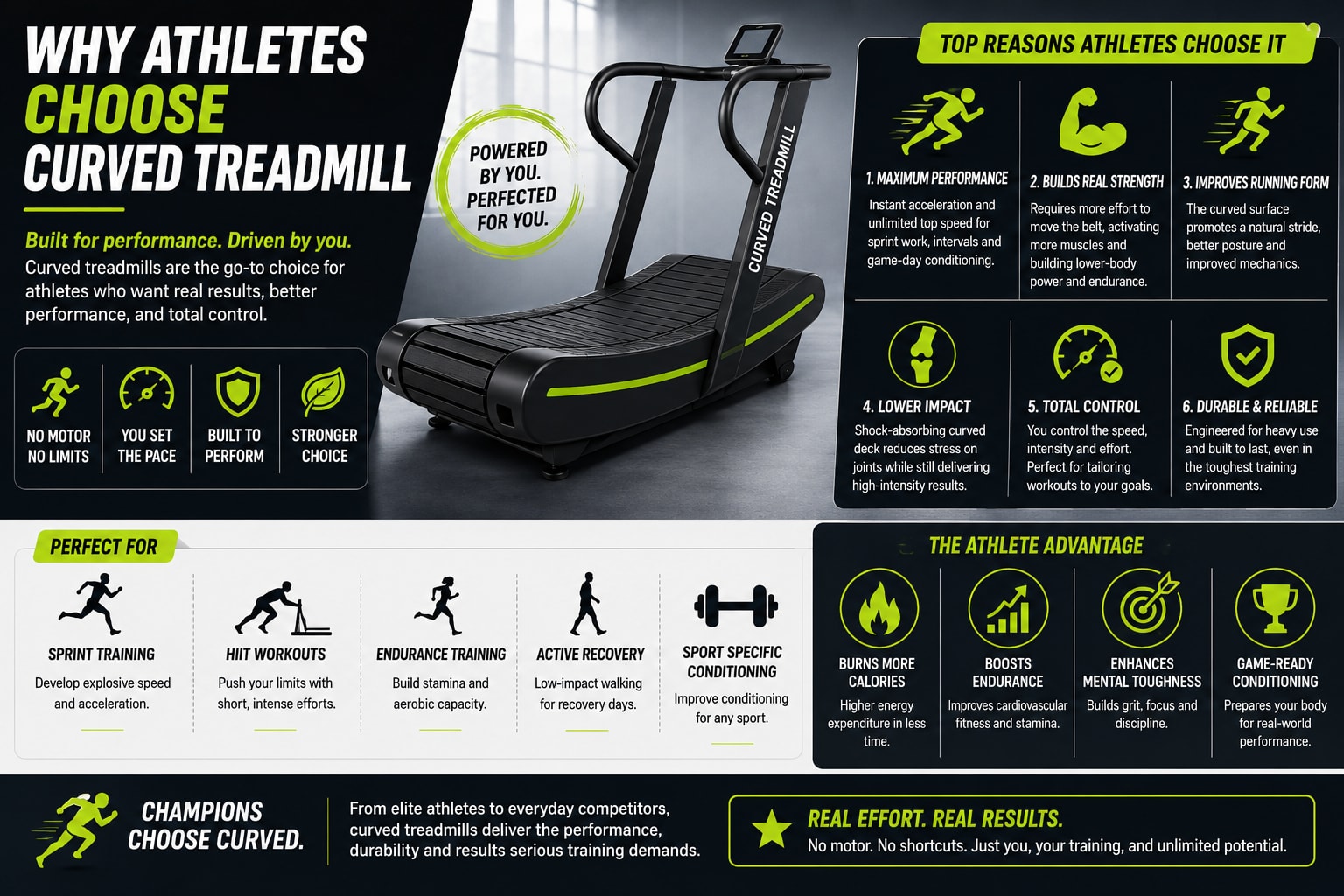
One of the reasons curved treadmills gained popularity over a period of time is because athletes embraced them wholeheartedly. It is a known fact that sports performance training demands rapid acceleration, deceleration, and changes in intensity. This is where curved treadmills come in handy and meet those specific requirements.
Athletes, in general, admire the feature of curved treadmills where users could shift from walking to sprinting without depending on a motor to enhance the belt. Needless to say, this factor allows users to pull off high-intensity training and sprint sessions.
According to the response from several users, it is noted that workouts in curved treadmills are more challenging when compared to workouts performed on traditional treadmills. This is because of the fact that users are responsible for the belt movement. The additional effort and workload from users lead to extra cardiovascular demand and a significant increase in training intensity.
This further leads to users burning more calories and gaining more benefits during certain workouts. Though the workout intensity depends on several factors, curved treadmills create a comparatively demanding environment than traditional treadmills. There are no two ways about it.
One of the most exciting features of curved treadmills is the speed control. While traditional treadmills require users to adjust the settings, curved treadmills are capable of such changes through natural movements. This difference makes curved treadmills effective for interval workouts as frequent speed changes are required. They easily adapt to users instead of demanding users to adapt to the machine.
Among the several positive aspects of curved treadmills, the one that stands out is the fact that they do not require electricity for their functioning. This is a major advantage they have over the traditional treadmills. Though some of the curved treadmills may include electronic displays that are powered by batteries or generators, the fact remains that they are self-powered. This simplifies the installation process and reduces energy consumption.
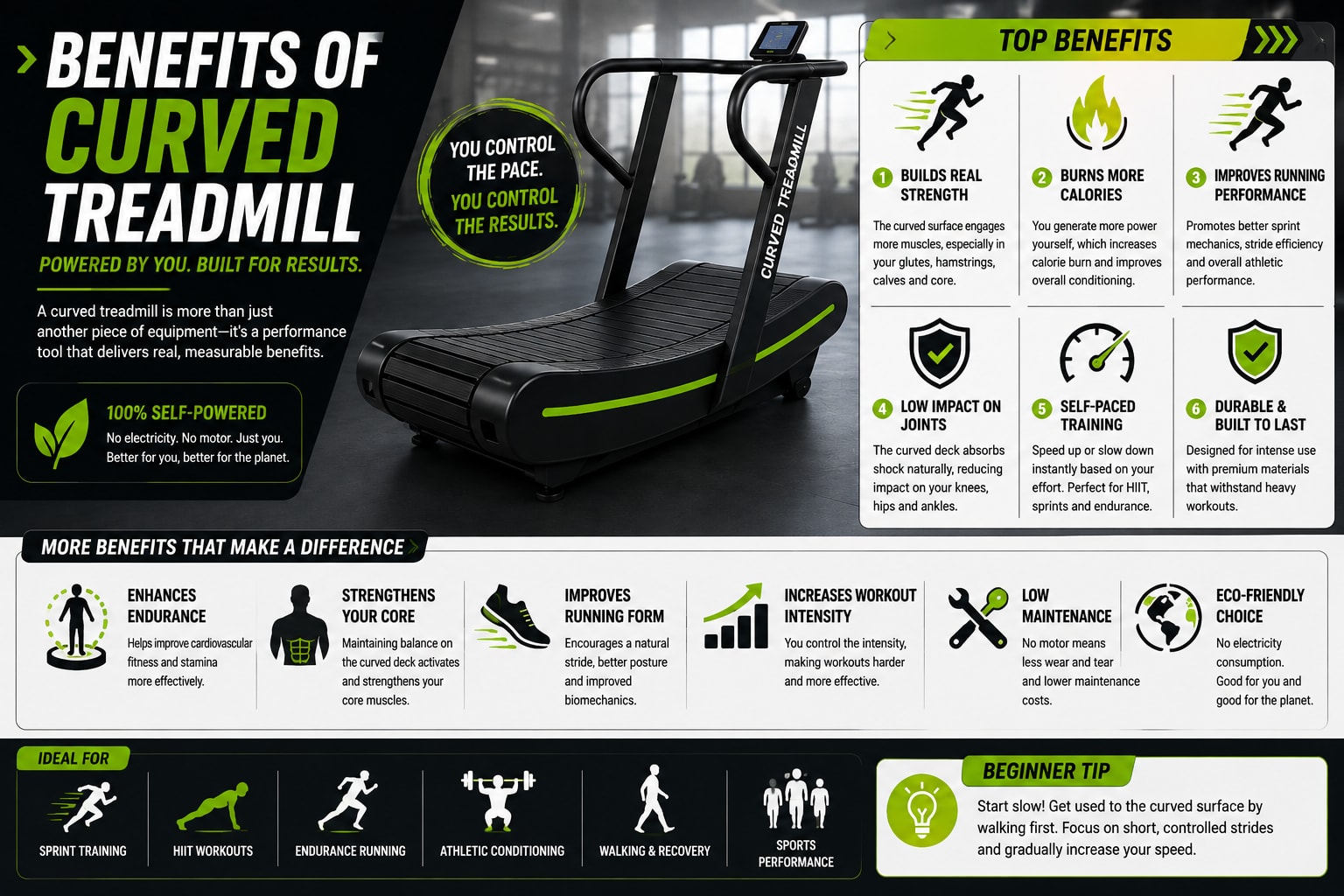
We have already mentioned why curved treadmills have an upper hand over traditional treadmills. Let’s get into each of them again in a crisp and short manner.
Having discussed the numerous benefits of curved treadmills, it’s now time to mention the down side as well. Firstly, it is not ideal for everyone. Those who have relied on traditional treadmills would find it a bit tiresome when they shift to the curved ones. Those seeking steady-state workouts are likely to prefer motorized treadmills as they tend to maintain the speed automatically. Moreover, there are people who find long walking sessions more enjoyable on traditional treadmills.
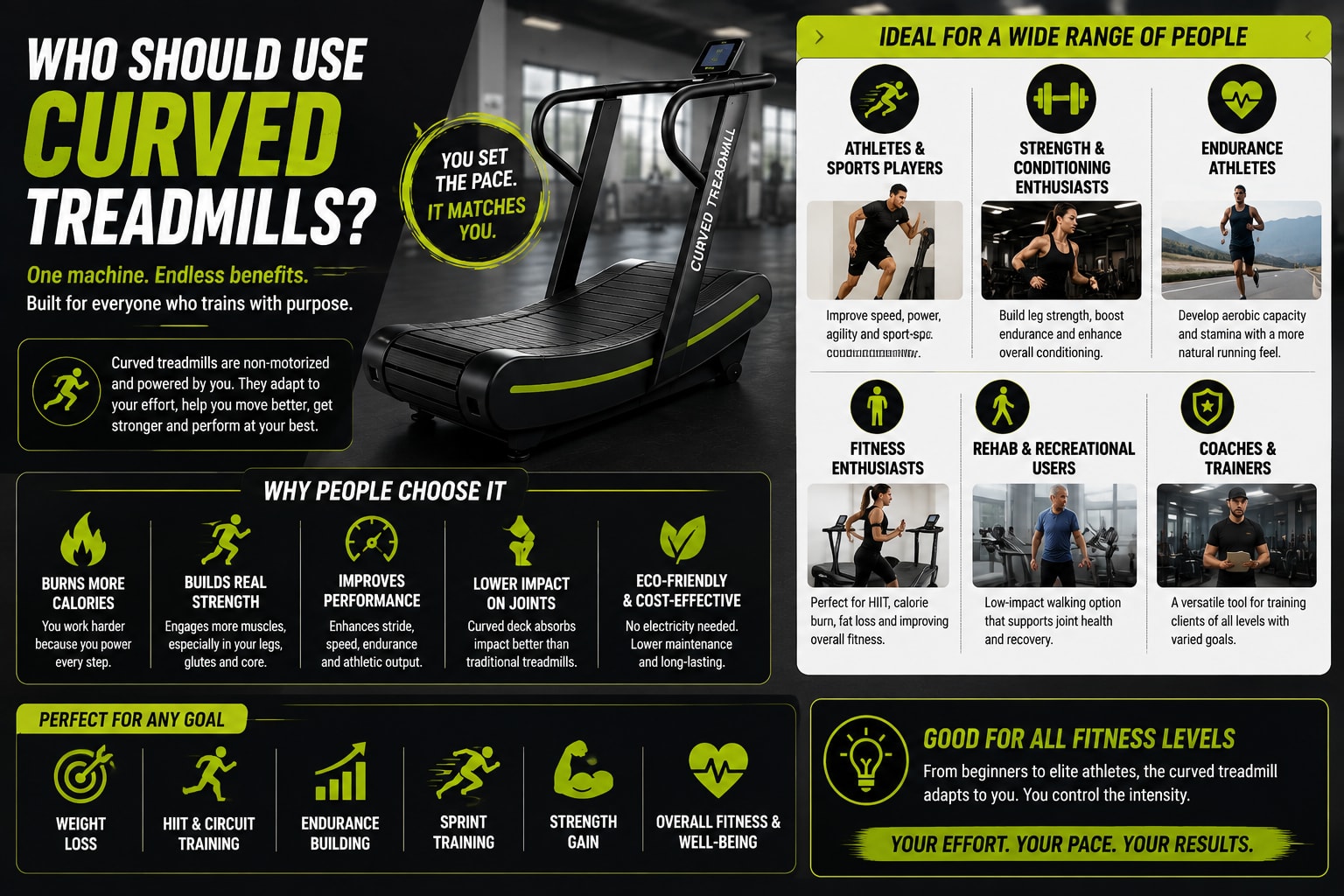
We have already mentioned why athletes prefer curved treadmills over traditional treadmills. In addition to this, there are other fitness enthusiasts, too, who may want to reap the benefits of curved treadmills, thanks to their advantages. Strength trainers are one set of people who prefer curved treadmills as it aids in their broader athletic training systems.
These days, commercial gyms and training centers ensure curved treadmills in their workout stations as they play a vital role in attracting fitness geeks. They also offer varied training experiences that differ from traditional equipment. As curved treadmills are self-powered, they provide maintenance advantages as well. As if this isn’t enough, their distinct appearance generates instant curiosity among fitness buffs.
Well, the answer depends on your fitness goals. Curved treadmills provide certain benefits than traditional treadmills for those who enjoy high-intensity training. Self-powered design, instant responsiveness, and increased workout intensity are some of the aspects that make them appealing for sprint training and conditioning work. However, users who prefer steady walking sessions or structured endurance training are likely to find traditional treadmills more comfortable. Are you based out of Saudi Arabia, and are looking to buy curved treadmills or other fitness accessories, visit lifetimefitnessstore.com/treadmills/curve-treadmills and explore the variety of options we offer at an affordable price.
A pivotal reason why curved treadmills have become more popular than their traditional counterparts is because of their co-relation with functional fitness training. We know that a curved treadmill enables users to generate their own momentum as each movement requires strenuous effort, resulting in making the workout impactful. It is this characteristic that makes curved treadmills apt for functional fitness workouts.
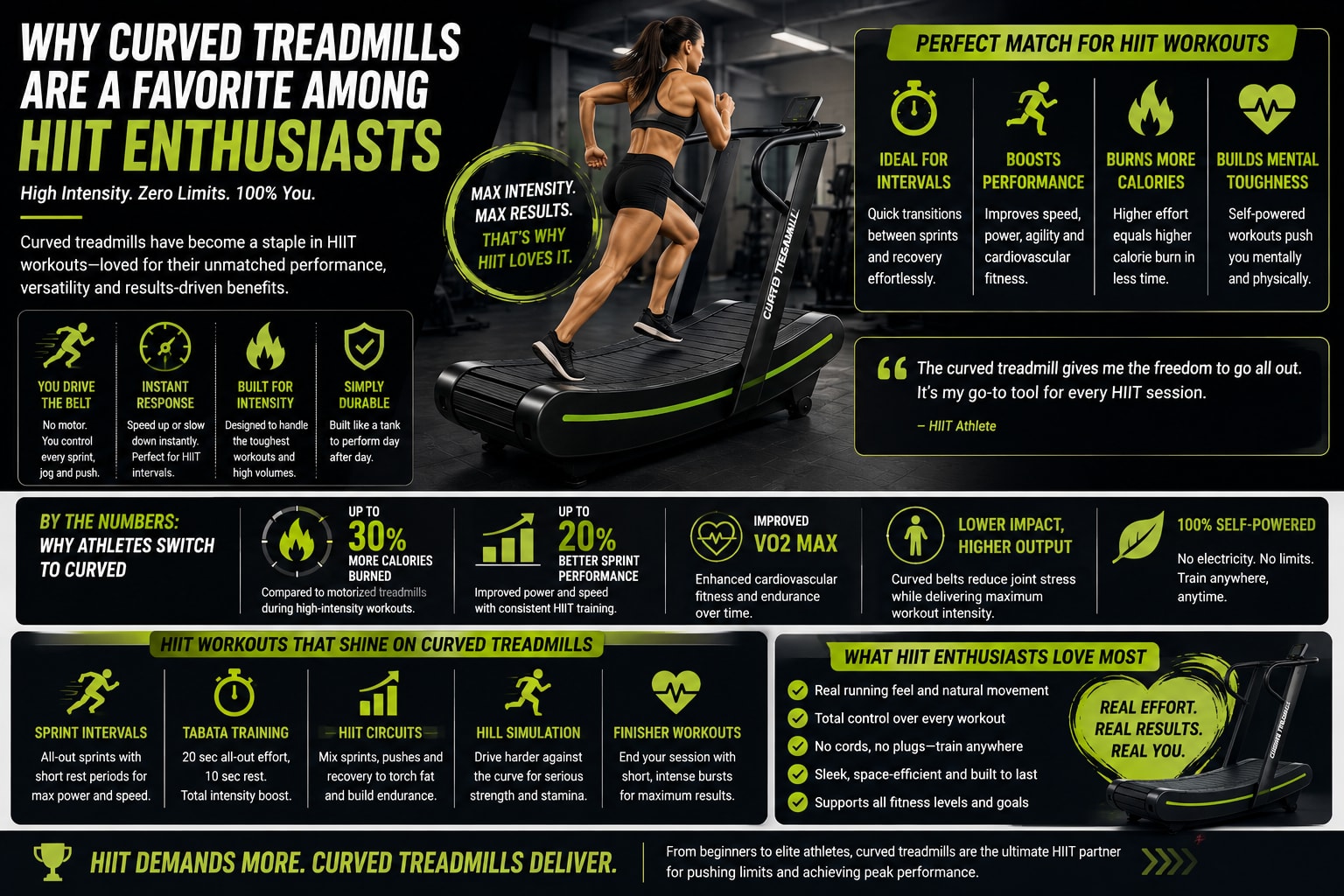
High-Intensity Interval Training, aka HIIT, remains one of the most popular fitness techniques worldwide. These workouts alternate between periods of intense effort and short recovery intervals, thus helping fitness geeks improve their cardiovascular fitness while maximizing workout efficiency. Curved treadmills are considered to be suitable for HIIT because of their immediate responsiveness. On a traditional treadmill, users wait for the machine to accelerate or decelerate. In the hindsight, this may seem insignificant, but it could disrupt the flow of interval workouts.
As far as a curved treadmill is concerned, users can shift from walking to sprinting and vice-versa by tweaking their efforts and position on the running surface. This allows workouts to feel seamless. For example, a user performing a 20-second sprint followed by a 40-second recovery period can change the dynamics of the intensity without pressing any button or waiting for speed adjustments. This co-relation between effort and movement makes curved treadmills effective equipment for HIIT workouts.
Those runners who depended on motorized treadmills have been used to allowing the equipment to dictate their pace. Though this approach is considered to be useful for structured workouts, it tends to reduce awareness of running mechanics. On the other hand, curved treadmills require users to control their speed as there is no motor maintaining a specific speed. Every change in movement reflects the users’ effort and technique.
This awareness enables runners to develop aspects of stride length, cadence, acceleration, and other movement patterns. Eventually, users go on to become conscious of how their body position affects performance. This consciousness may help in improved running efficiency. Athletes rely on curved treadmills not only for conditioning but also for enhancing movement quality and developing control over their running mechanics.
Several team sports like football, basketball, rugby, and hockey among others require long-distance endurance, rapid acceleration, and short recovery periods. Curved treadmills align well with these requirements because they allow athletes to accelerate and decelerate naturally.
Unlike some of the traditional cardio equipment, curved treadmills encourage active engagement throughout the workout schedule. This training style helps replicate the physical demands experienced during competition, thus making curved treadmills a preferred equipment for sports performance facilities.
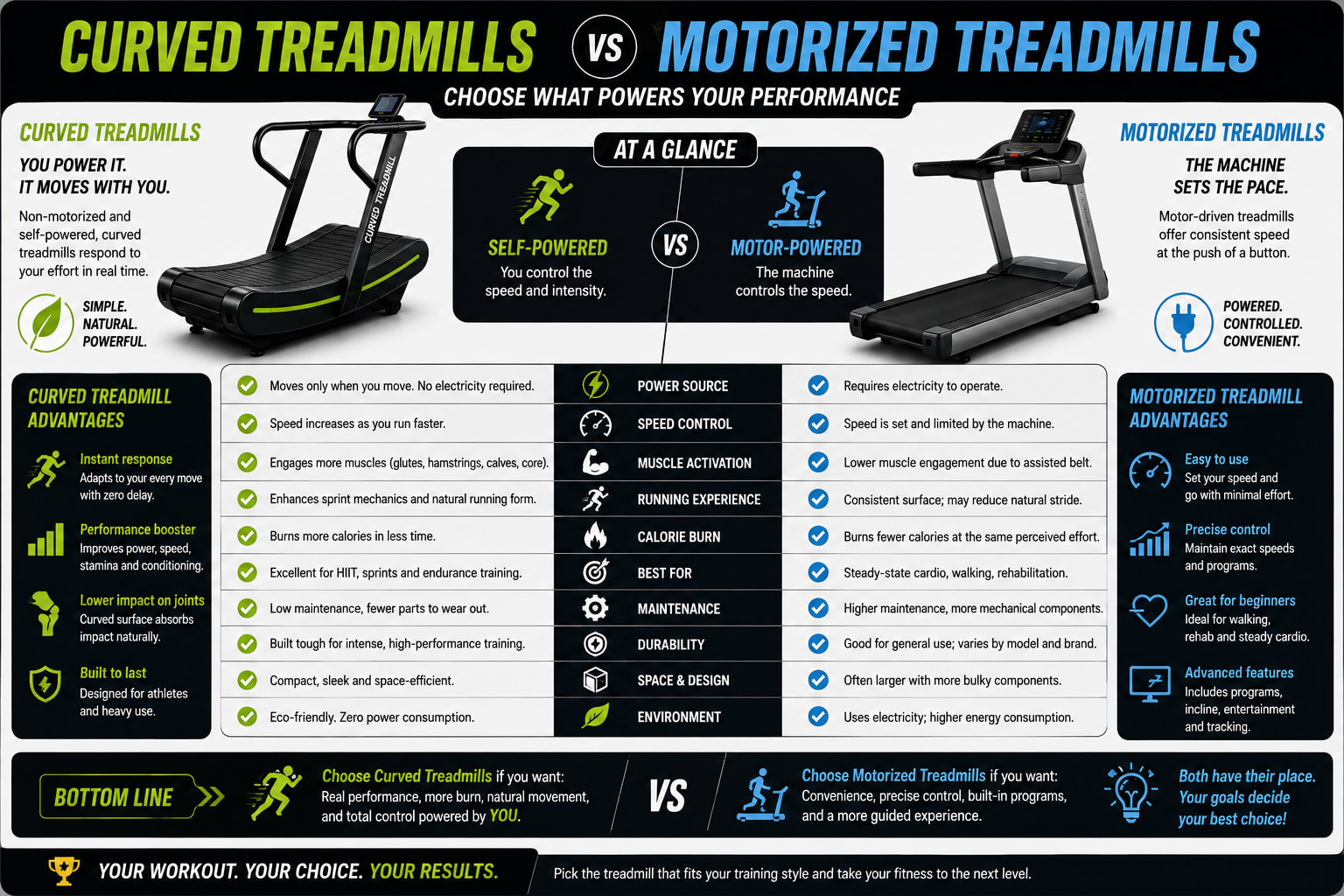
This is one of the common questions gym owners and fitness enthusiasts have in their minds. The answer depends on the intended purpose of the equipment. Curved treadmills have a clear upper hand when it comes to interval workouts, athletic conditioning, sprint training, and performance-focused exercise. They provide a unique training stimulus that many users find challenging and engaging.
On the other hand, traditional treadmills are appropriate if we are to look at aspects like walking programs, steady-state cardio, rehabilitation, and endurance training. In fact, curved treadmills often complement traditional treadmills rather than replacing them. Many workout stations offer both options, allowing users to choose the equipment of their preference.
Over the last few years, curved treadmills have become increasingly common in fitness centres around the world. Their popularity has been driven by the rise of functional fitness, sports performance training, and high-intensity conditioning programs. Unlike traditional cardio equipment, curved treadmills demand constant engagement and active participation. Every workout with them offers a different experience because the user controls the intensity. As fitness trends continue evolving frequently, curved treadmills are likely to remain as the preferred mode of equipment for those seeking performance-oriented training.
Curved treadmills have introduced a systematic approach to treadmill training by placing speed control entirely in the hands of the user. Their salient features offer workout experiences that differ from traditional motorized treadmills. Curved treadmills have become popular among athletes, trainers, and fitness centres owing to their natural movement patterns and support in rapid changes in intensity. They provide training opportunities that could enhance conditioning and overall cardiovascular fitness.

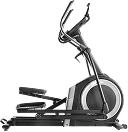 Setup Your Space
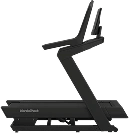 Cardio
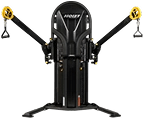 Strength
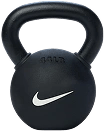 Weights
 Benches
 Game tables
 Boxing
 Yoga
Yoga
 Sports
 Massagers
 Balance Training
 Accessories
 Flooring


 Treadmills
 Elliptical Cross Trainers
 Exercise Bikes
 Rowing Machines
 Climbmill & Steppers
 Interactive Trainers
 Athletics
Squash
Athletics
Squash
 Handball
 Padel Tennis
 Cricket
 Football
 Badminton
 Chess
Chess
 Swimming
 Tennis
 Rugby
Rugby
 Agility Training
 Netball
 Volleyball
 Kids Games
 Throwball
 Basketball
 Bottles & Hydration
 Training & Gym Gloves
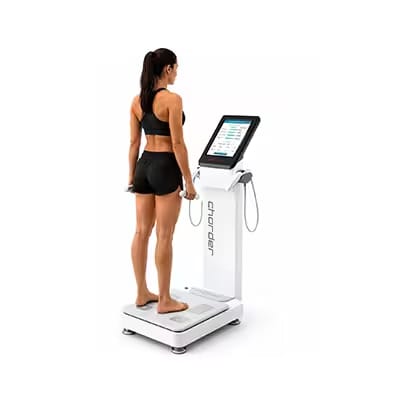 Body Composition Analyzers
 Battle Ropes
 Wellness Support
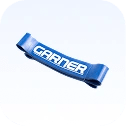 Resistance Bands & Tubes
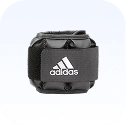 Ankle and Wrist Weights
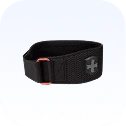 Fitness Belts
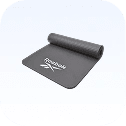 Exercise Mats and Gym Mats
 CrossFit Training Turf
 Sweatbands
 Sit Up Bars
 Skipping Ropes
 Push Up Bars
 Pedometers
 Suspension Slings
 Hula Hoops
 Stopwatch
 Pull Up Bars
 Timer
Timer
 Aerobic Steps
 Weighted Vests
 Plyo Box
 Door Gyms
 Gym Balls
 Gym Rings
 Fitness Tires
 Hand Grips
 Body Strengthener



















 0
0