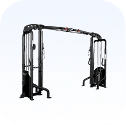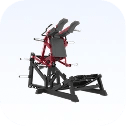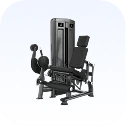




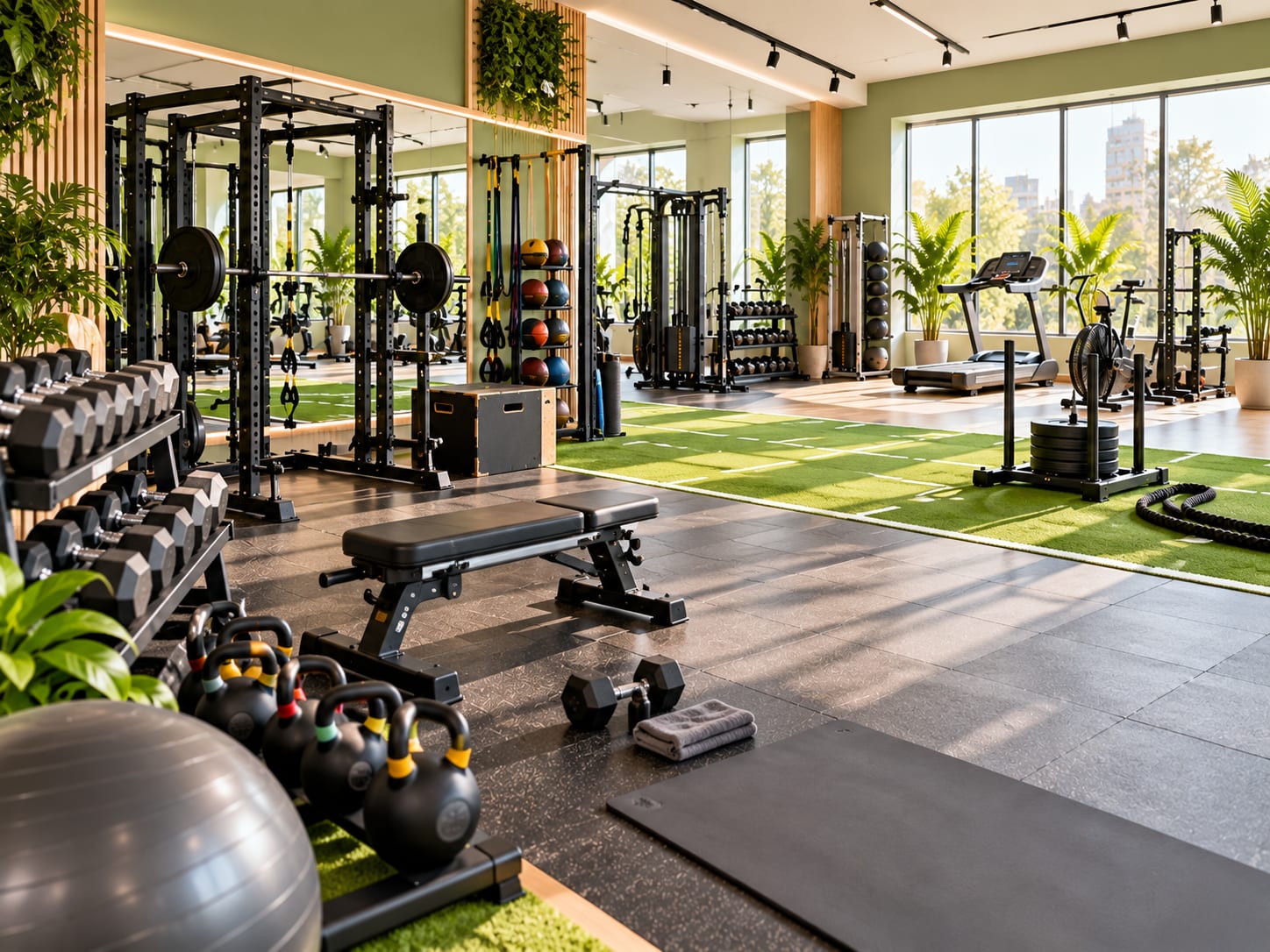
Among all kinds of fitness centres, a personal training studio stands out because of the various advantages it offers. Unlike other gyms where you need several pieces of equipment that caters to a wide range of people, here, you may need only a few machines for a smaller number of clients.
This basic difference reflects every step that goes in setting up an effective personal training studio. An ideal studio should let a trainer work closely with clients, perform exercises efficiently, move between equipment and keep an eye on technique.
All the equipment should be useful for different types of workouts rather than being limited to one exercise. For a versatile studio, the main priorities are varied equipment, smart use of space, assessment areas and room for future expansion.
You do not need to have every piece of gym equipment when you launch a personal studio. It is better to start with a smart selection that supports your training style and later add equipment when the business witnesses a growth.
From choosing equipment to planning the floor space and preparing for future growth, this blog explains some of the major things to consider when setting up a personal training studio.
All About Training Concept for a Personal Training Studio
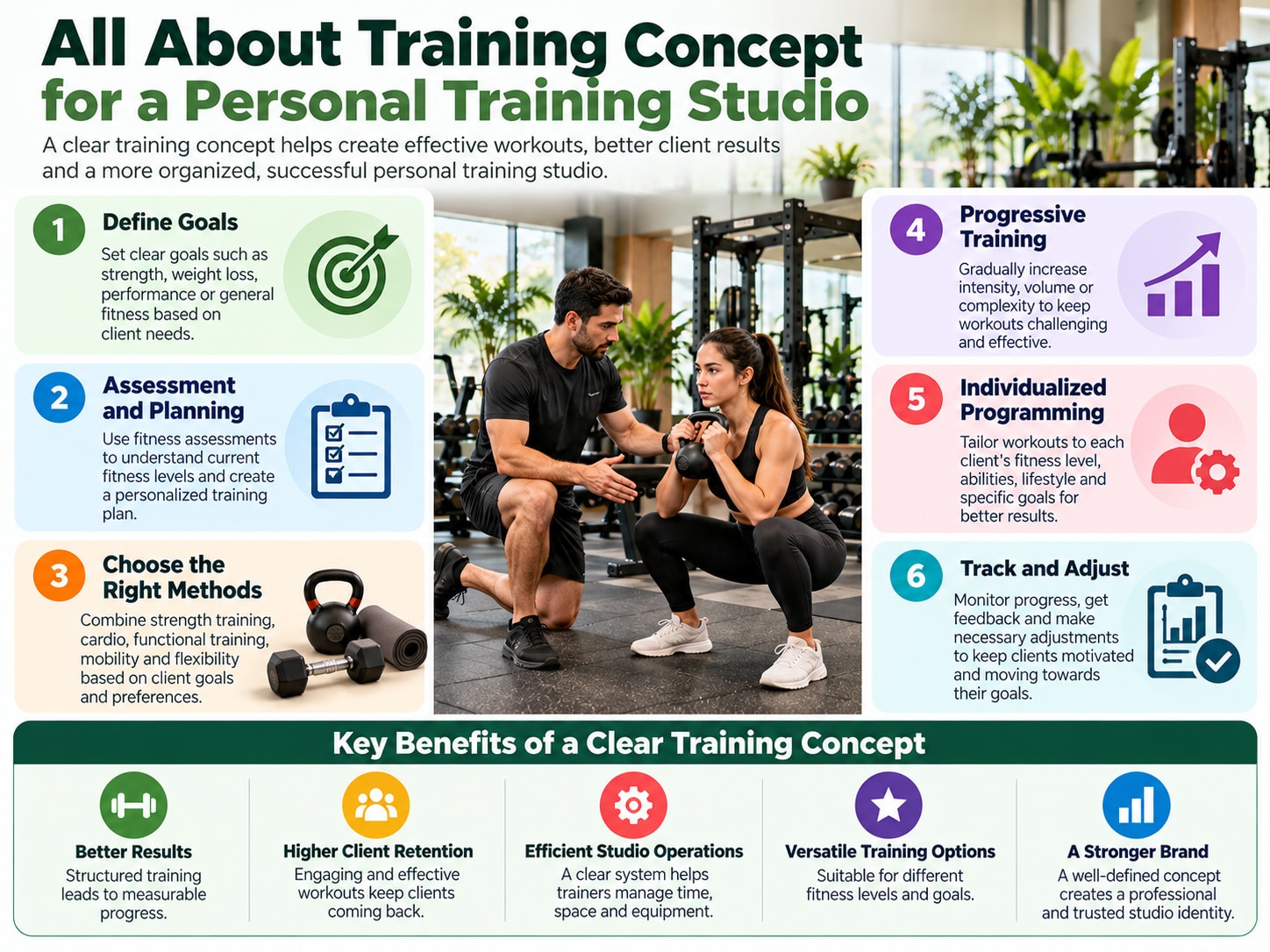
Before buying equipment, you need to decide what kind of personal training you want to offer. Ask yourself if the studio is focusing mainly on the following factors:
- Weight loss
- Strength training
- Muscle building
- Functional fitness
- Sports performance
- Mobility
- Rehabilitation-style exercise
- General fitness
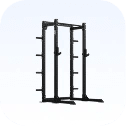
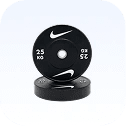
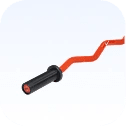
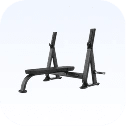
You may offer several of these services, but having a clear cut idea about your training style makes equipment selection easier. For example, a strength-focused studio may need a power rack, barbell, plates and adjustable benches.
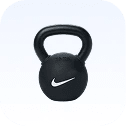
A functional training studio may need more open floor space, kettlebells, dumbbells, resistance bands, and a functional trainer. A studio focused on general fitness may need a mixture of cardio and strength equipment. The important thing is to buy equipment that supports the services you plan to offer.
Always Consider the Number of Clients
Client capacity is one of the first factors to consider. A personal training studio may have several trainers working with clients throughout the day. Hence, you need to think about how many people will be training at the same time.
A studio designed for one-on-one training can be planned differently from one that offers small group sessions. For example, if two trainers are working with two clients each, the space needs to accommodate four people moving around at the same time.
If the studio offers small group sessions of six to ten people, open floor space becomes much more important. Do not plan the studio based only on the total number of clients you have.
Think about peak hours as well. The morning and evening sessions may be usually busier. Your layout should be able to handle these busy schedules without making the studio feel crowded.
Prioritize Versatile Equipment for the Studio
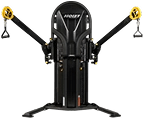
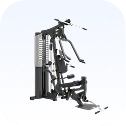
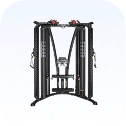
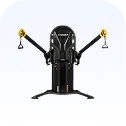
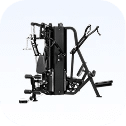
One of the biggest advantages of versatile equipment is that it can support several exercises without taking up too much space. A functional trainer can be used for rows, presses, pulldowns, curls, triceps exercises, leg exercises and core movements.
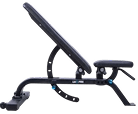
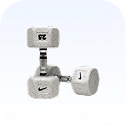
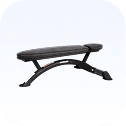
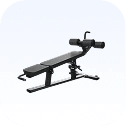
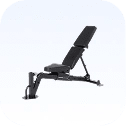
An adjustable bench can be used with dumbbells, barbells and cable equipment. Dumbbells can be used for upper-body, lower-body and full-body exercises. Check out some of the versatile equipment below:
- Functional trainer
- Adjustable bench
- Dumbbells
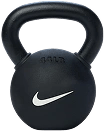
- Kettlebells
- Resistance bands
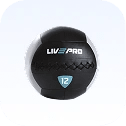
- Medicine balls
- Barbell and plates
- Power rack
- Suspension trainer
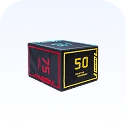
- Plyometric box
Plan the Studio Around the Trainer's Workflow
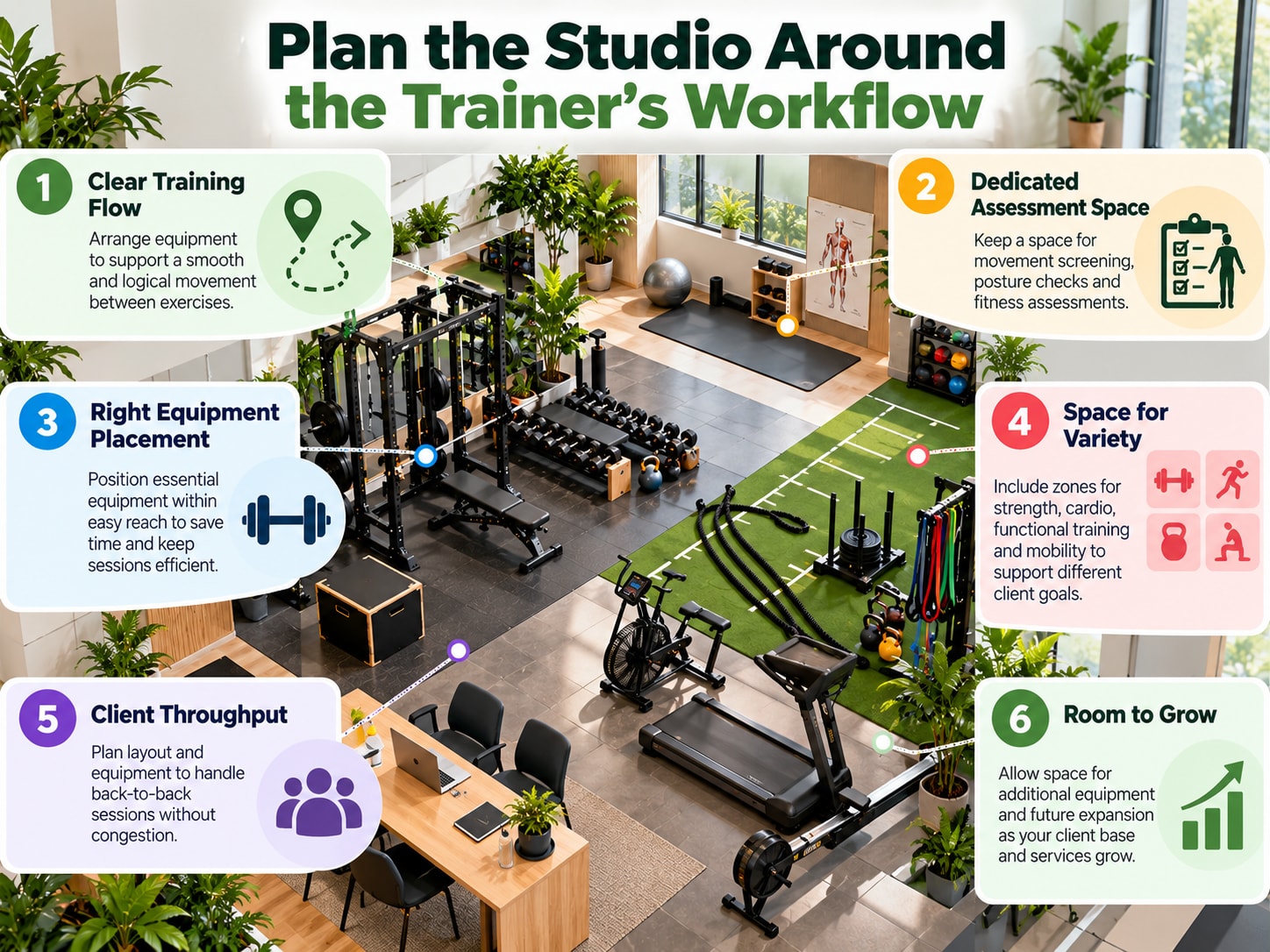
The trainer of a studio should always be able to move freely. The client may start with a warm-up, move to strength exercises, and perform some functional movements. The trainer may have to demonstrate exercises, adjust equipment, change weights and observe the client throughout the session.
Equipment should therefore be positioned so that these movements feel organic. Refrain from placing large machines in the middle of the room to avoid unnecessary obstacles.
Always keep frequently used equipment within easy reach. For example, dumbbells and kettlebells can be stored close to the training area rather than in a corner that requires the trainer and client to walk across the entire studio.
Why is Assessment Area Necessary for a Personal Studio?
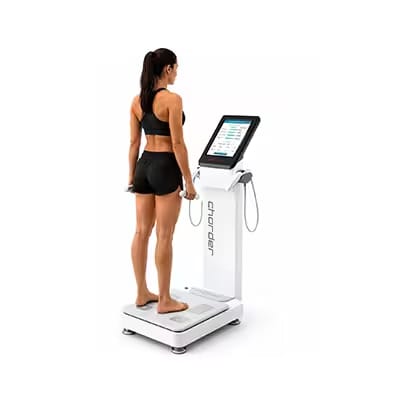
An assessment area is often overlooked while planning a personal training studio. Before starting a training session, a trainer may need to discuss the client's goals, training history and current fitness level. Depending on the services offered, the assessment may include the following aspects:
- Basic measurements
- Movement checks
- Mobility exercises
- Fitness tests
- Posture observation
- Goal setting
- Progress tracking
Keep in mind that you do not need a separate room. In fact, a small, quiet section of the studio can work well. Keep enough open space for basic movement assessments. A mirror can be useful to check exercise form and movement patterns.
Leaving Adequate Open Floor Space is Recommended
Open floor space is an integral aspect of a personal training studio. Its benefits clearly reflect in the following activities:
- Warm-ups
- Stretching
- Mobility work
- Bodyweight exercises
- Kettlebell movements
- Medicine ball exercises
- Agility drills
- Small group training
A common mistake many commit is filling the studio with various machines because they assume that empty floor space can look like unused space. However, when it comes to personal training, the opposite can be true.
Moreover, open space gives the trainer more freedom to initiate different workouts. A relatively empty area can be used differently every day, while a fixed machine can usually perform a much smaller number of functions.
Plan the Studio Layout in Different Zones
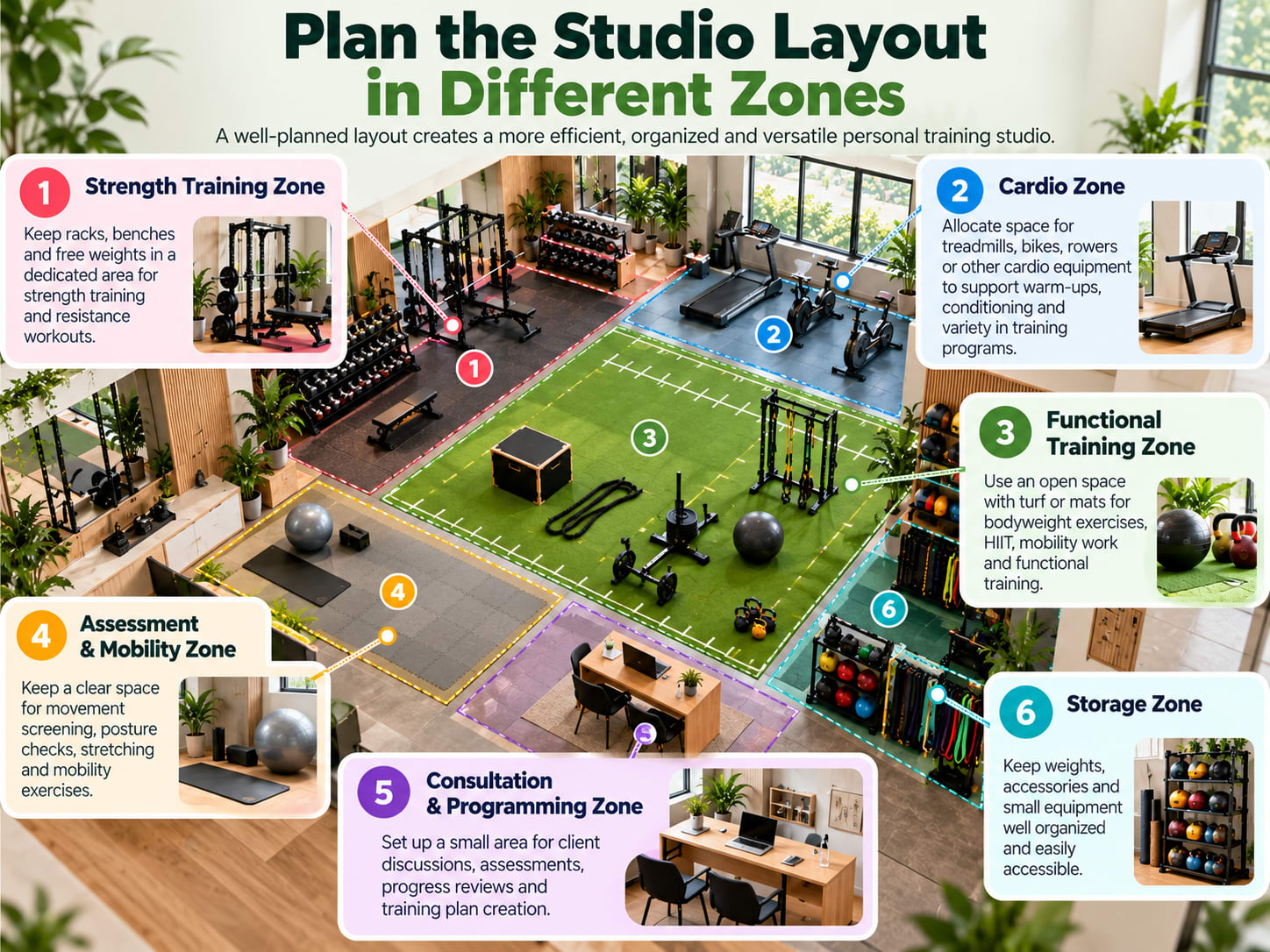
A simple zoning system can make the studio easier to use. Check out the following suggestions:
Strength Zone
This could include equipment like:
- Power rack
- Barbell
- Plates
- Adjustable bench
- Dumbbells
Functional Training Zone
This area could have equipment like:
- Functional trainer
- Kettlebells
- Medicine balls
- Resistance bands
- Suspension trainer
Assessment and Mobility Zone
Keep space available for these activities:
- Movement assessments
- Stretching
- Warm-ups
- Mobility exercises
- Recovery work
Cardio Zone
Depending on the studio concept, this may include the following things:
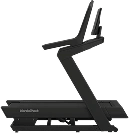
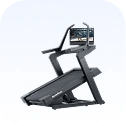
- Treadmill
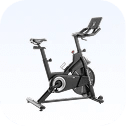
- Bike
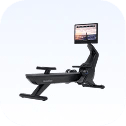
- Rower
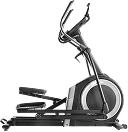
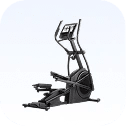
- Elliptical
The separate zones do not need physical walls. A clear arrangement is more than enough.
The Importance of Choosing Cardio Equipment Carefully
A personal training studio does not need several cardio machines. If cardio is only a small part of your workout, one treadmill, bike or rower may be enough. If your studio focuses heavily on weight loss or conditioning, you may want more options. Consider the footprint of each machine before buying it.
A treadmill, for example, requires more than the space occupied by the running deck. The client needs safe access and enough space around the machine. If space is limited, choose equipment that supports your training schedules without taking over the studio.
Equipment Durability Matters the Most
Personal training equipment may be used repeatedly throughout the day. A dumbbell or bench might be used by several clients across different sessions. For this reason, durability matters a lot. When selecting equipment, look at the following factors:
- Build quality
- Weight capacity
- Adjustment system
- Upholstery
- Moving parts
- Warranty
- Spare parts
- Service support
The cheapest option may not always be the most practical choice for a busy studio. A piece of equipment that lasts longer and is easier to maintain can make more sense in the long run.
Why is Flooring an Unavoidable Segment in a Studio?
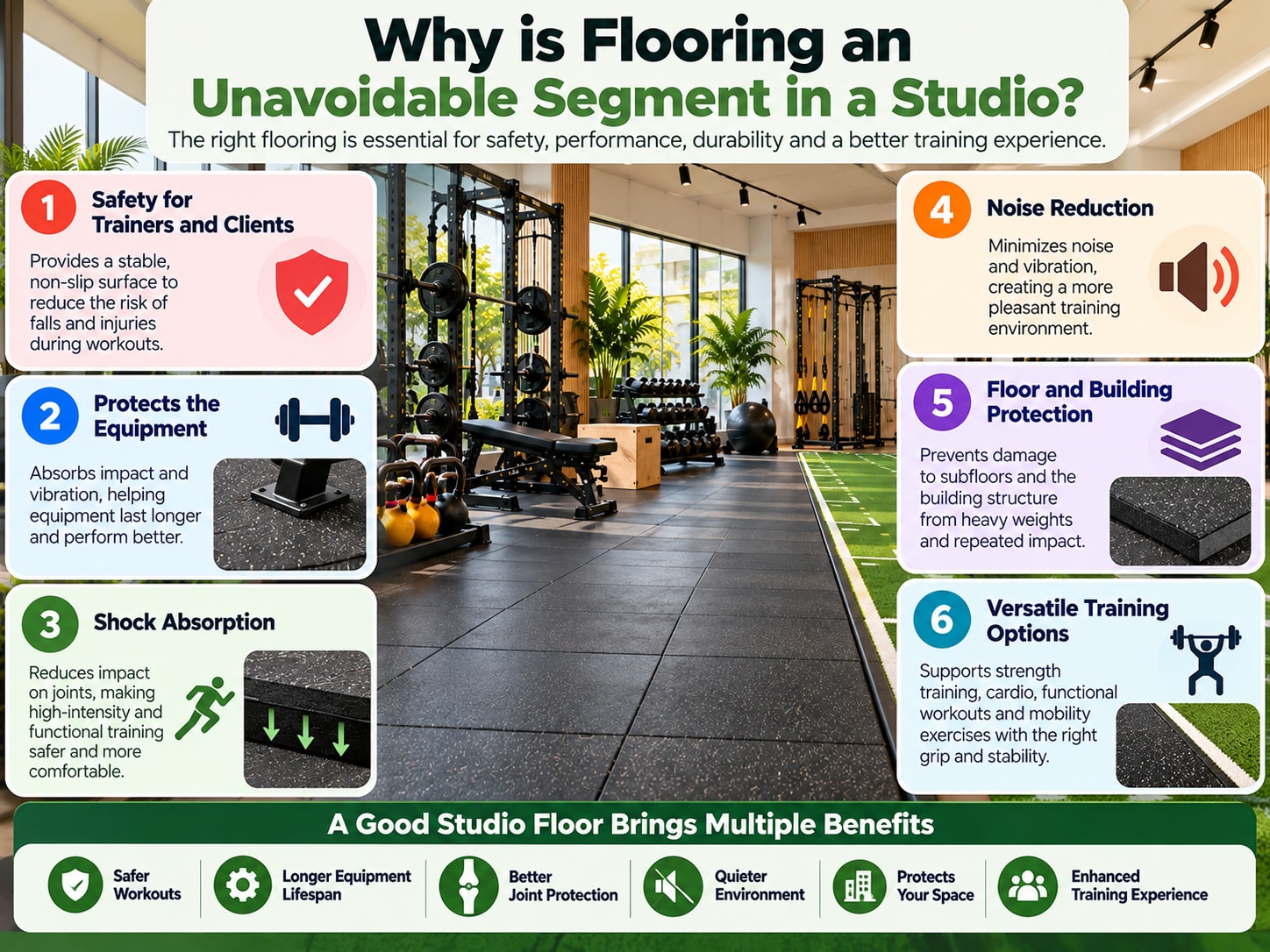
The right flooring can make a remarkable difference in a training studio. Different areas may have different needs. Rubber flooring is commonly used in strength training areas because it is durable and suitable for regular gym use.
An open functional training area may also benefit from a proper rubber surface. For mobility, you may add exercise mats where required. When planning flooring, consider the following aspects:
- Equipment weight
- Impact
- Noise
- Cleaning
- Maintenance
- Client comfort
Storage Aspect Should Be Part of the Layout
Storage is easily overlooked during the initial design of gyms and personal studios. Once a studio starts functioning, small equipment can quickly spread across the floor. Plan storage for the following things:
- Dumbbells
- Kettlebells
- Plates
- Resistance bands
- Medicine balls
- Mats
- Barbells
- Accessories
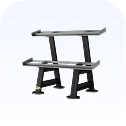
Experts suggest that wall storage can be useful in smaller studios. A dumbbell rack can keep weights organised and make them easier to access. The goal should be to keep the training area open while making equipment easy for trainers to reach.
One-on-One vs Small Group Training in a Studio
The type of training you offer should influence your layout. Check out the key differences between the two types of training below:
One-on-One Training
A smaller space can work well because the trainer can focus on one client. The setup can include versatile equipment and an open training area.
Small Group Training
Small group training needs more open space. Clients need room to perform movements without getting in each other's way. Equipment should also be easy to access. For example, a rack of dumbbells positioned at one end of the room may not be practical if many clients need to collect and return weights.
Client Comfort Should be of Top Priority
A personal training studio should feel welcoming. Clients are paying for a focused experience than they may get in a busy commercial gym. Simple details like the following make the space more comfortable:
- Good lighting
- Clean equipment
- Proper ventilation
- Comfortable temperature
- Mirrors
- Clear walkways
- Organised storage
- Clean changing facilities
The studio need not be luxurious. It should simply feel clean, professional and easy to use.
Personal Training Studio Setup: Delivery and Installation
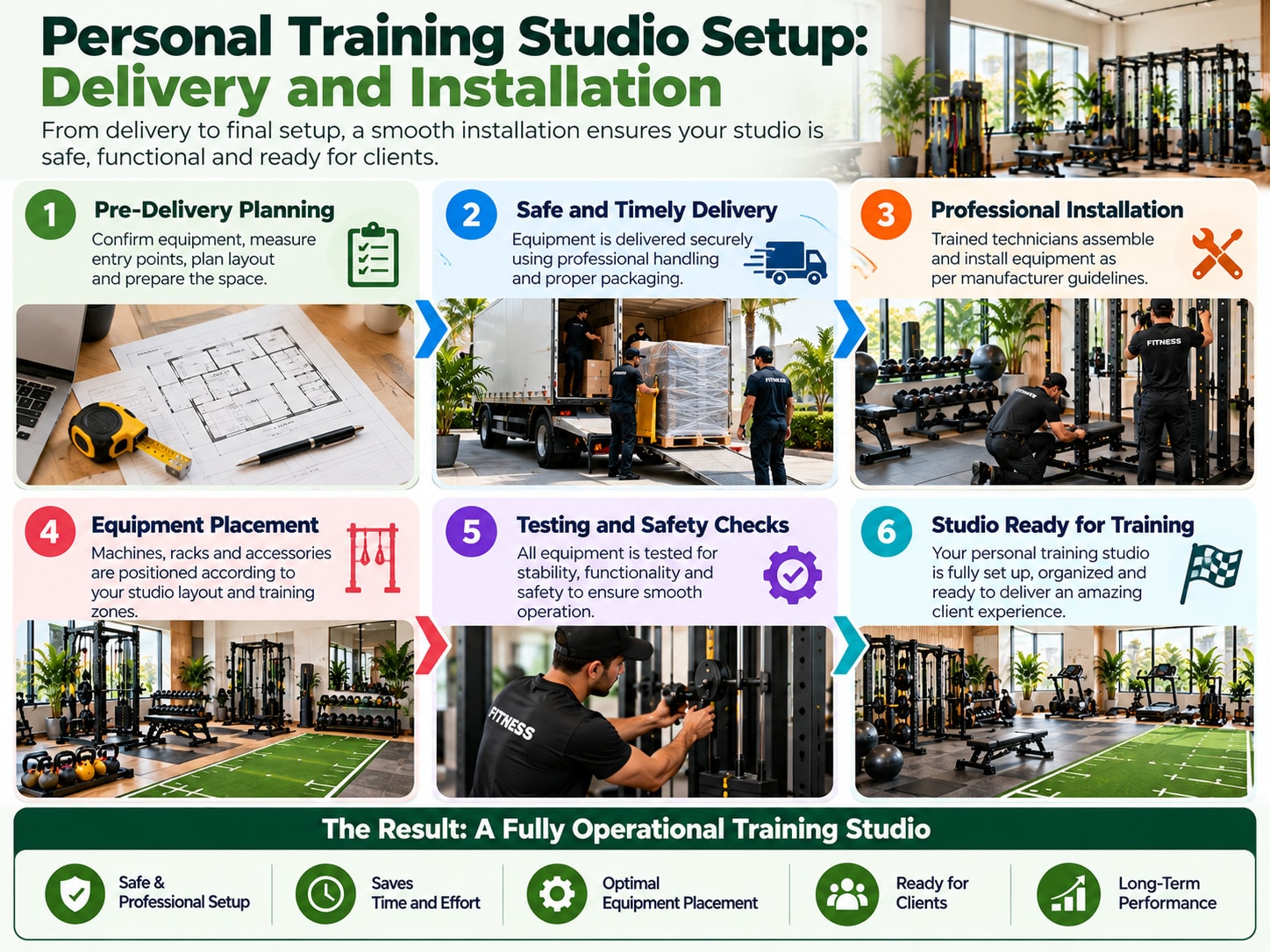
It may be difficult for large gym equipment to move into a studio. Before ordering, check for the following aspects:
- Main entrance
- Door width
- Lift dimensions
- Staircases
- Corridors
- Ceiling height
This matters for functional trainers, racks, treadmills and larger machines. Ask the supplier about delivery requirements before the equipment arrives. Note that some equipment also requires professional installation.
Get clarity on whether installation is included and whether the equipment will be positioned according to your floor plan.
Plan Appropriately in Advance for Maintenance
A personal training studio depends heavily on its equipment. If a functional trainer or treadmill stops working, it can affect multiple sessions. Regular maintenance can help reduce unexpected problems. Depending on the equipment, maintenance may include the following tips:
- Cleaning
- Cable inspection
- Bolt checks
- Lubrication
- Belt inspection
- Checking moving parts
- Upholstery checks
Follow the manufacturer's maintenance recommendations as well. It is also useful to keep contact details of a reliable service provider.
Have an Additional Plan for Spare Parts
It’s a known fact that some parts of equipment naturally wear out with use as time passes. These can include the following:
- Cables
- Belts
- Rollers
- Bearings
- Handles
- Pins
- Upholstery
Before buying equipment, check whether spare parts are available. Easy availability can make repairs easier and reduce downtime. This is important for a studio that has appointments scheduled throughout the day.
Plan for a Futuristic and Progressive Expansion
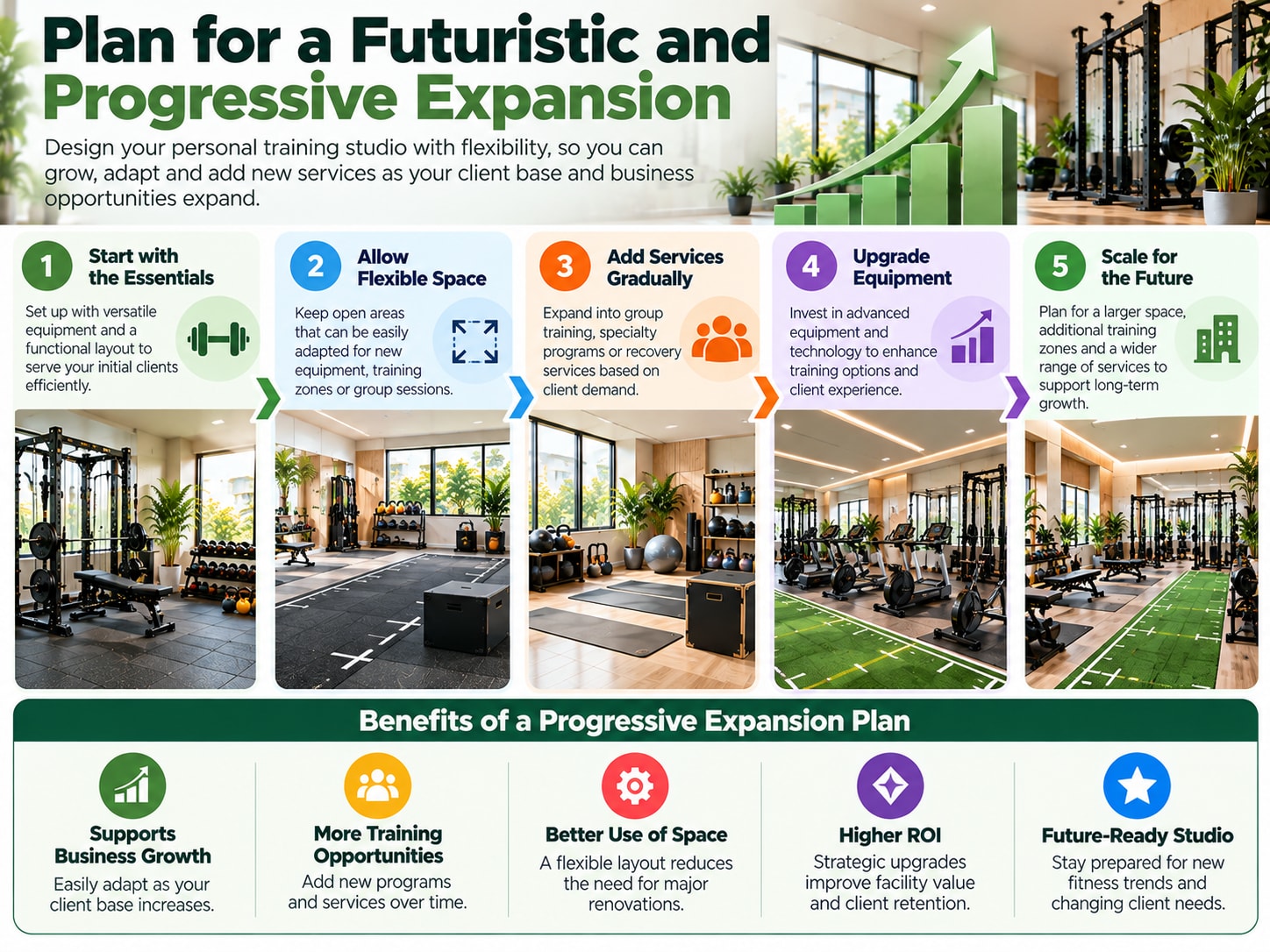
You do not have to build a so-called perfect studio on the first day. In fact, starting with a practical setup can be an ideal approach. Begin with the equipment you need for your core needs. As your client base increases, you may add equipment based on what your trainers and clients use. For example:
First Stage
- Dumbbells
- Adjustable bench
- Functional trainer
- Kettlebells
- Resistance bands
- Mats
Second Stage
- Power rack
- Barbell
- Additional benches
- More weight plates
- Cardio equipment
Third Stage
- Additional strength machines
- More cardio options
- Specialised equipment
- Dedicated assessment area
This practical approach gives you ample time to understand which equipment gains popularity over time.
Common Personal Training Studio Mistakes
- Buying too many machines: Versatile equipment often gives you more options with less space.
- Ignoring open floor space: Trainers need room for movement-based exercises.
- Forgetting assessment space: Client assessments are part of the training process.
- Ignoring storage: A messy training floor can quickly become difficult to manage.
- Forgetting delivery access: Large equipment still needs to get through the building.
- Not planning maintenance: Equipment needs regular attention when used throughout the day.
- Planning around total clients: Peak usage is more useful when estimating equipment requirements.
Personal Training Studio Planning Checklist
Before opening the studio, thoroughly review the following aspects:
Training Concept
- Define your main services
- Identify your target clients
- Decide on one-on-one or small group training
Space
- Measure the room
- Check ceiling height
- Plan equipment zones
- Keep open training areas
Equipment
- Prioritise versatile equipment
- Choose suitable cardio
- Add strength equipment
- Plan storage
Client Experience
- Create an assessment area
- Provide comfortable lighting
- Ensure good ventilation
- Keep the studio clean and organised
Safety
- Leave space around equipment
- Keep walkways clear
- Use suitable flooring
- Check equipment regularly
Operations
- Plan client throughput
- Consider peak hours
- Plan equipment sharing
- Schedule maintenance
Growth
- Leave room for expansion
- Add equipment as demand increases
- Review equipment usage regularly
For customers across the Qatar, Lifetime Fitness Store is a trusted destination for quality fitness equipment, competitive offers, expert guidance, reliable delivery, professional installation, and dependable after-sales support for home and commercial gym setups.
Conclusion
An ideal personal training studio need not have to be filled with expensive machines. The focus should be on creating a space that helps trainers deliver good sessions and gives clients a comfortable place to exercise.
Start with your training concept and understand how many clients you expect to train at the same time. Choose versatile equipment that can support several exercises without taking up unnecessary space.
Always keep enough open floor area for warm-ups, mobility, assessments and functional movements. Plan storage from the beginning and make sure the flooring can handle the type of training you provide.
Plan for delivery and installation before ordering large equipment. Once the studio is operating, regular maintenance and access to spare parts will help keep the equipment available for clients. Most importantly, do not make the mistake of purchasing everything at once.
A personal training business can grow gradually. Start with a strong foundation, learn what your clients use most and expand the equipment collection as the business develops.
A well-planned personal training studio is not the one with the most number of equipment. It is the one where every piece of equipment has a solid purpose, every part of the space appears useful and trainers can focus on helping their clients achieve their goals.
 Get a weekly dose of latest stories
and useful tips directly in your inbox!
Get a weekly dose of latest stories
and useful tips directly in your inbox!


 0
0