



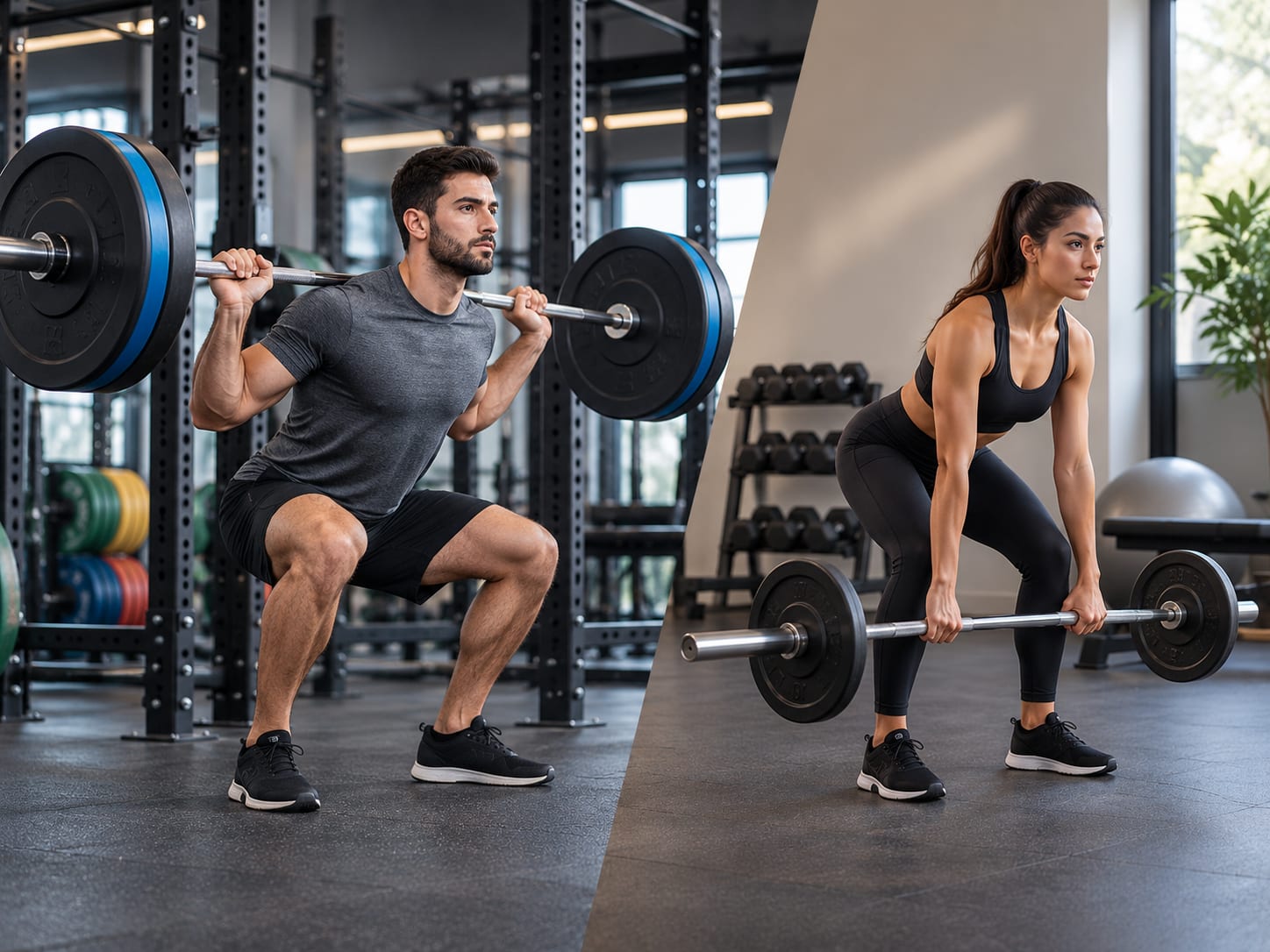
Picture yourself working out at a gym or at your home. It is likely that the first equipment that comes to most people’s mind would be a barbell. This simple tool with a long metal bar with plates on both sides is quite effective for various exercises. They are available in different sizes, weights, sleeve diameters, lengths, and designs.
The two common options among them are Olympic bars and standard barbells. Though they may look identical, there are significant differences between the two. An Olympic bar has thicker sleeves, a larger diameter for the plates, and is designed to handle heavy training. Standard barbells are lighter and compact, making them useful for basic strength training and smaller workout spaces.
Before picking the best among the two, you need to focus on things like type of training, available space, plate compatibility, weight capacity, knurling, storage, and how frequently the bar will be used. Let's dive into the major differences.
What Is an Olympic Barbell and How Does It Work?
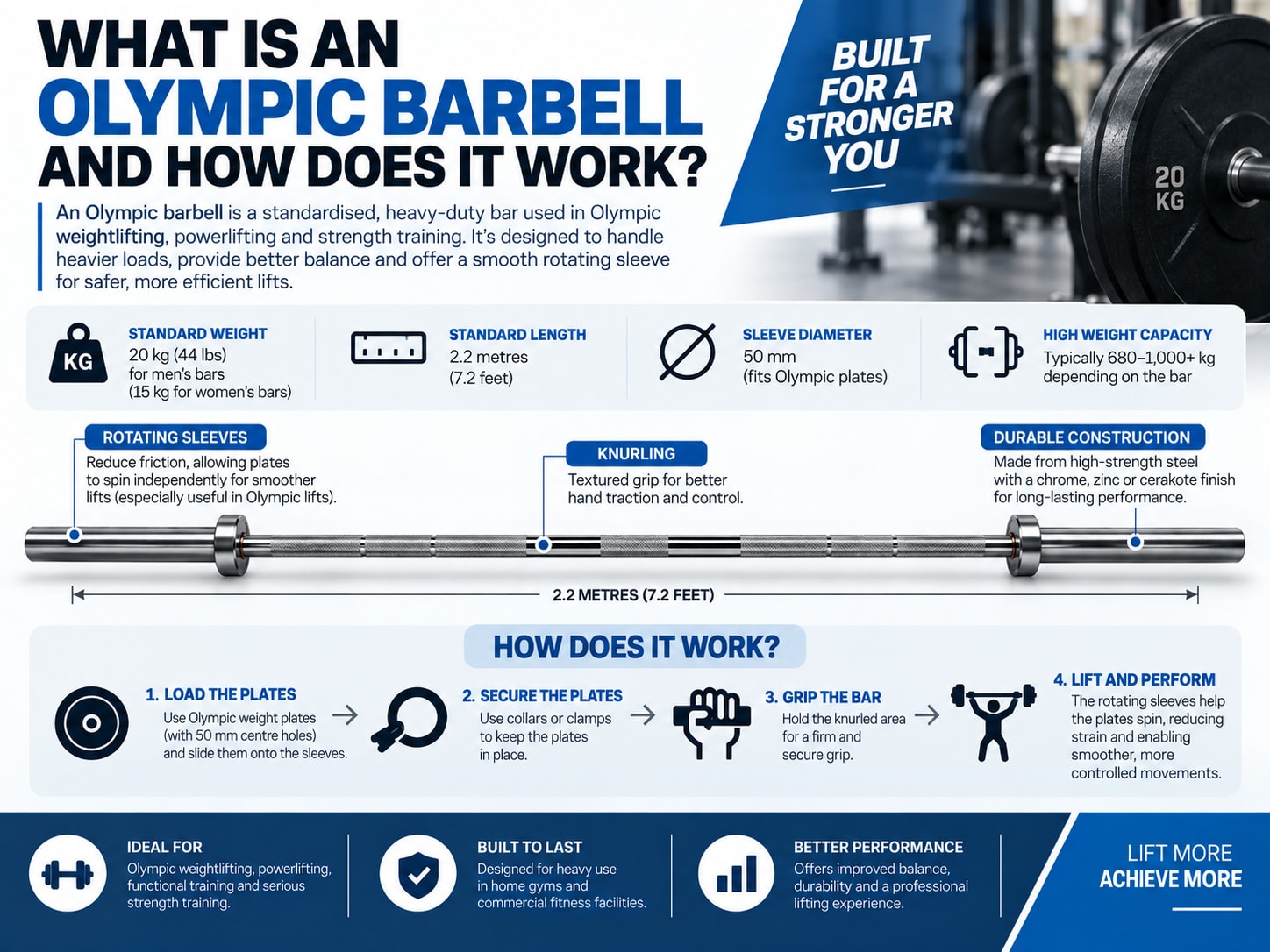
An Olympic bar is a heavy and robust barbell designed for serious strength training. A regular full-size Olympic bar is around 2.2 metres long and commonly weighs about 20 kg. The exact specifications can vary depending on the model, though. The sleeves are designed to accept Olympic-sized plates, which normally have a larger centre hole than standard plates.
Olympic bars are commonly found in commercial gyms, strength-training facilities, cross-fit-style training areas, and gyms where users regularly perform compound lifts. Exercises such as squats, dead-lifts, bench presses, cleans, and snatches can be performed with an Olympic bar.
However, it is important to note that not every Olympic bar is designed for all types of lifting. A power-lifting bar, weightlifting bar, and multipurpose bar can have different knurling, stiffness, sleeve rotation, and specifications.
What Is a Standard Barbell and How Does It Work?
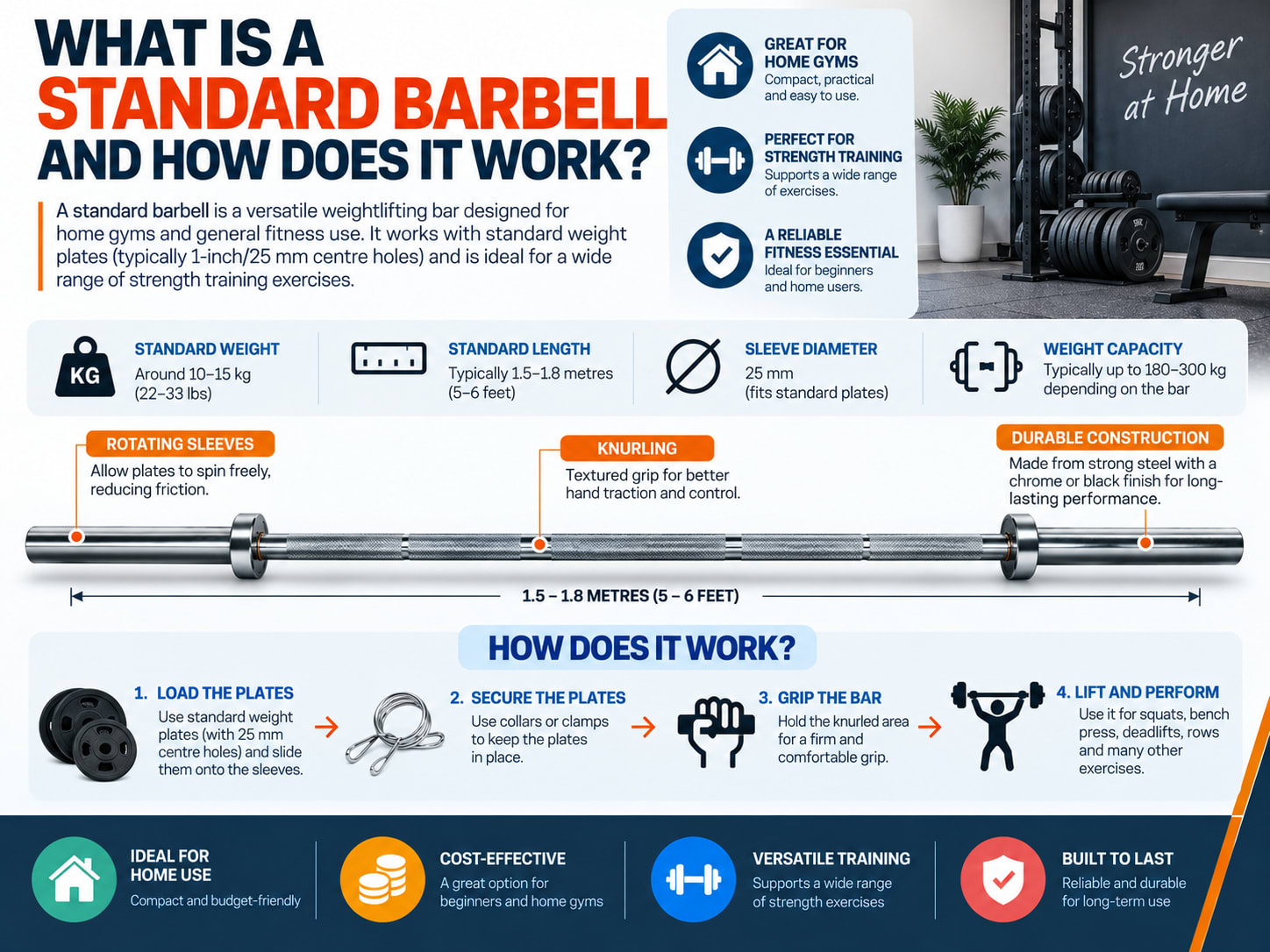
A standard barbell usually has a smaller sleeve diameter and is designed to work with standard weight plates. Standard bars are often shorter and lighter than full-size Olympic bars. This makes them easier to handle, especially for beginners and people training in a limited space. They are commonly used for basic exercises like bicep curls, shoulder presses, squats, lunges, basic bench pressing, and other strength exercises.
Standard barbells are generally suitable for light and moderate training. Their main limitation is the comparatively less load capacity or durability.
Olympic Bar vs Standard Barbell: Quick Comparison
The exact measurements and capacities can vary between models, so it is always recommended to check the manufacturer's specifications. Some of the basic differences are listed below.
- Typical length: The former is around 2.2 m, the latter is usually shorter
- Common bar weight: Olympic bars weigh around 20 kg, standard ones are lighter
- Sleeve diameter: Olympic bars have larger diameter
- Weight capacity: Olympic bars have generally higher capacity
- Knurling: It varies by bar type in olympic bars, while it is simpler in standard bars
- Heavy lifting: Olympic bars offer better options
- Commercial gym use: Olympic bars are highly suitable for commercial gyms
- Home gym use: Standard bars are more convenient
- Price: Olympic bars are expensive, while standard ones are affordable
Barbell Sleeve Diameter: Olympic vs Standard Bars Compared
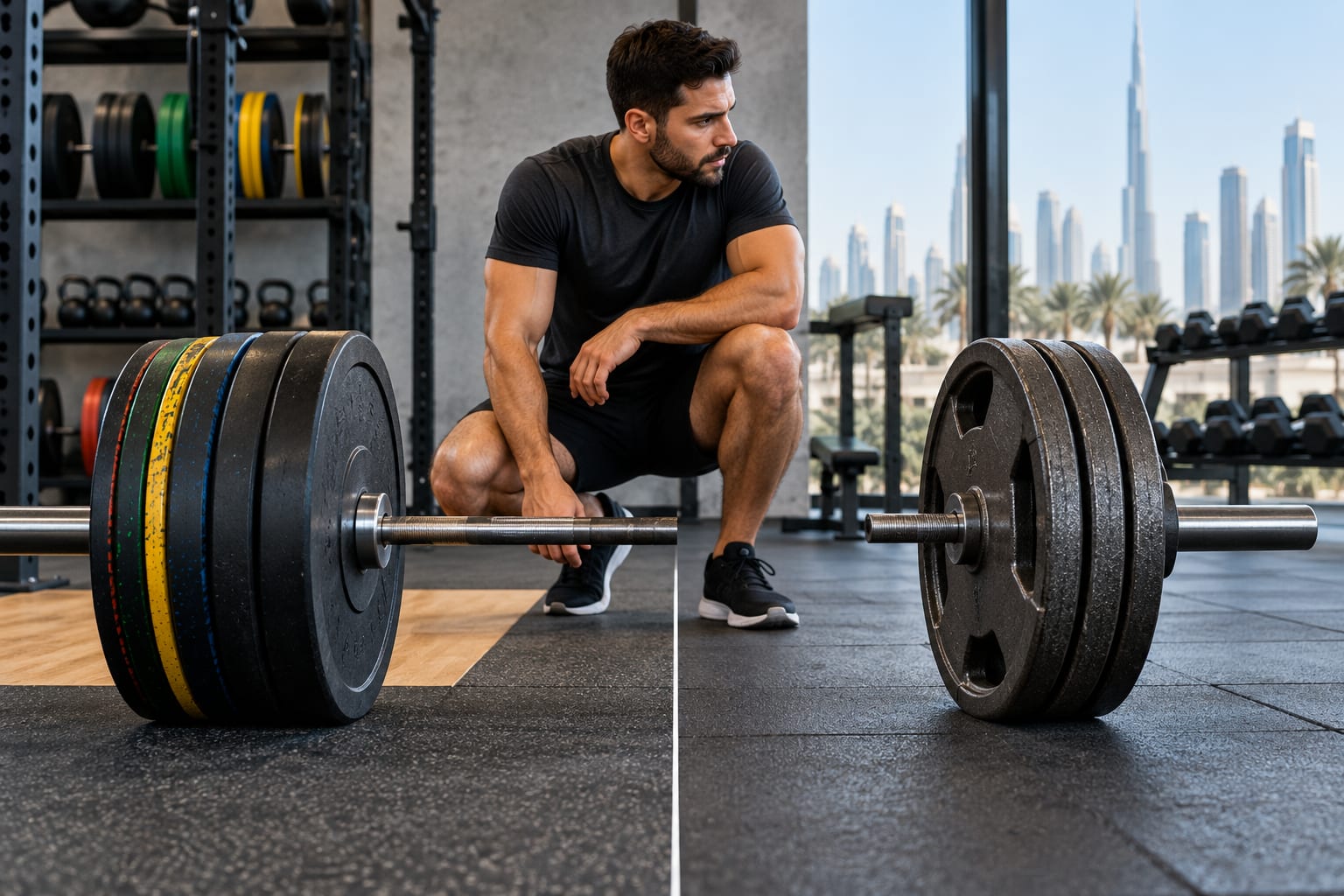
One of the easiest ways to differentiate an Olympic bar from a standard bar is by looking at the sleeves. The sleeve is the section at either end of the bar where the weight plates are loaded.
Olympic bars have larger sleeves designed for Olympic plates. Standard barbells have narrower sleeves that fit standard plates. This difference is important because the two plate types are not automatically interchangeable.
If you already own a set of plates, check the centre-hole diameter before buying your bar. Buying an Olympic bar when you only have standard plates leaves you with equipment that doesn't fit together.
For gym owners, this is really important when expanding an existing free-weight area. The new bars and plates should match the equipment already in use unless you are intentionally creating a separate Olympic lifting section.
Weight Plate Compatibility: Olympic vs Standard Plates
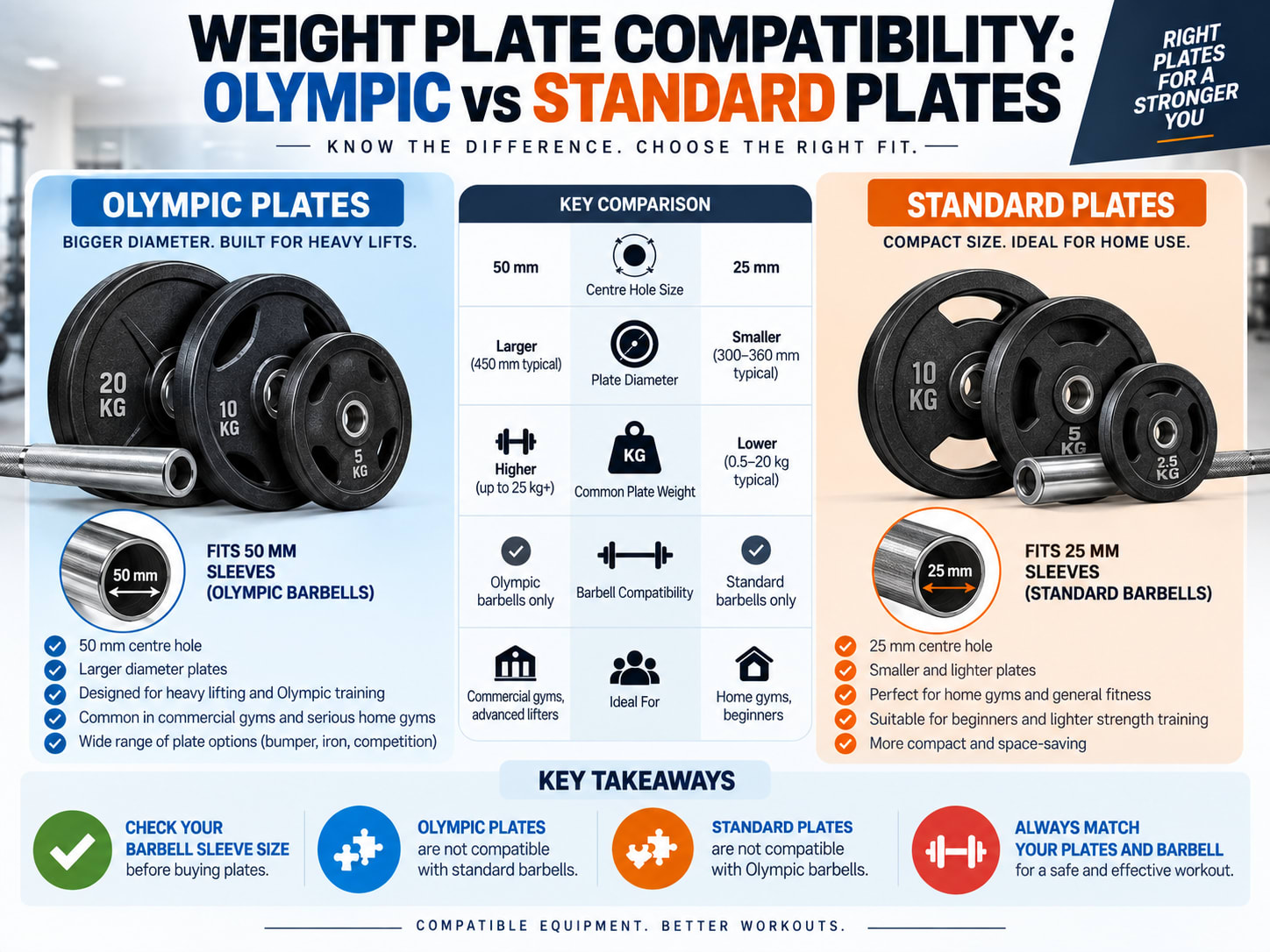
The main difference is the size of the centre hole. Olympic plates are designed with a larger centre opening to fit Olympic bar sleeves. Standard plates have a smaller opening.
This doesn't mean Olympic plates are always heavier or better. It simply means they are made for a different barbell system. If you are starting from scratch, it is usually easier to decide on one system and build your plates and bars around it.
Olympic vs Standard Barbell Weight: How Heavy Is Each Bar?
Bar weight is another major difference. A standard full-size Olympic bar commonly weighs around 20 kg, while standard barbells are often lighter. However, there is no single weight that applies to every bar. You will also find women's Olympic bars, technique bars, specialty bars, curl bars, and other variations.
Why does this matter? Because the bar itself contributes to the total weight lifted. For example, if you place 20 kg of plates on each side of a 20 kg Olympic bar, the total load is 60 kg.
That means gym users need to know the bar's weight when recording their workouts. In a commercial gym, clearly marking the bar weight can make things easier for members and trainers.
Do All Olympic Barbells Weigh 20 kg?
This is an important point to consider before making the purchase. Though many standard Olympic bars are 20 kg, you shouldn't assume that every one of them has the same specification. The manufacturer's specifications should always be your reference. Check for:
- Bar weight
- Overall length
- Shaft diameter
- Sleeve length
- Weight capacity
How Barbell Length Affects Your Home Gym Space
Olympic bars are generally longer than standard barbells. A full-size Olympic bar is around 2.2 metres long. That extra length provides room for Olympic plates and gives the user ample space for positioning their hands.
However, a longer bar also requires more room. This is worth considering when setting up a home gym or a smaller commercial fitness studio. Always measure the workout area before buying. Don't just check whether the bar can physically fit into the room. Think about the space required when someone is actually using it.
For example, a person performing squats or dead-lifts needs clear space around the bar. Storage also needs consideration. A long Olympic bar shouldn't be left lying across a walkway where someone could trip over it. For commercial gyms, proper vertical or horizontal bar storage can keep the free-weight area organised.
Olympic vs Standard Barbell: Weight Capacity Compared
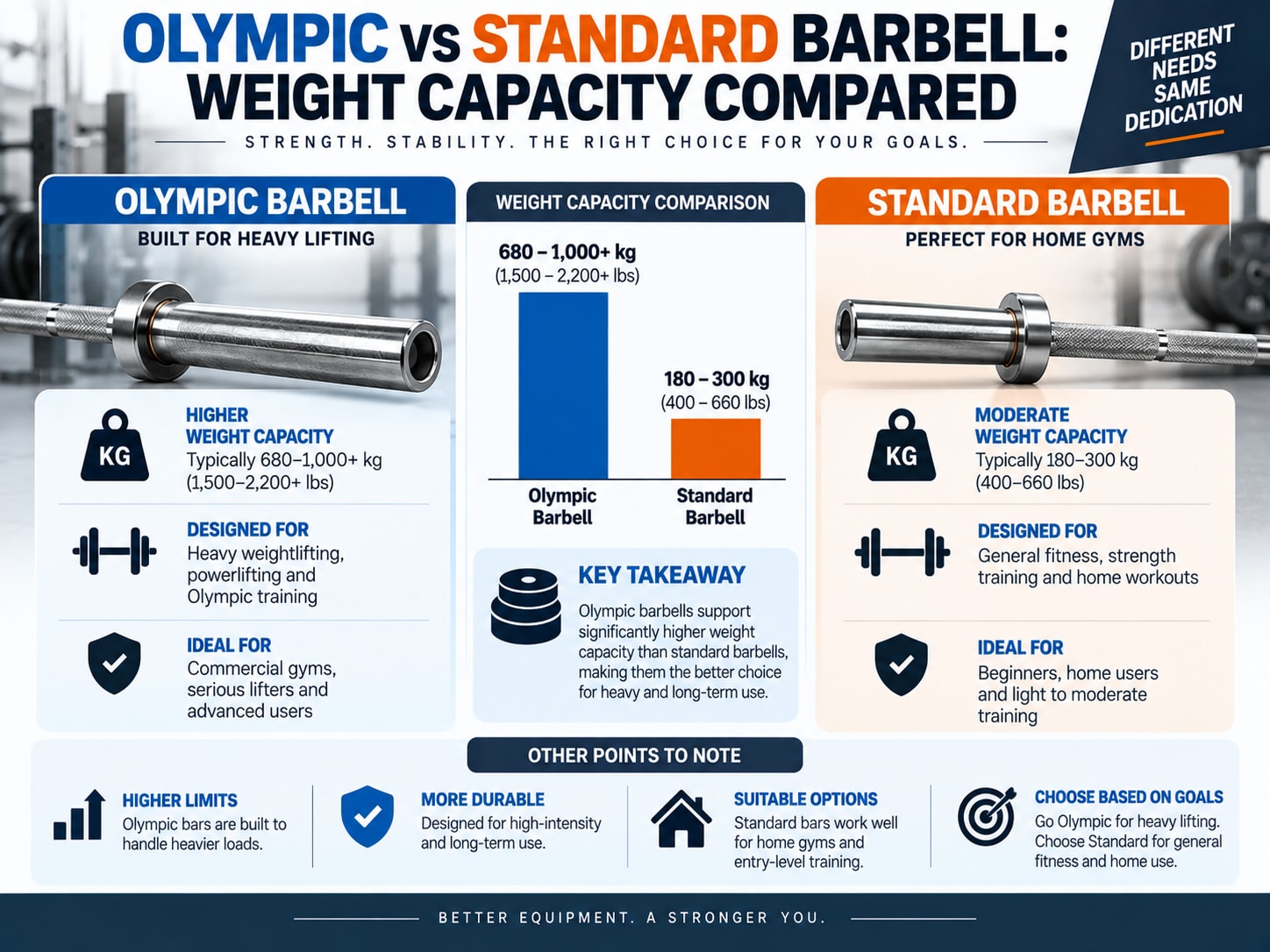
If heavy lifting is part of your workout, weight capacity should be a top priority on your checklist. Olympic bars generally have a higher load capacity than standard barbells, but the actual capacity depends on the construction and quality of the bar.
A commercial-grade Olympic bar can be designed to handle substantial loads, while a basic standard bar may be intended for lighter training. When comparing bars, don't just think "How much weight can it hold?"
It is advised to look at the manufacturer's rated capacity and consider how the bar will actually be used. A commercial gym with frequent dead-lifting, squatting, and other heavy compound movements needs a bar built for repeated use. Buying a lightweight bar simply because it is cheaper can become a bad decision if it isn't suited to the workload.
Barbell Knurling Explained: Why Grip Matters
Knurling is the textured pattern machined into the shaft of a barbell. It helps the user maintain a secure grip during exercises.
Different bars can have different knurling patterns and levels of aggressiveness. Some bars have relatively mild knurling that feels comfortable during general training. Others have deeper or more aggressive knurling designed to provide extra grip during heavy lifts.
The right choice depends on the type of training. For general gym use, extremely aggressive knurling may not be necessary. It can become uncomfortable during high-repetition exercises.
For heavy squats or dead-lifts, stronger knurling can be useful. Some Olympic lifting bars also have specific knurling areas that help with movements such as cleans and snatches.
When buying a bar for a commercial gym, think about your members rather than just the strongest lifter using the facility. A good all-round bar should offer a secure grip without feeling unnecessarily harsh.
Barbell Sleeve Rotation Explained
Another difference you may notice between quality Olympic bars and basic standard barbells is sleeve rotation. Many Olympic bars use rotating sleeves, often supported by bushings or bearings.
The idea is simple: when the bar moves during certain exercises, the sleeves can rotate independently of the shaft. This is particularly useful for Olympic lifts, where the bar moves quickly and the plates need to rotate smoothly.
For exercises such as cleans and snatches, sleeve rotation can make the movement feel more natural. Standard barbells may have little or no sleeve rotation depending on the design. If you're buying a bar primarily for basic curls, presses, and light strength training, this may not be a major concern. For more advanced lifting, it becomes much more relevant.
Which Bar Is Better for Commercial Gyms?
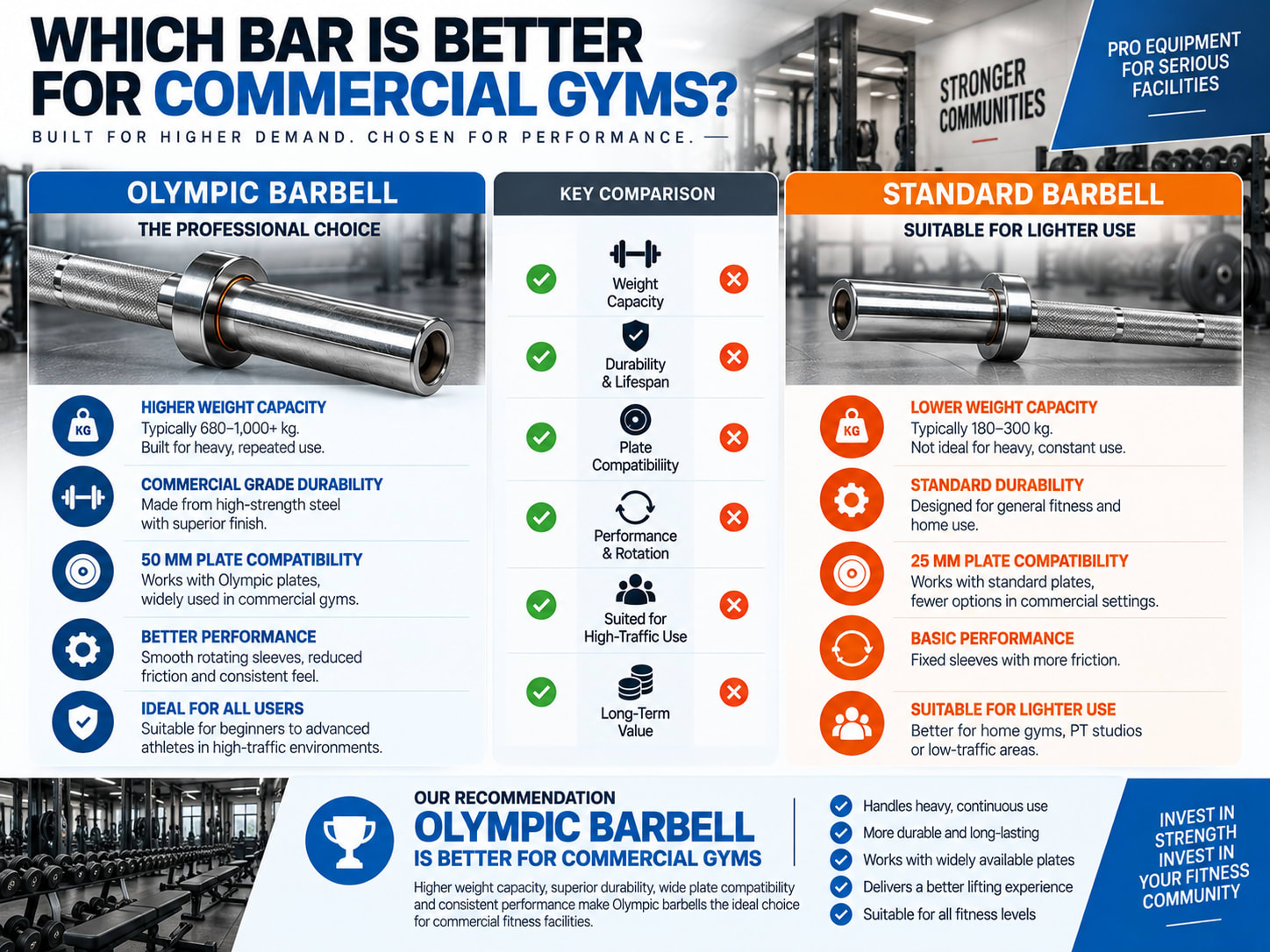
For most commercial gyms, an Olympic bar is usually the more versatile long-term option, particularly if the fitness centres have a dedicated free-weight or strength-training area. It can handle heavy training, works with Olympic plates, and is available in different specifications for varied lifting styles.
However, standard barbells still have their advantages. A smaller gym, hotel fitness centre, or a residential gym may not need multiple heavy Olympic bars. The best approach is to match the equipment to the members.
A bodybuilding gym may need several Olympic-style bars for squats, bench presses, and deadlifts. A general fitness centre might only need a few heavy Olympic bars alongside lighter bars for other exercises. There is no reason to buy equipment that won't be used.
Which Bar Is Better for a Home Gym?
For a home gym, both options can work. A standard barbell can be attractive if you have limited space, already own standard plates, and mainly perform basic exercises. An Olympic bar makes more sense if you plan to progressively increase your lifting weight or want your home setup to resemble a commercial strength-training gym.
Before buying an Olympic bar for a home gym, measure the room carefully. A 2.2-metre bar may fit comfortably in a large garage or dedicated fitness room but could be awkward in a small bedroom or apartment. Also think about where you will store the plates and bar when they aren't being used.
Barbell Plate Compatibility: What to Check Before Buying
This is one of the most common things many people tend to overlook. The bar and plates need to be compatible. If you have standard plates, buy a bar designed to accept them. If you have Olympic plates, choose an Olympic bar.
There are adapters and other solutions available in the market, but it is usually better to keep the setup straightforward.
For a new gym, decide whether you want to use standard or Olympic plates and then purchase your bars, plates, racks, and storage equipment accordingly. This avoids unnecessary compatibility problems later.
Delivery and Setup Considerations
When purchasing a barbell, delivery is usually much simpler than with large gym machines. However, for a complete gym project, logistics still matter.
If you're ordering several barbells, weight plates, racks, benches, and machines at the same time, make sure the supplier can coordinate delivery according to your installation schedule.
For commercial gyms, delivery may involve loading bays, building access rules, lifts, or specific delivery timings. Barbells themselves don't normally require complicated installation, but other equipment in the same order may.
A fitness equipment supplier that offers delivery, installation, and after-sales support can make the entire gym setup easier to manage.
Check Barbell Availability and After-Sales Service Before Buying
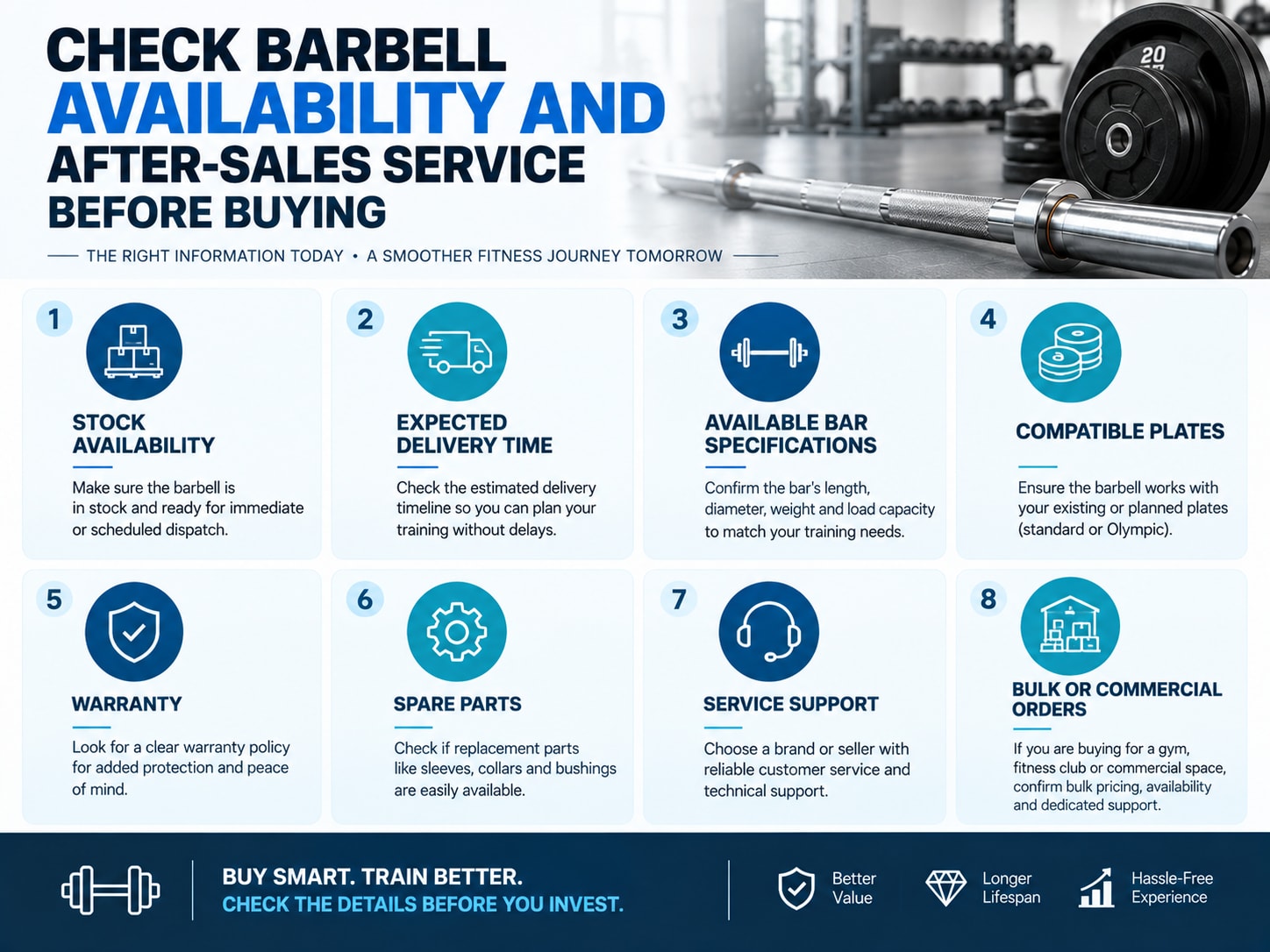
Availability is another factor worth checking before placing an order. You may find a particular Olympic bar online, but that doesn't necessarily mean it is immediately available. If you're setting up a commercial gym, delays may affect the opening schedule. Ask the supplier about:
- Stock availability
- Expected delivery time
- Available bar specifications
- Compatible plates
- Warranty
- Spare parts
- Service support
- Bulk or commercial orders
After-sales support is really important for commercial gyms. A barbell doesn't have many complicated components, but regular use can eventually lead to wear on areas such as sleeves, bearings, bushings, or the finish. Having a supplier who can provide support when needed can save time later.
Which Barbell Is Best for Your Training Goals?
The decision becomes easier only when you know what you need.
Choose an Olympic bar if
- You plan to lift heavy weights.
- You already use Olympic plates.
- You want a higher-capacity bar.
- You perform compound lifts regularly.
- You are setting up a commercial strength area.
- You want smoother sleeve rotation.
- You expect the bar to receive frequent use.
Choose a standard barbell if
- You are working with lighter or moderate weights.
- You already own standard plates.
- You have limited space.
- You want a simple and affordable setup.
- Your workouts don't require Olympic lifting.
- The bar will be used mainly for general strength exercises.
Olympic vs Standard Barbell: Price and Value Compared
People always consider price as a major factor, but it shouldn't be the only deciding aspect. A basic standard bar can cost less because the construction is generally simple. Olympic bars can cost more because of their larger sleeves, stronger construction, finishing, knurling, and sleeve rotation system.
For a commercial gym, spending a little more on equipment designed for regular heavy use can make sense. For a home user who only trains with moderate weights, paying extra for features that won't be used may not be necessary.
Fitness enthusiasts across Qatar can visit Lifetime Fitness Store to discover quality gym equipment at competitive prices, combining reliable performance, trusted brands, and excellent value for home and commercial fitness needs.
Conclusion
A standard barbell is an ideal option for general strength training, lighter workouts, and smaller spaces. It can be a sensible choice for beginners and home users who already have standard plates.
An Olympic bar, on the other hand, is better suited to serious strength training, heavier loads, commercial gyms, and users who want access to Olympic-sized plates and more advanced lifting movements.
If you're setting up a new gym, think about the complete system rather than buying the bar separately. Your bar, plates, rack, storage, and training space should all work together. Check the sleeve diameter, bar weight, length, shaft diameter, weight capacity, knurling, sleeve rotation, and plate compatibility before making your choice.
Most importantly, don't be tempted to choose a bar just because it looks good or is available at a cheap price. A good barbell should feel solid in your hands, suit your training style, and be capable of handling the work you expect it to do.
For a commercial gym, it is also worth considering factors like delivery, installation support, product availability, warranty, and after-sales service before placing a larger equipment order.
The right barbell may seem like a small decision, but it becomes one of the most frequently used pieces of equipment in a strength-training area. Once chosen wisely, it can remain a dependable part of your gym for years.
 Get a weekly dose of latest stories
and useful tips directly in your inbox!
Get a weekly dose of latest stories
and useful tips directly in your inbox!


 0
0