Front-Drive vs Rear-Drive Ellipticals: Comparing Space, Motion, Incline and Maintenance in Qatar
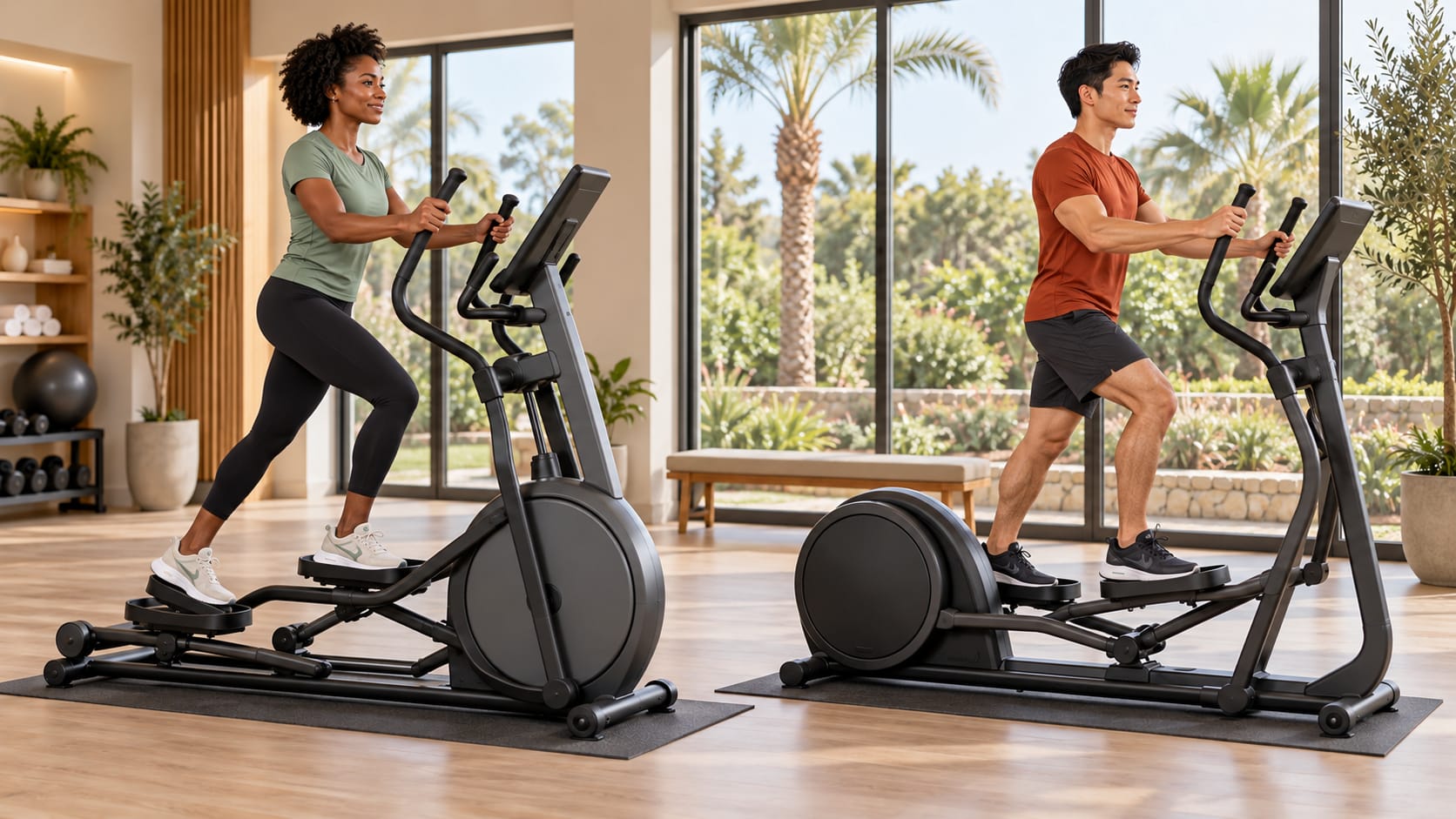
A lot of technical factors are taken into account while choosing a suitable elliptical machine for home gyms. Most of you may have noticed that some models are equipped with the main drive system at the front, while others have it at the rear.
People often overlook this difference, assuming it is a trivial thing. However, not many know that it can affect the machine's design, movement, footprint and the overall workout experience.
Both front-drive and rear-drive ellipticals provide low-impact cardiovascular exercise. They allow you to work your legs and, on models with moving handlebars, your upper body as well. Having said that, the position of the drive system can influence how the pedals travel and how the machine feels during use.
So, which one should you choose? Well, the answer depends on a few aspects like available space, fitness goals, preferred movement, budget and maintenance. If you are buying an elliptical for a home gym or commercial gym, understanding these differences help you make a better decision.
This blog touches upon the differences between front-drive and rear-drive ellipticals, explains them in simple terms, and covers related factors like space requirements, motion, incline, maintenance, price and user comfort.
What Is a Front-Drive Elliptical?
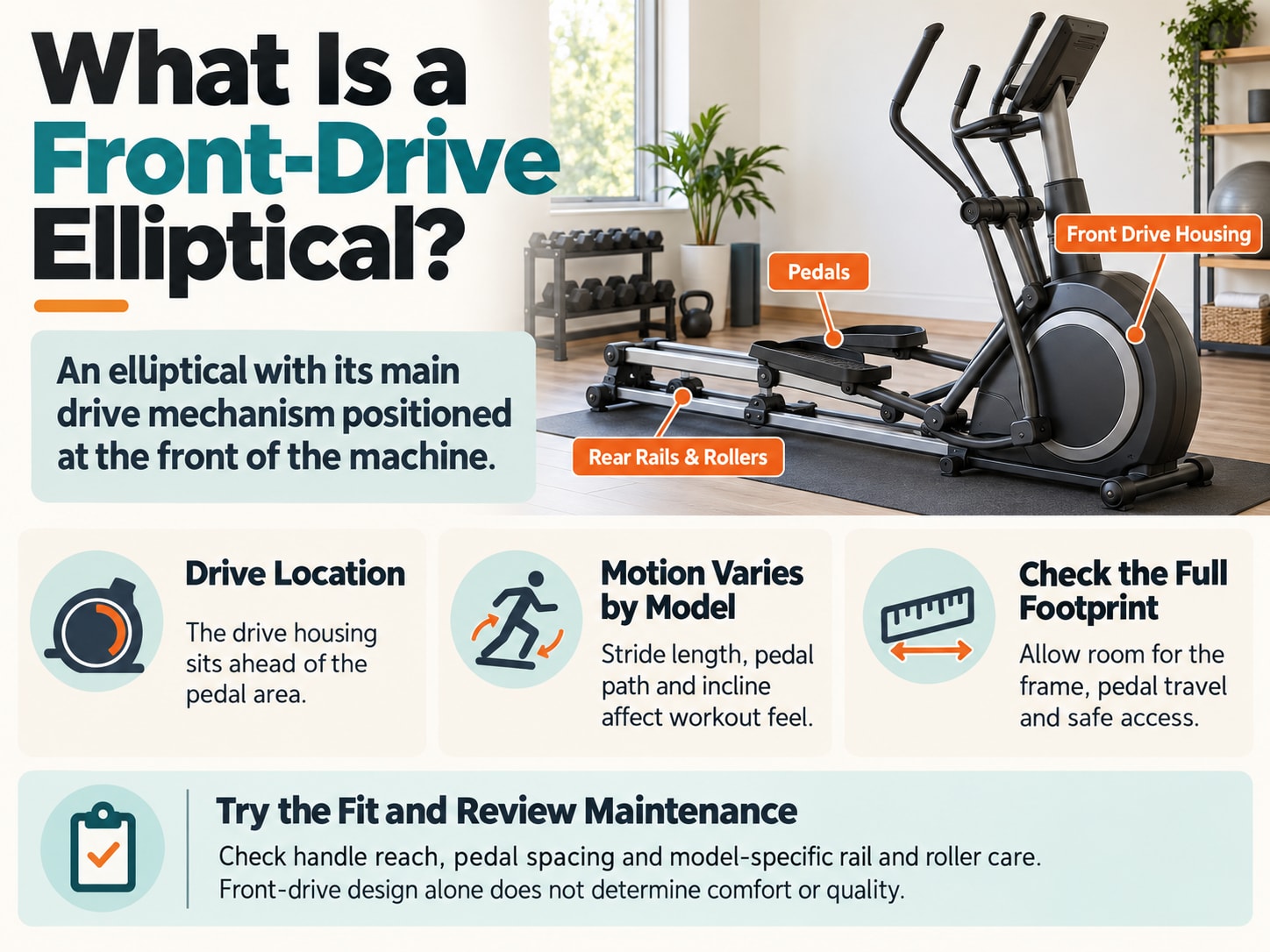
As the name suggests, a front-drive elliptical has its main drive mechanism, including the flywheel and related components, positioned towards the front of the machine. The front section often looks larger because it houses the drive system. The pedals and linkage mechanism are arranged around this design to create the elliptical movement.
The font-drive models are available in different sizes, from compact home machines to larger models designed for frequent use. Some include adjustable incline, multiple resistance levels and moving handlebars.
One feature commonly associated with front-drive ellipticals is a movement that may feel slightly more forward-leaning or similar to climbing on certain models. However, this is not true of every front-drive machine. The actual feel depends on the pedal path, frame geometry, stride length and handle position.
Who Should Consider a Front-Drive Elliptical?
A front-drive elliptical may be considered if you belong to the following category:
You want a machine with a relatively compact design for your workout room.
You prefer the movement offered by a particular front-drive model.
You want incline or resistance features available on your preferred machine.
You are comparing several home or commercial options and find that the front-drive design suits your space.
Do not choose one based on drive position alone. Compare the full dimensions and try the movement if possible.
What Is a Rear-Drive Elliptical?
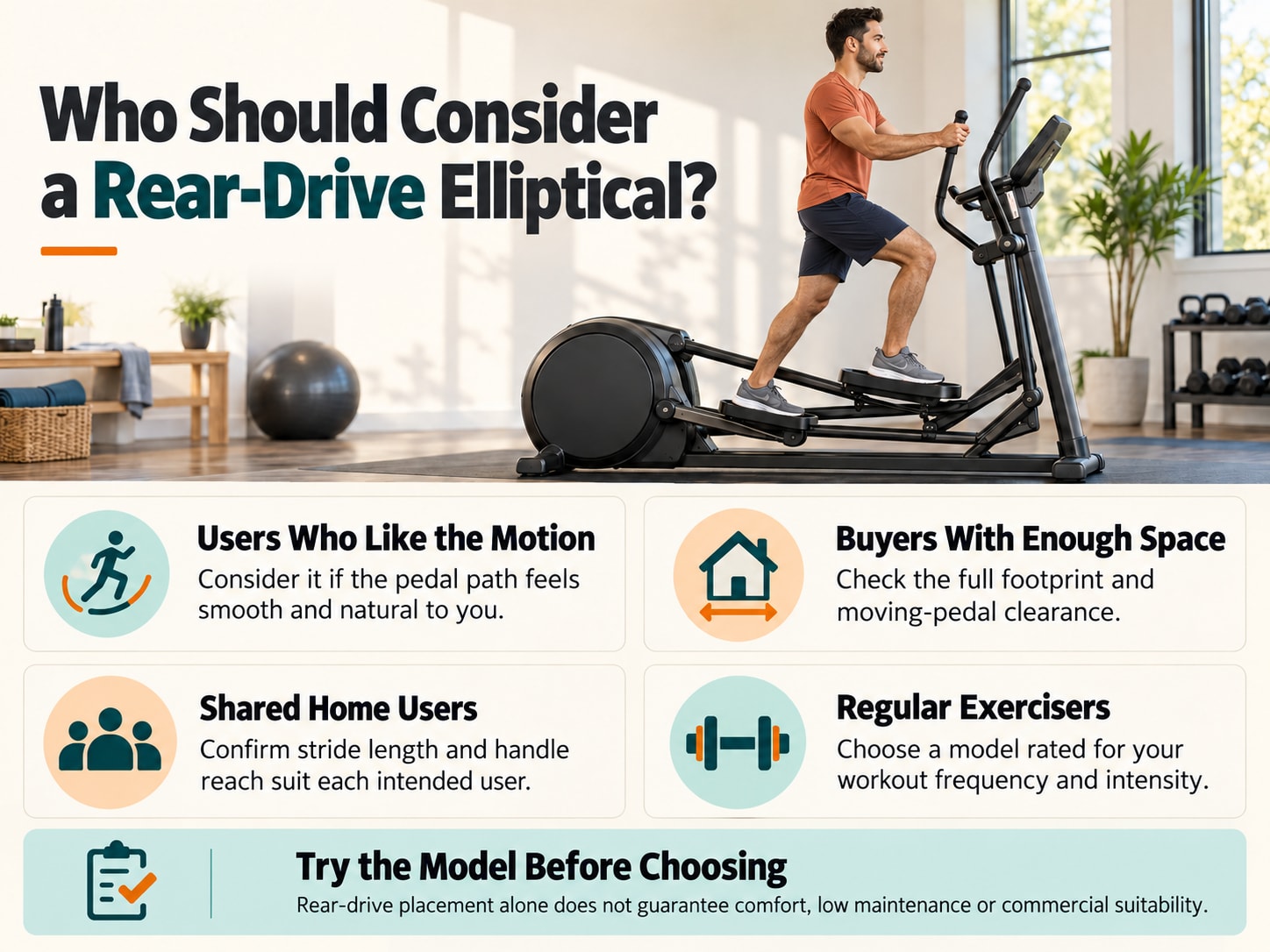
A rear-drive elliptical’s main drive mechanism is towards the back of the machine, behind the pedal area. This arrangement is associated with a smoother, more elongated or running-like movement. Some users find this motion comfortable because the pedals travel along a path that feels more natural to them.
Rear-drive designs may also create a different balance between the front and rear sections of the machine. Depending on the model, the frame can have a more open appearance around the pedal area.
However, a rear-drive elliptical is not automatically smoother or more comfortable than a front-drive model. The quality of the bearings, pedal linkage, flywheel system and overall construction matters just as much.
Who Should Consider a Rear-Drive Elliptical?
A rear-drive elliptical may be a good option if you belong to the following category:
You prefer the movement pattern of a particular rear-drive model.
You want to compare machines that offer a more elongated pedal path.
You have enough room for the model's full footprint.
You find its stride length, pedal spacing and handle position comfortable.
For both designs, the best way to judge comfort is to consider the complete machine rather than its drive position alone.
Space and Footprint: Which One Fits Your Home Better?
Space is one of the first things to consider when buying an elliptical, especially if you live in an apartment or have a multipurpose workout area. The drive position can influence the shape of the frame, but it does not tell you the exact amount of floor space the machine will occupy.
Front-drive footprint
Some front-drive ellipticals have a broad front section that houses the flywheel and drive components. This may affect how close the machine can sit to a wall or other equipment. Depending on the design, the pedals and handlebars may extend well beyond the main housing. You need to measure the entire machine rather than just the drive section.
Rear-drive footprint
As mentioned above, rear-drive models place the main mechanism towards the back. Some have a longer frame or a different balance between the front and rear sections. This can affect where the machine fits in your room. For example, you may need more space behind the pedal area or around the rear housing, depending on the model.
How to Plan Your Space in a Practical Manner?
Before buying either type of ellipticals, check the following aspects:
The full length and width of the machine.
The height, including the moving handlebars if applicable.
The recommended clearance around the machine.
The space needed to step on and off safely.
The distance from walls, furniture and nearby equipment.
The route through doors, corridors and lifts for delivery.
For a home gym in GCC countries, measuring the intended location before ordering can help avoid delivery and installation problems.
If you are placing the elliptical in a shared fitness room, allow enough space for people to move around it without blocking walkways. Choose based on the actual dimensions of the model, not simply whether it is front-drive or rear-drive.
Motion and User Feel: How Do They Compare?
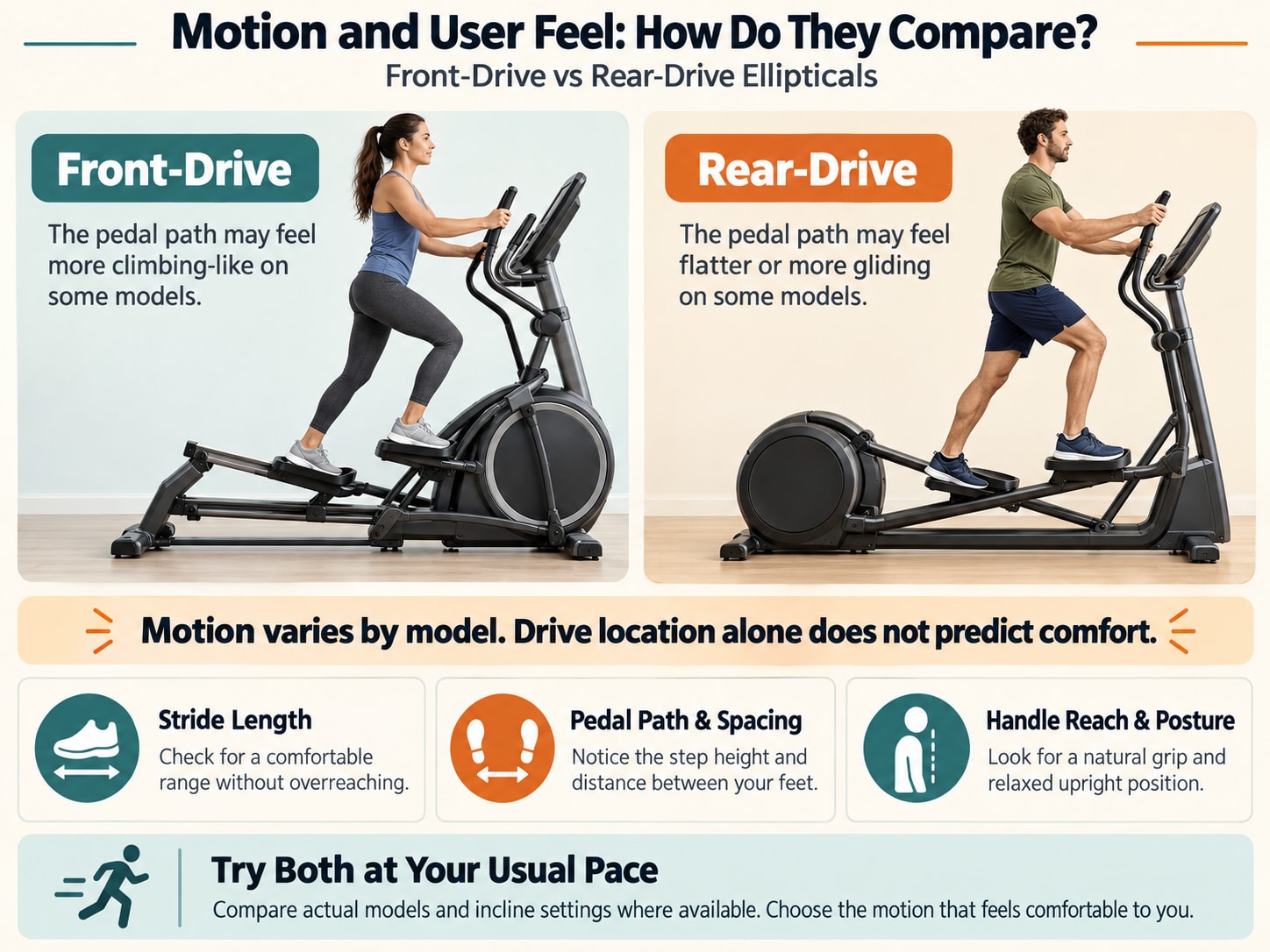
The movement pattern is one of the most noticeable differences when using an elliptical. It can influence how comfortable the machine feels during a short workout or a longer cardio session.
Front-drive movement
Some front-drive ellipticals create a movement that feels slightly more upright or climbing-like. This may suit users who enjoy a steady cardio workout or want to combine resistance with an incline feature. However, the feeling depends on the machine's pedal path. A front-drive model with a well-designed linkage system can provide a smooth, natural movement.
Rear-drive movement
Some rear-drive ellipticals produce a longer, more elongated movement that users may compare to running or striding. This can appeal to people who prefer a longer range of leg movement. Yet the drive position alone does not guarantee that the stride will suit your height or workout style.
Which feels more natural?
The truth is, there is no universal answer. A machine that feels comfortable for one person may feel awkward to another. When testing an elliptical, pay attention to the following things:
Stride length: Does the distance travelled by the pedals suit your height?
Pedal spacing: Are your feet positioned comfortably, without feeling pushed too far apart?
Knee movement: Can you move without feeling that your knees are forced into an uncomfortable position?
Hip movement: Does the stride feel natural rather than excessively short or long?
Handle position: Can you stand upright without leaning too far forward?
Smoothness: Do the pedals move evenly without unwanted jerking or excessive noise?
Try the machine at a comfortable pace first, then increase the resistance if appropriate. A short test can help you understand whether the movement suits you.
Stride Length: An Important Factor for Both Designs
Stride length refers to how far your feet travel during the elliptical movement. It is one of the most important specifications to check, regardless of drive position.
A shorter stride may suit some shorter users and people who prefer a compact movement. Taller users often prefer a longer stride, although height factor alone does not determine the perfect fit.
For example, two elliptical machines may both be rear-drive models, but one could have a shorter stride than the other. The same applies to front-drive models. When comparing ellipticals, look for the actual stride length listed by the manufacturer.
If possible, try the machine and see whether you can maintain a comfortable, natural movement. If several people use the same machine, consider the height range of the main users. An adjustable-stride model may be useful when available, although its price and adjustment range should also be considered.
Never assume that rear-drive always means a longer stride or that front-drive always means a shorter one. These are not reliable rules for choosing equipment.
Front-Drive vs Rear-Drive: Which One Offers Better Incline?
Incline changes the angle or path of movement on an elliptical. Depending on the machine, it may create a different workout feel and allow you to vary your exercise routine. Both front-drive and rear-drive ellipticals can offer incline adjustment, but it is not available on every model.
Front-drive ellipticals with incline
Some front-drive machines include an adjustable ramp that changes the pedal path. This can create a more climbing-focused movement on certain models. If incline training is important to you, check the available settings and how easily they can be adjusted.
Rear-drive ellipticals with incline
Rear-drive models can also include incline functions. The movement may feel different from a front-drive model because of differences in the pedal path and overall frame geometry. Do not assume that one drive type provides a greater incline range than the other. Always compare the specifications of the individual machines.
What are the important factors you should check?
Before buying, consider the following things:
Whether the model offers incline adjustment.
The available incline range.
Whether the incline is manual or motorised.
How incline changes the movement and feel.
Whether the adjustment can be made during a workout.
Whether the machine remains comfortable at different settings.
If you want steady cardio exercise, a fixed-incline model may be sufficient. If you enjoy changing workout intensity and movement, an adjustable-incline machine may be worth considering.
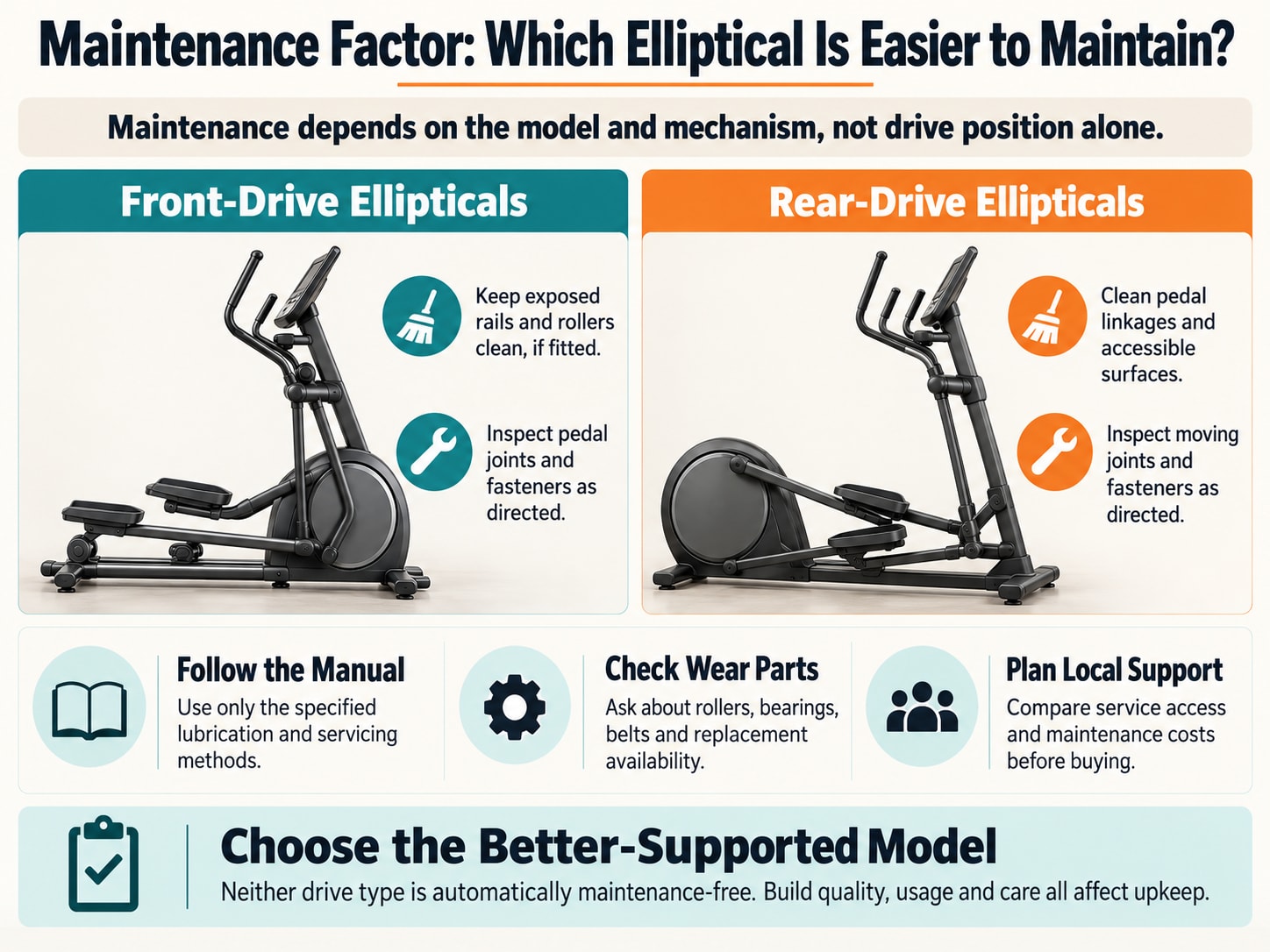
Maintenance Factor: Which Elliptical Is Easier to Maintain?
Every elliptical needs regular care, whether it is front-drive or rear-drive. Dust, frequent use and a lack of maintenance can affect the machine's performance over time. The drive position can influence how easy it is to access certain components, but it does not determine overall maintenance requirements.
Front-drive maintenance
On a front-drive elliptical, the main drive system is located at the front. Depending on the design, access to the flywheel, covers and moving components may require specific steps. Follow the manufacturer's instructions before cleaning around the drive housing. Do not remove covers or attempt repairs unless the manual permits it and you know how to do so safely.
Rear-drive maintenance
On a rear-drive model, the main drive components are positioned towards the back. The arrangement may make some areas easier to reach and others less convenient, depending on the frame design. As with front-drive machines, the maintenance process depends on the individual model rather than drive position alone.
Basic Elliptical Maintenance Checklist
To help keep your elliptical in good condition, embrace the following tips:
Wipe sweat from the handles, console and frame after use.
Thoroughly clean the pedals and surrounding surfaces regularly.
Always keep dust away from moving parts and ventilation openings.
Inspect visible bolts and connections according to the manual.
Listen for unusual noises and check for changes in movement.
Use only manufacturer-approved lubricants or cleaning products.
Follow the recommended service schedule.
Arrange professional service if you notice persistent grinding, looseness or other problems.
In GCC countries, dust can collect on fitness equipment, especially in busy homes and commercial fitness centres. Regular cleaning is helpful, but avoid spraying liquids directly onto the console or drive housing. For commercial gyms, planned maintenance is particularly important because equipment may be used by many people throughout the day.
Front-Drive vs Rear-Drive Ellipticals: Which is More Expensive?
Neither design is always cheaper. Price depends on the brand, construction, resistance system, stride length, console, incline options, warranty and intended usage. A basic front-drive elliptical may cost less than a premium rear-drive model, but a high-quality front-drive machine can also be more expensive than an entry-level rear-drive option.
When comparing elliptical prices, look beyond the drive position. Check whether the machine offers the stride length you need, a suitable maximum user weight, the resistance levels you prefer and the features you will actually use.
Also consider delivery, installation, warranty and after-sales support. These details can affect the overall value of your purchase. A lower-priced machine may be suitable for occasional home use, while a household with several daily users may benefit from a more robust model. Commercial facilities should look for equipment designed for their expected level of use.
The best value is not necessarily the machine with the lowest price. It is the one that meets your needs and offers suitable performance and support over time.
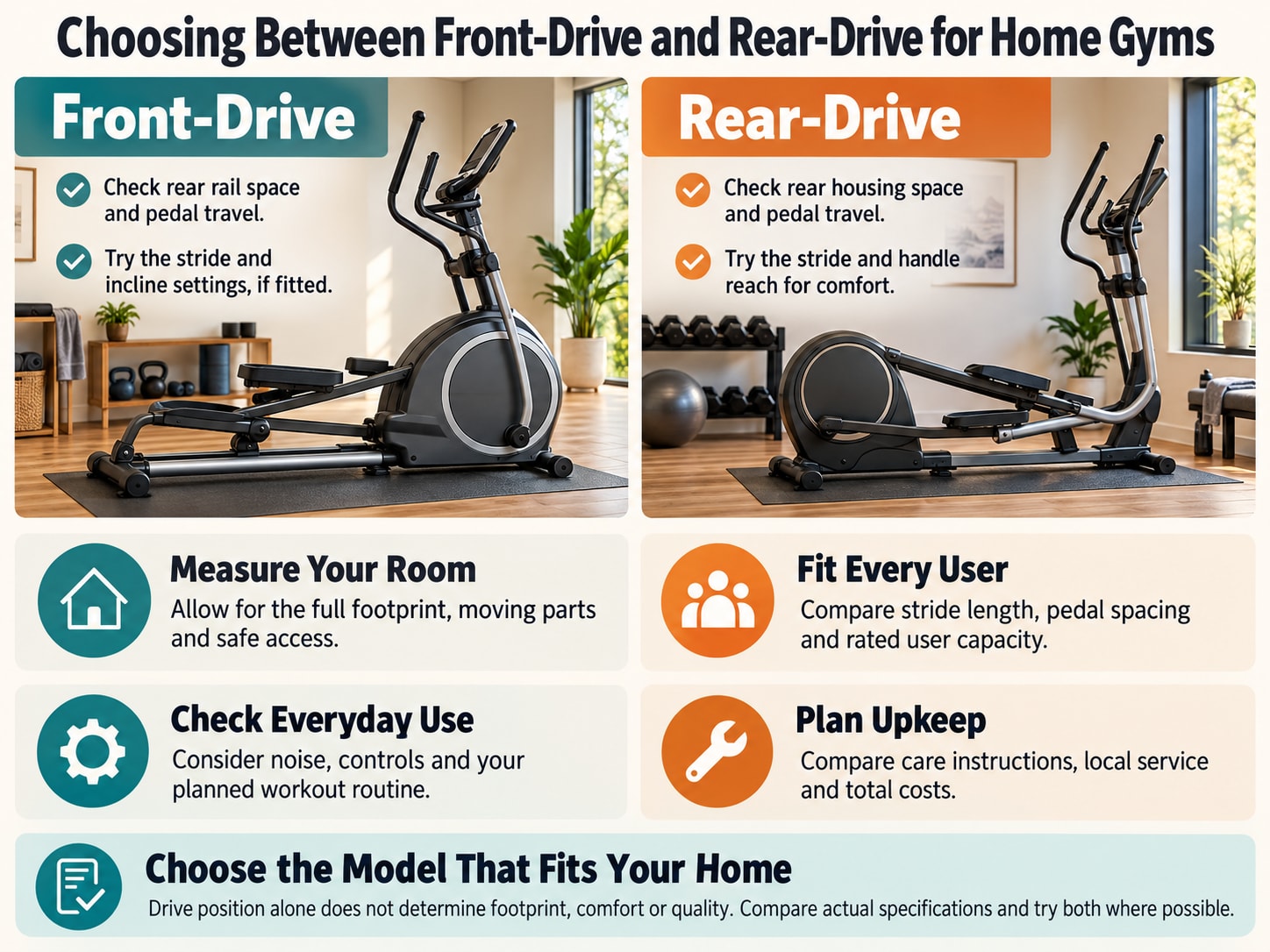
Choosing Between Front-Drive and Rear-Drive for Home Gyms
For home use, your available space and preferred movement should guide your decision.
For small apartments
Measure the full machine dimensions before buying. Some front-drive models may fit well in compact spaces, while some rear-drive models may suit the room layout better. The actual dimensions matter more than the drive position. Also consider noise, vibration, access around the machine and whether other people need to use the same room.
For dedicated home gyms
If you have a spare room or a dedicated workout area, you may have more flexibility to compare larger models. Focus on stride length, pedal spacing, resistance, incline and how the movement feels. You may also want to consider console features and workout programmes if you plan to use the machine frequently.
For shared family use
When several people will use the elliptical, check whether the stride length suits the main users and whether the machine's user weight limit is appropriate. A comfortable fit is more important than choosing a particular drive design. If users have very different heights, testing the machine becomes especially useful.
Choosing an Elliptical for Commercial Gyms
Commercial gyms have different requirements from home fitness spaces. The equipment must suit a wider range of users and withstand more frequent use. Both front-drive and rear-drive ellipticals can be suitable for commercial facilities, provided they are designed for the expected workload.
Check the usage rating
Review the manufacturer's guidance for intended use, maximum user weight, frame construction and permitted operating conditions. A home-use machine may not be suitable for a busy gym.
Consider different users
Members may have different heights, fitness levels and movement preferences. Choose equipment that provides a comfortable stride and accessible controls. If possible, offer a mix of cardio equipment to suit different needs rather than relying on one type of elliptical alone.
Compare durability and service support
Check the warranty, availability of replacement parts and access to professional maintenance. A machine that is easy to service can help reduce downtime. For fitness centres in GCC locations, reliable installation and after-sales support are useful considerations when planning a commercial gym.
Plan the layout
Allow enough space between machines for users to get on and off safely. Keep walkways clear and position equipment so that moving handlebars do not interfere with neighbouring machines. A good commercial setup balances user comfort, safety, available floor area and long-term maintenance.
Common Buying Mistakes to Avoid
Before choosing an elliptical, avoid the following common mistakes:
Assuming one drive type is always better: Both designs can provide a good workout. Compare the individual model's features and feel.
Choosing by footprint alone: A compact machine may not offer the stride length or comfort you need.
Ignoring stride length: A suitable stride can make a significant difference to how natural the movement feels.
Assuming incline is standard: Not all ellipticals offer adjustable incline. Check the specifications.
Overlooking maintenance: Both drive types need regular cleaning and inspection.
Buying for the wrong usage level: A machine designed for occasional home workouts may not suit a commercial gym.
Ignoring service support: Warranty terms and replacement-part availability are important for long-term ownership.
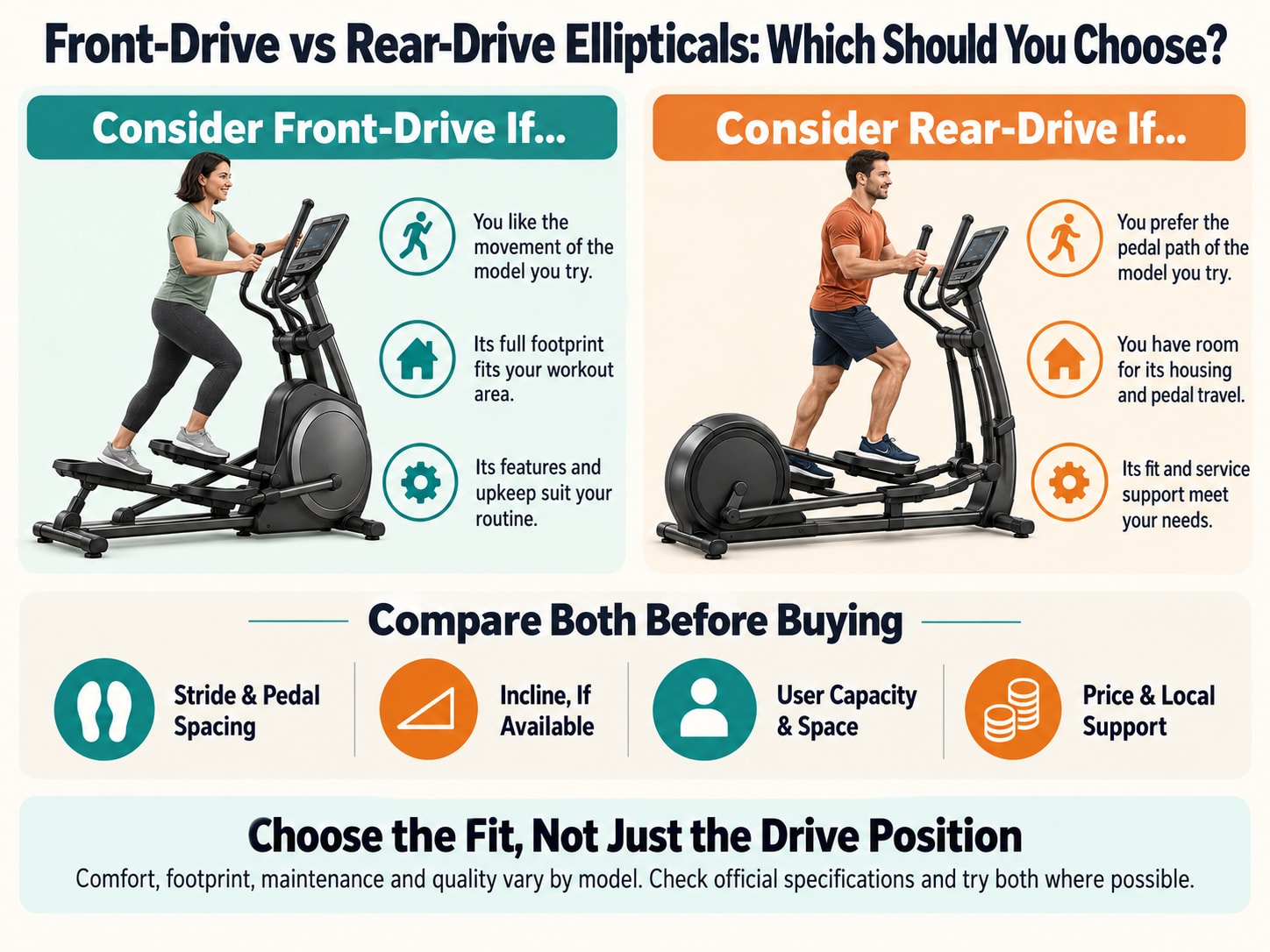
Front-Drive vs Rear-Drive Ellipticals: Which Should You Choose?
Choose a front-drive elliptical if you find a model whose movement, dimensions and features suit your workout needs. Some front-drive designs may appeal to people who prefer a climbing-like movement, but this depends on the machine.
Choose a rear-drive elliptical if you prefer the movement of a particular model and it offers the stride length, comfort and features you need. Some rear-drive designs may feel more elongated, but that is not guaranteed by the drive position alone.
If space is your main concern, compare the full footprint of both types. If comfort is your priority, focus on stride length, pedal spacing and body position. If you are buying for a commercial gym, consider durability, usage rating, maintenance and service support.
Qatar residents may build an ideal home or commercial gym with Lifetime Fitness Store, where they can explore a wide range of quality fitness equipment, discover exciting offers, get expert guidance to choose the right products and enjoy fast delivery, backed by professional installation and dependable service.
Conclusion
Both front-drive and rear-drive ellipticals have a place in home and commercial gyms. Their drive position changes the machine's design, but it does not automatically determine comfort, durability, price or workout quality.
The most important factors are the stride length, pedal spacing, movement pattern, available space and intended level of use. Incline, resistance, maintenance and warranty should also be considered before you buy.
If you are choosing an elliptical, measure your workout area, compare the specifications and try the movement whenever possible. For commercial gyms, consider the needs of different users and plan for long-term servicing.
Finally, the right elliptical is the one that fits your body, your space and your fitness routine, not simply the one with the drive system at the front or rear.
Not necessarily. Both can provide effective low-impact cardio exercise. The better choice depends on the machine's stride length, movement, dimensions, features and overall construction.
Neither drive type is always more compact. Compare the full length, width and height of the models you are considering, along with the clearance required around them.
This depends on the user and the machine's pedal path, stride length and geometry. Some people prefer the movement of a rear-drive model, while others find a front-drive model more comfortable. Testing both can help.
Not always. Both front-drive and rear-drive models may offer incline adjustment. Check the incline range and adjustment method for the specific model.
Maintenance depends on the design, component access and manufacturer recommendations. Both types require regular cleaning, inspection and servicing.





 Get a weekly dose of latest stories
and useful tips directly in your inbox!


 0


















































 Price Match Guarantee
 Free Shipping
 Product Warranty
 After-Sale Support
 Have Coupon Code?
 You'll Save 0.00 On This Order
 Safe And Secure Payments. Easy Returns. 100% Genuine Products