School & University Gym Equipment: Safety, Durability & Planning Guide in Bahrain
It is not often that you come across fitness centres in schools or universities. However, many educational institutions have successfully executed this by putting in meticulous efforts for the sake of their students. In today’s times, various institutions are coming forward to establish gyms in their premises.
The teaching faculty across the globe has realized that students getting to learn about movement, fitness, teamwork, discipline, and healthy habits through fitness centres will unlock their complete potential in every sense.
While planning a gym in educational institutions, the selection of equipment really matters, along with various other factors. Schools and universities have students belonging to different age groups, abilities, fitness levels, and sporting interests.
It has to be noted that equipment that works well for an adult fitness centre may not be suitable for young students. Educational institutions require equipment that can handle regular use, is easy to maintain, and can be stored safely when not in use.
When planning a gym for a school or university, there are six areas that deserve special attention: age range, supervision, durability, multi-sport conditioning, safety, and storage.
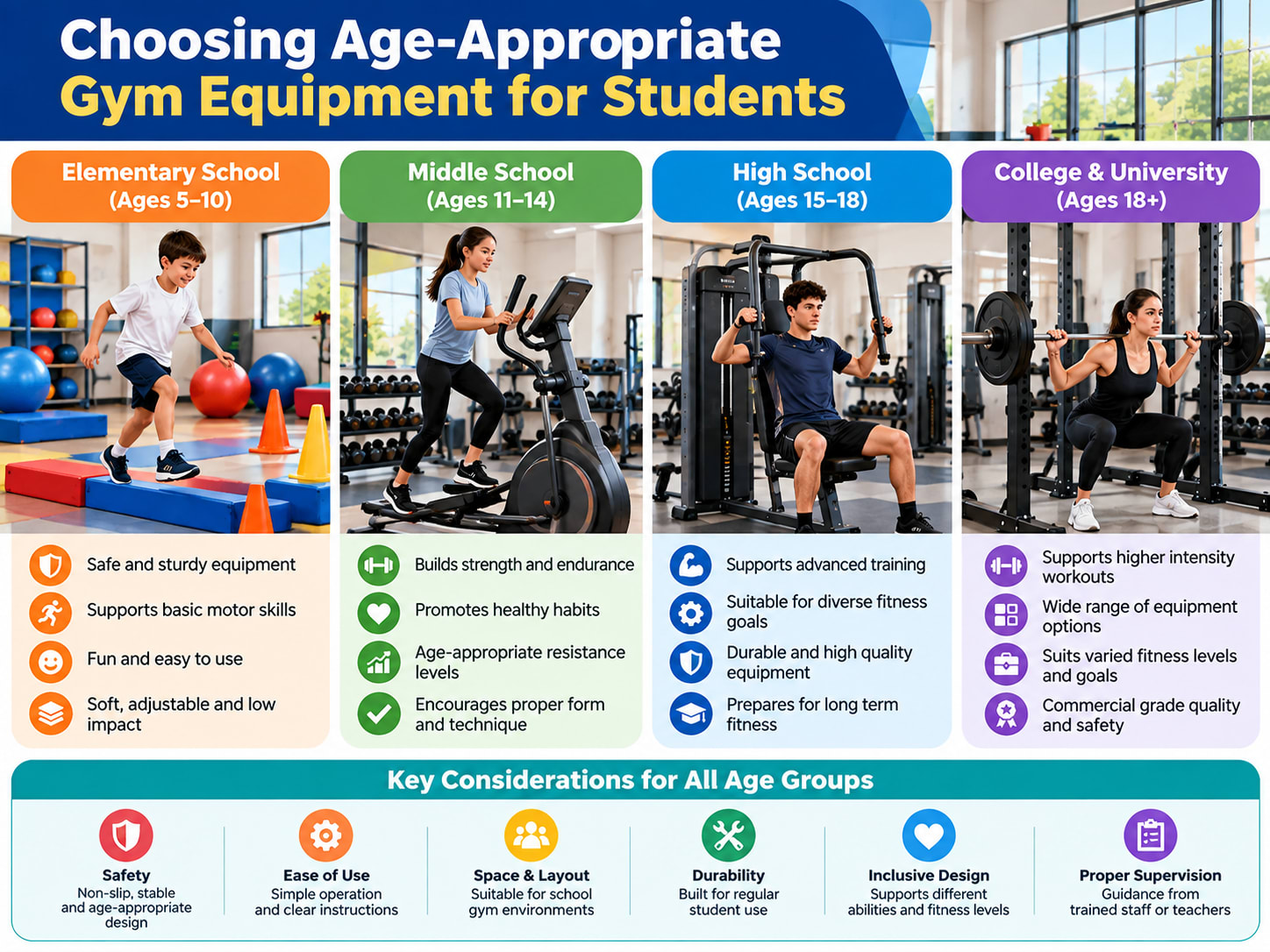
Choosing Age-Appropriate Gym Equipment for Students
The first thing to consider when selecting gym equipment for students is the clarity on who will be using it. A school gym may be used by children as young as six or seven, teenagers, teachers, and older students.
A university gym may cater to young adults, but students will still have different levels of fitness and experience. Hence, equipment should be selected according to the age, size, strength, and physical development of the students.
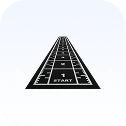
For younger children, fitness activities should generally focus on basic movement skills rather than heavy resistance training. Equipment such as skipping ropes, exercise mats, balance equipment, cones, agility ladders, and soft training equipment help children develop coordination, flexibility, and body control.
For older school students, the range can gradually include more structured strength and conditioning equipment. However, the focus should still be on right technique and controlled movement rather than simply lifting heavier weights.
University students may use more advanced equipment, including resistance machines, free weights, cardio equipment, functional training equipment, and sports-conditioning tools. Even here, students may have very different levels of experience.
It is also important to consider the adjustability factor. Equipment with adjustable heights, resistance levels, handles, benches, or settings can accommodate students of varied body sizes and abilities. This can make the gym experience productive in the long run.
To summarize, buying equipment based only on what looks impressive can be a mistake. The equipment should match the students who will actually use it.
Why Should Supervision Be A Priority in School & University Gym?
Having a good set of equipment alone does not make any gym a safe place. The act of supervision is equally important. Students should ideally know how to use equipment before they are allowed to use it independently.
Teachers, physical education instructors, or trained gym supervisors should always be available while students carry out various activities. For younger students, stringent supervision is unavoidable. They are more likely to experiment with equipment or use it in ways it was not designed for.
Hence, clear instructions and demonstrations help prevent several accidents. Older students, too, need expert guidance, especially when using weights or unfamiliar machines. A know-how on adjusting a machine, maintaining proper posture, and controlling movement make a huge difference.
It is advisable for schools and universities to introduce a simple gym orientation for students. This can cover the following aspects:
How to use each piece of equipment
How to adjust equipment correctly
Where equipment should be stored
Basic warm-up and cool-down practices
What to do if equipment appears damaged
How to report an injury or unsafe condition
Gym rules and expected behaviour
Students should always be encouraged to seek immediate help. Creating a space where students ask questions before using unfamiliar equipment is better than expecting them to figure everything out by themselves.
School & University Gym: The Importance of Durability
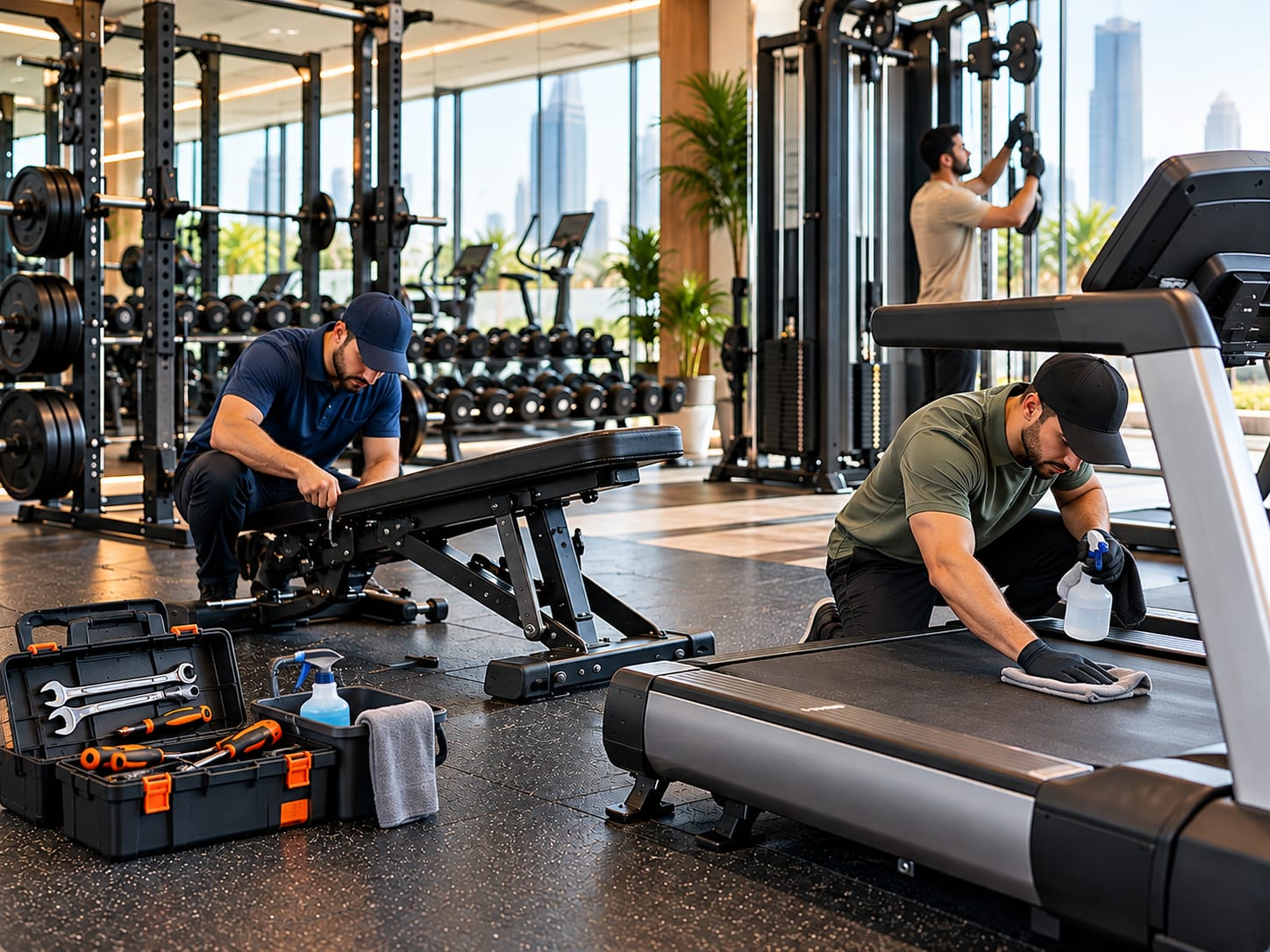
Contrary to the perception, educational gyms experience heavier usage than people expect. A piece of equipment may be used by several class students, or sports teams, or individual students in one day.
This is where the durability factor comes into play. When choosing equipment, look beyond appearance and price. Consider how often the equipment will be used, who will use it, and how easy it will be to maintain.
For example, gym mats should be able to withstand frequent use and cleaning. Benches should remain stable and strong. Resistance bands should be checked regularly for wear. Storage racks should be sturdy enough for repeated handling.
Equipment made from durable materials can have a higher initial cost, but it may provide better value over time if it lasts longer. However, durability does not mean that equipment can be ignored after installation. Even strong equipment can become unsafe if it is damaged or poorly maintained.
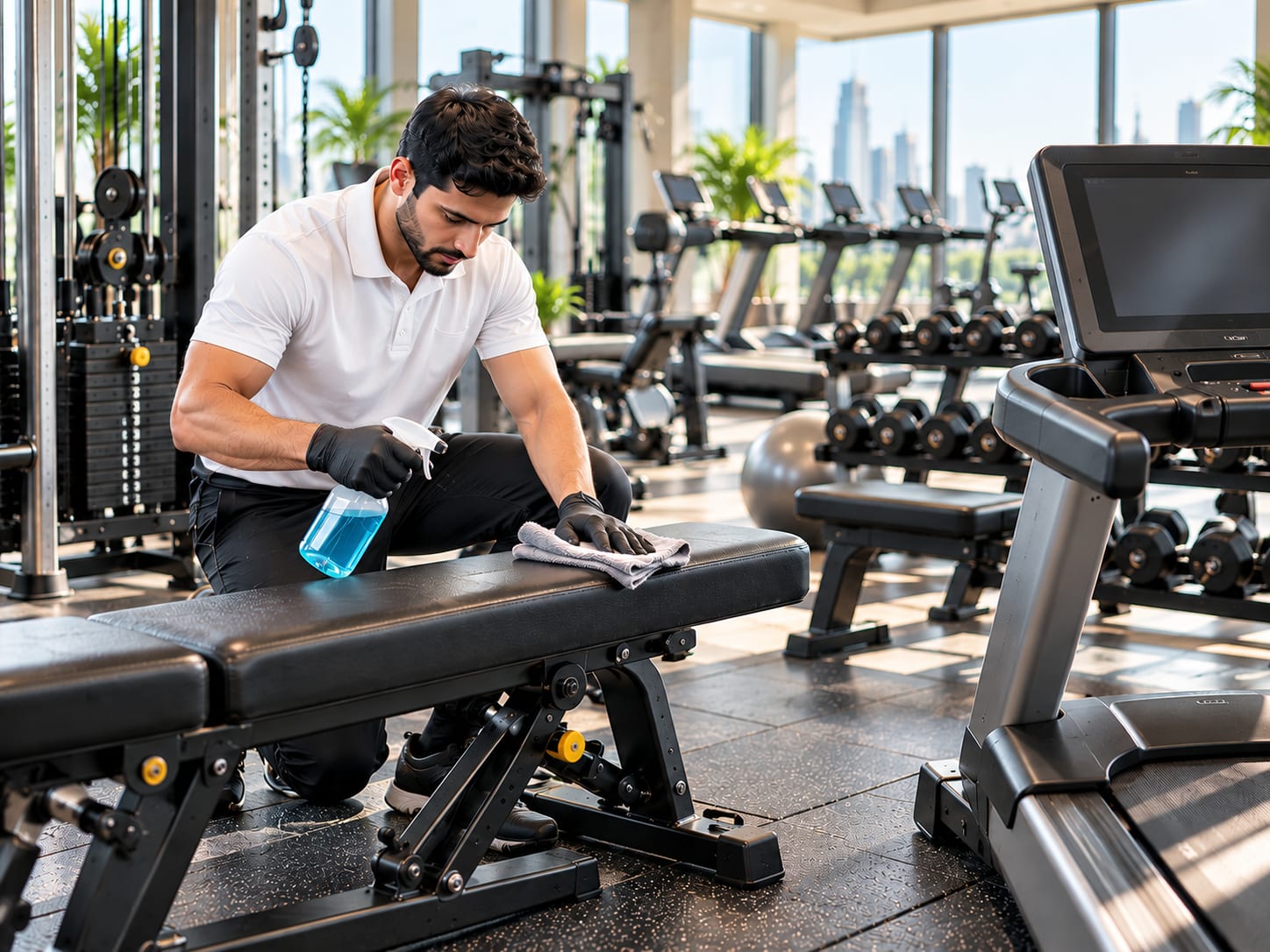
A simple maintenance schedule can include the following steps:
Daily checks: Look for visible damage, loose parts, spills, or misplaced equipment.
Weekly checks: Inspect commonly used items such as mats, resistance bands, benches, balls, ropes, and storage units.
Monthly or scheduled checks: Inspect larger machines, moving parts, cables, fasteners, and other components according to the manufacturer's recommendations.
Any equipment that appears damaged should be removed from use until it has been properly checked or repaired.
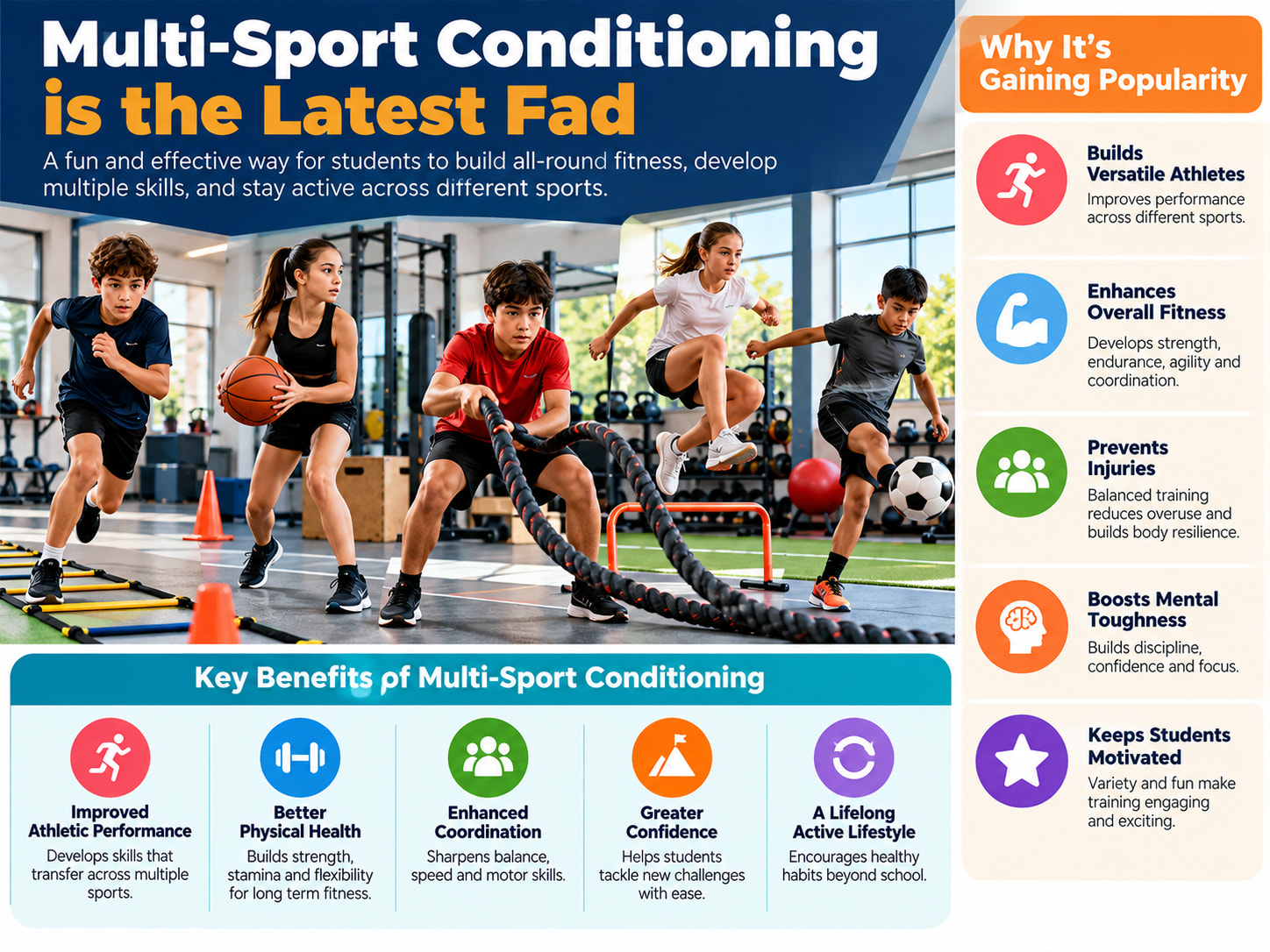
Multi-Sport Conditioning is the Latest Fad
A school or university gym should not be designed only for one sport. Students may participate in football, basketball, volleyball, athletics, badminton, cricket, swimming, tennis, or other sports. A well-planned gym can support conditioning for all these activities.
This is where multi-purpose and functional equipment becomes significant. Agility ladders and cones can be used for speed, footwork, and coordination. Medicine balls can support different strength and power exercises.
Resistance bands can be used for warm-ups, mobility work, and strength exercises. Plyometric boxes can support jumping and movement drills when used appropriately and under proper supervision. Cardio equipment can also provide general conditioning.
Strength equipment can support students who are training for different sports. However, the goal should not be to fill the room with machines. A smaller collection of versatile equipment can often support a wider variety of activities.
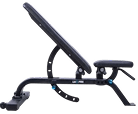
For example, a few adjustable benches, appropriate free weights, resistance equipment, and functional training tools can be used in many programmes. The focus should be on different activities this equipment can support. This approach helps schools make better use of limited budgets and available space.
As Always Safety Should Come Before Everything Else
Safety should be the numero uno priority rather than appearance, quantity, or even convenience. The gym floor should provide suitable grip and cushioning for the activities that take place. There should be adequate space between equipment for students to move safely.
Equipment should be placed according to how it will be used. For example, areas used for movement drills should have enough open space, while heavier equipment should be positioned where it can be used without creating unnecessary traffic.
Students should also have access to appropriate footwear and, where necessary, other protective equipment. Benches, racks, machines, and other large items should be properly positioned and secured according to their design and manufacturer's instructions.
Weights and other heavy items should never be left where students can trip over them. Free weights should have designated storage areas, and students should be taught to return them after use. Similarly, staff should know where the first-aid kit is located and the procedures to follow if a student is injured.
Good ventilation, lighting, temperature control, and access to drinking water are also important. Apart from a gym having excellent equipment, the environment needs to be comfortable and suitable as well for physical activity.
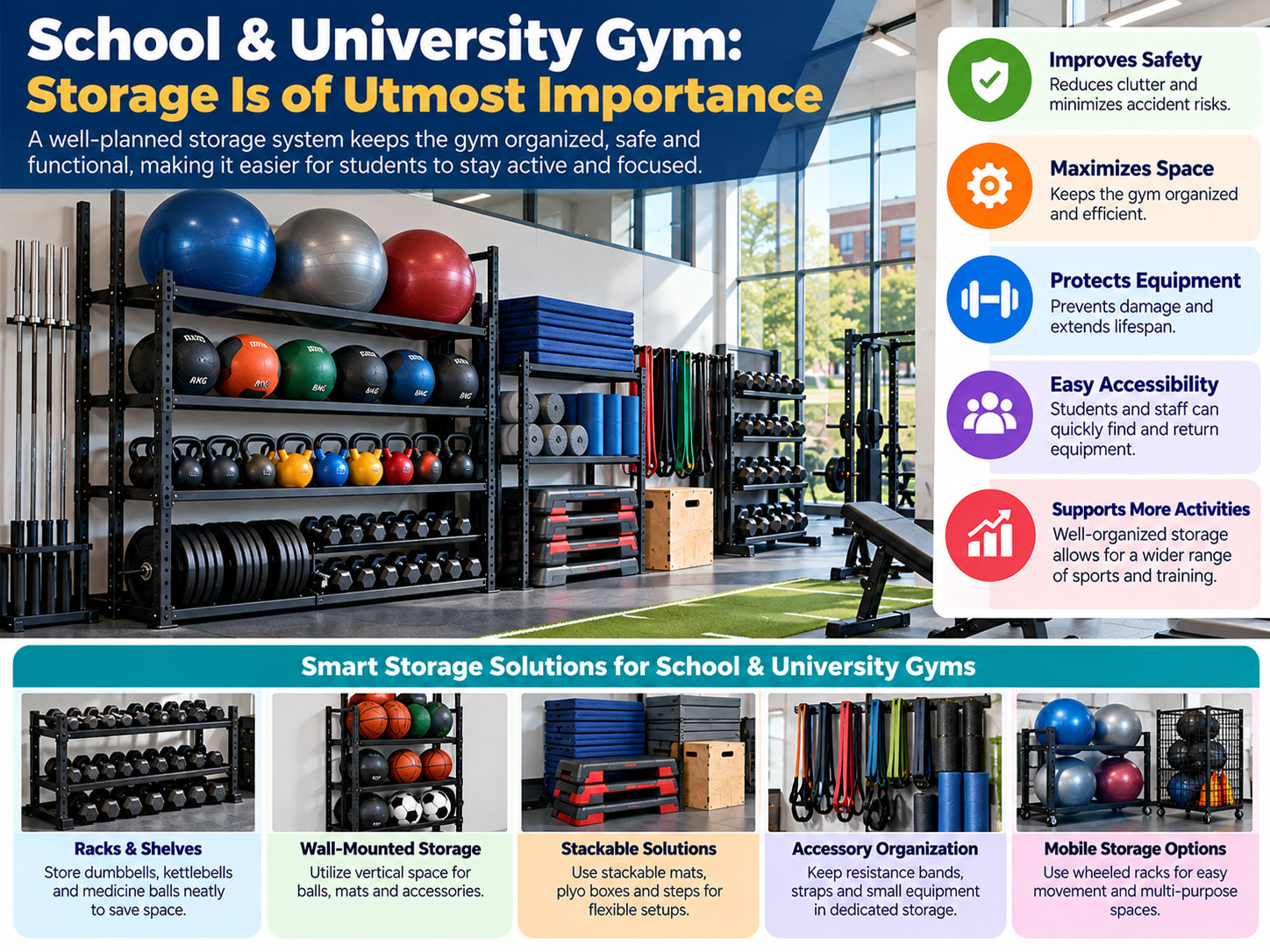
School & University Gym: Storage Is of Utmost Importance
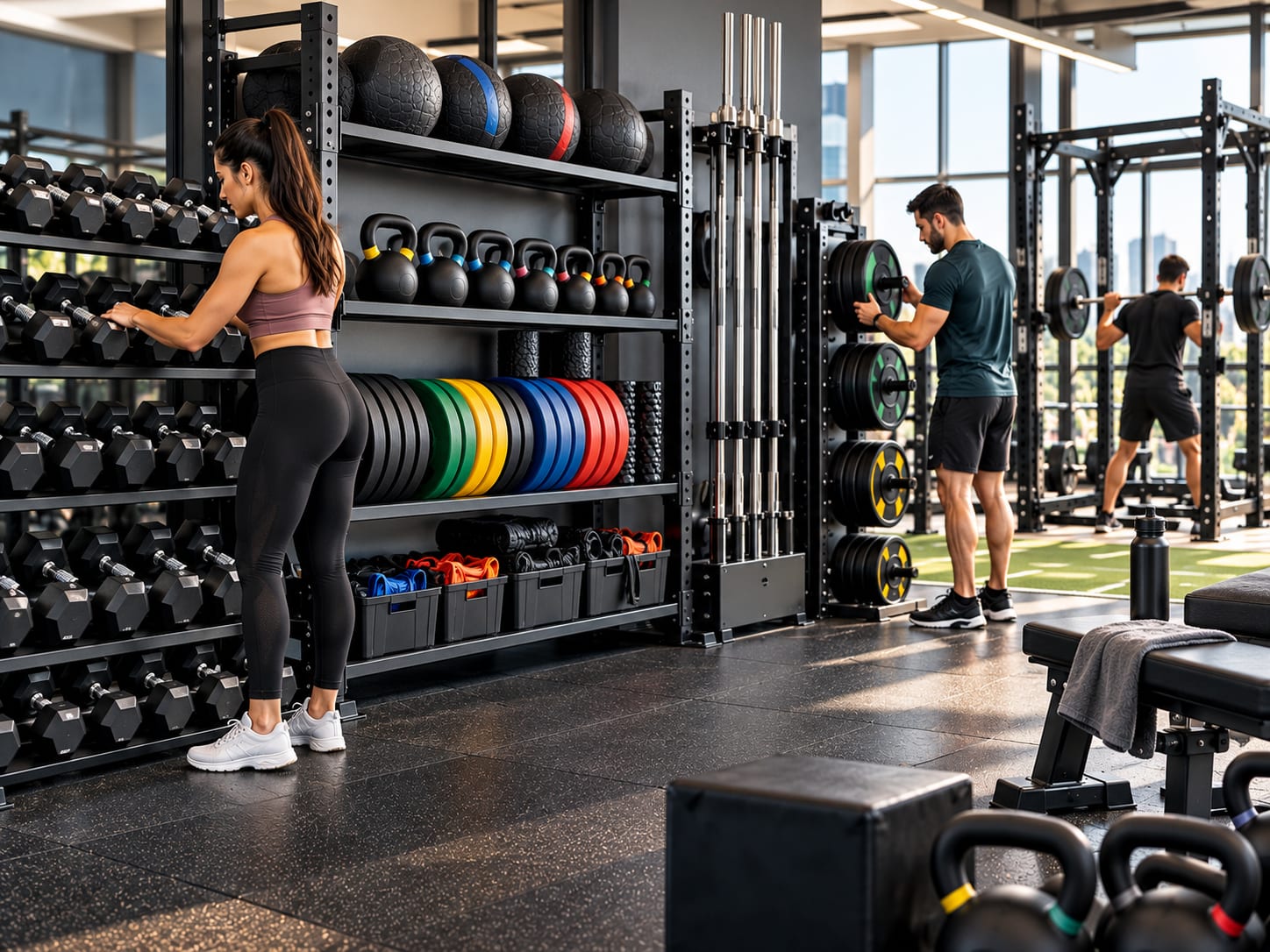
Storage in a school gym should be part of the overall design from the beginning phase. Small equipment like balls, cones, ropes, mats, resistance bands, weights, and others can quickly make a gym look crowded if there is no proper storage system.
There are scenarios where poor storage can lead to safety problems. Equipment left on the floor can become a trip hazard, while heavy objects placed on unsuitable shelves may fall or pose a threat for students to handle safely.
Storage should therefore be planned based on the equipment being purchased. Wall-mounted racks can be useful for some equipment where appropriate. Ball racks can keep sports balls organised. Shelving can be used for smaller items, while designated areas can be provided for larger equipment.
The height and accessibility of storage should also be considered. Equipment that students are not expected to access independently should not be stored where they can easily reach it. Every piece of equipment should have a clear place to store. This encourages students to take responsibility for the gym.
Never Ignore the Accessibility Factor in a Gym
A modern educational gym should be usable by students with different physical abilities. Accessibility does not mean providing a clear doorway. Equipment placement, floor space, access routes, and the types of activities offered should all be considered.
Adjustable equipment can be helpful because it can accommodate different users. Open floor areas can allow students to participate in movement-based activities without being restricted to machines.
Teachers should also be able to adapt activities when necessary. The ultimate goal is to make physical activity as inclusive as possible rather than designing a gym around only the strongest or experienced students.
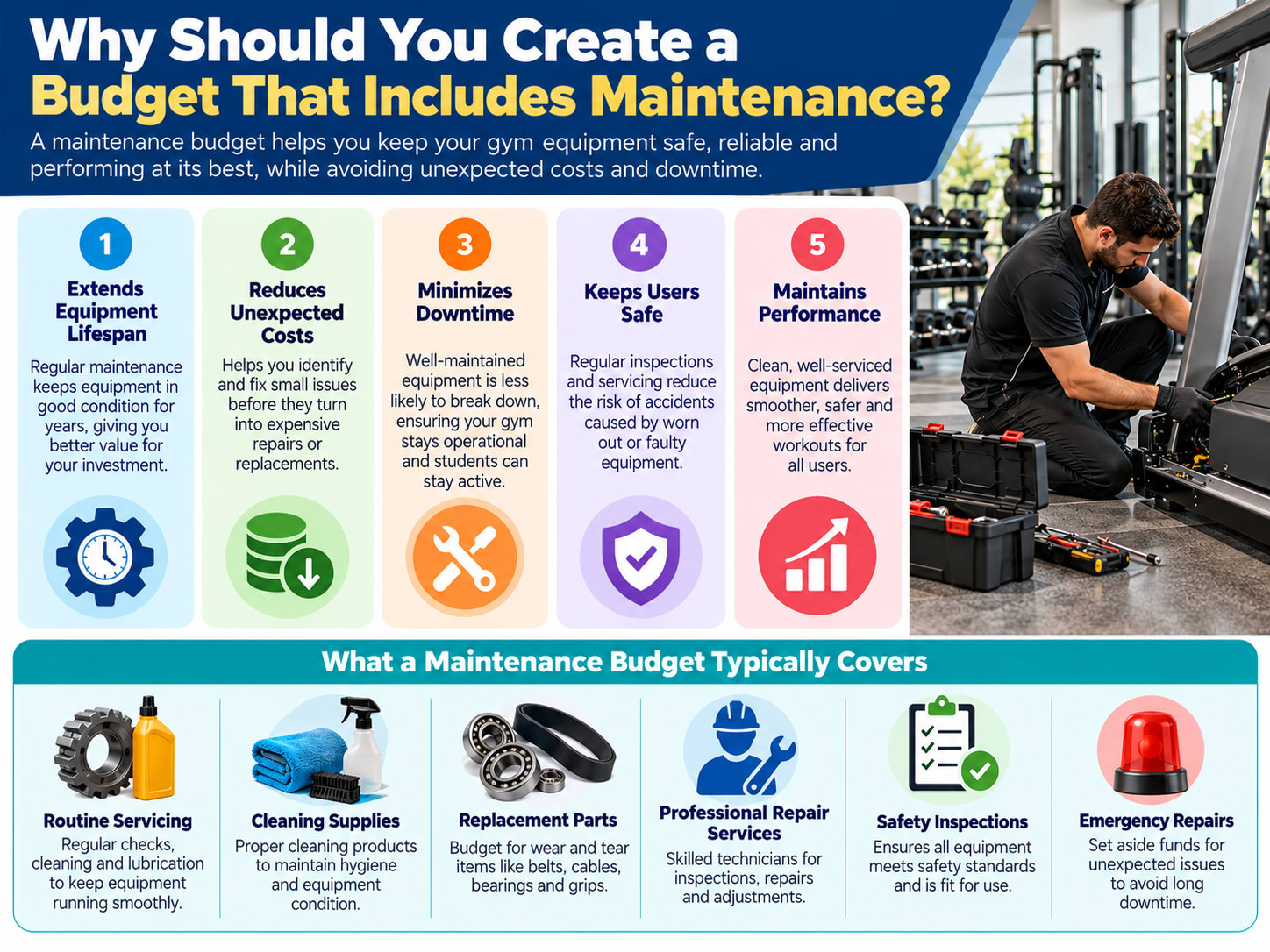
Why Should You Create a Budget That Includes Maintenance?
When planning a gym, the purchase price is only one part of the cost. Schools and universities should also consider aspects like delivery, installation, maintenance, replacement parts, repairs, cleaning, storage, and staff training.
It may be tempting to purchase a large number of low-cost items to fill the gym. However, replacing damaged equipment frequently may cost more in the long run. Instead, institutions can divide their budget into categories such as the following:
Essential safety equipment
Basic fitness equipment
Strength and conditioning equipment
Multi-sport equipment
Storage
Maintenance
Staff training
Future replacement or expansion
Experts suggest that a phased approach can also work well. The gym does not have to contain every possible piece of equipment from day one. Start with essential and versatile items, then observe how students use the space, and add equipment eventually based on actual needs.
Ensure to Keep Gym Rules Simple and Effective
Making clear rules and sticking to them make a gym easier to manage. The rules do not need to be complicated. Students should understand them quickly. Check out a few examples:
Follow the teacher's or instructor's instructions.
Use equipment only for its intended purpose.
Warm up before strenuous activities.
Keep walkways clear.
Return equipment after use.
Report damaged equipment immediately.
Do not use equipment without proper instruction.
Respect other students using the gym.
Keep the gym clean and organised.
Stop an activity if something feels unsafe and inform the supervisor.
These rules can be displayed and instructed clearly inside the gym.
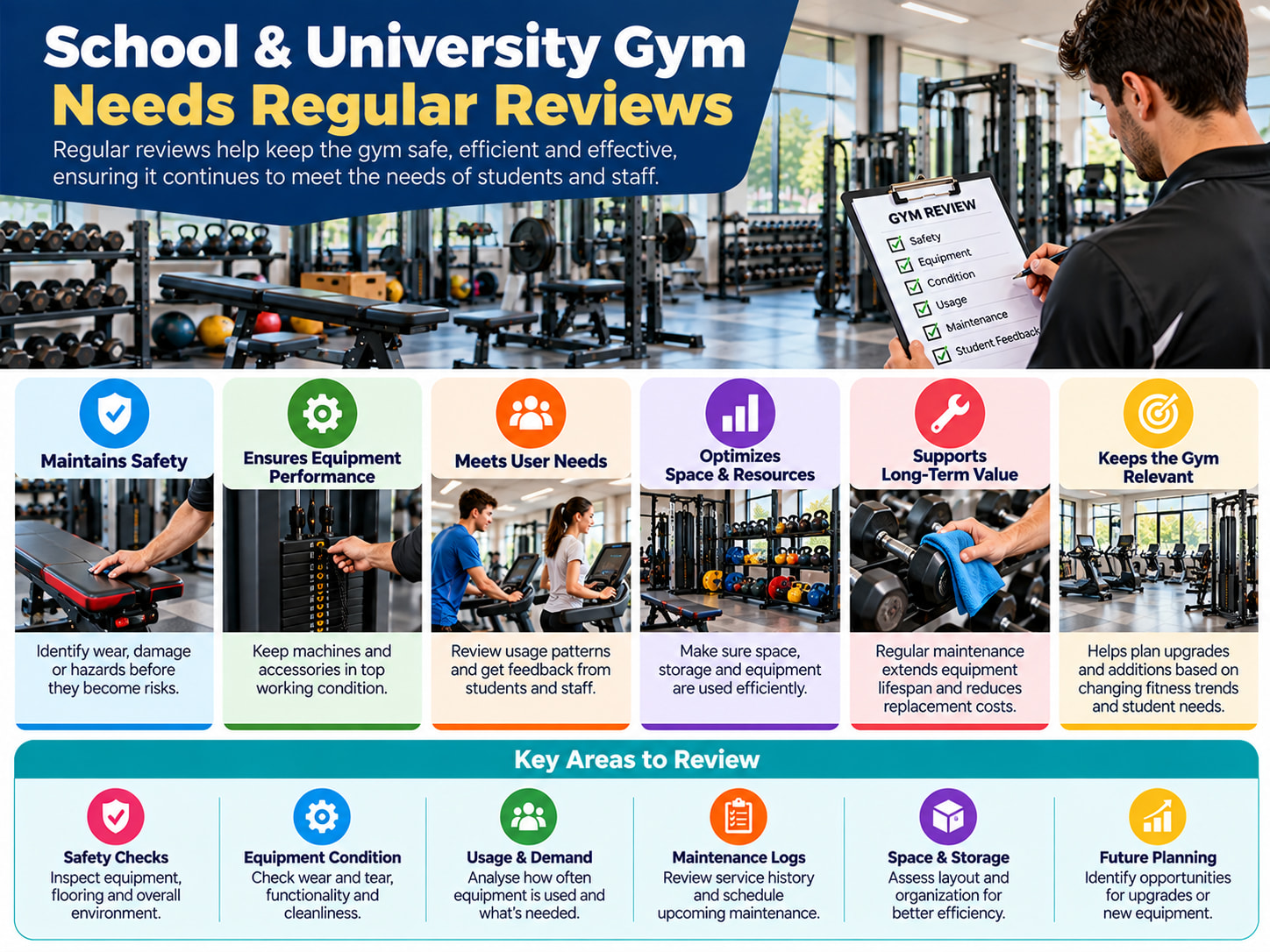
School & University Gym Needs Regular Reviews
The layout planning does not end with the installation of equipment. Schools and universities should regularly review how the gym is being used. Some equipment may be extremely popular, while other items may rarely be used. Some areas may become crowded during particular classes.
Feedback from physical education teachers, students, and maintenance staff can provide useful information. For example, teachers may notice that certain equipment is difficult for younger students to adjust. Coaches may identify a need for more sport-specific conditioning tools.
Students may also point out storage problems or equipment that is difficult to access. A quarterly or yearly review can help institutions decide what should be repaired, replaced, or added.
For customers across Bahrain, Lifetime Fitness Store offers quality gym equipment, competitive offers, reliable delivery, and professional installation services for a complete and convenient fitness equipment buying experience.
Build a Holistic Gym That Works for Students
The best school or university gym is not necessarily the one with the largest number of machines or the most expensive equipment. It is the one that is safe, practical, durable, flexible, and suited to its users.
The age range factor should guide equipment selection. Supervision should be mandatory in everyday use. Durable equipment can help manage the demands of frequent student activity. Multi-sport equipment can provide greater value by supporting different types of training.
Safety should influence everything from floor layout to equipment placement. And good storage can keep the entire space organised and reduce unnecessary risks.
Most importantly, a gym should support the educational purpose of physical activity. Students should leave the gym not only stronger or fitter, but also more confident in moving their bodies, working with others, following safety practices, and developing healthy habits.
With thoughtful planning, even a modest gym can become a valuable part of a school's or university's environment. The aim is not simply to buy equipment, but to create a space where students can learn, move, train, and stay active safely.
Suitable equipment depends on student age, fitness level, available space and intended activities. Common options include cardio machines, selectorized strength equipment, benches, dumbbells, kettlebells, resistance bands, exercise mats, functional training equipment and mobility accessories.
Schools should consider students' age range, physical development, equipment adjustability, ease of use and required supervision. Equipment should support controlled movement and appropriate resistance while allowing teachers or qualified staff to supervise training effectively.
Key considerations include equipment spacing, suitable flooring, clear walkways, secure storage, ventilation, supervision, equipment condition and regular maintenance. The layout should also separate different training activities where practical to reduce congestion and improve usability.
School and university gyms can experience frequent use by many students, making durable equipment important for long-term performance. Proper racks and storage systems also help keep weights, balls, mats and training accessories organised, accessible and away from walkways.




 Get a weekly dose of latest stories
and useful tips directly in your inbox!
Get a weekly dose of latest stories
and useful tips directly in your inbox!


 0
0








































































 Price Match Guarantee
 Free Shipping
 Product Warranty
 After-Sale Support
 Have Coupon Code?
 You'll Save 0.00 On This Order
 Safe And Secure Payments. Easy Returns. 100% Genuine Products