Magnetic vs Friction Exercise Bikes: Noise, Resistance, Price & Buying Guide in Bahrain
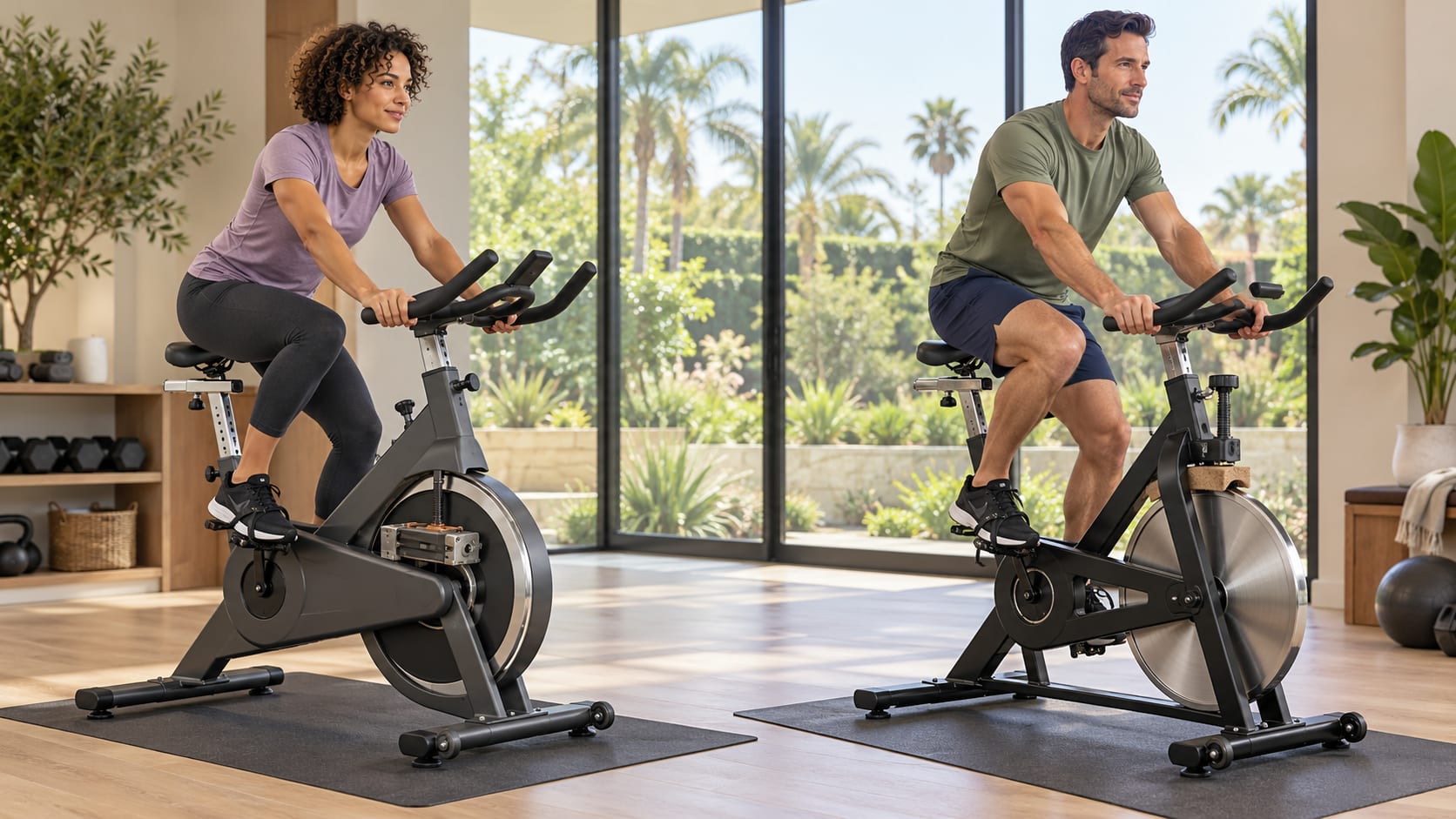
Exercise bikes are one of the most preferred popular choices for home gyms, apartment fitness spaces and commercial gyms. They offer practical ways to enhance cardiovascular fitness, build stamina and stay fit without needing a large workout area. However, when it comes to choosing exercise bikes, many become confused over opting for magnetic resistance bikes or friction resistance bikes.
Both types can provide effective workouts, but they differ in resistance creation, noise making, maintenance needs, and cost. The right choice depends on factors like budget, workout routine, available space and whether the bike will be used at home or in a busy gym.
For example, someone setting up a home gym in an apartment may prefer a quiet bike that does not disturb neighbours. A commercial fitness centre may focus more on durability, frequent use and long-term maintenance costs.
This blog compares magnetic and friction exercise bikes to help you choose the right option for your various fitness requirements.
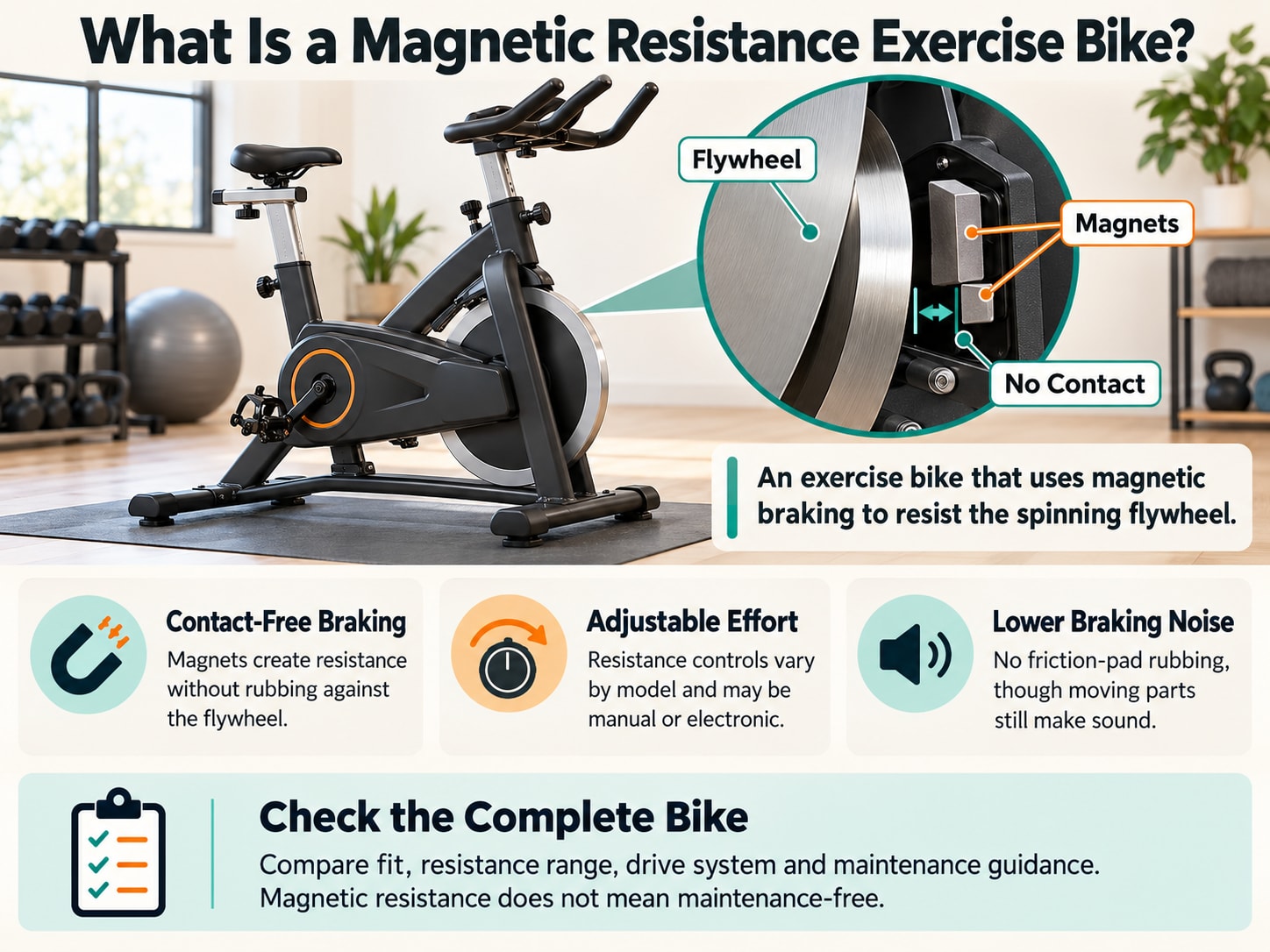
What Is a Magnetic Resistance Exercise Bike?
A magnetic resistance exercise bike uses magnets to control the resistance you feel while pedalling. The resistance system works with a flywheel, and the magnets create resistance without directly rubbing against the flywheel.
When you increase the resistance, the magnetic system influences how strongly the magnets affect the flywheel. This makes pedalling harder and allows you to adjust the intensity of your workout.
Many magnetic exercise bikes use a manual adjustment knob, while others feature electronic resistance controls that let you change the level through a console.
Magnetic bikes are available in different designs, including upright bikes, recumbent bikes and indoor cycling bikes. Some models offer basic resistance settings, while more advanced options include workout programmes, heart-rate tracking and app connectivity.
Salient Features of Magnetic Exercise Bikes
Quiet operation compared with most friction resistance systems.
Smooth and controlled pedalling.
Different resistance levels, depending on the model.
Suitable for home gyms, apartments, offices and many commercial fitness facilities.
Less wear on the resistance mechanism because the magnets do not directly rub against the flywheel.
Magnetic resistance bikes are a practical choice for people who want a comfortable and relatively low-maintenance cardio machine.
What Is a Friction Resistance Exercise Bike?
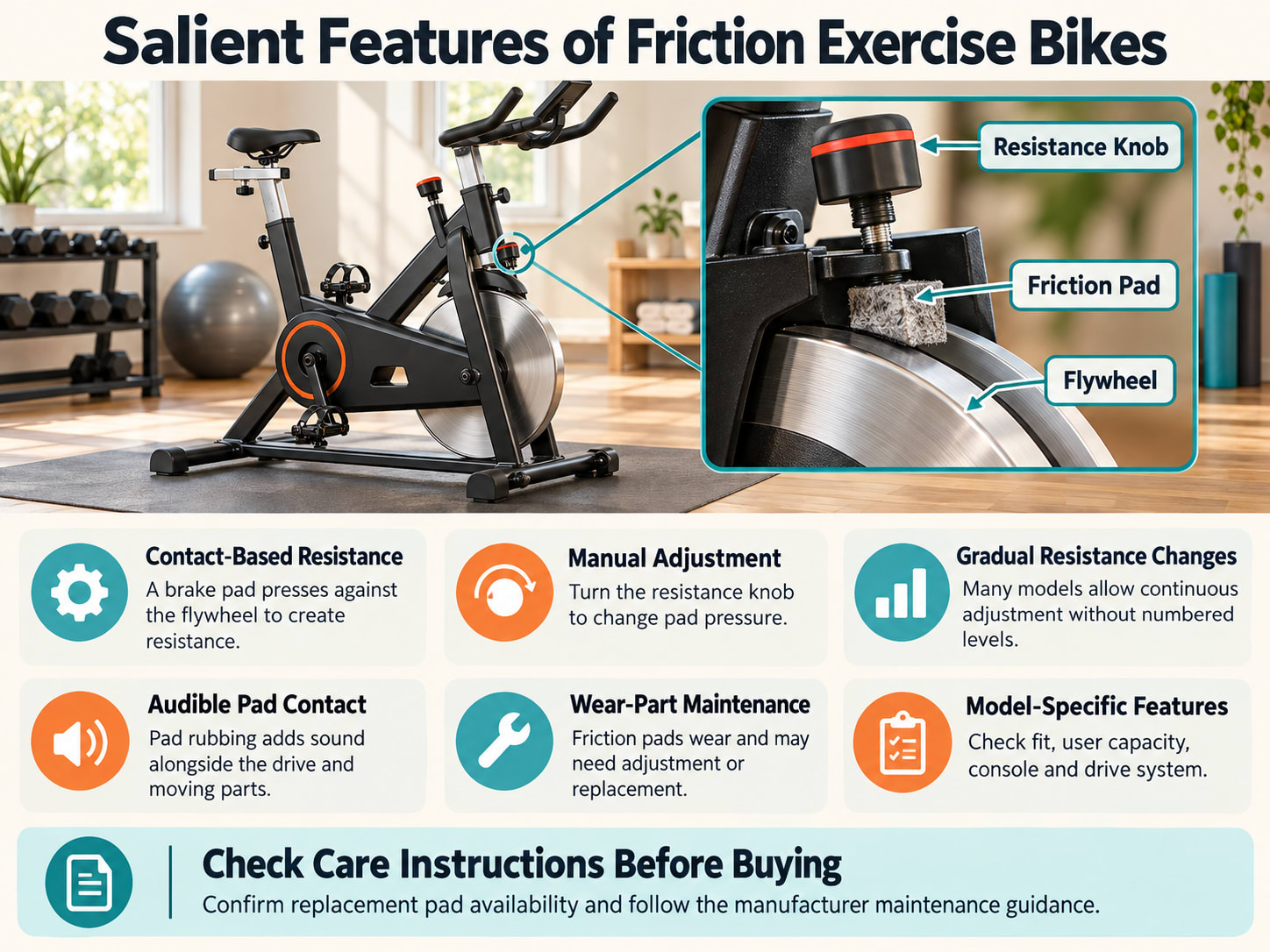
A friction resistance exercise bike uses a brake pad or friction material that presses against the flywheel to create resistance. When you increase the resistance, the pad presses more firmly against the flywheel, making it harder to pedal.
This system is commonly found in traditional indoor cycling bikes and some spin bikes. The resistance can often be adjusted using a simple mechanical knob, making the design straightforward to operate.
Friction resistance bikes are popular among users who enjoy traditional indoor cycling workouts. They can offer a challenging ride for interval training, endurance sessions and high-intensity cycling.
Salient Features of Friction Exercise Bikes
Direct and adjustable resistance.
A simple mechanical resistance system.
Often available at an affordable initial price.
Suitable for spin-style workouts and high-intensity sessions.
Requires periodic inspection and replacement of worn friction pads.
The main consideration is that the brake pad and flywheel come into contact during use. This creates friction, which can lead to noise and gradual wear over time.
Noise Levels: Which Exercise Bike Is Quieter?
Noise factor is one of the biggest differences between magnetic and friction resistance exercise bikes. It matters especially when the bike is used in an apartment, shared home or small fitness room.
Magnetic resistance bikes are generally quieter because the magnets create resistance without rubbing directly against the flywheel. During normal use, you may hear the movement of the flywheel, pedals and other mechanical components.
This makes magnetic bikes suitable for early-morning or late-night workouts. They are also a good choice for people who watch television, listen to music at a low volume or exercise while other family members are working or sleeping.
For apartment residents, a quiet exercise bike can make regular training more convenient. However, magnetic resistance does not mean completely silent operation. A worn bearing, loose pedal, damaged belt or poorly tightened component can still create unwanted sounds.
Friction resistance bikes use a pad that presses against the flywheel. This contact can create a rubbing sound, particularly when resistance is increased or the friction components become worn.
Some well-maintained friction bikes operate smoothly, but they are generally more likely to produce resistance-related noise than magnetic models. The noise may be less important in a dedicated gym or spin studio where music and other exercise equipment are already operating.
Which Exercise Bike Should You Choose?
Choose a magnetic exercise bike, if quiet operation is a priority for you. A friction bike may be suitable, if you have a dedicated workout area and do not mind some mechanical noise.
Remember that the floor, bike frame, pedal design and maintenance condition can also affect noise. A suitable exercise mat may help reduce vibration, but it will not eliminate mechanical sounds completely.
Magnetic vs Friction: How Does Pedalling Feel?
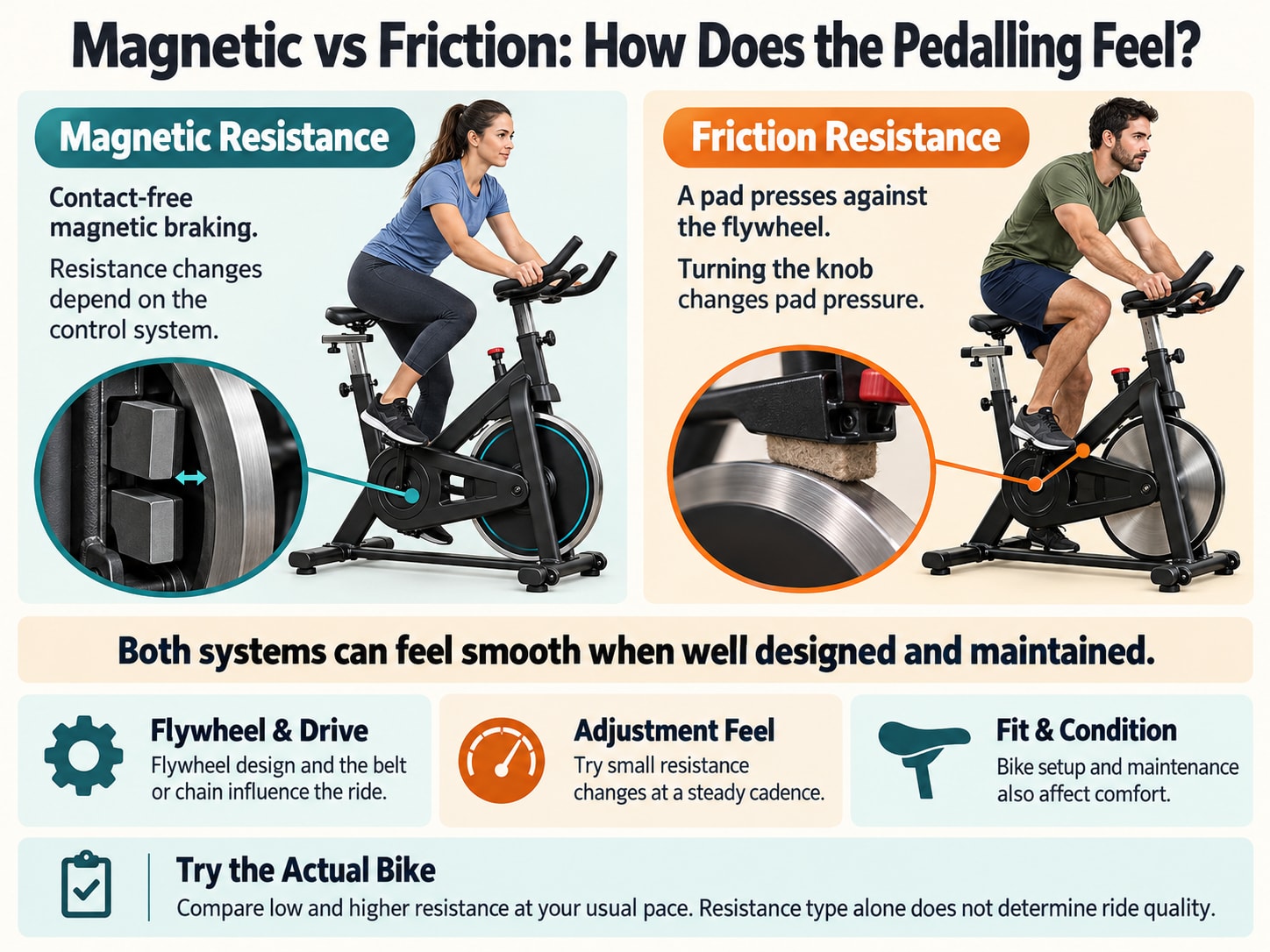
The way resistance feels during a workout can influence how much you enjoy using an exercise bike.Magnetic exercise bikes generally provide smooth and controlled resistance. Changing the resistance allows you to make your workout easier or harder without relying on a pad pressing against the flywheel.
This can be useful for steady cycling, warm-ups, longer cardio sessions and structured workouts that require frequent resistance changes.Many models offer several resistance levels. More advanced bikes may provide electronic adjustments and preset training programmes.
However, the feel varies by model. Some entry-level magnetic bikes have limited resistance ranges, while higher-quality machines may offer more challenging settings for experienced cyclists.
Friction bikes create resistance through direct contact between the brake pad and flywheel. Many users enjoy this traditional indoor cycling feel, especially during standing climbs, sprint intervals and demanding spin sessions.
The resistance is usually controlled through a manual knob. Turning the knob changes the pressure applied by the pad, allowing the rider to adjust the difficulty.
The adjustment may feel less precise than electronic resistance on some models. The feel can also change as the friction pad wears and requires adjustment or replacement. Friction resistance can still provide a very effective workout. What matters is whether the bike offers the level of challenge and control you need.
Maintenance: Which Exercise Bike Is Easier to Maintain?
It goes without saying that the maintenance factor is important for both home users and commercial gym operators. Regular care helps keep exercise bikes safe, comfortable and reliable.
Magnetic Exercise Bike Maintenance
Magnetic resistance bikes generally require less maintenance because the resistance system does not depend on a brake pad rubbing against the flywheel. However, they still contain moving parts that need periodic inspection. The basic maintenance includes the following steps:
Wiping sweat from the frame, seat and handlebars after use.
Checking pedals and crank arms for looseness.
Inspecting the drive belt or chain, depending on the design.
Checking the seat and handlebar adjustment mechanisms.
Listening for unusual sounds during pedalling.
Following the manufacturer's cleaning and servicing instructions.
Electronic magnetic bikes may also have consoles, sensors, wiring and power components that need attention if a fault occurs.
In the GCC countries, dust and sweat can affect equipment over time, especially in rooms with frequent use or poor ventilation. Wiping the bike regularly and keeping it in a clean, suitable environment can help maintain its condition.
Friction Exercise Bike Maintenance
Friction bikes require similar care, but their resistance pads need additional attention. Because the pad makes contact with the flywheel, it gradually wears during use. The rate of wear depends on workout intensity, resistance settings, frequency of use and the quality of the components.
The maintenance may include the following steps:
Inspecting the friction pad for wear.
Adjusting the resistance mechanism when necessary.
Replacing worn brake pads.
Checking the flywheel and contact area according to the manufacturer's instructions.
Tightening pedals, bolts and other mechanical connections.
Cleaning sweat and dust from the bike.
A friction bike used for daily spin classes may need more frequent resistance-system checks than one used occasionally at home. Do not apply lubricant to a friction pad or flywheel contact surface unless the manufacturer instructs you to do so. Lubrication in the wrong place can affect braking performance.
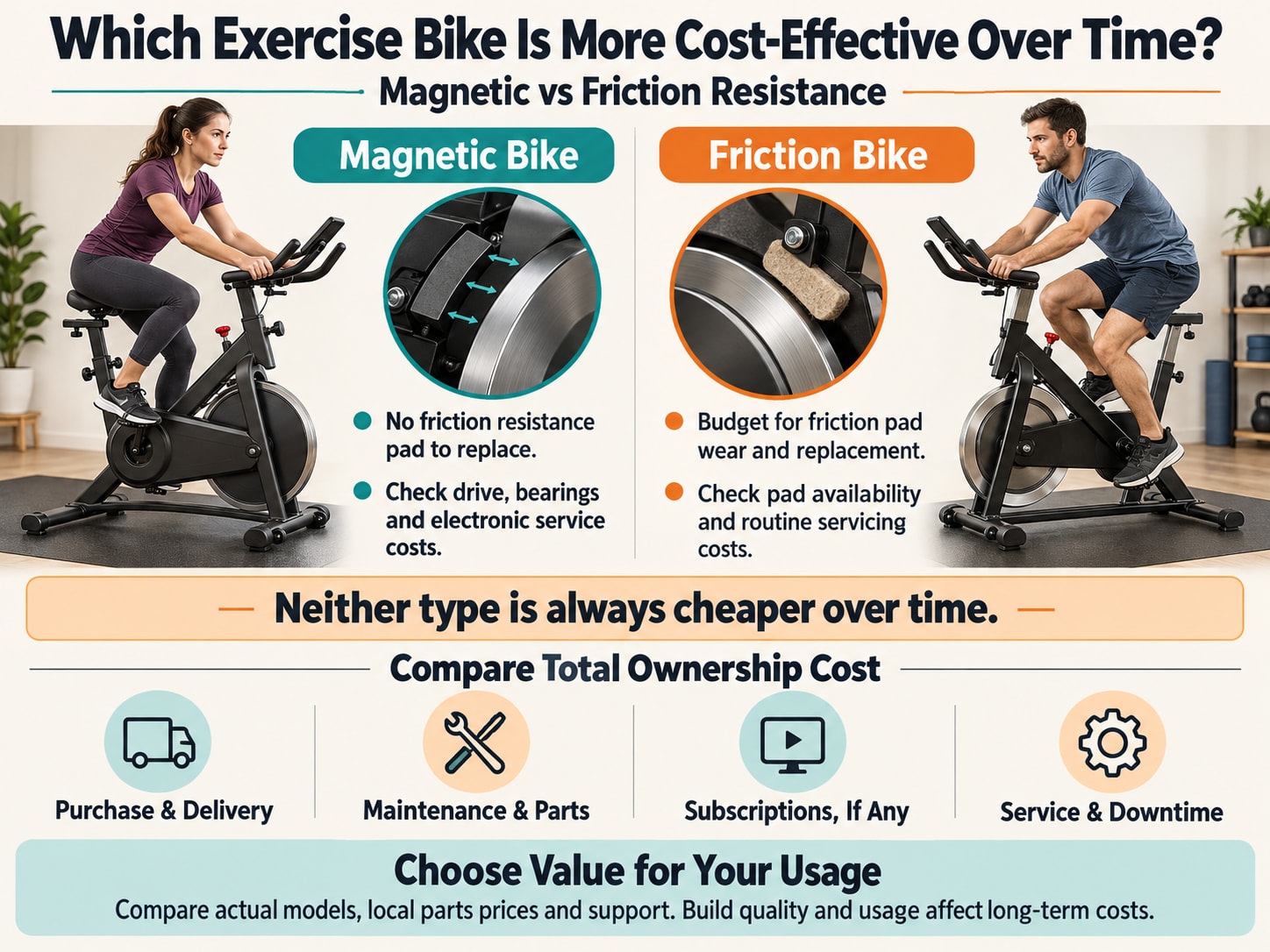
Which Exercise Bike Is More Cost-Effective Over Time?
Magnetic bikes often have an advantage in routine resistance-system maintenance. However, a higher purchase price may offset some of those savings. Friction bikes may cost less initially, but replacement pads and servicing can add to the long-term expense.
For commercial gyms in the GCC, it is worth comparing the expected service needs, spare-parts availability, warranty and cost of ownership before making a decision.
Price: Which Exercise Bike Offers Better Value?
The purchase price of an exercise bike depends on its design, brand, construction, resistance range, console features and intended use.
Magnetic resistance bikes are available in budget-friendly home models as well as premium commercial machines. Friction bikes also range from basic models to durable indoor cycling bikes designed for regular spin sessions.
In general, a basic friction resistance bike may have a lower initial price than a magnetic bike with similar build quality and features. However, this is not a universal rule.
What Factors Affect the Price of a Magnetic Bike?
Magnetic bikes may cost more when they include the following features:
Electronic resistance adjustment.
A larger or heavier flywheel.
A more robust frame.
A comfortable seat and adjustable handlebars.
A digital console with workout data.
Heart-rate monitoring or connected training features.
A higher user-weight capacity and commercial-grade construction.
A simple magnetic bike can still be an affordable option for home use. You do not necessarily need a premium model if your goal is basic cardio exercise.
What Affects the Price of a Friction Bike?
Friction bikes may offer good value when they have a simple mechanical design. The final price depends on factors such as frame stability, flywheel construction, adjustment options, seat quality and overall durability.
A low-cost bike may be suitable for occasional use, but it is important to check its stability and maximum user-weight rating. A bike used frequently by different people may need a stronger frame and better components.
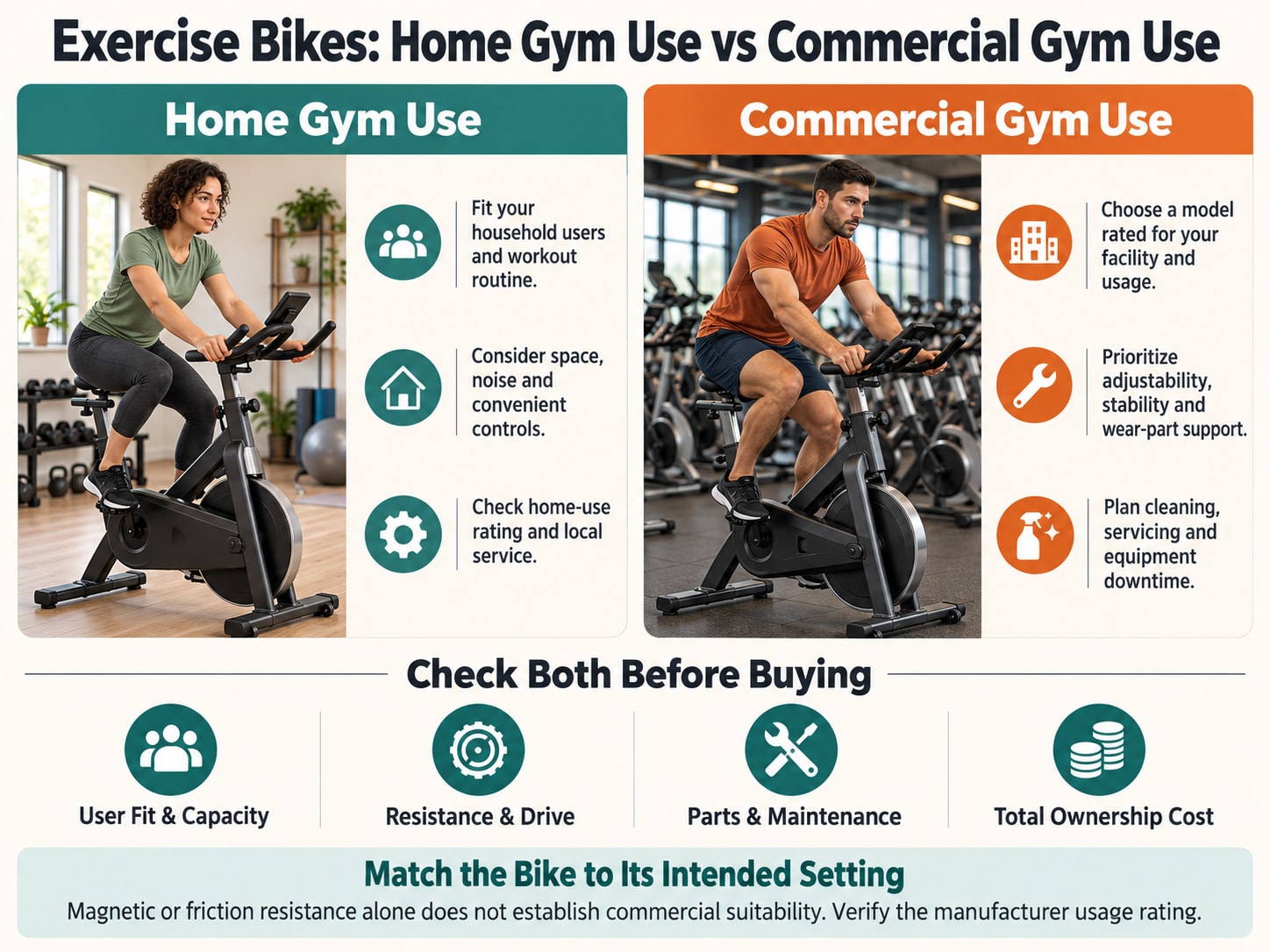
Exercise Bikes: Home Gym Use vs Commercial Gym Use
The best resistance system often depends on where the bike will be used.
Best Exercise Bike for Home Gyms
For most home users, a magnetic resistance bike comes across as a strong option. Its quieter operation and generally lower resistance-system maintenance make it convenient for regular workouts.
It is particularly suitable for the following scenarios:
Apartments and smaller homes.
People who exercise early in the morning or late at night.
Beginners who want to build a consistent cardio routine.
Families sharing one exercise bike.
Home gyms where easy maintenance is important.
If you live in an apartment, check the bike's footprint, weight, transport wheels and floor-clearance requirements before buying it. A compact bike may be easier to position in a spare room or multipurpose living space.
You should also check the noise from the pedals and flywheel, not just the resistance system. A stable frame and suitable flooring can improve the overall experience. A friction bike can still be a sensible home purchase if you prefer its riding feel, have a dedicated workout area and want to keep the budget low.
Best Exercise Bike for Commercial Gyms
Commercial gyms need equipment that can handle frequent use by different people. Durability, stability, comfort, maintenance and parts availability are important considerations.
Magnetic resistance bikes can work well in commercial fitness centres, hotels, residential communities, corporate gyms and general cardio areas. They are especially useful when quiet operation and lower routine resistance-system maintenance are priorities.
Friction bikes can be suitable for spin studios and cycling-focused classes, where riders want a traditional indoor cycling experience and the facility has a maintenance routine in place. For a commercial purchase, consider the following factors:
Expected daily usage.
Frame strength and stability.
Maximum user-weight capacity.
Resistance range and adjustment quality.
Seat and handlebar adjustability.
Availability of replacement parts.
Warranty and after-sales support.
Cleaning and maintenance requirements.
Ease of use for people with different fitness levels.
Do not assume that every magnetic bike is commercial-grade or that every friction bike is suitable for intensive use. Always check the manufacturer's intended-use rating and specifications.
Choosing an Exercise Bike for GCC Conditions
The climate and typical living arrangements in the GCC countries can influence how you select and maintain fitness equipment.
Consider Indoor Conditions
If you plan to keep your bike in a garage, balcony enclosure or other warm space, check the manufacturer's recommended operating and storage conditions. High temperatures and humidity can affect electronic components, upholstery and some materials.
Hence, an indoor, well-ventilated area is generally a better choice. Avoid exposing the bike to direct sunlight, rain or excessive moisture.
Think About Dust and Sweat
Dust can accumulate around moving parts, while sweat can damage finishes and contribute to corrosion if it is not cleaned regularly. Wipe the bike after workouts and inspect it periodically. In shared gyms, use a consistent cleaning routine and follow the manufacturer's instructions for consoles, seats, handlebars and other surfaces.
Check Delivery and Installation
Before ordering an exercise bike, measure the space where it will be used. Check the dimensions of the assembled bike, access through doorways and lifts, and any stairs or narrow passages. For commercial facilities, confirm delivery access and assembly requirements.
When comparing products from fitness equipment retailers, enquire about delivery coverage, installation, warranty and service support. These practical details are as important as the resistance system.
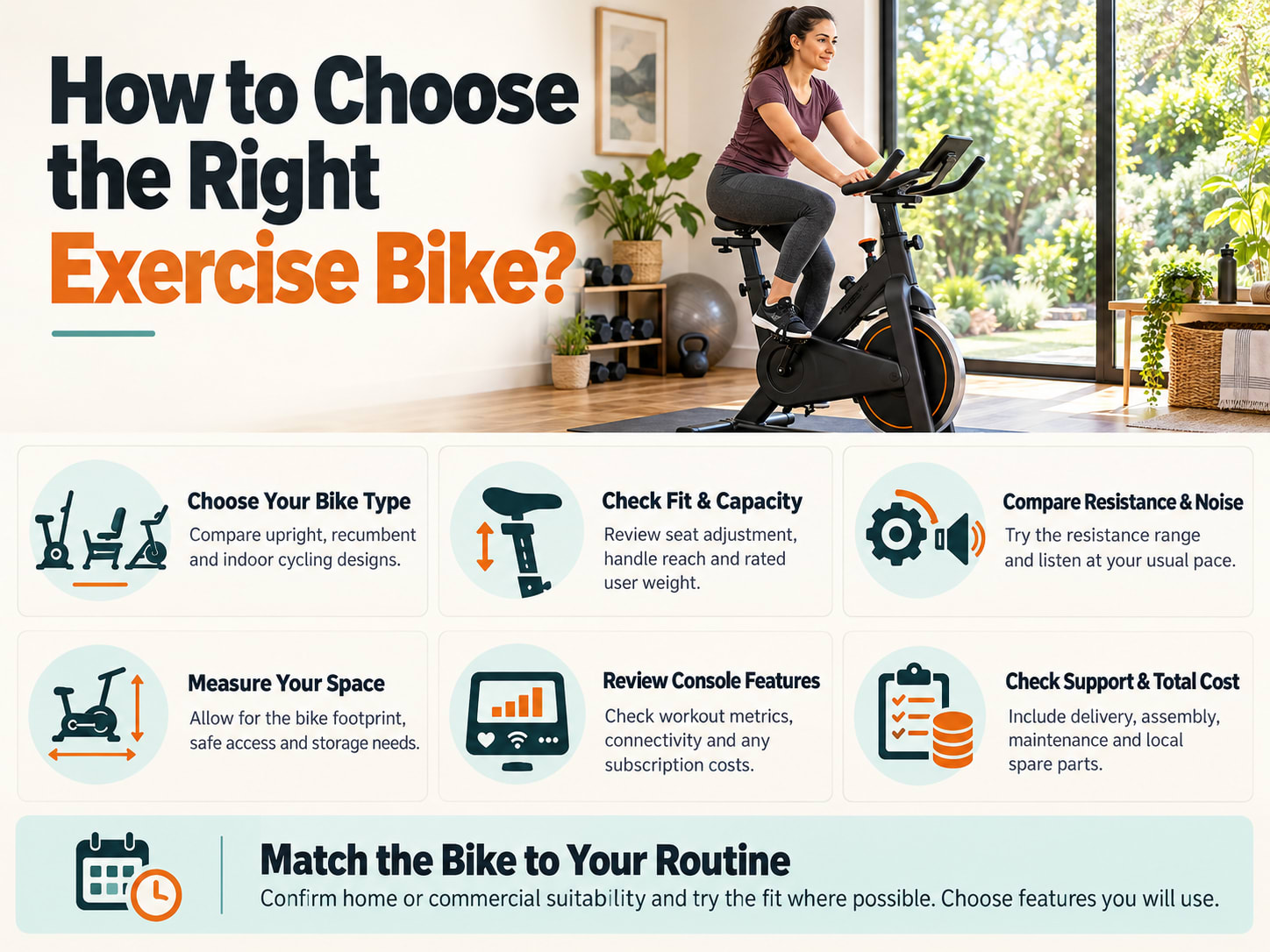
How to Choose the Right Exercise Bike?
Use the following checklist to narrow down your options.
Choose a magnetic exercise bike if:
You prefer quieter workouts.
You live in an apartment or share your living space.
You want smooth resistance adjustments.
You prefer less routine maintenance of the resistance mechanism.
You plan to use the bike regularly for general cardio.
You are willing to compare the purchase price against the features offered.
Choose a friction exercise bike if:
You prefer a traditional spin-bike feel.
You want a straightforward mechanical resistance system.
You find a suitable model at a lower initial price.
You do not mind periodic inspection and replacement of friction pads.
You have a dedicated workout area or a spin studio with an appropriate maintenance plan.
Before purchasing either type, check the bike's stability, resistance range, seat comfort, adjustability, user-weight limit and warranty. If possible, try the bike to see whether the pedalling motion feels natural.
People in Bahrain can visit Lifetime Fitness Store to explore a wide range of quality fitness equipment, enjoy exciting offers along with expert guidance, and benefit from fast delivery, professional installation and dependable after-sales service.
Conclusion
Magnetic and friction exercise bikes can both provide effective cardio workouts, but they suit different priorities.
A magnetic resistance exercise bike is usually the better starting point for home users who want quiet operation, smooth pedalling and less routine maintenance of the resistance system. It is also a strong option for many general-purpose commercial gyms when the model is built for frequent use.
A friction resistance exercise bike is worth considering if you prefer traditional spin-style resistance, want a simple mechanical setup or find a model that meets your needs at a lower initial price. You should be prepared to inspect and replace the friction pads when necessary.
For buyers in the GCC countries, compare more than just resistance type. Think about your available space, workout routine, budget, delivery arrangements, warranty and long-term service support.
The right exercise bike is one that fits your space, feels comfortable, matches your training goals and is practical to maintain. By comparing these factors before purchasing, you can choose a bike that supports a consistent fitness routine at home or in a commercial gym.
A magnetic bike is often better for users who prioritise quiet operation and lower routine maintenance of the resistance system. A friction bike may be better for someone who prefers traditional spin-bike resistance or wants a straightforward mechanical design. The best option depends on your needs and budget.
Magnetic resistance bikes are generally quieter because their magnets do not rub directly against the flywheel. However, pedals, bearings, the drive system and floor vibration can still create noise. Look for a stable bike with good construction and maintain it regularly.
Yes. They still need regular cleaning and checks of pedals, crank arms, the drive system, seat adjustments and other moving parts. They generally avoid the recurring friction-pad wear found in friction resistance bikes, but electronic models may require servicing if a component develops a fault.
Yes, provided the model is designed for the expected workload. Friction bikes are often used for spin-style training, but commercial facilities should plan for regular inspections and replacement of worn pads. Frame quality, warranty and spare-parts availability should also be checked.
Yes. Both types can suit beginners. Start with a comfortable resistance level and increase the intensity gradually. Check that the seat and handlebars can be adjusted correctly, and choose a stable bike that feels comfortable to use.




 Get a weekly dose of latest stories
and useful tips directly in your inbox!


 0










































 Price Match Guarantee
 Free Shipping
 Product Warranty
 After-Sale Support
 Have Coupon Code?
 You'll Save 0.00 On This Order
 Safe And Secure Payments. Easy Returns. 100% Genuine Products