Air Hockey Table Buying Guide: Right Size, Motor, Airflow, Features & Durability for Home or Commercial Use in Bahrain
Air hockey may have more takers among youngsters, thanks to the fun and excitement it generates. It is still a game that is enjoyed by people of all age groups. Be it a casual match between members of a family, a competitive game with friends, air hockey tables bring tons of enjoyment.
Having said that, choosing the right table is not an easy task. There are specific factors like different sizes, designs, features, and price ranges that you need to focus on before purchasing one.
There are tables that are designed for casual home use, while there are also those that are built to handle regular playing sessions in game rooms, clubs, and commercial spaces. Needless to say, a table that works well in a home may not be suitable for a busy gaming centre.
So, what exactly should you look for before buying an air hockey table? Some of the factors include table length, airflow, motor performance, rail quality, scoring system, playing surface, and overall durability. A know-how in these things will help you make a better buying decision.
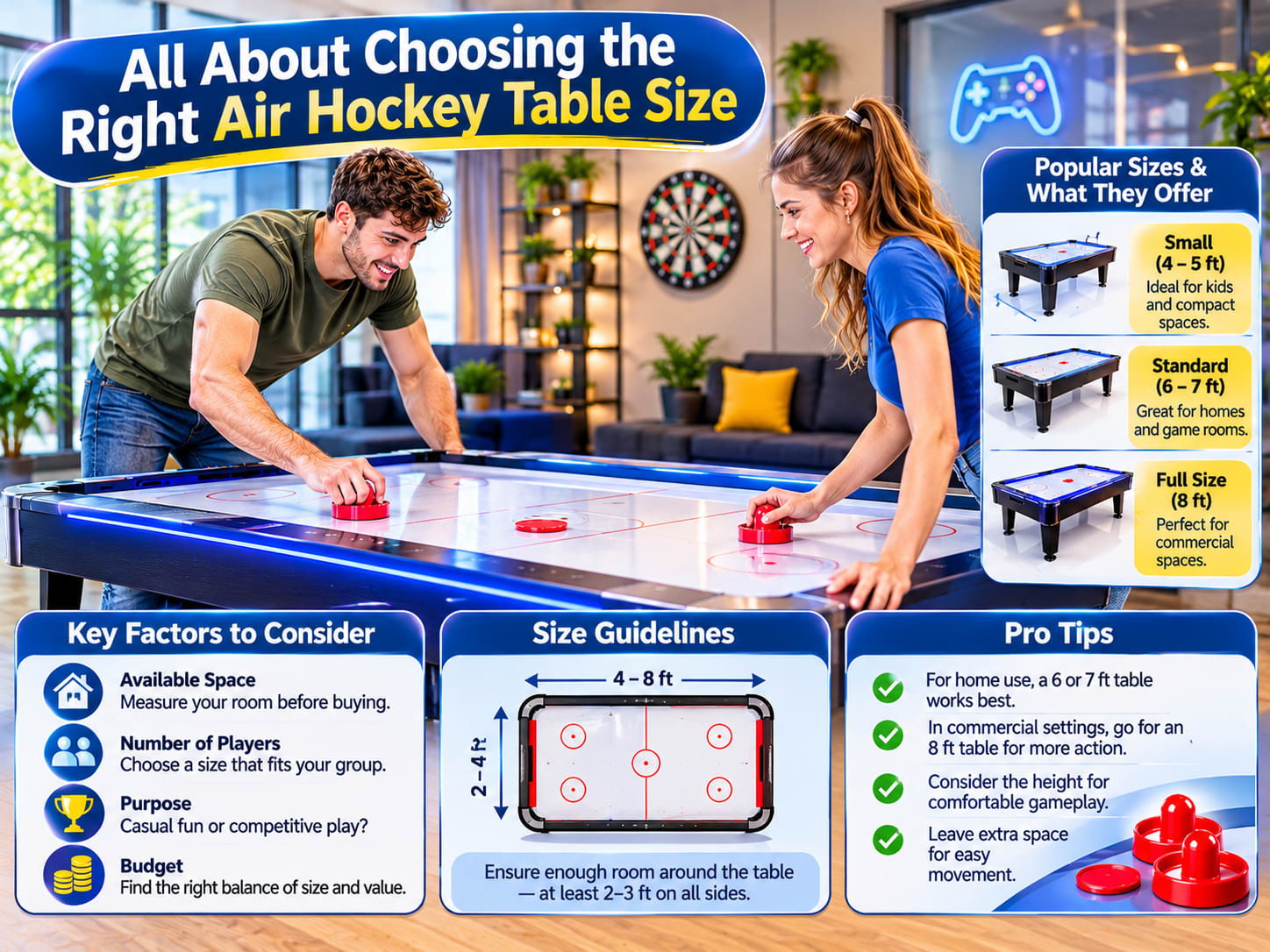
All About Choosing the Right Air Hockey Table Size
Table size is one of the first things to consider when buying an air hockey table. The right size depends on the available space, the age of the players, and how frequently the table will be used. Air hockey tables are generally available in small, medium, and full-size models.
Small Tables (Usually 2 to 4 ft)
These are suitable for young children and beginners. They are compact, easy to move, and can fit into bedrooms or smaller play areas. These tables are a good choice for casual entertainment, but may not provide the same playing experience as larger models.
Medium Tables (Usually 5 to 6 ft)
They are suitable for families, teenagers, and casual players. They offer more playing space than tabletop models without requiring a large room. If you want an air hockey table for your home game room, this size can be a practical option.
Full-Size Tables (Usually 7 to 8 ft)
These are designed for a more realistic playing experience. They provide enough room for fast-paced games and are commonly preferred by serious players, gaming zones, and commercial entertainment centres.
Always measure the room carefully before selecting a table. Remember that players need enough space to stand comfortably on both sides and move their hands freely while playing. A table that fits perfectly into a room, but leaves no space for players can make the game uncomfortable.
Always Check the Airflow and Playing Surface
Airflow is considered as one of the most important features of an air hockey table. It is what makes the puck glide smoothly across the playing surface.
An air hockey table uses small holes across its playing field to release air. When the blower motor pushes air through these holes, it creates a thin cushion of air between the puck and the surface. This reduces friction and allows the puck to move quickly.
Why Is Good Airflow Important?
Good airflow helps provide the following:
Smooth puck movement across the table.
Faster and more consistent gameplay.
Better control during shots and rebounds.
A more enjoyable playing experience.
Poor airflow can make the puck move slowly or get stuck in certain areas. This can affect the quality of the game and make playing less enjoyable. When comparing air hockey tables, check whether the air is distributed evenly across the playing surface. The quality and number of air holes, blower performance, and surface design all play a role.
Moreover, it is important to look at the playing surface material. A smooth, flat, and durable surface helps maintain consistent puck movement over time. For commercial use, choose a table with a well-designed airflow system that can support frequent and continuous play.
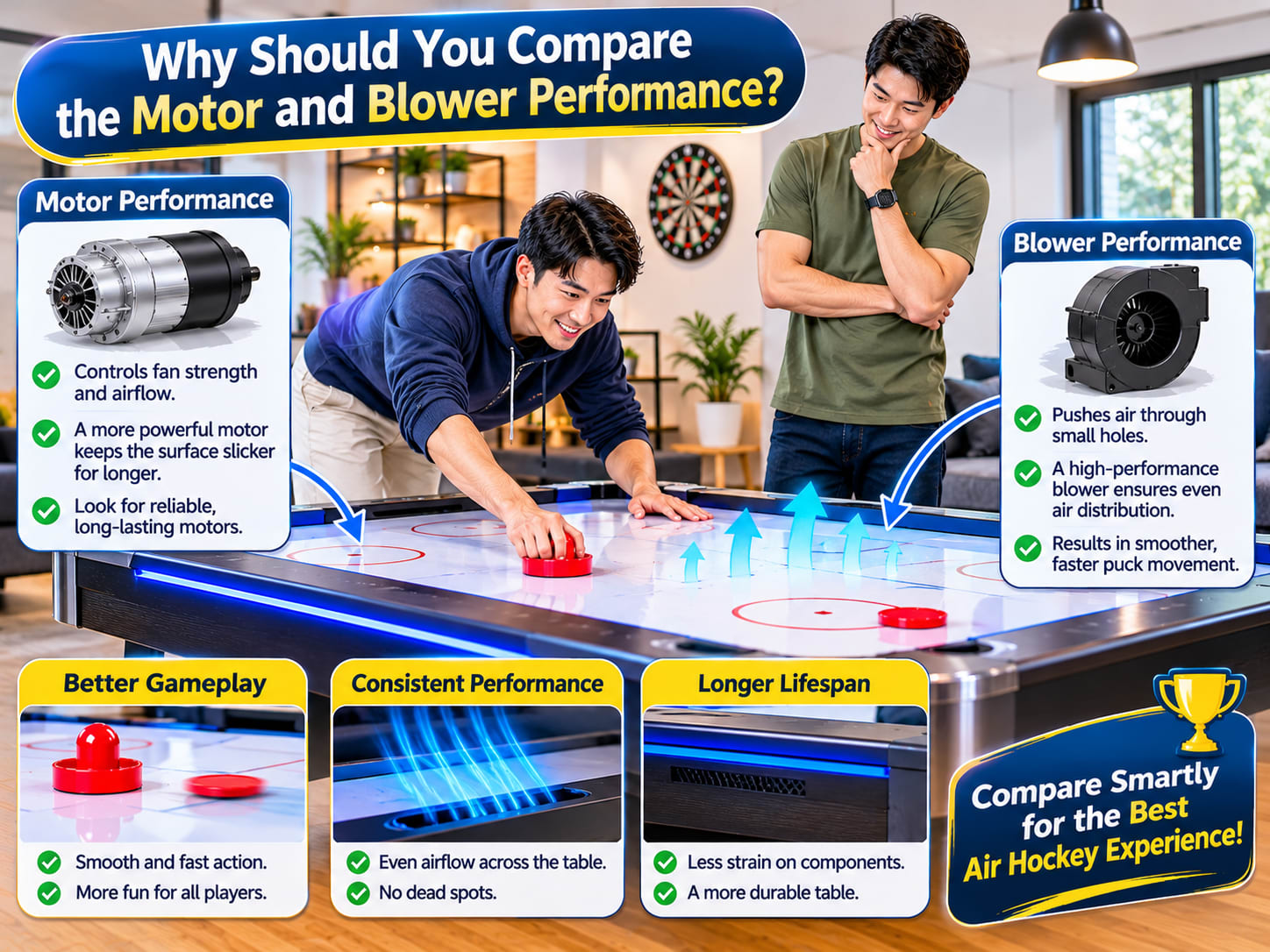
Why Should You Compare the Motor and Blower Performance?
The motor is regarded as the heart of an air hockey table's airflow system. It powers the blower, which pushes air through the holes on the playing surface.
A good motor helps maintain consistent airflow and supports smooth gameplay. However, not all air hockey table motors offer the same performance. When choosing a table, consider the following factors:
Motor Power
Motor power affects how effectively air is pushed through the playing surface. A suitable motor should provide enough airflow for the table size and design. A larger table generally requires an appropriately sized blower system to maintain consistent air distribution.
Airflow Consistency
A powerful motor alone does not guarantee good performance. The blower design, air distribution system, and condition of the playing surface also matter. Look for a table that provides even airflow from one end to the other.
Noise Level
Some air hockey tables produce more noise because of their blower motors. If you are buying a table for your home, a quieter motor may be preferable, especially when the table is placed in a living room or indoor recreation area.
For commercial spaces, noise levels should also be considered because several machines may be operating at the same time.
Motor Durability
A motor designed for regular use is important, especially for gaming centres and entertainment facilities. Check the manufacturer's specifications, warranty, and availability of replacement parts before purchasing.
Choosing a reliable motor can help reduce maintenance issues and improve the overall playing experience.
Why Do Side Rails Quality and Rebound Matter?
Side rails play an important role in air hockey gameplay. They are instrumental in keeping the puck within the playing area and allowing it to bounce back into the game.
Good-quality rails provide consistent rebounds and make the game more enjoyable. When comparing tables, pay attention to the following features:
Rail Material: Rails can be made from different materials, depending on the table's construction and price range. Strong materials are better suited for frequent use because they can withstand repeated puck impacts.
Rebound Quality: The puck should bounce back smoothly when it hits the side rails. Uneven or weak rebounds can affect the flow of the game.
Rail Construction: Check whether the rails are securely attached to the table. Loose or poorly fitted rails may become damaged over time, especially in commercial environments.
Corner Protection: The corners and edges of the table should have proper finishing and protection. This helps prevent damage from regular impacts.
For home use, standard-quality rails may be sufficient. However, if the table is intended for a gaming zone, mall, or commercial entertainment centre, stronger rail construction is a better investment.
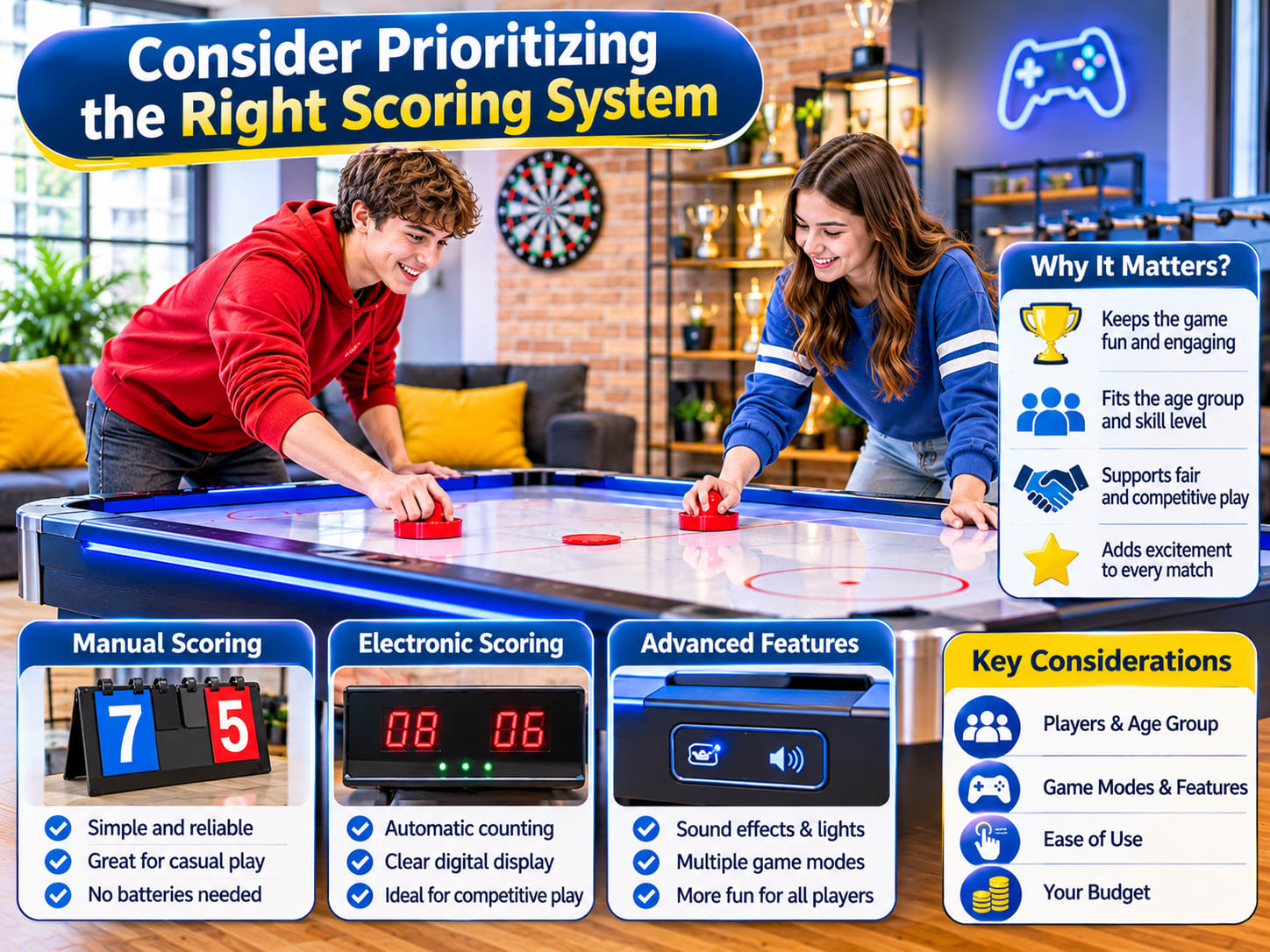
Consider Prioritizing the Right Scoring System
The scoring system makes it easier for players to keep track of their scores during a game. Air hockey tables generally come with manual or electronic scoring systems.
Manual Scoring System
Manual scoring systems use sliding score markers that players move after scoring a goal. They are simple, affordable, and easy to maintain. These systems are commonly found on basic and mid-range tables.
Electronic Scoring System
Electronic scoring systems automatically detect goals and display the score on a digital screen. Some models also include sound effects, game timers, and automatic game-end alerts. These features make the game more interactive and enjoyable.
Which Scoring System Should You Choose?
For a home air hockey table, both options work well. If you prefer a simple setup with fewer electronic components, manual scoring is a good choice. For commercial use, electronic scoring can be more convenient because players do not need to keep track of scores manually.
It also adds to the overall gaming experience. Before purchasing, check whether the electronic scoring system is easy to operate and whether replacement sensors or display components are available.
Air Hockey Table: Check the Build Quality and Durability
Durability is another important factor, especially if you want your air hockey table to last for several years. A table may look attractive when new, but its quality of construction determines how well it performs after regular use. Check out a few areas to inspect.
Frame Construction
The frame supports the entire table. A strong frame helps keep the table stable during gameplay. Look for sturdy construction and materials that can handle regular use without bending or becoming loose.
Playing Surface Quality
The playing surface should be smooth, flat, and resistant to scratches. A damaged or uneven surface can affect puck movement and reduce the quality of gameplay.
Leg Strength and Stability
The legs should provide proper support and prevent unnecessary movement while players are using the table. Some models also include adjustable leg levelers. These are useful when placing the table on floors that are not perfectly even.
Electrical Components
The blower motor, wiring, switches, and electronic scoring components should be properly fitted and protected.
For commercial buyers, it is important to choose tables with reliable components that are easy to service. A durable air hockey table may cost more initially, but it can offer better value over time by reducing repair and replacement expenses.
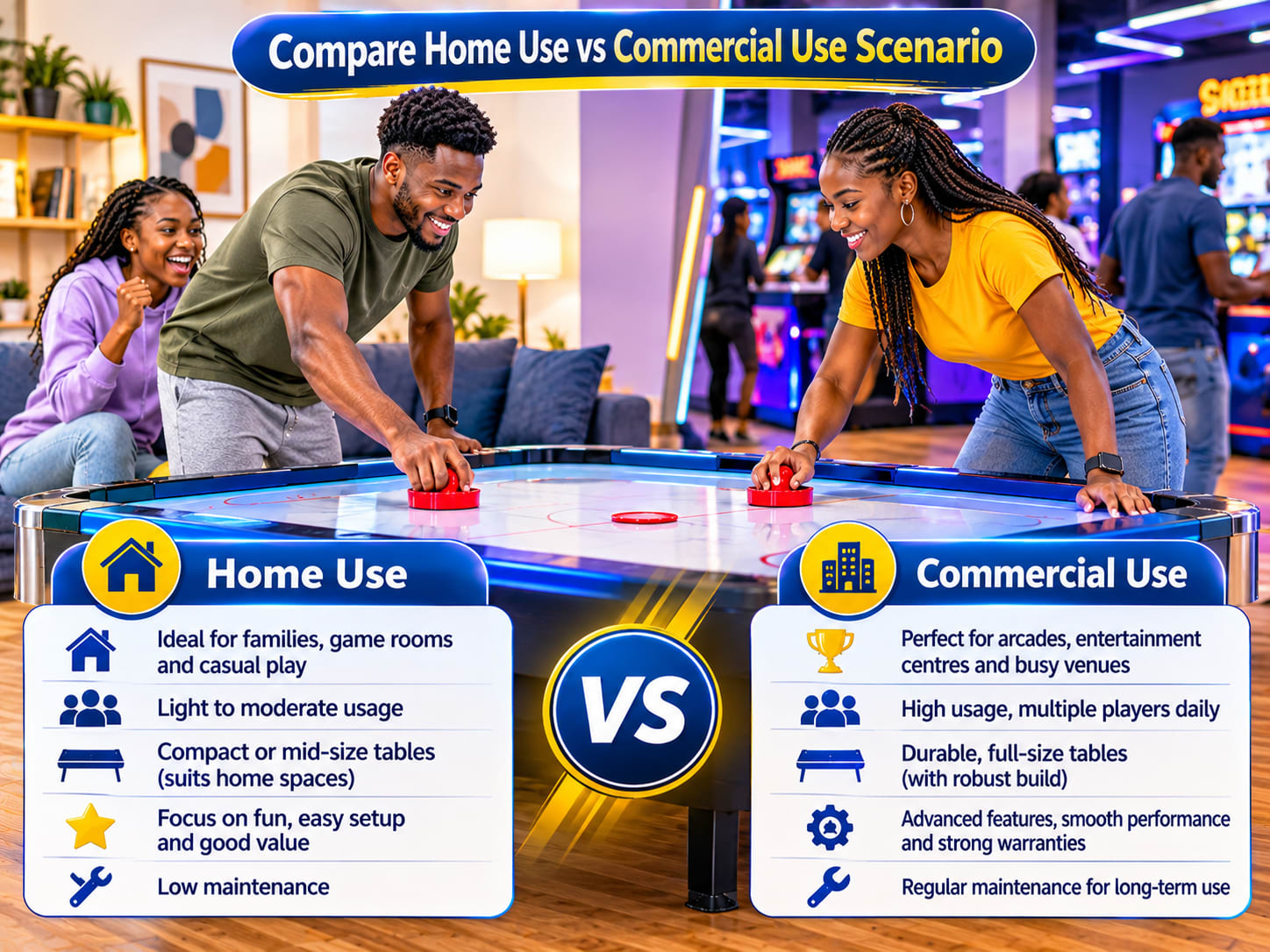
Compare Home Use vs Commercial Use Scenario
One of the biggest mistakes people make is choosing a table without considering where it will be used. A table designed for occasional family games may not be suitable for a commercial gaming centre. Let's understand the difference in a detailed manner.
Air Hockey Tables for Home Use
If you are buying an air hockey table for your home, focus on comfort, size, design, and ease of maintenance. Consider these factors:
Choose a size that fits comfortably into your available room.
Look for a motor that offers good airflow without excessive noise.
Select a stable frame and smooth playing surface.
Choose a scoring system that suits your preferences.
Check whether the table is easy to clean and maintain.
Consider the safety and usability of the table if children will be playing.
For most families, a medium-sized or full-sized table can be a good option depending on the available space and budget.
Air Hockey Tables for Commercial Use
Commercial air hockey tables are used in malls, gaming zones, amusement centres, clubs, hotels, and other entertainment spaces. These tables need to handle more frequent gameplay and regular interaction from different users. Some of the important features include:
Strong frame and heavy-duty construction.
Reliable blower motor for consistent airflow.
Durable playing surface and side rails.
Quality electronic scoring system.
Easy access to replacement parts.
Reliable electrical components.
After-sales service and maintenance support.
Commercial buyers should also consider the availability of coin-operated or payment-enabled systems if they plan to charge customers for each game. A commercial table should be selected based on expected daily usage rather than appearance alone.
Understand the Maintenance Requirements
Even a high-quality air hockey table needs regular maintenance to perform well. Proper care helps maintain airflow, protects the playing surface, and extends the life of the table. Some basic maintenance practices include the following:
Clean the Playing Surface
Dust and dirt can block the small air holes and affect puck movement. Clean the playing surface regularly using a soft, dry or slightly damp cloth, following the manufacturer's instructions.
Inspect the Blower Motor
Listen for unusual sounds and check whether the airflow remains consistent. If you notice changes in performance, have the blower system inspected.
Protect the Table When Not in Use
A suitable table cover can help prevent dust accumulation and accidental scratches. For commercial environments, a regular maintenance schedule is often recommended. Checking the table frequently can help identify small issues before they become expensive repairs.
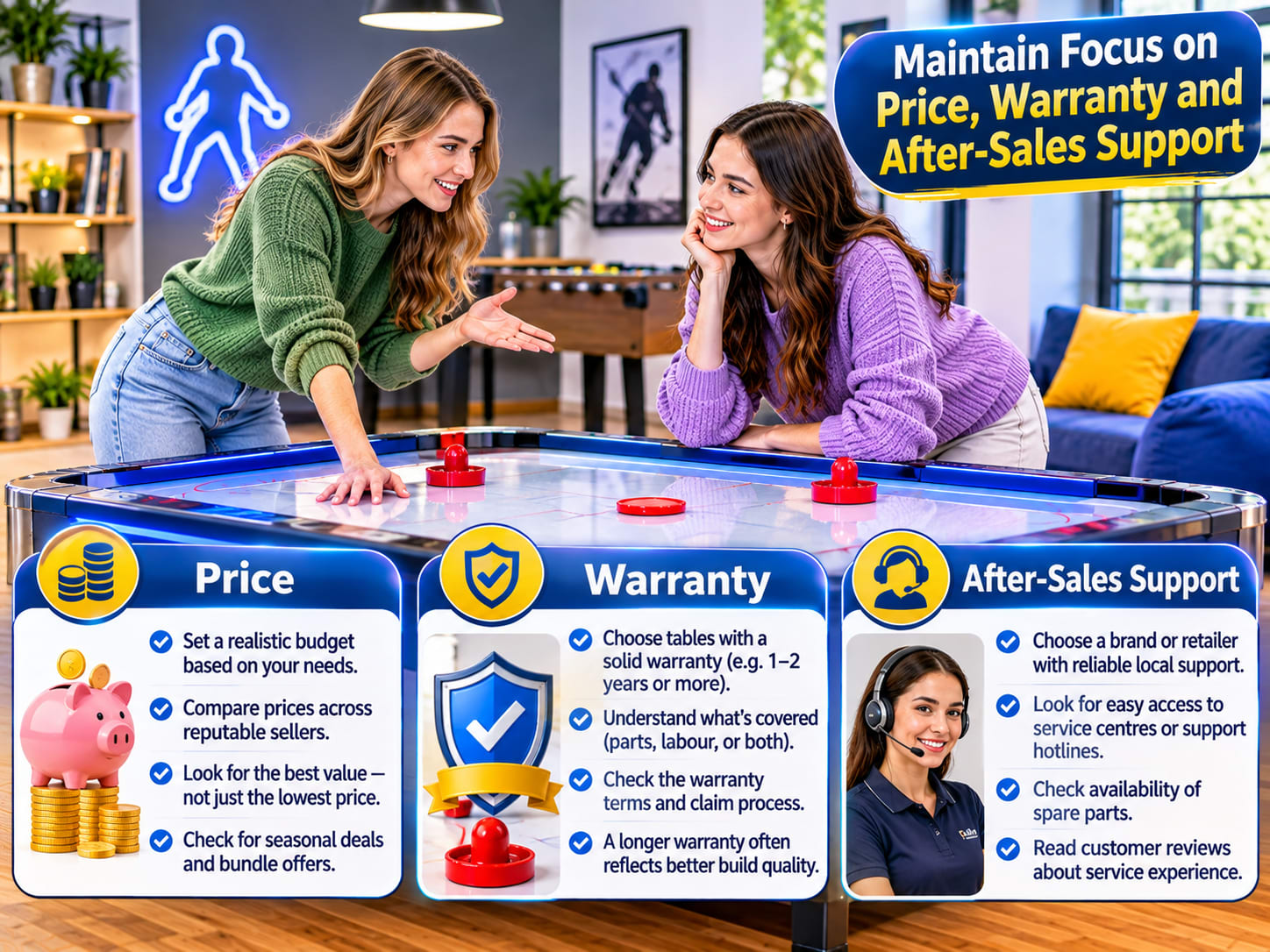
Maintain Focus on Price, Warranty and After-Sales Support
Price is an important part of the buying decision, but it should not be the sole factor. A low-cost table may be suitable for occasional home use. However, if you expect frequent gameplay, investing in a better-built model can be more economical in the long run. Before making a purchase, compare:
Table size and construction quality.
Motor and blower specifications.
Playing surface material.
Rail strength and rebound quality.
Manual or electronic scoring features.
Warranty coverage.
Availability of spare parts.
Installation and after-sales support.
For commercial buyers, also ask about servicing options and the availability of technical assistance. A supplier who provides reliable support can make a significant difference when the table is used regularly.
Common Mistakes to Avoid When Buying an Air Hockey Table
Before finalising your purchase, avoid the following mistakes:
Choosing a Table Without Measuring the Room: Always measure the available floor space and allow enough room for players to stand on both sides.
Focusing Only on Appearance: A stylish design may look attractive, but motor performance, airflow, and construction quality are more important for long-term use.
Ignoring the Motor Quality: A weak or unreliable blower can affect the entire playing experience. Always check the airflow system before buying.
Overlooking Rail Quality: Side rails experience repeated impacts during gameplay. Poor-quality rails may become loose or damaged over time.
Buying a Home Model for Commercial Use: Tables intended for occasional use may not withstand continuous gameplay in busy entertainment spaces.
Ignoring Warranty and Service: Always check the warranty terms and availability of replacement parts, especially for motors and electronic components.
People across Bahrain may visit Lifetime Fitness Store to experience the exceptional range of professional services, high-quality equipment, and reliable delivery solutions, all backed by a dedicated team committed to providing outstanding customer service.
Conclusion
Choosing the right air hockey table involves more than selecting an attractive design or the lowest-priced model. You need to consider a few aspects like table size, airflow, motor performance, side rails, scoring system, playing surface, and overall durability.
For home use, focus on comfort, suitable dimensions, smooth gameplay, and easy maintenance. For commercial use, give more importance to strong construction, reliable motors, durable rails, electronic scoring, and after-sales support.
Take time to compare different models and understand their features before making a decision. A well-chosen air hockey table can provide years of flawless entertainment at home and become a popular attraction in commercial gaming spaces.
Whether you are setting up a family game room or planning a professional entertainment centre, choosing a table that matches your space and usage requirements will help you get the best value from your investment.
For home use, air hockey tables are available in different sizes, typically ranging from 4 feet to 7 feet. Smaller tables are ideal for children and limited spaces, while 6-foot to 7-foot tables offer a more realistic playing experience for families and adults. Always consider the available room space and player comfort before choosing a size.
Motor power plays an important role in the performance of an air hockey table. A powerful and reliable motor helps maintain consistent airflow across the playing surface, allowing the puck to glide smoothly and ensuring a fast, enjoyable gaming experience. Commercial tables generally require stronger motors for continuous use.
Airflow determines how smoothly the puck moves across the table. A good air distribution system creates consistent air pressure through the playing surface holes, reducing friction and providing faster, more responsive gameplay. Proper airflow is essential for both home entertainment and commercial gaming environments.
Important features to consider include a powerful motor, evenly distributed airflow, a smooth playing surface, electronic scoring system, sturdy legs, durable construction, quality puck and pushers, and reliable side rails. For commercial use, also consider coin-operated functionality, easy maintenance, and long-term performance.
Home air hockey tables are generally designed for occasional recreational play, family entertainment, and personal use. Commercial air hockey tables are built with stronger construction, more powerful motors, durable playing surfaces, and features such as coin-operated systems to support frequent gameplay in arcades, malls, gaming zones, and entertainment centres.
Get a weekly dose of latest stories
and useful tips directly in your inbox!
Help Us Enhance Your Experience or Report a Website Problem!
We value your feedback! Let us know if there’s anything we can improve or if there’s a feature you’d love to see on our website.
Need Help? We're Here.
Our Fitness Experts Can Help With Products, Orders, Delivery And Installation





 Get a weekly dose of latest stories
and useful tips directly in your inbox!


 0





















































 Price Match Guarantee
 Free Shipping
 Product Warranty
 After-Sale Support
 Have Coupon Code?
 You'll Save 0.00 On This Order
 Safe And Secure Payments. Easy Returns. 100% Genuine Products